The 2007 Porsche Boxster engine spec includes a 2.7L flat-six with 245 hp and a 3.4L Boxster S with 295 hp. Both engines offer smooth power and sporty handling.
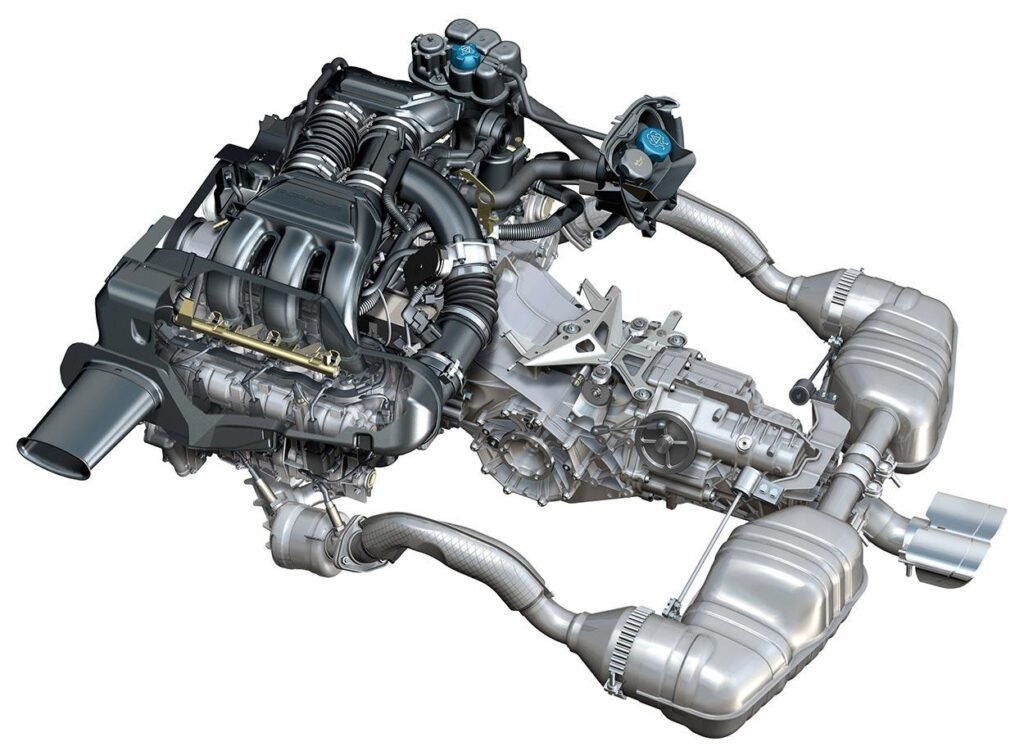
The 2007 Porsche Boxster engine spec is a standout example of mid‑engine engineering that blends performance and everyday usability. In 2007, Porsche refined both the base and S models. Changes included a larger displacement for the S, and the addition of VarioCam Plus variable valve timing on both engines. These updates boosted power and torque figures over the previous generation. For drivers, this meant smoother acceleration, stronger mid‑range pull, and a more confident overall engine character. Whether on twisty roads or long highways, the engines offer a rewarding driving experience.
Contents
- 1 What is a Boxer Engine and Why It Matters
- 2 The Base Engine: 2.7‑Liter Flat‑Six
- 3 Inside the Boxster S Engine: 3.4‑Liter Flat‑Six
- 4 How Porsche’s VarioCam Plus Improves Performance
- 5 Engine Placement and Weight Balance
- 6 Horsepower and Torque Explained
- 7 Transmission Choices
- 8 Performance Figures You Should Know
- 9 Fuel Economy and Everyday Driving
- 10 What Makes the 2007 Engines Better Than Before
- 11 Reliability and Maintenance
- 12 Driving the 2007 Boxster
- 13 Frequently Asked Questions
- 14 Conclusion
What is a Boxer Engine and Why It Matters
The 2007 Porsche Boxster uses a flat‑six engine, often called a “Boxer” layout. In a Boxer engine, cylinders lie flat and oppose each other horizontally. This design delivers several key advantages:
- A lower center of gravity improves stability and handling.
- It helps with even weight distribution, thanks to the mid‑engine layout.
- Opposing pistons balance forces, which reduces vibration.
Porsche has used this format for decades in many of its sports cars, as it gives both performance and refinement that are difficult to match with other engine types.
The Base Engine: 2.7‑Liter Flat‑Six
The standard engine in the 2007 Porsche Boxster is a 2.7‑liter flat‑six. This engine was not brand‑new for 2007, but it received notable upgrades that increased its output and improved its character.
Key Specs
- Configuration: Flat‑six, normally aspirated
- Displacement: 2.7 liters
- Horsepower: ~245 hp @ 6,400 rpm
- Torque: ~201 lb‑ft @ 4,600–6,000 rpm
- Valvetrain: DOHC 24‑valve
- Fuel System: Port fuel injection
- Performance: ~5.8 seconds 0‑60 mph
- Top Speed: ~160 mph (257 km/h)
- Fuel System: Premium unleaded gas recommended
These specs show that the base engine is no slouch. For a naturally aspirated engine in a compact sports car, it produces strong numbers. The 2007 revision also introduced VarioCam Plus, Porsche’s variable valve timing and lift system. This helped the engine breathe better at all speeds and made the power delivery smoother and broader than the previous year.
Engine Character and Behavior
One of the most striking things about this engine is how it pulls. The torque comes in fairly early and stays flat into the upper ranges. You feel strength whether cruising through town or pushing hard on a back road. The sound is smooth and classic, with an even tone that rises with revs. It never becomes harsh, even when it’s working hard.
Inside the Boxster S Engine: 3.4‑Liter Flat‑Six
On the higher end sits the Boxster S engine — a larger, more powerful 3.4‑liter version of the flat‑six. Porsche introduced this upgrade in 2007, replacing the earlier 3.2‑liter engine with a 3.4‑liter unit that produced more power while retaining balance and smoothness.
Core Specifications
- Configuration: Flat‑six, naturally aspirated
- Displacement: 3.4 liters
- Horsepower: ~295 hp @ 6,250 rpm
- Torque: ~251 lb‑ft @ 4,400–6,000 rpm
- Valvetrain: DOHC 24‑valve
- Compression Ratio: Around 11.1:1
- Performance: ~5.1 seconds 0‑60 mph
- Top Speed: ~169 mph (272 km/h)
The larger displacement means stronger performance across the board. Torque arrives early, and power keeps building as the revs climb. In everyday driving, this engine feels more eager and responsive than its smaller sibling. On an open road, it feels powerful and willing.
How Porsche’s VarioCam Plus Improves Performance
A big part of the reason the engines feel so good is VarioCam Plus. This technology continuously adjusts valve timing and lift based on engine speed and throttle input. Here’s what it brings to the Boxster engines:
- Better torque at low rpm
- Improved horsepower at high rpm
- Smoother power transitions
- More efficient fuel use
This system keeps the engines responsive across the whole rev range, so they don’t feel weak at low speeds or overly strained at high speeds.
Engine Placement and Weight Balance
The 2007 Porsche Boxster places its engine just behind the seats — a mid‑engine layout. This position helps balance the car nearly perfectly between front and rear. The results are more precise steering, better cornering, and reduced under‑ or oversteer. It’s one reason why drivers often describe the Boxster as having a “connected” feel to the road.
Horsepower and Torque Explained
Before we dig deeper, it helps to understand what these numbers mean:
- Horsepower: This measures top‑end power. More horsepower usually means higher top speed and stronger acceleration at higher rpms.
- Torque: This measures the twisting force the engine creates. More torque generally means stronger acceleration at lower speeds.
In the Boxster, the balance of horsepower and torque ensures strong performance across a wide speed range. Both engines deliver usable power whether you are driving slowly in traffic or accelerating hard on a highway.
Transmission Choices
The 2007 Boxster came with different transmission options:
Manual Gearboxes
- 5‑speed manual (standard on the base 2.7)
- 6‑speed manual (standard on the 3.4 S)
Manual transmissions give a more direct feel and generally help the driver feel more connected to the engine.
Tiptronic S
An optional 5‑speed Tiptronic S automatic was available. It lets the driver shift manually using steering‑wheel paddles or the shift lever.
Both options complement the engines well, but many purists favor the manuals for thrill and engagement.
Performance Figures You Should Know
Here’s a quick view of key performance numbers:
| Metric | 2.7L Boxster | 3.4L Boxster S |
|---|---|---|
| Horsepower | ~245 hp | ~295 hp |
| Torque | ~201 lb‑ft | ~251 lb‑ft |
| 0‑60 mph | ~5.8 s | ~5.1 s |
| Top Speed | ~160 mph | ~169 mph |
These results show how the larger engine adds enthusiasm and capability to the Boxster S.
Fuel Economy and Everyday Driving
Despite being performance engines, both variants provide reasonable fuel economy for what they are:
- 2.7‑liter: ~20–23 mpg city, ~28–32 mpg highway
- 3.4‑liter: ~18–20 mpg city, ~25–28 mpg highway
These figures show that the cars can be used for daily driving, not just weekend fun.
What Makes the 2007 Engines Better Than Before
For 2007, Porsche made two noteworthy enhancements:
- Increased engine displacement for the S model — from 3.2L to 3.4L, which raised power and torque.
- VarioCam Plus added to the base engine, which brought smoother power delivery and a slight boost in output.
Together, these changes improved drivability and performance from the older 986 and earlier 987 engines.
Reliability and Maintenance
Like all performance engines, regular care makes a big difference in longevity. Common routines include:
- Oil changes every 5,000–7,000 miles
- Spark plug replacement at manufacturer intervals
- Coolant and belt checks
- Air filter replacements
Many owners report their Boxster engines remain strong well past 100,000 miles when maintained properly. Regular checkups help avoid surprises.
Driving the 2007 Boxster
On everyday roads, both engines feel smooth and lively. The base engine has enough pull for normal traffic and highway use. The Boxster S feels quicker and more eager. The mid‑engine balance gives confidence in corners and sharp steering response. It’s a dynamic mix — friendly for beginners and rewarding for more experienced drivers.
Related Article
NHRA Engine Blueprint Spec
273 Dodge Engine Identification
VW Jetta Engine Interchange Chart
Frequently Asked Questions
Here are some common questions about the 2007 Porsche Boxster engine –
1. What exactly is meant by “flat‑six engine”?
A flat‑six places cylinders horizontally and opposed, giving a low engine profile and smooth balance.
2. How much more powerful is the 2007 S compared to the base model?
The 3.4‑liter S produces about 50 hp more than the 2.7‑liter engine.
3. Is the Tiptronic S as good as the manual transmission?
The Tiptronic S is smooth and convenient, but many drivers feel the manuals are more engaging.
4. What is VarioCam Plus and why does it matter?
VarioCam Plus changes valve timing and lift for better power and torque at all engine speeds.
5. Are these engines reliable long‑term?
Yes, with routine maintenance and care, they can last many years and miles without major issues.
Conclusion
The 2007 Porsche Boxster engine spec reflects a thoughtful balance of engineering precision, performance capability, and everyday usability. From the smooth 2.7‑liter flat‑six to the energetic 3.4‑liter Boxster S, these engines are impressively versatile. They deliver lively acceleration, confident torque, and a distinct character that has kept the 987 Boxster a favorite among sports car fans. Whether cruising on back roads or commuting on highways, these engines provide a rewarding and engaging experience that stands the test of time.