Best Mercedes-Benz Engine Ever Made: The best Mercedes-Benz engine ever made is the M100 V8, known for its power, smoothness, and durability, especially in the iconic Mercedes-Benz 600 series.
Mercedes-Benz engines are often regarded as some of the most finely crafted engines in the automotive industry. Known for their performance, reliability, and advanced technology, these engines have powered everything from luxury sedans to high-performance sports cars and SUVs. The best Mercedes-Benz engine ever made is subjective, depending on what criteria you consider most important—performance, reliability, innovation, or a blend of these elements.
The best Mercedes-Benz engines represent the pinnacle of automotive engineering. They have shaped the performance capabilities of countless iconic models and have delivered unforgettable driving experiences. These engines have been a hallmark of Mercedes-Benz’s commitment to pushing the boundaries of what’s possible.
In this article, we will examine some of the best engines produced by the brand, from the high-performance AMG engines to the legendary diesel engines that powered long-distance vehicles for years.
Contents
Best Mercedes-Benz Engine Ever Made
When it comes to the best Mercedes-Benz engine ever made, it’s difficult to pick just one due to the brand’s long history of engineering excellence. However, several standout engines have defined Mercedes-Benz’s legacy, combining performance, innovation, and reliability in ways that have influenced both the automotive industry and the driving experience for generations.
1. M100 Engine
One of the most iconic engines in Mercedes-Benz history is the M100. Introduced in 1963, this engine powered the Mercedes-Benz 600 series, which became the benchmark for luxury and performance in its era. The M100 is a 6.3-liter V8 engine, designed to provide both immense power and smooth refinement, which made it a favorite among affluent buyers looking for a high-performance luxury vehicle.
Why Was the M100 So Special?
The M100 was ahead of its time. In an era when most luxury sedans were powered by six-cylinder engines, the M100’s 6.3-liter V8 offered both incredible performance and supreme refinement. The engine produced around 250 to 300 horsepower, a remarkable output for its time. What made the M100 even more special was its exceptional torque, which made it a joy to drive on highways, as the engine could effortlessly propel the car to high speeds without strain.
The M100 engine wasn’t just powerful; it was also reliable and durable. Its robust design meant that many of the vehicles that carried the M100 engine remained in operation long after their production ceased. The engine’s smooth operation and quietness were key reasons the 600 series became a favorite of royalty, celebrities, and heads of state around the world.
Key Features of the M100 Engine:
- Displacement: 6.3 liters
- Configuration: V8 engine
- Power Output: 250-300 horsepower
- Torque: High torque for effortless cruising
- Famous Applications: Mercedes-Benz 600 series, luxury limousines
Legacy of the M100 Engine
The M100 engine’s legacy is deeply rooted in Mercedes-Benz’s history. It was one of the first mass-produced V8 engines from the brand, setting the stage for future innovations in engine design. While the M100 is now considered a vintage powerplant, its contribution to Mercedes-Benz’s reputation for luxury and performance cannot be overstated.
2. The V12 M275 Engine
Fast-forwarding to the 21st century, the M275 V12 engine is another notable example of Mercedes-Benz’s engineering prowess. Introduced in the early 2000s, the M275 is a 5.5-liter twin-turbocharged V12 engine that powered some of the brand’s most prestigious models, such as the S600 and the SL600. This engine is an exceptional blend of power, performance, and refinement.
The Power and Performance of the M275
The M275 engine generates approximately 493 horsepower and 590 lb-ft of torque, which translates to rapid acceleration and top-tier performance. With this engine, the S600 could go from 0 to 60 mph in just 4.5 seconds, an astonishing feat for a luxury sedan. The M275’s twin-turbocharging setup gave it an extra layer of efficiency, making it more powerful than naturally aspirated engines while still maintaining a level of smoothness and refinement that Mercedes-Benz is known for.
Despite the M275’s incredible power output, one of the key aspects of the engine’s design was its smoothness. The M275 was designed to be incredibly refined, offering a driving experience that was not only fast but also supremely comfortable. The smooth, almost silent nature of the engine made it a perfect match for Mercedes-Benz’s flagship sedans and coupes.
Key Features of the M275 Engine:
- Displacement: 5.5 liters
- Configuration: V12 engine, twin-turbocharged
- Power Output: 493 horsepower
- Torque: 590 lb-ft
- Famous Applications: Mercedes-Benz S600, SL600
Legacy of the M275 Engine
The M275 solidified Mercedes-Benz’s commitment to building high-performance luxury vehicles. It combined the brand’s tradition of smooth, refined driving with the raw power required for a thrilling driving experience. The M275 set the standard for future V12 engines in Mercedes-Benz’s lineup, and its advanced turbocharging system became a blueprint for future models.
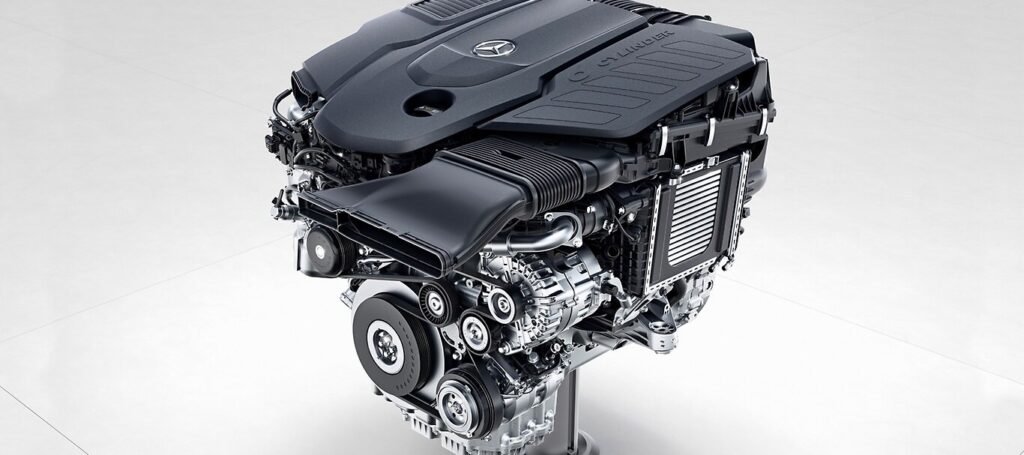
3. The Inline-6 M256 Engine
The M256 engine is a more recent addition to the Mercedes-Benz engine lineup, but it has quickly gained recognition as one of the brand’s most advanced and versatile powerplants. Introduced in the early 2010s, the M256 is a 3.0-liter inline-six engine that uses a turbocharger and a mild-hybrid system to combine both performance and fuel efficiency.
Related Article
Chevy Inline 6 Engine Identification
GM 6 Cylinder Engine Identification
A Perfect Balance of Performance and Efficiency
The M256 engine delivers an impressive 362 horsepower and 369 lb-ft of torque, making it more than capable of delivering a powerful driving experience. However, what sets this engine apart from others is its combination of power and fuel efficiency. Thanks to its mild-hybrid system, the M256 engine is able to offer better fuel economy compared to its V8 and V12 counterparts, while still maintaining excellent performance.
One of the highlights of the M256 engine is its ability to recover and store energy via the mild-hybrid system, which helps improve overall efficiency and reduce emissions. This system is part of Mercedes-Benz’s broader initiative to improve the environmental impact of its vehicles without compromising performance.
Key Features of the M256 Engine:
- Displacement: 3.0 liters
- Configuration: Inline-6 engine with turbocharging
- Power Output: 362 horsepower
- Torque: 369 lb-ft
- Hybrid System: Mild-hybrid for improved efficiency
- Famous Applications: Mercedes-Benz E-Class, S-Class
Legacy of the M256 Engine
The M256 engine is an example of Mercedes-Benz’s forward-thinking approach to engine design. By incorporating hybrid technology into a traditionally gas-powered engine, the M256 is a bridge between the past and the future. This engine is a key part of Mercedes-Benz’s strategy to create more sustainable vehicles without sacrificing luxury or performance.
4. The V8 M156 Engine
The M156 engine is another standout in Mercedes-Benz’s performance-oriented lineup. Introduced in the early 2000s, the M156 is a 6.2-liter naturally aspirated V8 that powered several high-performance AMG models, including the Mercedes-Benz C63 AMG and E63 AMG. Known for its raw power and aggressive sound, the M156 engine quickly became a favorite among driving enthusiasts.
The Thrill of the M156 Engine
The M156 engine produces around 500 horsepower and 465 lb-ft of torque, which makes it one of the most powerful naturally aspirated V8 engines ever produced by Mercedes-Benz. One of the key features of the M156 is its aggressive exhaust note, which became synonymous with AMG’s performance cars. The engine’s raw power and responsiveness made it a perfect fit for Mercedes-Benz’s AMG lineup, delivering an exhilarating driving experience.
Key Features of the M156 Engine:
- Displacement: 6.2 liters
- Configuration: V8, naturally aspirated
- Power Output: 500 horsepower
- Torque: 465 lb-ft
- Famous Applications: Mercedes-Benz C63 AMG, E63 AMG
Legacy of the M156 Engine
The M156 engine is part of AMG’s legacy of building some of the world’s most thrilling performance engines. It was designed to deliver maximum performance with no compromise, and it helped establish AMG as one of the leading performance divisions in the world.
5. The OM617 Diesel Engine
The OM617 diesel engine is one of the most beloved diesel engines ever made by Mercedes-Benz. Produced from 1974 to 1985, the OM617 is a 5-cylinder engine that became synonymous with Mercedes-Benz’s legendary reputation for durability. This engine was used in vehicles like the Mercedes-Benz 240D and is often regarded as one of the most reliable engines in automotive history.
The Durability of the OM617 Engine
What set the OM617 apart from other diesel engines of its time was its ability to run for hundreds of thousands of miles with minimal maintenance. Many OM617-powered cars are still on the road today, proving the engine’s longevity. The engine was known for its simple yet robust design, which made it relatively easy to repair and maintain.
Key Features of the OM617 Engine:
- Displacement: 3.0 liters (varied by model)
- Configuration: 5-cylinder diesel engine
- Power Output: Around 70-80 horsepower (varies by model)
- Fuel Economy: Excellent fuel efficiency
- Famous Applications: Mercedes-Benz 240D, 300D
Legacy of the OM617 Engine
The OM617 engine’s legacy is cemented in its reputation for reliability and durability. This engine is one of the reasons why Mercedes-Benz has such a strong following among diesel enthusiasts, and it remains one of the most cherished engines in Mercedes-Benz history.
6. The M104 Inline-6 Engine
The M104 engine, introduced in the early 1990s, was designed to be a smooth-running, efficient powerplant for everyday driving. This 3.0-liter inline-six engine powered vehicles like the Mercedes-Benz 300E, and it became well-known for its smooth operation and reliability.
The Smoothness of the M104 Engine
The M104 engine’s defining feature was its balance. It was a smooth-running engine that offered a perfect combination of power and efficiency. Known for its reliability, the M104 quickly became a popular choice among buyers looking for a dependable and easy-to-drive vehicle.
Key Features of the M104 Engine:
- Displacement: 3.0 liters
- Configuration: Inline-6 engine
- Power Output: 180-220 horsepower (varies by model)
- Famous Applications: Mercedes-Benz 300E, 320E
Legacy of the M104 Engine
The M104 engine is an excellent example of Mercedes-Benz’s ability to create balanced and reliable engines that perform well in everyday driving scenarios. It remains one of the most respected engines among owners of vintage Mercedes-Benz vehicles.
Frequently Asked Questions
Here are some FAQs about Mercedes-Benz engines
1. Which Mercedes-Benz engine has the highest horsepower?
The M275 V12 engine, found in models like the S600 and SL600, produces up to 493 horsepower.
2. What makes the M100 engine so special?
The M100 engine is a 6.3-liter V8 engine known for its smooth operation, high torque, and power output of up to 300 horsepower, which made it a standout in the 1960s.
3. How reliable are Mercedes-Benz diesel engines?
Mercedes-Benz diesel engines, especially the OM617, are known for their remarkable reliability and longevity. The OM617, in particular, can easily exceed 500,000 miles with proper care.
4. Is the M256 engine better than the M275?
The M256 is a more modern, efficient engine with a turbocharger and mild-hybrid system. While it may not offer the raw power of the M275, it provides a better balance of performance and fuel efficiency.
5. What’s the difference between the M156 and M275 engines?
The M156 is a 6.2-liter naturally aspirated V8, while the M275 is a 5.5-liter turbocharged V12. The M156 is favored for its raw power and aggressive performance, while the M275 excels in smoothness and luxury.
Conclusion
Choosing the “best” Mercedes-Benz engine ever made depends on the criteria used. Some may prioritize raw power, while others may value reliability or fuel efficiency. The engines we’ve discussed today—such as the M100, M275, M256, M156, and OM617—represent the pinnacle of Mercedes-Benz’s engineering achievements. Each one has its unique contributions to the brand’s legacy, offering performance, durability, and refinement in their own right.
Ultimately, the best Mercedes-Benz engine ever made is a matter of personal preference, but there’s no doubt that each of these engines has helped define the brand’s exceptional reputation in the automotive world.