Brake booster push rod adjustment ensures proper brake function by setting the correct rod length. Incorrect adjustment can cause a soft pedal or brake drag, affecting performance and safety.
This insidious detail connected with brake system maintenance involves getting your brake booster push rod adjustment correct. When installing a new brake booster or troubleshooting brake pedal problems, knowing how to properly adjust your brake booster push rod impacts your car’s safety and brake responsiveness. If this adjustment is wrong, brake system performance will suffer. Excess brake pedal travel and poor braking will be the result. Of course, this is very unsafe.
In this beginner-friendly comprehensive guide, we will detail the adjustment of the brake booster push rod, covering why it is of consequence, how to do it step-by-step, how to avoid all of the common mistakes, and answering many frequently asked questions.
Contents
Why Proper Adjustment of Brake Booster Push Rod is Important
The brake booster push rod is the unit that connects the brake pedal to the master cylinder, via the brake booster. It serves the purpose of transmitting the force you apply at the brake pedal to the master cylinder, which in turn, activates the brakes using hydraulic pressure.
Some of the problems that can happen with the push rod out of adjustment include the following:
- Soft or Spongy Pedal Feel: If the push rod is on the short side, the brake pedal feels soft or the engagement of the brakes requires increased travel. If the rod is too long, the master cylinder would become preloaded, resulting in brake drag and excess wear.
- Lack of Consistent Brake Performance: The adjustment of the push rod can lead to performance problems within the brake system. This is because the hydraulic pressure to the brakes is worked upon by the system. The net outcome is a fluctuating difference in the braking force that is applied to the system. This can result in vehicle control problems.
- Brake Drag: Constant imbalance within the braking system can lead to overheating, wear and tear of the system due to brake drag. This can happen when the push rod is out of adjustment and is too long.
Brake Booster Push Rod Adjustment
Get the following tools prior to attempting the brake booster push rod adjustment:
| Tool | Purpose |
|---|---|
| Brake push rod adjustment tool | This helps to find the correct push rod length and check for adequate clearance. |
| Feeler gauge | This helps to check the distance between the push rod and master cylinder to ensure proper clearance |
| Wrench and socket set | This helps in loosening and tightening any nuts and bolts involved in the adjustment |
| Flathead screwdrivers | These will be used to reposition the push rod when necessary |
| Tape measure | This is optional but helpful in measuring the length of the push rod if the specialized tool is unavailable |
Step-by-step Brake Booster Push Rod Adjustment
Below is the breakdown on how to properly adjust the brake booster push rod.
1. Safety First
Before attempting any brake maintenance, safety should always come first. The brake system is an integral part of your vehicle’s performance and safety. Prior to this, make sure to:
- Park your vehicle on flat surface and turn the engine off.
- Pull the parking brake to ensure the vehicle remains stationary.
- To avoid any electrical mishaps, disconnect the negative battery terminal.
If you’re working on the brakes while the vehicle is elevated, double check that it’s on jack stands.
Step 2: Measure the Current Push Rod Length
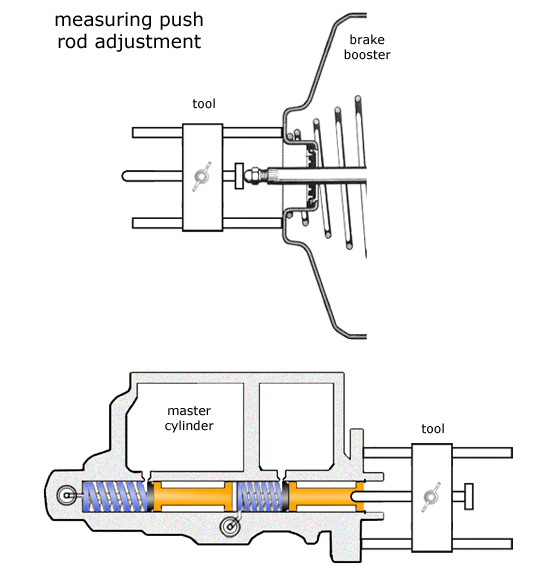
Take a look at the current length of the brake booster push rod. This push rod should not have too much excess length, nor should it be too short, either. If the push rod is out of adjustment, it can cause issues with brake performance.
If you can’t see this part or how far the push rod extends, you may need to take off the brake booster or any other parts that sit around the push rod. This will also show you if the push rod is the correct length for your vehicle.
Step 3: Release the Lock Nut
There is an adjustment nut for the brake booster push rod, which serves to lock that rod in place. You will need to loosen this lock nut if you want to adjust how long that rod is. Use a wrench or a socket set to loosen that nut, but do not take that nut off all the way at this point. After the nut is loosened, you can continue to adjusting the push rod.
Step 4. Adjust the Push Rod Length
Now, the most critical step! When adjusting the push rod, consider this: if the push rod is too long, you will have to shorten it. If it is too short, you will have to extend it. An ideal push rod will have free play so the brake pedal has a firm feel, and it remains responsive. If there is too much free play, then the master cylinder will not engage and then the pedal will have to travel too far. If there is too little, then the master cylinder is always engaged, which will also cause brake drag.
- If you need to lengthen the push rod: rotating it counter clockwise to increase its length.
- If you need to shorten the push rod: rotating it clockwise to decrease its length.
Be sure to adjust the rod evenly and symmetrically. This will maintain even pressure on the master cylinder!
Step 5: Calibrating the Push Rod with the Feeler Gauge
After getting the push rod to the appropriate length, take the push rod and master cylinder piston and utilize the feeler gauge to check the clearance. Getting the correct clearance may take a few tries to properly gage the correct amount of distance, so make sure to check the service manual for the appropriate distance and get to the certain amount of distance needed.
A distance that is too wide and too short have certain concerns in regards to the overall performance and efficiency of the brakes. Having a wide distance will cause the push rod to take too long to engage the master cylinder. If the distance is too short, the brakes will drag alongside wearing the brake system.
Step 6: Secure Push Rod
After finishing the previous step and looking to make sure the amount of distance is correct, you will want to take the adjustment nuts and lock nuts and secure the push rods. When tightening the nuts, make sure you do not overtighten, in order to not cause damage to the nuts while trying to secure the push rods.
Step 7: See How the Brake Pedal Feels
Once you have the push – rod secured into place, you will want to test the brake pedal by pushing it down. It should feel consistent and should not feel too soft and should not feel spongy. Which means you may have to readjust the push – rod.
Go for a low speed test drive and see how the brakes feel once driving. If it still does not feel right you may want to go back and make further adjustments.
Common Mistakes to Avoid
Here are some examples of what to watch out for when adjusting the push rod for the brake booster:
Mistake 1: Adjusting the Push Rod Too Far
Repetitively adjusting the push rod can owe too much pressure to the master cylinder, and they could drag on the brakes. Along with overheating and wasting brakes, they could even damage the system. If that happens, fix the man adjustment suggestions by the manufacturer.
Mistake 2: Not Following the Instructions
Talking to the vehicle service manual will give you a recommended amount of the push rod length and how far to pull the rod back. One system does not work for others.
Mistake 3: Not Testing the Brakes After Adjusting
Testing it quickly by adjusting the push rod first is not enough. Ignoring the brake pedal could leave you with a soft pedal to the brakes or the brakes not even being able to work.
Additional Tips and Insights
Adjusting the brake booster push rod is a major task all by itself, but here are a few tips and insights that may help make sure that you get the best results possible. These tips help you to get through common concerns, and give you a little extra guidance for a precise adjustment.
Use of Professional Tools for Precision
If you want to get the highest precision possible, and are unsure about your adjustment, there are gauges for measuring brake push rod depth that are helpful for measuring the exact length that is needed for your brake system. These tools are especially helpful for heavy-duty and high-performance vehicles that need precise adjustments.
Check for Any Wear or Damage
While you are adjusting the push rod, taking the time to look over the entire brake booster and connected parts for wear and tears and/or damage is a good idea. If you see a problem, replacing the parts before you make adjustments may be wise.
Frequently Asked Questions
Here are some FAQs about brake booster push rod adjustment –
- What is the recommended clearance for the brake booster push rod?
The recommended clearance for the brake booster push rod is usually about 0.005 to 0.02 inches, but the best thing to do is look at your vehicle’s service manual, because it should have the exact clearance measurement that is recommended for your make and model.
- Can I adjust the brake booster push rod without special tools?
Yes, all that is required is basic tools like wrenches, sockets, and feeler gauges. However, using a brake push rod depth gauge is helpful to make the task easier and to get a more precise result.
- My brakes are still soft after adjustment. What could be wrong?
If your brakes still feel like they have soft adjustment, it could be that there is air in the brake lines, an issue exists with the master cylinder, or that the push rod is not properly adjusted.
- What happens if the push rod is too long?
If the push rod is too long, it can lead to brake drag, which is when the brakes are excessively applied and can lead to overheating and premature brake wear.
- Is brake booster push rod adjustment a job I can do at home?
Yes, you can, given that all the right tools are there and taking the time needed, you can do this adjustment by yourself. Just make sure that the necessary steps are followed in order and do not hesitate to take a look at your vehicle’s service manual.
Conclusion
Adjusting the brake booster push rod is crucial to the brake system’s functionality and safety. Neglecting to perform such an important task would result in the following consequences: negative brake performance (the driver will need to apply more force during braking), poor overall brake feel (the driver will notice more fatigue and lack of control), and shorter lifespan of all brake system parts relating to the booster. Knowing these consequences may cause anxiety in the operator but these feelings can be laid to rest by doing the task of push rod adjustment.
Performing the task will save time and money compared to driving to a workshop and will ensure the brakes work as they should. If there’s something unclear about the process of adjusting the push rod to the appropriate length feel free to contact specialists and make sure the work is done right. It’s always a question of your safety.