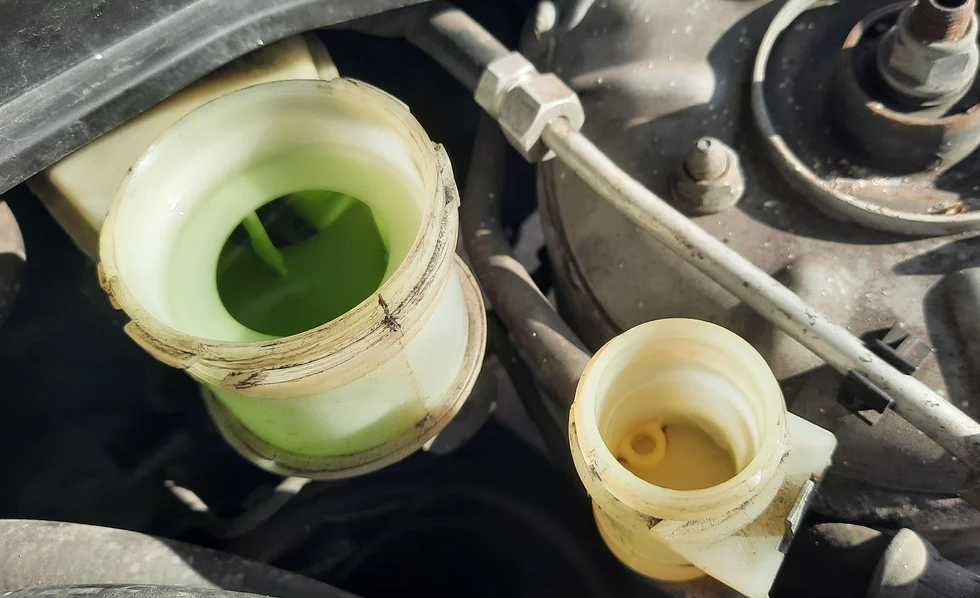
Brake fluid color green is typically seen in certain vehicles that use a specific type of brake fluid, such as some Honda and Toyota models. It can also indicate contamination if coolant or antifreeze has mixed with the brake fluid, which can lead to reduced braking performance.
One of the key aspects of vehicle upkeep is the careful monitoring of the brake fluid, which is essential to the functioning of the vehicle’s braking system. Without blank fluid, the force of the brake pedal cannot be transmitted to the braking components, rendering the vehicle incapable of stopping. Though the majority of people understand the basics of brake fluid, its color may be of greater significance.
Some may only be used to seeing translucent or yellowish fluids, while some may even be wondering why brake fluid can come in a green variety. If you are looking for a detailed explanation of why and how to deal with green brake fluid, you’ve come to the right place.
In this article, we will discuss the reasons brake fluid may be green, how to recognize the presence of this fluid in the braking system, and the steps necessary to protect the system’s braking functionality or braking safety.
Contents
Why Brake Fluid Color Matters
The color of brake fluid serves as a good indicator of its quality and its type. Brake fluid color changes over time due to heat, air, and moisture. New and good brake fluid is light colored. Old and worn out brake fluid is dark colored. However, a green color is a particular problem that is worse than just showing age. Knowing and understanding brake fluid color can help you see and avoid more problems, which could damage your car’s braking systems.
What Causes Brake Fluid to Turn Green?
Several things can turn brake fluid green. For example, it can be the specific fluid that a manufacturer uses, or the fluid can become contaminated with other liquids such as coolant. Knowing the facts can help you decide if the green color is normal or if there is an issue with your braking system.
1. The Type of Brake Fluid the Manufacturer Uses
Green brake fluid is most commonly a case of vehicle manufacturers putting that type of brake fluid in their vehicles, and one of the most common car manufacturers that use green brake fluid is from Japan (Honda and Toyota). Because of this, they stand out from the crowd utilizing different systems.
- Honda Brake Fluid: The DOT 3 and DOT 4 brake fluids from Honda have a greenish tint. Because of this tint, it makes it easier to identify them as Honda fluids.
- Toyota Brake Fluid: Green brake fluids are not uncommon when manufacturing brake fluids for various Toyota models. This might be linked to their proprietary formulations, in which case it can be attributed to a specific additive or dye that would cause a green coloration.
The green color should not cause alarm as it is a characteristic attributed to Toyota. As long as the brake fluid is in good condition, there should not be any issues with the brake system.
2. Additives or Dyes in Brake Fluid
Some manufacturers may use a dye in the formulation to allow for better tracking of the brake fluid. This dye, along with other additives, may also be intended to prevent brake fluids of differing formulations from interacting in ways that would cause problems.
Some of the high-performance and synthetic brake fluids that are formulated to be used under extreme conditions, such as racing, and to endure high temperatures for extended periods of time, may have performance indicators in the form of synthetic dyes, including green.
3. Other Fluid Contamination
A more serious issue that can be identified from green brake fluid is fluid contamination. While brake fluid is used to keep the braking system functioning properly, the brake system itself can become contaminated from leaking brake fluid, or from poorly maintained cars that are leaking brake fluid. Specifically, coolant or antifreeze (which can be green or orange) can mix with the fluid in the brake system, due to some system failure like a cracked master cylinder or a leaking hose, or some issue with the seals.
Coolant or antifreeze mixed with brake fluid will turn fluid green. When this occurs, an immediate responsive action is required. This is because contaminated brake fluid can lead to brake system failure. A mixture of fluid can ruin the seals, hoses, and other parts of the brake system, leading to increased brake wear, and decreasing brake performance.
4. Aging of Brake Fluid
Brake fluid continually gathers moisture as it gets older. This moisture negatively affects the effectiveness of brake fluid, and could even impact the viscosity and color, making it murky. While the color of the fluid’s liquid becoming dark brown or black is common and does signify that brake fluid has degrade, it is also possible that fluid could moisture or contaminants that could turn the fluid to a green color. In order to prevent this and to avoid damage and corrosion in the brake wires and brakes, it is crucial to regularly change the brake fluid.
Brake Fluid Types and Their Colors
Before getting into what green brake fluid means, we must examine the kinds of brake fluid available and what each type looks like.
1. DOT Brake Fluids
The standard brake fluid found in vehicles are glycol based DOT fluids. There are 5 categories of DOT fluids (DOT 3, DOT 4, DOT 5, etc.) DOT fluids can range in color based either on age, formulation, or brake fluid type.
DOT 3: This type of fluid is most often found in older vehicle’s and is light amber to clear in color.
DOT 4: This is a performance based fluid and can often be found in a yellowish or amber color. In certain high performance cases, some DOT 4 fluids can even be a fresh green color.
DOT 5: This fluid is silicone based and is often a purple color. This fluid is not typically seen in most standard vehicles, however, many classic cars and performance cars prefer to use DOT 5 fluid.
DOT 5.1: This fluid is comparable to DOT 4 but has a higher boiling point. DOT 5.1 brake fluid can often be seen in a clear to light amber color.
2. Non-Glycol Brake Fluids
Non-hygroscopic (moisture-absorbent) silicone-based brake fluids like DOT 5 can even be purplish. These fluids can be used in specific situations only, such as in classic cars, or cars in extreme temperature situations.
What Should You Do If You Find Green Brake Fluid?
The first thing you notice should be confirming whether or not the green brake fluid is the normal color of brake fluid for your car. If it is, the manufacturer of your car produces green brake fluids ( ex. Honda or Toyota), in that case, it is likely nothing to be concerned about. On the other hand, if the green color seems odd or the brake fluid is from a manufacturer that does not use the green color, it is a possibility that there is a contaminant or even a brake system that is more serious.
Here’s what you should do step-by-step:
Consult the Vehicle’s Manual: Your first step should be checking the owner’s manual. This usually gives the best recommendations on what type of brake fluid is best for your car. If the manual mentions that your car uses green brake fluid, it is probably nothing to be concerned about.
Look for Leaks or Cracks in the Brake System: If you think the green brake fluid could be contamination, you should perform a visual inspection of the brake system to see if there are any cracks that could be letting in some fluid. Check the master cylinder, brake lines, and calipers to see if there is any leakage of coolant or antifreeze. If you see any coolant around the brake system, this means that the brake fluid has been contaminated for sure.
Check the Level of Brake Fluid: If the fluid is low, that means you probably have a leak or are slowly losing fluid. Make sure to fill the brake fluid to the proper level with the right type and color of brake fluid (as recommended by the manufacturer). If the fluid keeps dropping after you fill it, that means there is a serious leak in the braking system somewhere.
Flush and Replace Contaminated Brake Fluid: If a vehicle’s braking system has been contaminated with any kind of fluid, such as fluid mixed with coolant, the entire braking system must be flushed and cleaned. Damaged braking systems and burned-out brake fluid will severely hinder a vehicle’s braking ability, and that can be extremely dangerous.
How to Identify Brake Fluid Contamination
Determining whether brake fluid has been contaminated can be extremely important. Here are some signs that will help indicate that a fluid change is necessary.
1. Color Change: In a previous point, we discussed that a fluid’s color can change as a result of being burned. Clear and amber brake fluid should always be the first to look for. However, should the fluid turn green, that means that a mixture of coolant has contaminated it.
2. Unusual Brake Performance: Vehicle braking systems are engineered to be as advanced as possible, so when fluid is contaminated, that means that some brake flaws may exist. In almost all cases, the presence of a contaminated fluid will make a vehicle’s brakes stiff, or it could result in the vehicle taking longer and distanced to stop.
3. Visible Fluid Leaks: Look for any signs of a brake system leak. If coolant or antifreeze is around the brake lines, contamination has likely occurred.
Frequently Asked Questions
Here are some FAQs about green color brake fluid –
- In terms of standards, is green brake fluid considered fine?
Green brake fluid is more or less fine in a Honda or a Toyota. In some cases, antifreeze or other contaminated fluid might be used in other types of vehicles.
- Explain the fluid that causes green brake fluid.
The green color of the brake fluid can often be caused by the presence of some additives or mixed brake shifter, if it is combined with Ice Cold Antifreeze or a crawl space.
- Is it safe to drive with green brake fluid?
If the green brake fluid is the right kind for your car, you can drive. If the fluid is contaminated, however, you should address it right away since it could affect brake performance.
- How often should you check the color of your brake fluid?
You should check the brake fluid at least once every 6 months, or you could check it during routine maintenance. If you monitor the condition of your brake fluid it could help you catch issues early.
- How can I tell if my brake fluid is contaminated?
The fluid could be contaminated if the color of the fluid changes (green, cloudy, or dark). Reduced braking performance can be an indicator too. For example, you may experience a soft brake pedal or increased stopping distance.
Conclusion
To summarize, different colors of brake fluid can mean different things in regard to the brake fluid itself, as well as different issues that could involve the braking system. Green brake fluid can mean that the brake fluid is mixed with a crawl space of ice shifter, as this is a type that can be used with some manufacturers such as Honda and Toyota.
On the other hand, if it is a vehicle that does not use that type of fluid, the mixed brake fluid could mean a contamination issue from the brake system and the antifreeze. You should pay attention to issues such as the above in order to prevent bad performance in the brake system and jeopardize the safety of the vehicle.