


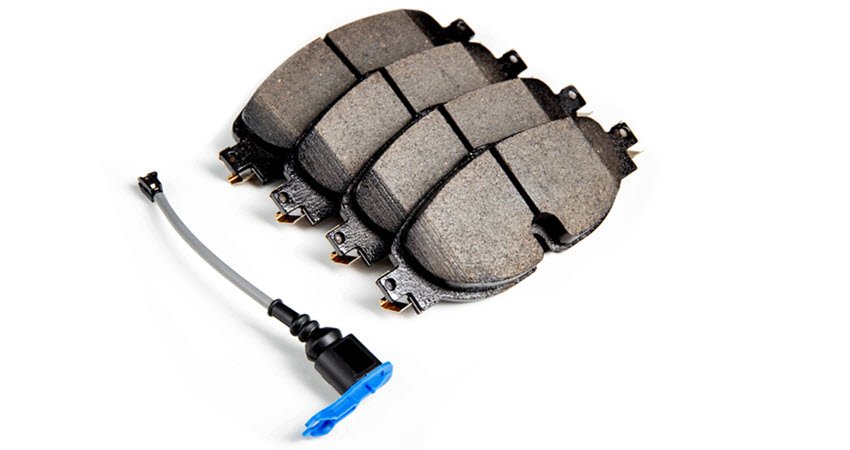
Brake pad with wear sensor which side should be installed on the inner pad of the brake caliper. This is because the inner pad wears faster due to piston pressure, ensuring the sensor triggers a timely warning. Proper placement helps maintain braking safety and prevents uneven pad wear.
Brake pads are the single most important safety component in any automobile. These humble parts are responsible for stopping thousands of pounds of moving metal. They do this by converting kinetic energy (movement) into thermal energy (heat) through friction. Every time a driver presses the brake pedal, the brake pads are squeezed against a rotating metal disc called a rotor. This friction causes the vehicle to slow down and stop.
Because of this constant friction, brake pads are designed to wear out over time. It is a natural part of their function. If a driver operates a vehicle with worn-out brake pads, the stopping power is significantly reduced. This is why manufacturers include various types of warning systems.
This guide will focus on how to install a brake pad with wear sensor on which side of the caliper assembly to ensure safety and performance.

Contents
- 1 What is a Brake Pad Wear Sensor?
- 2 Brake Pad with Wear Sensor Which Side? The Core Question
- 3 Why the Inner Pad?
- 4 How to Identify the Sensor During Installation
- 5 Front vs. Rear Axle Considerations
- 6 Guide to Installing Brake Pads with Sensors
- 7 Common Mistakes to Avoid
- 8 Important Safety and Maintenance Tips
- 9 Frequently Asked Questions
- 10 Conclusion
What is a Brake Pad Wear Sensor?
A brake pad wear sensor is a vital safety device. It alerts the driver when the friction material is dangerously thin, preventing total brake failure.
The Two Main Types
- Mechanical Sensors: Often called “squealers.” A small metal tab is attached to the brake pad backing. When the pad wears down, the tab scrapes the rotor. This creates a loud, high-pitched squeal to signal that a replacement is needed.
- Electronic Sensors: These use a small wire loop embedded in the pad. When the pad reaches its limit, the rotor cuts the wire. This breaks an electrical circuit and triggers a warning light on the dashboard.
Pro Tip: Modern luxury vehicles often use “two-stage” electronic sensors. These can actually estimate how many miles are left before the pads become unsafe.
Brake Pad with Wear Sensor Which Side? The Core Question
The most critical aspect of installing new brake pads is understanding the proper placement of the brake pad with wear sensor which side it belongs on. Proper orientation ensures the warning system functions correctly. If placed incorrectly, the sensor might not trigger at the right time, or worse, it could be damaged instantly upon application. Let’s break down the rules for mechanical and electronic sensors, as well as lead/trail concepts.
1. Mechanical “Squealer” Sensor Placement
When a car owner purchases a standard set of disc brake pads, they will often notice that only two out of the four pads (for one axle) have a mechanical squealer attached. Sometimes all four have them. If only two are provided, it is crucial to place them on the inner side of the caliper assembly. The “inner” side is the side where the hydraulic piston is located. This is also called the “piston side” or “inboard side.”
2. Electronic Sensor Placement
For vehicles using electronic sensors, the placement is also generally on the inner brake pad. A vehicle will typically have one or two electronic sensors per axle, depending on the manufacturer. For example, many BMW and Mercedes-Benz models have one electronic sensor on the front axle and one on the rear axle. Usually, these are on the front right and rear left wheels, or vice versa, to save on wiring costs.
It is common for the replacement brake pad kit to come with new electronic sensors. These sensors clip onto a specific designated spot on the inner brake pad. The sensor wire must then be carefully routed and plugged back into the vehicle’s electrical system. This routing is important to prevent the wire from being pinched or melted by high heat during driving. The simple rule is: always place the electronic sensor on the inner brake pad.
3. Leading vs. Trailing Edge Rotation
If you are dealing with a mechanical squealer, there is another layer of complexity: leading edge versus trailing edge. The “leading edge” of the brake pad is the edge that the rotating brake rotor meets first when the car is moving forward. The “trailing edge” is the opposite end. Many brake manufacturers recommend placing the squealer tab on the leading edge. This orientation allows the tab to scrape against the rotor immediately as rotation occurs, creating the desired noise.
However, some manufacturer guides may say the trailing edge is acceptable. When in doubt, always refer to the specific instructions provided with your replacement part or the vehicle’s service manual.
4. Symmetrical Brake Pads and Exceptions
Sometimes, a set of replacement brake pads will look completely identical. They will both have squealers attached in the same spot, or neither will have them because they are designed for an external clip-on sensor. In these symmetrical cases, the “which side” question becomes simpler. If both pads have the same sensor, it does not matter which one goes on the inner or outer side of the rotor.
Additionally, some advanced performance vehicles use fixed calipers. Unlike sliding calipers, fixed calipers have pistons on both sides of the rotor. This means the pads should wear very evenly. On these cars, the manufacturer might place sensors on both the inner and outer pads. It is very important to pay close attention to how the old pads were installed during the removal process.
Why the Inner Pad?
Most cars use a sliding caliper design. In this setup, the hydraulic piston is located only on the inner side of the brake assembly. When brakes are applied, the piston pushes the inner pad against the rotor first.
The caliper then slides to pull the outer pad into contact. This creates a tiny delay. Because the inner pad handles direct pressure and makes contact longer, it wears down faster.
Why Placement Matters
Placing the brake pad with wear sensor on the inner side ensures the driver gets the earliest possible warning.
- Inner Pad: Faces the piston and wears out first.
- Outer Pad: Attached to the caliper body and wears slower.
If the sensor is placed on the outer pad, the inner pad could grind into the rotor before the alarm ever triggers. This would lead to a dangerous and expensive “metal-on-metal” situation.
How to Identify the Sensor During Installation
For many beginner mechanics or DIY enthusiasts, identifying the brake pad with wear sensor which side it needs to go on starts with identifying the sensor itself. When unboxing a new set of brake pads, it might not be immediately obvious which one is which.
1. Visually Inspecting Mechanical Squealers
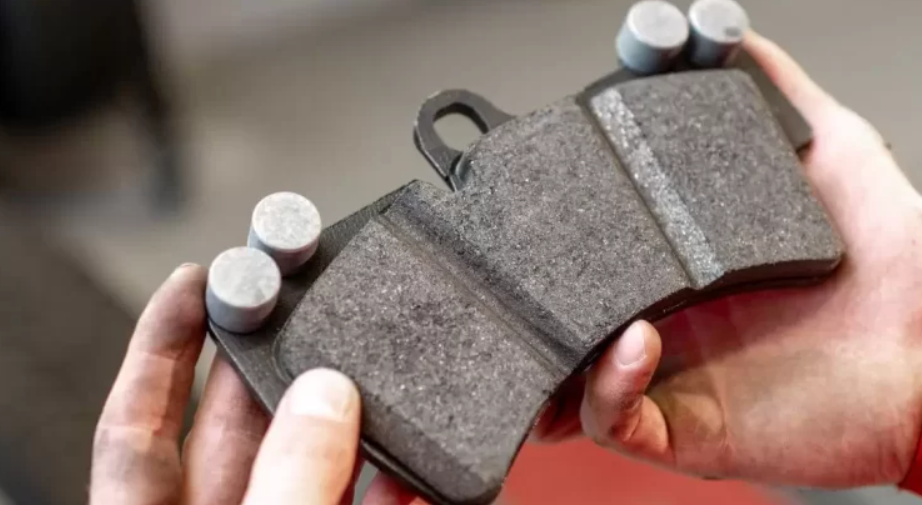
For mechanical sensors, you are looking for a small, curved piece of spring steel. This metal tab is usually riveted or clipped to the metal backing plate of the brake pad. It may look like an extra appendage that does not fit into the caliper hardware properly. In a set of four pads (front or rear), you will often find that only two of them have this extra metal tab. These are your inner pads.
2. Visualizing Electronic Sensor Placement
For electronic sensors, the identifying feature is often an empty slot or groove on the top or side edge of the friction material. New high-quality brake pads that require an external electronic sensor will often include the new sensor wire and clip in the box. You will need to visually locate the receptacle where the old sensor was plugged in on the vehicle. Then, look for the corresponding receptacle on the inner new pad. Some modern pads have the sensor pre-installed, meaning you will see the wire already embedded into one of the pads.
It is absolutely crucial that you do not force an electronic sensor onto the wrong pad. Many caliper brackets and piston assemblies are designed with very tight tolerances. Forcing the sensor could crack the delicate wire casing or prevent the caliper from sliding smoothly.
3. Use the Old Parts as a Guide
The best advice for any DIYer is this: the vehicle itself is the best manual. During the disassembly process, do not simply rip the old parts out and throw them away. When you remove the old caliper and access the worn-out pads, stop and take notes. Look closely at the inner pad. Where is the wear sensor located? Does it have a mechanical squealer? If so, is the squealer tab on the top edge or the bottom edge of the pad? If it uses an electronic sensor, how is the wire routed?
Take photos with a smartphone before removing the old components. This visual reference will be invaluable when it comes time to install the new parts. If the previous brake job was done correctly, you should mirror the old orientation exactly. If the previous job had errors (like no sensors triggering despite metal-on-metal wear), this guide will help you correct those mistakes.
Front vs. Rear Axle Considerations
Does the brake pad with wear sensor which side question change depending on whether you are working on the front or rear of the vehicle? The fundamental principle is usually the same, but there are some critical differences in how different vehicle types are equipped.
Front Axle Focus
The front brakes of any standard passenger car do the vast majority of the work. During a normal stop, about 60% to 70% of the braking force is generated by the front wheels. This is because the weight of the vehicle transfers forward as it slows down. Because of this high workload, front brake pads wear out much faster than rear brake pads.
Consequently, almost every vehicle manufactured today is equipped with some form of front brake wear indication system. It is very common to see mechanical squealers on the front inner pads of budget-friendly or older cars. Luxury and European vehicles almost always use electronic sensors on the front axle, typically on at least one wheel.
Rear Axle Variations
Rear brake pads have a easier life than the fronts. They generate less force and operate at lower temperatures. Because they last longer, manufacturers have sometimes omitted wear sensors on the rear axle to save on production costs, especially on older or base-model vehicles. On these cars, regular visual inspection of the rear pads is the only way to monitor wear.
However, on modern vehicles, electronic stability control and sophisticated traction control systems often apply the rear brakes automatically and subtly. This has increased the wear rate of rear pads significantly compared to older cars. Modern safety standards often mandate wear sensors on the rear axle as well. You will often find electronic sensors on the rear, or mechanical squealers on the inner rear pads.
A common setup for vehicles with electronic systems is a “diagonal setup”: one sensor on the front right wheel, and one sensor on the rear left wheel. This ensures that any severe wear issue on either axle is likely to trigger the dashboard warning, regardless of the wheel. The general rule still applies: look for the inner pad on either axle.
Guide to Installing Brake Pads with Sensors
Installing new brake pads is a common maintenance task, but you must prioritize safety. This guide assumes the vehicle is safely lifted on jack stands and the wheel has been removed.
Preparation and Tools
Before starting, the vehicle must be parked on a flat, level surface. The correct replacement brake pads must be on hand. Essential tools usually include a jack, jack stands, a lug wrench, a socket set (to remove caliper bolts), brake cleaner fluid, caliper guide pin grease, a small wire brush, and a mechanism to compress the caliper piston (like a C-clamp or a piston compression tool). Do not use simple pliers to compress pistons, as this can damage delicate seals.
Step 1: Removal and Observation
Begin by identifying the caliper mounting bolts. Usually, there are two of them, often protected by dust caps. Once removed, you should be able to carefully slide the entire caliper assembly off the rotor. Important: never let the heavy caliper assembly dangle by its flexible rubber brake line. This could damage the line. Use a piece of coat hanger or a specific caliper hanger tool to suspend the caliper safely from the vehicle’s suspension.
With the caliper supported, you can now remove the old brake pads. This is the moment to verify the old placement of the brake pad with wear sensor which side it was on. Look at the inner pad. Note the position and style of the old sensor. Also, note any anti-rattle clips or shims.
Step 2: Inspection and Cleaning
Use a wire brush and brake cleaner to thoroughly clean the caliper bracket surfaces where the pads slide. Any buildup of rust, dust, or road grime can cause the new pads to bind or drag, leading to uneven wear and noise. Inspect the brake rotor for any deep scoring, cracks, or excessive lip wear. If the rotor is damaged, it should be replaced.
Step 3: Compressing the Piston
Since the new brake pads are significantly thicker than the old worn-out ones, the hydraulic piston inside the caliper must be pushed back into its housing. Before compressing, it is a good practice to slightly open the cap of the brake fluid reservoir under the hood. This allows the fluid a place to go as it is pushed back up the lines.
Caution: keep a close eye on the fluid level to ensure it does not overflow, as brake fluid is extremely corrosive and will ruin vehicle paint instantly.
Apply the piston compression tool or C-clamp to the old inner brake pad (or directly to the piston face if you use a block of wood for protection). Slowly and evenly compress the piston until it is fully seated inside the caliper housing.
Step 4: Installing the New Sensor Pad
Identify the new inner brake pad (the one with the squealer attached or the slot for the electronic sensor). Place any necessary anti-rattle shims on the metal backing plate. If you are using a mechanical squealer, confirm the correct edge orientation (usually the leading edge).
Apply a very thin layer of caliper-specific grease to the points where the brake pad makes contact with the caliper bracket and the piston. Do not get any grease on the friction material surface of the pad or on the rotor. The inner pad with the sensor is then seated correctly into the caliper bracket or onto the piston clips, depending on the car’s design.
Step 5: Final Reassembly and Testing
Install the outer brake pad into the caliper bracket. Once both pads are in place, the entire caliper assembly is slid back over the rotor. This should be a smooth process if the piston was fully compressed and the pads are oriented correctly. Reinstall and torque the caliper mounting bolts to the manufacturer’s specification.
If you are using electronic sensors, this is the time to clip the new sensor wire into the new inner pad and plug it back into the vehicle’s electrical receptacle. Route the wire carefully, replicating the original path and using any pre-existing guide clips. This prevents the wire from contacting the moving rotor or hot brake surfaces. Check the brake fluid level again and top off if necessary.
Common Mistakes to Avoid
A beginner often thinks that installing a brake pad with wear sensor which side it goes is a “50/50 shot,” but ignoring the standard can lead to costly and unsafe errors. Avoid these common mistakes during your next brake job:
- Placing the Squealer on the Outer Pad: As discussed extensively, this is the most common error. Since the inner pad usually wears faster, placing the sensor on the outer pad means the inner pad will likely become “metal-on-metal” before the sensor can warn you. This will damage the rotor and severely compromise braking safety.
- Forcing the Electronic Sensor: When installing new electronic sensors, the clips must snap in with minimal effort. If you have to hammer or force the sensor wire into the slot on the pad, it is likely the wrong pad, or it is orientated incorrectly. A forced sensor wire is often a broken sensor wire.
- Neglecting Routing Guidelines: Electronic sensor wires must be carefully routed. A wire that is left to dangle might rub against the wheel rim, the brake rotor, or the drive axle. This friction will cause a short circuit or cut the wire, leading to a false “worn pad” light on the dashboard, even if the pads are brand new.
- Assuming All Pads are Symmetrical: Never assume. Some high-performance brake pads look identical, but they might have subtle directional arrows stamped onto the backing plate or shims. This arrow indicates the required direction of rotor rotation. Placing a directional pad backward can cause extreme noise and uneven wear.
Important Safety and Maintenance Tips
A comprehensive guide on a brake pad with wear sensor which side belongs on must include the surrounding maintenance rules. Your safety depends on a correctly functioning warning system and healthy brake components.
1. Don’t Ignore the Signs
This is the most critical rule. If you hear a loud, high-pitched squealing noise when braking (or even when cruising), do not turn up the radio to ignore it. This noise is the mechanical squealer telling you that you have only a few hundred miles of safe driving left. Likewise, if the “Brake Wear” light illuminates on your dashboard, schedule an inspection or replacement immediately. Delaying will lead to costly rotor damage and increased stopping distances.
2. Replace Electronic Sensors as a Set
Electronic brake wear sensors are designed as a “one-time-use” item. Once the circuit loop is broken by the rotor, the sensor cannot be repaired or reset. When you replace a set of brake pads that triggered a dashboard light, you must purchase and install a new electronic sensor wire for that axle. Re-using the old sensor will cause the warning light to stay illuminated permanently.
3. Lubrication is Key
Proper brake function depends on smooth motion. Apply high-temperature caliper grease to the slide pins (after cleaning them), the “ears” of the brake pads (where they slide in the bracket), and the area where the piston meets the inner pad. This reduces friction and prevents the pads from binding, ensuring even wear. Do not use generic chassis grease, as it will melt and flow onto the brake surfaces under the high heat of braking.
4. Conduct Visual Inspections
Do not rely solely on the sensors. A simple way to check the remaining brake pad life is to peek through the openings in the wheel rim. On many modern alloy wheels, you can clearly see the side profile of the brake pad pressed against the shiny rotor. If the friction material (which is usually a dark gray color) appears to be 1/8 of an inch or thinner, it is time to plan for a replacement. A thickness equivalent to two stacked quarters is a good “critical” benchmark. Regular visual checks can catch a faulty sensor early.
Frequently Asked Questions
Here are some FAQs about brake pad with wear sensor which side –
1. My brake pads did not come with sensors. Did I buy the wrong ones?
Not necessarily. Many budget-friendly brake pad manufacturers save on costs by not including the sensors. If your vehicle requires sensors, you may need to purchase them separately. Alternatively, some pads are designed for vehicles that do not use any form of sensor system. Always check your vehicle’s specifications.
2. Is the “which side” question only about front or rear wheels?
No. The term “side” in this context almost always refers to the inner (piston side) versus the outer (the side visible from the outside of the vehicle) of the brake rotor assembly on a specific wheel. It also refers to the leading edge versus the trailing edge.
3. Can I reuse my old electronic sensor if it was not triggered?
While it is physically possible, it is highly discouraged. Electronic sensors degrade over time due to heat, road vibration, and grime. A sensor that appears fine today might fail internally next week. Replacing the sensor is relatively inexpensive and should be considered a standard part of any high-quality brake job.
4. Why is my “Brake Wear” light still on after I replaced the pads and sensors?
If the light stays on, there are a few possibilities. The most common is a faulty or poorly seated connection where the sensor plugs into the main chassis harness. Ensure the plug is clean, dry, and clicked in all the way. It is also possible that a false reading from a different wheel is triggering the light, or you may need to perform a specific ignition key cycle or dashboard menu operation to reset the warning system.
5. Are there any cars where the sensor is on the outer pad?
Yes, but they are very rare. Some specialized high-performance vehicles, or those with highly unusual caliper designs, might place a sensor on the outer pad or on both pads. This is a very uncommon exception. You must always refer to your vehicle’s factory service manual for any specialized application. The default standard for nearly all standard passenger cars is the inner pad.
Conclusion
Knowing brake pad with wear sensor which side to install is a straightforward process once the principles are clear. For the vast majority of vehicles using standard sliding calipers, the answer is the inner brake pad (the piston side). This is true for both mechanical squealers and electronic sensors.
The inner pad typically wears faster than the outer pad because the hydraulic piston applies pressure directly to it. Placing the sensor on the inner pad guarantees that the warning system provides the earliest possible notice. For mechanical squealers, it is often best practice to position the tab on the leading edge (the edge that the rotor meets first in forward rotation).
By observing the orientation of the old pads, visually inspecting your new components, and adhering to simple rules of cleanliness and lubrication, any car owner can perform a safe and correct brake installation. A functioning wear sensor is an invaluable safety net. It prevents dangerous brake failure and costly “metal-on-metal” damage, ensuring that every drive is a safe one.


