A Briggs and Stratton engine spark plug chart identifies the exact part and gap needed for your specific engine model. Following this guide ensures your machine starts quickly and runs efficiently without any guesswork.
A small engine needs three things to run: fuel, air, and a spark. The spark plug provides that final piece of the puzzle. If the plug is worn out, the engine will stutter or die. Many people feel confused when they see the wall of parts at a hardware store. There are dozens of sizes and brands available. This is where a Briggs & Stratton engine spark plug chart becomes a lifesaver. It tells a person exactly which part fits a specific machine.
This guide helps beginners find the right numbers without any stress. Keeping a mower in top shape starts with knowing which plug to buy.
Contents
- 1 What Does a Briggs & Stratton Engine Spark Plug Chart Do?
- 2 Deciphering the Spark Plug Codes
- 3 Common Engine Series and Their Plugs
- 4 Step-by-Step Replacement Using the Chart
- 5 How to Cross-Reference Different Brands
- 6 Maintenance Schedules for Spark Plugs
- 7 Tools for Spark Plug Success
- 8 Advanced Spark Plug Topics: Platinum and Iridium
- 9 Troubleshooting Foul Conditions
- 10 Myths About Spark Plugs
- 11 Storing Your Mower and the Spark Plug
- 12 Where to Buy the Right Parts
- 13 The Environmental Impact of a Good Spark Plug
- 14 Summary of Key Points
- 15 Frequently Asked Questions
- 16 Conclusion
What Does a Briggs & Stratton Engine Spark Plug Chart Do?
Think of this chart as a translator. Engines have long ID numbers stamped into metal. Spark plugs have codes like “RJ19LM” printed on the ceramic. A Briggs & Stratton engine spark plug chart connects these two different languages.
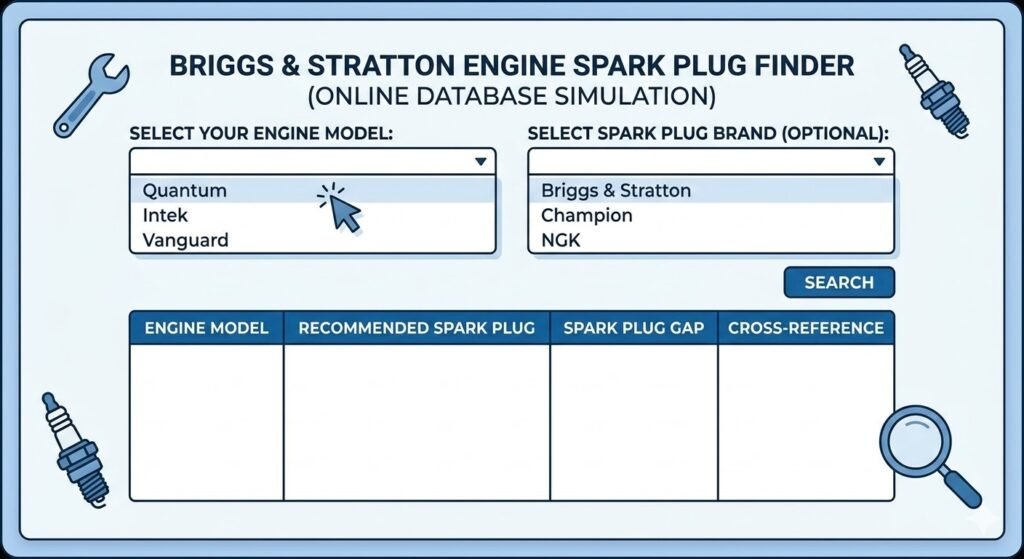
Most people use these charts to find a match for their specific engine model. The chart lists the engine series first. Then, it shows the part number for the plug. It also lists the “gap.” The gap is the space where the spark jumps. If that space is wrong, the engine will not run well. A chart removes the guesswork from the repair process.
Finding the Engine Numbers First
Before looking at a Briggs & Stratton engine spark plug chart, the engine ID is needed. Look at the metal blower housing. This is the part that covers the top of the engine. Numbers are usually stamped into the metal here. They are often near the muffler or the spark plug itself.
Sometimes, a sticker has these numbers. Look for “Model,” “Type,” and “Code.” Write these down. These numbers are the key to using any Briggs & Stratton engine spark plug chart correctly. Without them, a person might buy a plug that is too long. A plug that is too long can hit the piston. This causes major damage.
Deciphering the Spark Plug Codes
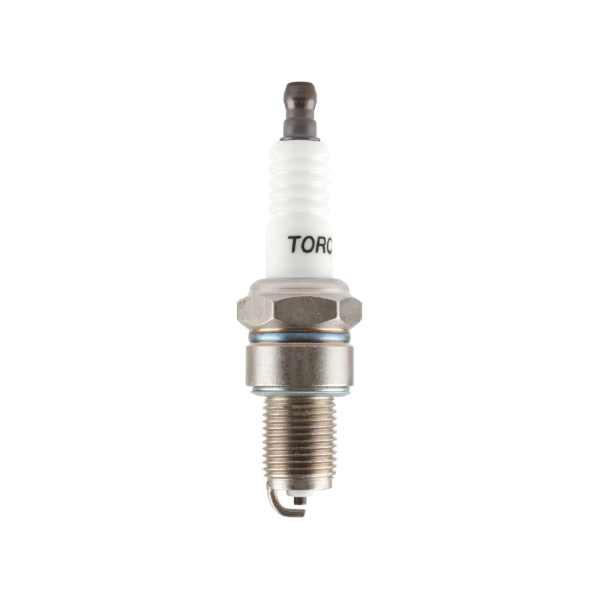
Spark plug names look like random letters. They actually have a meaning. For example, the “R” in RJ19LM stands for “Resistor.” This type of plug helps prevent radio interference. Most modern engines require this.
A Briggs & Stratton engine spark plug chart will often list “Standard” and “Resistor” options. It is always best to follow the chart exactly. If the chart calls for a resistor plug, don’t use a non-resistor one. The machine might run poorly if the wrong type is installed.
Heat Ranges
The numbers in the code, like “19” or “12,” refer to the heat range. Spark plugs must stay hot enough to burn off deposits. However, they cannot get so hot that they melt. A Briggs & Stratton engine spark plug chart ensures the engine gets a plug that handles the heat correctly.
Engineers test these engines for hundreds of hours. They pick the best heat range for that specific displacement. Choosing a different number might cause the plug to foul or overheat. Stick to the data provided by the manufacturer.
Common Engine Series and Their Plugs
Let’s look at some popular engines found in a Briggs & Stratton engine spark plug chart.
- Small Side-Valve Engines: These are common on older push mowers. They often use the RJ19LM plug. The gap is usually 0.030 inches.
- OHV Engines (Overhead Valve): These are newer and more efficient. They often use the RC12YC plug. The gap is also 0.030 inches.
- Vanguard Engines: These are commercial-grade. They might use a different plug like the 491055. Always check the Briggs & Stratton engine spark plug chart for these.
The Importance of the Gap
Even a new plug needs a check. The gap is the distance between the two metal points at the bottom. A Briggs & Stratton engine spark plug chart gives this measurement. A common tool called a “feeler gauge” measures this.
If the gap is too small, the spark is weak. If the gap is too large, the spark might not jump at all. Most mowers use a 0.030-inch gap. Some larger engines use 0.020 or 0.040. The chart is the only way to be sure.
Step-by-Step Replacement Using the Chart
Once the Briggs & Stratton engine spark plug chart provides the right part number, the work begins. Follow these steps for a safe install.
Step 1: Safety First
Disconnect the black wire from the spark plug. This prevents the mower from starting accidentally. This is the most important safety step. Never work on the blade or the plug while the wire is attached.
Step 2: Remove the Old Plug
Use a spark plug socket. Most small engines use a 5/8 inch or 13/16 inch socket. Turn the plug counter-clockwise. If it is stuck, apply a little bit of penetrating oil. Do not force it too hard.
Step 3: Inspect the Old Plug
The old plug tells a story. Is it black and sooty? That means the air filter might be dirty. Is it oily? The engine might have internal wear. Comparing the old plug to the Briggs & Stratton engine spark plug chart notes on troubleshooting is helpful.
How to Cross-Reference Different Brands
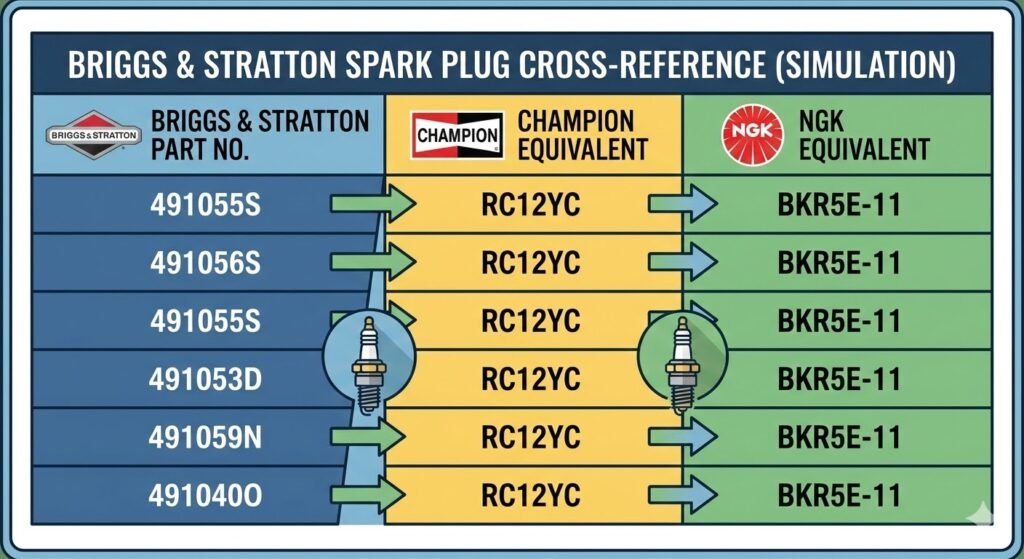
Sometimes, a store is out of Briggs & Stratton parts. A Briggs & Stratton engine spark plug chart often includes cross-references for Champion or NGK.
- Champion: Very common in the USA. Many Briggs engines come with Champion plugs from the factory.
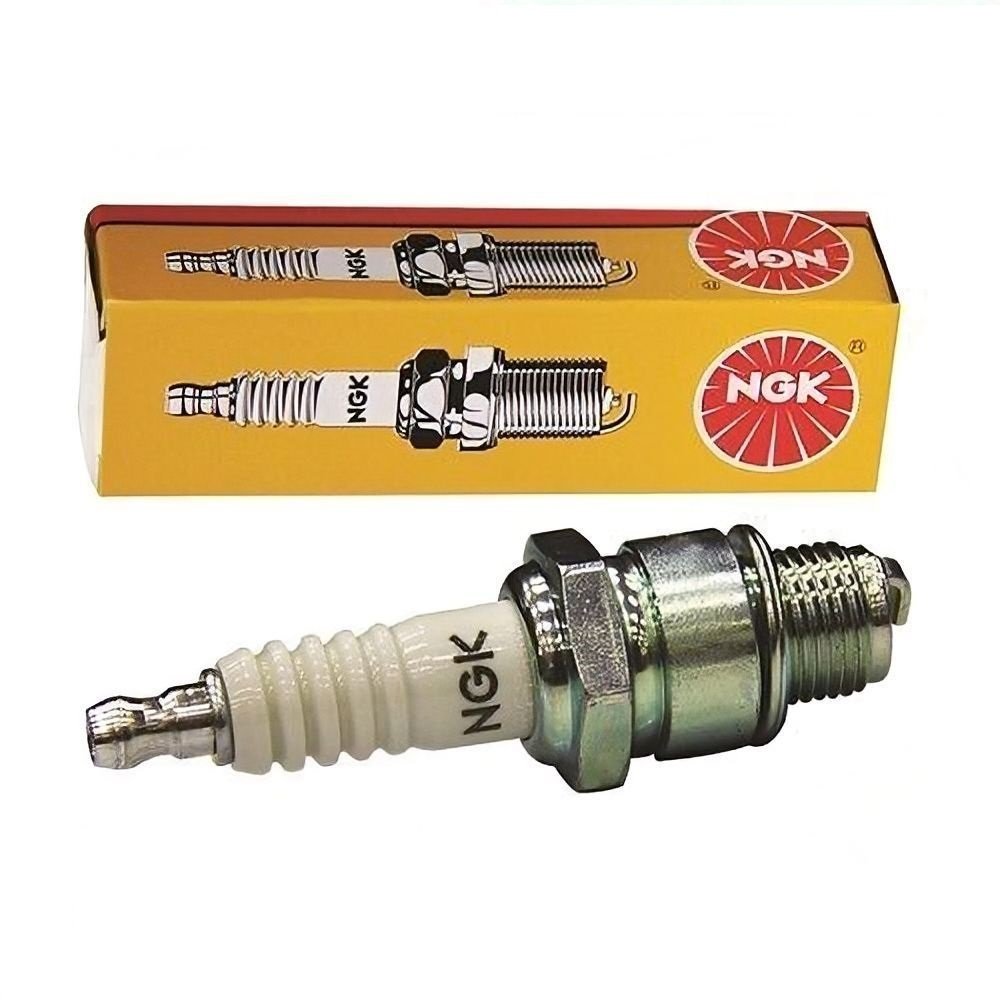
- NGK: Popular for high quality. Many mechanics prefer these for easier starts.
- Autolite: A good budget-friendly option found in many auto parts stores.
The Briggs & Stratton engine spark plug chart makes sure the thread size and length match across brands. A person must ensure the “reach” is the same. The reach is the length of the threaded area. If it is too short, the spark is hidden in the hole. If it is too long, it hits the engine internals.
Maintenance Schedules for Spark Plugs
Checking the Briggs & Stratton engine spark plug chart should be an annual habit. Most manufacturers suggest a new plug every 100 hours of use. For a standard yard, this is once per year.
Spring is the best time for this. A fresh plug ensures the mower starts easily after sitting all winter. If the mower is used for a business, check it every month. Clean engines last longer. A simple plug change is the cheapest way to prevent a breakdown.
Signs a New Plug is Needed
- Hard Starting: The rope must be pulled many times.
- High Fuel Use: The engine runs “rich” and wastes gas.
- Misfiring: The engine “pops” or skips a beat while running.
- Loss of Power: The mower struggles in tall grass.
If these happen, consult the Briggs & Stratton engine spark plug chart and get a replacement.
Tools for Spark Plug Success
A person does not need a full shop to change a plug. A few simple tools make the Briggs & Stratton engine spark plug chart data useful.
- Spark Plug Socket: This has a rubber insert to hold the plug.
- Ratchet: To turn the socket.
- Gap Tool: A cheap coin-shaped tool or wire gauge.
- Wire Brush: To clean dirt away from the engine hole before removing the plug.
Cleaning the area is vital. If dirt falls into the cylinder, it can scratch the walls. Always brush the area around the plug before taking it out.
Advanced Spark Plug Topics: Platinum and Iridium
Some Briggs & Stratton engine spark plug chart versions list “Premium” plugs. These are made of harder metals.
- Standard Copper: These are cheap and work well. They conduct electricity perfectly. They wear out faster than other types.
- Platinum: These last longer. They resist “fouling” (getting dirty) better than copper.
- Iridium: These are the most expensive. They provide the strongest spark. They are often used in high-end generators or professional gear.
For a basic push mower, a standard plug from the Briggs & Stratton engine spark plug chart is usually enough. Premium plugs are great for machines that run for hours every day.
Troubleshooting Foul Conditions
A Briggs & Stratton engine spark plug chart is a diagnostic tool too. Look at the tip of the old plug.
Carbon Fouling
If the plug is covered in dry, black soot, it is carbon fouled. This happens if the air filter is clogged. The engine is “choking” on too much gas. Replace the filter and the plug.
Oil Fouling
Wet, black oil on the plug is a sign of trouble. This means oil is leaking past the rings. The Briggs & Stratton engine spark plug chart might recommend a specific heat range to help, but the engine might need a repair.
Wet Plugs
If the plug is wet with gas, the engine is flooded. This happens if the mower is tilted the wrong way. It can also happen if the carburetor is sticking. Dry the plug off and try again.
Myths About Spark Plugs
There are many wrong ideas about small engines. Let’s clear some up using the Briggs & Stratton engine spark plug chart logic.
Myth 1: Any plug that fits the hole will work. False. The heat range and resistor type must match. The wrong plug can destroy the ignition module.
Myth 2: You should never clean a spark plug. False. A wire brush can remove light carbon. However, a new plug is so cheap that cleaning is rarely worth the time.
Myth 3: Tightening it as hard as possible is best. False. This can strip the threads in the engine head. A “snug” fit plus a quarter turn is usually right.
Storing Your Mower and the Spark Plug
When winter comes, the plug needs attention. Some people remove the plug and spray a little oil into the hole. This is called “fogging.” It prevents rust inside the engine.
Before the oil is sprayed, check the Briggs & Stratton engine spark plug chart. Note the plug type for the spring. Put the old plug back in loosely to keep dirt out. In the spring, install a brand-new plug from the chart list.
Why Fresh Gas Matters
A spark plug cannot ignite bad gas. If the fuel is old, it turns into “varnish.” This coats the plug and prevents a spark. Always use a fuel stabilizer. This helps the spark plug do its job when the season starts.
Where to Buy the Right Parts
Finding a part from the Briggs & Stratton engine spark plug chart is easy.
- Local Hardware Stores: They usually carry the most common 5 or 10 types.
- Auto Parts Stores: These have cross-reference books for every brand.
- Online Retailers: Good for finding rare plugs for very old engines.
- Small Engine Repair Shops: These shops have the most expert advice.
Always bring the old plug or the engine model numbers with you. This prevents a second trip to the store.
The Environmental Impact of a Good Spark Plug
A clean spark plug is better for the earth. When a plug is bad, gas does not burn completely. This goes out the muffler as smoke.
Using the correct part from a Briggs & Stratton engine spark plug chart keeps emissions low. It makes the air cleaner for everyone in the neighborhood. It also keeps the mower from smelling like raw gasoline.
Summary of Key Points
- Use the engine model number to find the right chart row.
- Check the gap before installing the new part.
- Replace the plug once a year for the best results.
- Never use a plug that is too long or has the wrong heat range.
- A Briggs & Stratton engine spark plug chart is the most accurate source of data.
Frequently Asked Questions
Here are some FAQs about Briggs & Stratton engine spark plug charts –
1. Where is the spark plug chart located in the manual?
It is usually in the “Maintenance” or “Specifications” section. If the manual is lost, the official website has a digital Briggs & Stratton engine spark plug chart.
2. Can I use a car spark plug in my mower?
No. Cars use different sizes and heat ranges. A car plug will likely damage the small engine. Stick to the Briggs & Stratton engine spark plug chart recommendations.
3. What is the most common spark plug for Briggs engines?
The RJ19LM and the RC12YC are the most frequent. These cover millions of lawnmowers across the world.
4. Does the brand of the plug really matter?
As long as the number cross-references correctly on the Briggs & Stratton engine spark plug chart, the brand is a personal choice. Champion and NGK are both top-tier.
5. Why does my new plug look different than the old one?
Manufacturers sometimes update designs. The metal might look different, or the shape of the electrode might change. If the Briggs & Stratton engine spark plug chart says it fits, it is safe to use.
Conclusion
Taking care of a mower does not have to be hard. A Briggs & Stratton engine spark plug chart is the first step toward a reliable machine. It provides the exact part number and gap needed for success. By checking this chart once a year, a person ensures their engine starts quickly and runs strong. It saves money on fuel and prevents expensive trips to the repair shop. Whether the machine is a small push mower or a large tractor, the right spark is everything. Keep the chart handy, buy a quality plug, and enjoy a perfectly cut lawn all summer long.