


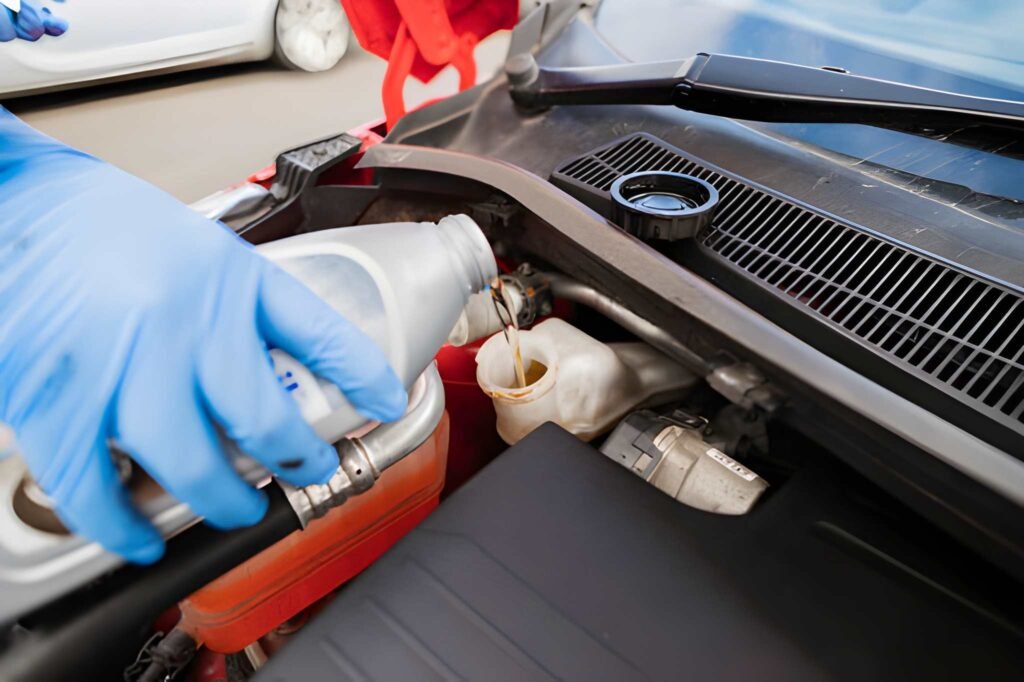
Can you mix brake fluid? Mixing brake fluid is generally not recommended due to compatibility issues between different types. For example, DOT 5 is silicone-based and cannot be mixed with glycol-based fluids like DOT 3, DOT 4, or DOT 5.1, as it can cause reduced performance and damage to the braking system.
An important component of your car’s braking system is brake fluid. It transfers the pressure you apply when pressing the brake pedal to activate the brakes and stop your car. It is important to understand the different kinds of brake fluid. Owners of vehicles often wonder whether it is permissible to mix different types of brake fluid. Mixing brake fluids is typically frowned upon. It may be necessary and unavoidable in some cases. In these situations, it is important to understand your brake fluids.
This article will examine various types of brake fluids, the effects of mixing them, and the recommendations for the maintenance of your brake system.
Contents
- 1 Different Types of Brake Fluid
- 2 Can You Mix Brake Fluid? What Happens If You Do?
- 2.1 1. Brake Fluids Compatibility
- 2.2 2. Brake Fluid Mixing and Brake System Failure
- 2.3 3. Damage and Corrosion of the Brake System Components
- 2.4 4. Total Brake Failure
- 2.5 What to Do If You Accidentally Mix Brake Fluids
- 2.6 1. Flush the Brake System
- 2.7 2. Examine the Brake Parts for Loss
- 2.8 3. Change the Brake Fluid
- 2.9 4. Test the Brake and Look for Fluid Leaks
- 3 Best Practices For Keeping Your Brake Fluid Healthy
- 4 Frequently Asked Questions
- 5 Conclusion
Different Types of Brake Fluid
Having some understanding of the different types of brake fluids will help you appreciate the significance of the risks associated with mixing brake fluid. The grade of the fluid is determined by the type of vehicle and the driving conditions. Brake fluids are classified as either glycol or silicone. It is important to note that they may be further classified as either mineral oil based, glycol based, or even manufactured in a synthetic way. There are many brake fluids that are synthetic. They perform better in extreme conditions than other brake fluids.
Can You Mix Brake Fluid? What Happens If You Do?
Being aware of the risks of mixing different types of brake fluids is the next important step after identifying the different types of brake fluids. Although some brake fluids may be mixed in order to be more cost-effective, mixing incompatible brake fluids can be a significant risk.
1. Brake Fluids Compatibility
The first risk of mixing brake fluids is the fact that some brake fluids can be incompatible. Fluids that are glycol based, such as DOT 3, DOT 4, and DOT 5.1, can be mixed; however, the silicone based DOT 5 fluid should never be mixed. Failure to comply to this can result in mixing glycol and silicone brake fluids that may cause separation or possibly produce a harmful sludge that could clog the system.
2. Brake Fluid Mixing and Brake System Failure
One of the primary functions that brake fluid serves is to transfer the braking force to the braking components. Another critical function is the brake fluid must be able to withstand extreme braking function and remain unboiled. Unfortunately, when different types of brake fluids are mixed, the boiling point can be reduced, and the risks of brake fade become increased. When the brake fluid reaches a boiling point, air bubbles form in the system that can lead to the reduction in the effectiveness of the brakes.
3. Damage and Corrosion of the Brake System Components
Poor performance of the braking system is not the only problem that mixing brake fluids can cause. Incompatible fluids can cause corrosion of the internal components of the braking system including the master cylinder, brake lines, and calipers. For example, if the mixing of the fluids causes the system to absorb moisture, then the system will begin to rust, which will weaken the braking system.
4. Total Brake Failure
The mixing of brake fluids can lead to total brake failure. This is the most serious and dangerous issue that can be caused by mixing brake fluids. Using the wrong brake fluids can impact the system in a way that causes total failure. A failure can lead to total unresponsiveness of the brakes, and not being able to stop the vehicle, which can lead to serious accidents.
What to Do If You Accidentally Mix Brake Fluids
In the event that brake fluid mixing happens by accident, it is important to take action immediately in order to avoid damaging the braking system.
1. Flush the Brake System
The first step is to remove any existing brake fluid, including any brake fluid that may be trapped in the system. You will need to visit an auto repair. They will remove the brake fluid and replace it with a new fluid.
2. Examine the Brake Parts for Loss
Next, see if there are any parts in the brake system that may be damaged. Loss of the brake fluid system parts can be due to gaskets, seals, and brake lines that are compromised due to the use of the wrong brake fluid. If any brake components are damaged, they will need to be changed.
3. Change the Brake Fluid
Then, the brake fluid needs to be replaced with the correct fluid. Changing the brake fluid is recommended in order to avoid the system from becoming damaged and the brakes from working more effectively. Follow the brake fluid instructions from the manufacturer to ensure the correct fluid is used.
4. Test the Brake and Look for Fluid Leaks
Finally, after changing the fluid, see if the lines are leaking around the master line and the cylinder. Then, to make sure they are working, test the brakes. If the brakes are not working properly, see a specialist as soon as you can.
Best Practices For Keeping Your Brake Fluid Healthy
In order to mitigate the risks entailed in mixing brake fluids and ensuring the continued functionality of your braking system, here are a few suggestions for the maintenance of your brake fluid.
1. Use the Right Kind of Brake Fluid: You should use the brake fluid that is recommended by the manufacturer of your vehicle. These recommendations can be found in the vehicle’s owner’s manual. Brake fluids are categorized in different classes like DOT 3, DOT 4. Using the wrong fluid is likely to cause lengthy and detrimental damage to the braking system.
2. Brake Fluid Should Be Checked Often: Regular checks should be conducted to look for acks fluid and to analyze the composition of the fluid to see if it is contaminated. Signs of a contaminated fluid include discoloration like turning dark. Contaminated fluids have absorbed water, and fluids like that are due for an immediate brake fluid replacement.
3. Replace Brake Fluid Regularly: There is a general recommendation of changing brake fluid once every 2 to 3 years, even if the system is still functional. Brake fluid absorbs moisture from the surrounding environment and that leads to braking system malfunctions. Frequent replacement of brake fluids leads to optimal functioning of the braking system.
4. Properly Store Brake Fluid: If you buy brake fluid separately, keep it in a dry and cool place. Brake fluid can soak up moisture, so keep the brake fluid container tightly closed when you are not using it. Do not use brake fluid that has been stored for a long time, as it can soak up moisture and lost its effectiveness.
Frequently Asked Questions
Here are some FAQs about mixing brake fluid –
- Can I mix DOT 3 and DOT 4 brake fluid?
Although it is not recommended, brake fluid DOT 3 and DOT 4 can mix, but there is a possibility that mixing them will compromise the safety and performance of your brake system.
- Can I mix DOT 5 and DOT 5.1 brake fluid?
Mixing DOT 5 and DOT 5.1 brake fluid is not allowed. They are not compatible, as DOT 5 is silicone-based and DOT 5.1 is glycol-based.
- How can I tell if my brake fluid is contaminated?
Darker or cloudier brake fluid is an indicator that the brake fluid is contaminated. If you witness these indicators, you are due for a brake fluid replacement.
- How often should I replace my brake fluid?
You should replace your brake fluid roughly every 2-3 years. Alternatively, you can check your manufacturer’s recommendations based on how your vehicle is used.
- What should I do if I mix brake fluids?
If you mix brake fluids, the entire brake system should be flushed, and brake fluid should be added that is correct for your vehicle.
Conclusion
Even though it can seem like a quick and easy solution, breaking fluid can cause severe issues with your braking system, like corrosion, poor performance, and complete brake failure. To keep your brakes safe and working both, use the brake fluid that your manufacturer’s specifies. If you mixed brake fluids by mistake, then the best thing to do is flush the system and replace it with the correct fluid. Make sure to monitor your brake fluid level and to replace it in order to have a fully functional and safe braking system.


