


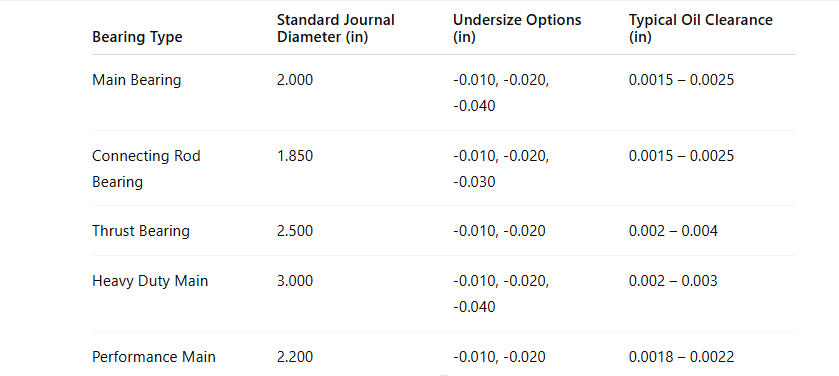
Engine bearing size chart provides a reference for selecting the correct bearing dimensions for crankshafts, rods, and engine housings. It lists standard, undersize, and oversize options along with recommended oil clearances.
Knowing the engine bearing size chart is vital when rebuilding or servicing an engine. This chart lists the precise sizes of engine bearings, making sure they match the crankshaft and housings. The right size ensures proper lubrication and long engine life.
For someone just starting out, these charts can look like a jumble of numbers. But once you learn how to read them, they become one of the most useful references in engine work. This post explains what the charts mean, why they matter, how to measure parts and match them to sizes, and how clearances affect performance and reliability.

Contents
- 1 What Is an Engine Bearing Size Chart?
- 2 Why Engine Bearing Sizes Matter
- 3 Types of Engine Bearings Covered in Size Charts
- 4 How Bearing Size Charts Are Organized
- 5 Standard and Undersize Bearings
- 6 How to Read an Engine Bearing Size Chart
- 7 Step‑by‑Step: Using a Bearing Size Chart
- 8 Why Oil Clearance Matters
- 9 Practical Tips When Using Size Charts
- 10 Common Mistakes People Make
- 11 Tips for Engine Rebuilders
- 12 Frequently Asked Questions
- 13 Conclusion
What Is an Engine Bearing Size Chart?
An engine bearing size chart is a detailed reference that shows the dimensions and fitment codes for engine bearings used on crankshafts, connecting rods, and thrust surfaces. It helps builders and mechanics choose the correct bearing thickness based on measured crankshaft journal size and housing bore. These charts often list standard sizes, undersize and oversize options, and recommended clearances.
Without matching the chart to accurate measurements, an engine can suffer poor oil film thickness, rapid wear, or even catastrophic failure when running. For precision work, always measure journals and bores before choosing from a chart.
Why Engine Bearing Sizes Matter
Engine bearings support rotating parts like the crankshaft and connecting rods. They must maintain a precise gap called oil clearance. This clearance holds a pressurized film of oil between moving metal surfaces. Too much gap leads to low oil pressure and metal contact. Too little gap squeezes out the oil film and causes metal‑to‑metal wear. Using the proper engine bearing size chart ensures bearings match the actual machined journal and housing dimensions, minimizing wear and extending service life.
Types of Engine Bearings Covered in Size Charts
Engine bearings come in several types, each designed for a specific function in the engine. Understanding the differences is essential before referring to a size chart.
Main Bearings
Main bearings support the crankshaft within the engine block. They are the largest bearings in the engine and carry the rotating load of the crankshaft. Size charts for main bearings list journal diameters, inside diameters of the bearings, and recommended oil clearances. These charts help choose bearings that match journal size after grinding or machining.
Connecting Rod Bearings
These bearings sit between the connecting rod and crankshaft journals. They are usually thinner than main bearings and take into account side loads from piston motion. The size chart for connecting rod bearings shows inside diameters and wall thickness for standard and undersized options.
Thrust Bearings
Thrust bearings handle axial forces on the crankshaft. They do not circle the crank like the main or rod bearings. Size charts list thrust surfaces and thickness values to control crankshaft end play. Though not found in all engines, where they are present the chart provides the proper thickness for correct alignment and clearance.
How Bearing Size Charts Are Organized
Engine bearing size charts list large amounts of data in clear rows and columns. Common columns include:
- Bearing Code / Part Number – Identifies the specific bearing type.
- Journal or Housing Diameter – Size of the crankshaft or bore it fits.
- Bearing Inside Diameter (I.D.) – Space inside the bearing where the journal will sit.
- Bearing Thickness or Undersize Value – How much thinner or thicker the bearing is compared with standard.
- Recommended Oil Clearance – Gap recommended between journal and bearing.
Most charts express these values in inches and millimeters. If the crankshaft has been machined or polished, the journal diameter changes and a different bearing size is needed — often undersized to compensate.
Standard and Undersize Bearings
Standard bearings fit journals that are at factory size. Undersize bearings are used when a journal has been ground down to remove wear. For example, a crankshaft journal may be ground away 0.010″ or 0.020″ smaller than its original specification. In this case, the bearings chosen must have slightly thicker walls so the inside diameter matches the reduced journal diameter.
Many engine bearing charts list sizes in increments such as:
- Standard (STD)
- -0.010″ (first undersize)
- -0.020″ (second undersize)
- -0.040″ (third undersize)
Each step corresponds to a precise change in bearing wall thickness and inside diameter, helping builders dial in correct oil clearance.
How to Read an Engine Bearing Size Chart
Here’s a straight example of how values appear on a table:
| Bearing Size | Journal Diameter | Bearing I.D. | Thickness | Oil Clearance |
|---|---|---|---|---|
| STD | 2.2500″ | 2.2485″ | Standard | 0.0015–0.0025″ |
| -0.010″ | 2.2400″ | 2.2385″ | +0.010″ | 0.0018–0.0027″ |
| -0.020″ | 2.2300″ | 2.2285″ | +0.020″ | 0.0020–0.0030″ |
If a crankshaft journal measures 2.2300″ after grinding, the -0.020″ bearing is the best match. Choosing the correct size keeps oil clearance within recommended limits.
Step‑by‑Step: Using a Bearing Size Chart
To pick the right engine bearing from a chart, follow these steps:
1. Measure Crankshaft Journal Diameter
Use a micrometer set to thousandths of an inch or hundredths of a millimeter. Take several measurements around the journal to ensure roundness. The smallest measurement is often used for bearing selection.
2. Measure Engine Block or Rod Housing Bore
Use a bore gauge and micrometer to measure the inside diameter of the housing where the bearing sits. Record this carefully.
3. Compare Measurements With Chart Values
Match the measured journal and housing size to the bearing inside diameter values in the chart. Pick a bearing size that brings you into the target oil clearance range.
4. Double‑Check Oil Clearance
Once bearings are installed but before full assembly, use a tool such as plastigauge to verify oil clearance. Adjust bearing sizes if necessary.
Why Oil Clearance Matters
Oil clearance is the tiny gap between the bearing inside diameter and the crankshaft journal. This gap traps a pressurized film of engine oil. That film supports loads and prevents metal‑to‑metal contact. If the gap is too small, the oil film is squeezed out — this starves lubrication and accelerates wear. If the gap is too large, oil pressure drops and cannot form a stable film. Both extremes dramatically reduce bearing life and engine performance.
Manufacturers specify clearance ranges for different bearing sizes and engine types. Always aim to stay within these ranges when selecting from a chart.
Practical Tips When Using Size Charts
Using a size chart correctly can save time and prevent costly mistakes during engine assembly. These tips will help you select the right bearings and ensure proper installation before diving into the step-by-step points.
- Always measure journal and bore sizes before choosing bearings. Guessing can lead to engine damage.
- Keep all measurements consistent (inches vs millimeters).
- Remember that bearing colors or codes from manufacturers often represent standard and undersize values, but you still need measurements to confirm fit.
- Match bearings in sets — main bearings and rod bearings often must be installed in matched groups for proper balance.
Common Mistakes People Make
Many beginners make these errors:
Guessing sizes without measurement: Without exact journal and bore measurements, selecting a bearing off a chart is guesswork.
Misreading charts: Some charts list loads of data — be sure you understand whether values refer to inside diameter, wall thickness, or clearance.
Ignoring oil clearance: Focusing on size codes without verifying clearance with tools can lead to costly mistakes.
Tips for Engine Rebuilders
Rebuilding an engine requires careful attention to detail, especially when selecting and installing bearings. Following these practical tips will help ensure that each bearing fits perfectly and the engine operates smoothly.
- Work in a clean environment to prevent debris from contaminating bearings.
- Organize bearings in order with their chart codes before installation.
- Always torque main cap bolts to manufacturer specs, as crushing the bearing changes clearance slightly.
- Confirm clearances after bearing installation and torque but before final assembly.
Frequently Asked Questions
Here are some FAQs about the engine bearing size chart –
1. What does “standard” mean in a bearing chart?
Standard indicates a bearing that matches the original manufacturer’s journal dimensions before machining or wear.
2. When should undersize bearings be used?
Undersize bearings are chosen when a crankshaft journal has been ground to remove wear, reducing its diameter.
3. How do I check oil clearance before assembly?
Tools like plastigauge or precise bore gauges allow checking of clearance once bearings are installed and torqued.
4. Can oversize bearings be used in any engine?
Oversize bearings are used when housings have been machined larger than original. Not all engines offer oversize options.
5. Why do bearing colors matter?
Some manufacturers color‑code bearings to show size ranges, which helps quick identification during assembly. However, measurements are still essential.
Conclusion
An engine bearing size chart is one of the most valuable tools in engine work. It shows standard and undersize bearings, helping you match them to actual crankshaft journal and housing measurements. Correct selection and proper oil clearance lead to smooth rotation, reliable performance, and longer engine life. By measuring parts accurately, reading charts carefully, and testing clearances, you can rebuild or maintain engines with confidence and precision.


