Fixing a brake light switch involves diagnosing the issue, typically caused by a faulty switch that prevents the brake lights from turning on or off. To fix it, locate the switch near the brake pedal, test it for continuity, and replace it if necessary. Ensuring the switch is correctly aligned and securely connected will restore proper brake light function.
Your car needs a brake light switch to help keep it and you safe and functional. If brake light switch problems occur, you may end up with burnt out brake lights, cruise control problems, or difficulty shifting out of park. If you are already comfortable with basic car maintenance, problem solving and knowing how to fix brake light switch problems will save you time and money.
This guide will help you to problem solve, repair, or replace the brake light switch easily and safely, regardless of the level of experience you have.
Contents
- 1 What Is A Brake Light Switch?
- 2 Common Symptoms of a Faulty Brake Light Switch
- 2.1 When the brake pedal is pressed, the brake lights are not illuminated
- 2.2 The brake lights are illuminated all the time, even when the brake pedal is not pressed
- 2.3 Cruise control problems
- 2.4 Difficulty Shifting Out Of Park
- 2.5 Irregular Behavior of Your Car’s Electronic System
- 2.6 Why Fixing the Brake Light Switch Matters
- 3 What to Get Before Fixing a Brake Light Switch
- 4 How to Replace a Brake Light Switch: Step-by-Step Guide
- 5 Mistakes to Avoid When Replacing a Brake Light Switch
- 6 When is it Best to Get Help From a Professional?
- 7 Frequently Asked Questions
- 8 Conclusion
What Is A Brake Light Switch?
This switch is a small, but important and helpful part of the of your car braking system. It is an electrical switch that completes a circuit that powers the brake lights for the car. If the switch is not functioning, the brake lights will not turn on and you may put yourself and others at risk.
Location of the Brake Light Switch
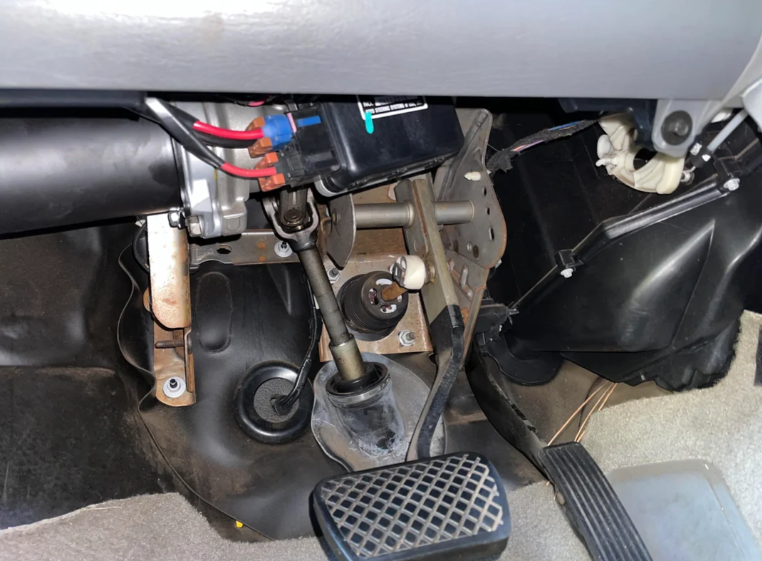
You’ll find the brake light switch installed at the top of the brake pedal arm, at the top of the firewall. Once the pedal is pressed, the switch closes the circuit and the brake lights light up. Since low brake light switches are relatively straightforward electrical components, they can be reached and replaced fairly quickly.
Common Symptoms of a Faulty Brake Light Switch
Before replacing the faulty brake light switch, let’s consider a few of the most common symptoms. Testing the switches is important if the following brake light switch faults are present.
When the brake pedal is pressed, the brake lights are not illuminated
The most common symptom of a faulty brake light switch is no illumination of the brake lights. If you find other motorists are following very closely, this could be a symptom of non-functioning brake lights.
The brake lights are illuminated all the time, even when the brake pedal is not pressed
A faulty brake light switch can also cause the brake lights to be illuminated all the time. In this situation, you could find that the battery of the car is drained along with the brake light bulbs that are being burned. Here is a detail guide about Why Brake Lights Won’t Turn Off?
Cruise control problems
Since several cars use cruise control functions when drivers use the brake light switch, a faulty brake light switch will cause a cruise control system to turn off or cause the cruise control system not to turn on at all.
Difficulty Shifting Out Of Park
Some cars use the switch as part of the system for the transmission’s shift lock. If it’s not working, you may have trouble or find that you can’t move out of park.
Irregular Behavior of Your Car’s Electronic System
Broken brake light switches may lead to malfunctions in a car’s other electronic systems, like in the case of it’s major systems like the dashboard sensors and indicators.
Why Fixing the Brake Light Switch Matters
The brake light switches is an important safety system for poles on the road. Your brake lights inform drivers behind you whenever you are stopping or are about to stop. If your brake lights are performed, it will be hard for other drivers to understand when you are about to stop, which may cause an accident.
Also, it may cause other systems like gear shifting or cruise control systems to malfunction. Fixing a faulty brake light can keep your vehicle working properly and can eliminate safety issues.
What to Get Before Fixing a Brake Light Switch
To fix the brake light switch, we need to have the following:
- Screwdrivers, Flathead and Phillips: You will need a flathead and Phillips screwdriver to unscrew the panels and the switch.
- Multimeter (Optional): You can also use the multimeter to check the brake light switch for a defective part. This can help ensure that the switch is faulty.
- Replacement Brake Light Switch: If you test the switch and confirm that the switch is indeed faulty, you would need a brake light switch for your specific make and model.
- Socket Set: If the switch is slider, you need to use a socket set to remove the switch.
- Flashlight: To find the brake light switch, you need to use a good flashlight. This is great for lighting up the area under the dashboard.
How to Replace a Brake Light Switch: Step-by-Step Guide
Replacing a brake light switch at home can be a very easy project as everyone can achieve it with a do-it-yourself attitude and a can-do approach and a few tools.
Step 1: Getting Started
The brake light switch is often found behind the brake pedal at the top of the brake pedal arm. You might have to lay on your back or bend your knees to reach the switch.
Tip: While in the driver’s seat, to get more perspective on the situation, look up under the dashboard as someone presses the brake. Some cars have a cover or a panel that needs to be removed to get to the switch.
Step 2: Time to Get a Multimeter for Testing
Before you remove and replace the brake light switch, you should do a test. Use a multimeter to determine if the switch works.
- Unplug the harness to disconnect the brake light switch’s electrical wiring.
- Set the multimeter to continuity.
- While the brake pedal is pressed, the switch should show continuity. When the pedal is released, the multimeter should show no continuity.
- If the switch is faulty, no continuity will be shown when the brake pedal is pressed.
Tip: If the test result is inconclusive, check the owner manual of your vehicle for the correct multimeter measurement to be used.
Step 3: Removing the Faulty Switch
After you confirm it is the brake switch, you need to take it out of there.
- First of all, to avoid any electrical issues, you should disconnect the negative terminal of your car’s battery.
- Depending on your car’s make and model, the brake light switch may be secured with screws, clips, or bolts.
- Take out your screwdriver and socket set, and carefully take out the fasteners.
- When the switch is no longer fastened, very gently pull it out of place to avoid breaking anything.
Note: In some vehicles, the switch is secured with a simple push and twist. If this is the case, you have to rotate the switch counterclockwise to loosen it.
Step 4: Installing the New Switch
When your new brake light switch arrives, installing it is the exact same steps you went through to get out the old one reversed.
- To put the new brake light switch in, line it up with the opening where you put the mounting piece from the old switch.
- Depending on the design, push it into place, then secure it with screws or clips.
- Reconnect the electrical connector to the switch.
Tip: Verify that the switch plunger is properly lined up with the brake pedal arm. If it is not lined up, it can lead to failure or malfunction of the switch.
Step 5: Make the Necessary Adjustments to the New Switch
Some brake light switches have the option to adjust. If the switch has the option to adjust, this is what you will do:
- Position the switch in a way that it is either closer or farther from the brake pedal in order to have the brake lights engage with the right amount of pressure on the pedal.
- After you make adjustments, you should test the switch to verify that the brake lights can be toggled on and off correctly.
Step 6: Test to Make Sure The Brake Lights Work
Once you have completed the installation of the new brake light switch and made the necessary adjustments:
- Verify that the brake lights engage when the brake pedal is pressed.
- Verify that the brake lights disengage when the brake pedal is released.
- If possible, have a friend inspect the brake lights from the back of the car while you operate the brake pedal.
Mistakes to Avoid When Replacing a Brake Light Switch
Here are some mistakes people make when replacing a brake light switch.
Neglecting to Disconnect Battery Terminals: Disconnect the negative terminal of the battery when working on any electrical systems.
Not Testing the Switch to Ensure That the Problem is the Switch: Sometimes the switch is not the problem. Sometimes the switch is not the problem. Test the wiring first before replacing the switch using a multimeter.
Installing the New Switch Incorrectly: Ensure the switch is installed in the correct alignment to ensure functionality.
Not Checking the Fuse: A faulty brake light fuse may imitate the symptoms of a faulty brake light switch. Be sure to check the fuse before replacing the switch.
When is it Best to Get Help From a Professional?
Fixing a brake light switch is in most scenarios is a DIY task that requires only a few tools. There also are some scenarios where it is best to get help from a professional:
- When you are not sure what is causing the brake lights to malfunction.
- When replacing the switch does not fix the problem.
- When the situation involves complicated electrical issues that would require professional diagnostic equipment.
- When you cannot get to the switch due to the design of the vehicle.
Frequently Asked Questions
Here are some FAQs about fix brake light switch
1. How much does it cost to replace a brake light switch?
In general, the part costs around $10 to $70, and the total cost of replacing the brake light switch will depend on the hourly rate your mechanic charges
2. What if my brake lights don’t turn off, even after replacing the switch?
the brake light switch replacement, if the brake lights stay on, make sure the switch is aligned properly and check the wiring. If the issue continues on, the problem may be electrical, wiring or fuse.
3. Do all vehicles have a brake light switch?
Almost all vehicles have a brake light switch that controls brake lights, but newer vehicles may have some more advanced systems that use sensors or electronics to control the same thing.
4. Can I replace the brake light switch myself?
Yes, replacing a brake light switch is generally a DIY-friendly job that only requires basic tools like a screwdriver and a multimeter.
5. How long does it take to fix a brake light switch?
For most vehicles, it takes around 15–30 minutes to replace a brake light switch.
Conclusion
The brake light switch is an essential yet small part of your car’s braking system. It makes sure other drivers notice when you are stopping, which is critical to everyone’s safety on the road. Replacement of the brake light switch is an easily manageable task by car owners. It’s an excellent way to cut down on auto repair costs
You can have peace of mind that your brake light is functioning by using the simple, straightforward guide above to successfully identify and repair a malfunctioning brake light switch.