Focus 1.8 TDCi low engine temperature problem happens when the engine stays cold due to thermostat, sensor, or coolant issues, causing poor heating and lower fuel efficiency.
The Ford Focus 1.8 TDCi is a vehicle defined by its paradoxes. On one hand, it features the “Lynx” engine—a rugged, cast-iron evolution of the old Endura-D unit that is legendary for its ability to clock up hundreds of thousands of miles. On the other hand, it is an engine that is notoriously “thermally efficient,” a polite way of saying it struggles to generate enough waste heat to keep its occupants warm or its internal components at peak operating temperature during a brisk winter morning.
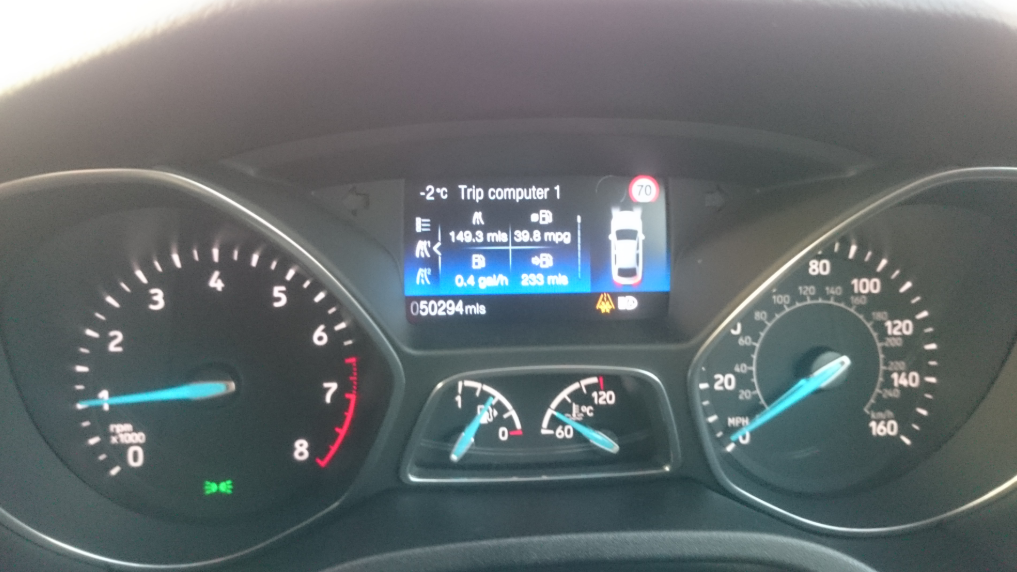
For many Focus owners, the sight of a temperature needle pinned to the “cold” side of the gauge is a common occurrence. However, what many dismiss as a “diesel quirk” is actually a silent performance killer. In a diesel engine, heat isn’t just a byproduct; it is a fundamental catalyst for the combustion process. When the 1.8 TDCi fails to reach its intended operating window—typically between 88°C and 94°C—the results range from poor fuel economy to catastrophic engine failure.
Contents
- 1 The Thermodynamics of the Diesel Cycle
- 2 Why the Focus 1.8 TDCi Runs Cold: Root Causes
- 3 The Symptoms: Identifying the Problem Early
- 4 The Hidden Dangers: Why “Running Cold” Costs You Money
- 5 Step-by-Step Diagnostics: Be Your Own Mechanic
- 6 Solutions: Fixing the Focus 1.8 TDCi
- 7 Preventive Maintenance: Keeping the Heat In
- 8 When to See a Professional
- 9 Conclusion
The Thermodynamics of the Diesel Cycle
To understand why a cold engine is so detrimental to the 1.8 TDCi, we must look at the physics of compression ignition. Unlike a petrol engine, which uses a spark to initiate a flame front, a diesel engine relies on the heat generated by rapidly compressing air.
As the piston rises on the compression stroke, the air temperature inside the cylinder must exceed the auto-ignition temperature of the diesel fuel. When the engine block is cold, the cast-iron walls act as a “thermal sink,” drawing heat away from the compressed air. This leads to a phenomenon known as “Ignition Delay.”
The efficiency of this cycle can be modeled using the thermal efficiency formula:
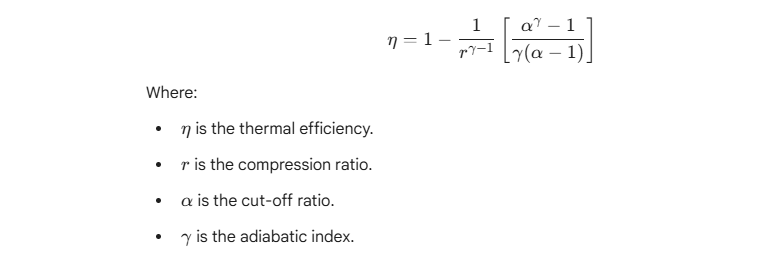
In a cold engine, the adiabatic index and cut-off ratio are negatively impacted. The result is incomplete combustion, where the fuel-air mixture fails to burn fully, leaving behind unburnt hydrocarbons and soot. This isn’t just a theoretical concern; it manifests as the “clatter” you hear on a cold morning and the lack of throttle response when you pull away.
Why the Focus 1.8 TDCi Runs Cold: Root Causes
The cooling system of the Focus is a complex loop of hoses, sensors, and valves. In the 1.8 TDCi, several specific failure points are common.
1. The Thermostat: The Gatekeeper of Heat
The most frequent culprit is a thermostat that has failed in the “open” position. The thermostat is essentially a thermal valve containing a wax pellet. As the engine warms, the wax melts and expands, pushing the valve open to allow coolant to flow to the radiator.
In the Focus 1.8 TDCi, the thermostat is designed to begin opening at 88°C. Over time, the spring can weaken, or the rubber seal can perish. When this happens, the valve stays slightly open even when the engine is stone cold. This allows the water pump to circulate coolant through the radiator immediately upon start-up. On the motorway, the sheer volume of cold air passing through the radiator prevents the engine from ever reaching its “opening” temperature.
2. The Cylinder Head Temperature (CHT) Sensor
Unlike many vehicles that measure the temperature of the coolant (ECT), the 1.8 TDCi utilizes a Cylinder Head Temperature (CHT) sensor. This sensor is screwed directly into the metal of the cylinder head, typically located behind the alternator.
The CHT is a Negative Temperature Coefficient (NTC) thermistor. This means its electrical resistance decreases as the temperature increases. The ECU sends a 5V reference signal to the sensor and measures the voltage drop to determine how hot the engine is. If the sensor is faulty—or if the wiring connector has corroded—the ECU may receive a “high resistance” signal, leading it to believe the engine is at -20°C when it is actually at 70°C. This causes the ECU to keep the engine in “Cold Start” mode indefinitely.
3. The “Hidden” Failure: The Instrument Cluster (IC)
A quirk specific to the Ford Focus Mk2 and Mk2.5 (the years most associated with the 1.8 TDCi) is the failure of the instrument cluster solder joints. The pins on the back of the cluster can crack due to vibration. This can cause the temperature gauge to drop to zero intermittently or stay low, even if the engine itself is actually at the correct temperature. This is a “ghost” issue—the engine is fine, but the driver is being lied to by the dashboard.
4. Heater Matrix Bypass and Air Pockets
The 1.8 TDCi features a relatively large heater matrix. If there is an air lock in the system—common after a coolant change—the air pocket usually settles at the highest point, which is often near the CHT sensor or the thermostat housing. Since air is a poor conductor of heat, the sensor may read “cold” while the metal around the cylinders is actually getting dangerously hot.
The Symptoms: Identifying the Problem Early
Recognizing a low-temperature issue requires more than just glancing at the gauge. You must listen to the “language” of the engine.
- The “Motorway Drop”: If your temperature gauge sits in the middle while idling in traffic but drops toward the blue zone as soon as you hit 60 mph, your thermostat is stuck open. The increased airflow is over-cooling the system.
- Excessive Diesel Knock: If the engine sounds like a “bag of nails” even after 10 miles of driving, it is likely over-advancing the injection timing to compensate for low internal heat.
- Poor Cabin Heat: If you have the climate control set to HI and the air is merely “tepid,” the coolant is not reaching the 70°C threshold required for effective heat exchange in the cabin.
- Increased “Regen” Frequency: If your car is equipped with a Diesel Particulate Filter (DPF), you may notice it trying to regenerate more often. A cold engine produces more soot, which clogs the filter faster.
The Hidden Dangers: Why “Running Cold” Costs You Money
Many drivers ignore a low-temperature gauge because the car “still runs fine.” This is a mistake that leads to massive repair bills in the long run.
1. Oil Dilution: The Engine Killer
When an engine runs cold, the ECU injects extra fuel to keep the engine running smoothly (essentially a digital “choke”). Because the cylinder walls are cold, this extra diesel doesn’t always vaporize. Instead, it “washes” the lubricating oil off the cylinder walls and leaks past the piston rings into the oil sump.
Over several months, your oil level may actually appear to “rise.” This isn’t magic; it is diesel fuel contaminating your oil. Diesel is a poor lubricant. Once your oil is diluted, it loses its film strength, leading to rapid wear of the turbocharger bearings and the crankshaft.
2. DPF Failure and Soot Loading
For later 1.8 TDCi models, the DPF is a critical component. To clear the soot, the ECU must perform an “Active Regeneration,” which requires a coolant temperature of at least 75°C to 80°C. If the thermostat is stuck open and the engine stays at 65°C, the DPF will never regenerate. Eventually, the filter will become so blocked that the car enters “Limp Mode,” often requiring a professional clean or a replacement costing over £800.
3. EGR Clogging
The Exhaust Gas Recirculation (EGR) valve is designed to lower NOx emissions by recirculating exhaust gases. In a cold engine, these gases are full of oily soot and moisture. This creates a “sludge” that bakes onto the intake manifold and the EGR valve itself, eventually snapping the plastic gears in the valve motor.
Step-by-Step Diagnostics: Be Your Own Mechanic
Before spending money on parts, follow this diagnostic path to ensure you are fixing the right component.
Step 1: The OBD2 Live Data Check
The dashboard gauge is “weighted.” It is programmed to stay in the center for any temperature between 75°C and 100°C. To see what is actually happening, you need live data.
- Plug an OBD2 scanner into the port (located behind the small coin tray by the driver’s knee).
- Watch the “Coolant Temp” or “CHT Temp” while driving.
- If the temperature fluctuates wildly with speed, the thermostat is the problem. If the temperature is a rock-steady 40°C, the sensor or wiring is likely at fault.
Step 2: The Radiator Hose Test
This is a classic “old school” mechanic trick.
- Start the engine from cold.
- Open the bonnet and find the large rubber hose going to the top of the radiator.
- As the engine idles, keep your hand on that hose.
- If the hose starts getting warm within 2-3 minutes, the thermostat is “leaking.” It should remain stone cold until the engine reaches 88°C, at which point the hose should get very hot very quickly.
Step 3: The “Hidden Menu” Test
If you don’t have an OBD2 scanner, you can use the Focus’s built-in diagnostic mode:
- With the ignition off, press and hold the ‘OK’ button on the steering wheel (or the ‘Reset’ button on the stalk).
- Turn the ignition to Position II (don’t start the engine yet).
- The screen will say “TEST.”
- Scroll through the menu until you see “ENGINE TEMP.”
- 5. Start the car and drive. This displays the raw, unweighted data from the sensor.
Solutions: Fixing the Focus 1.8 TDCi
Once you have identified the cause, the fixes are generally straightforward but require attention to detail.
1. Replacing the Thermostat
The thermostat on the 1.8 TDCi is located on the right-hand side of the engine block (looking from the front).
- Difficulty: 3/10.
- Tools: 8mm and 10mm sockets, pliers for hose clamps, and a drain pan.
- Pro Tip: When you remove the old thermostat, check the housing for “pitting.” If the plastic housing is warped, a new thermostat won’t seal correctly. Always use a new gasket.
2. Replacing the CHT Sensor
This is more difficult due to the location. It is screwed into the head, often obscured by the alternator or the common rail pump.
- Difficulty: 6/10.
- Tip: You will need a deep-reach socket to get over the sensor body. Be extremely careful not to over-tighten it; it is a brass fitting going into an aluminum or cast-iron head. The torque spec is typically quite low (10–12 Nm).
3. Bleeding the Cooling System
Ford cooling systems are “vacuum-assisted” in the factory, but for the home mechanic, they can be stubborn.
- Fill the expansion tank to the ‘Max’ line.
- Run the engine with the cap off until the radiator fan kicks in.
- Squeeze the radiator hoses to “burp” any trapped air.
- Keep an eye on the level for the next two days of driving, as it will likely drop as the last air bubbles are purged.
Preventive Maintenance: Keeping the Heat In
To prevent these issues from returning, a change in maintenance philosophy is often required.
Use the Correct Coolant
The 1.8 TDCi requires OAT (Organic Acid Technology) coolant, specifically meeting the Ford WSS-M97B44-D specification. This is usually orange or pink. Never mix it with the old-style blue (Silicate) coolant. Mixing them creates a “gel” that clogs the small passages in the oil cooler and heater matrix, leading to permanent low-temperature issues.
The “Winter Grill” Strategy
In extremely cold climates (Scandinavia, Northern Canada, or even the Scottish Highlands), the 1.8 TDCi’s iron block loses heat so fast that the car cannot maintain temperature at idle. In these cases, using a partial “grill cover” (a specialized plastic piece that clips onto the front bumper) can help. By reducing the volume of freezing air hitting the engine block directly, you allow the thermal mass of the engine to stay within the operating window.
Change Oil Frequently
If you know your car has been running cold, change your oil immediately. Do not wait for the service interval. If you have been running at 60°C for a month, your oil is likely 5–10% diesel fuel by volume. A £50 oil change is much cheaper than a £1,500 turbocharger replacement.
When to See a Professional
While the 1.8 TDCi is a “DIY-friendly” engine, some symptoms require advanced equipment. If you have replaced the thermostat and sensor but the car still reports low temperatures, you may have:
- A Faulty PCM (Engine Computer): The internal driver that reads the sensor may be damaged.
- Water Pump Cavitation: The internal plastic impeller may have detached from the shaft, causing poor flow that mimics a thermostat issue.
- Wiring Loom Chafing: The wires for the CHT sensor often rub against the gearbox casing, causing an intermittent short-circuit.
A qualified diesel specialist will use an oscilloscope to check the signal “cleanliness” of the CHT sensor and perform a “pressure test” on the cooling system to ensure there are no internal leaks (such as a cracked EGR cooler).
Conclusion
The Ford Focus 1.8 TDCi low engine temperature problem is more than just a lack of comfort in the winter. It is a fundamental mechanical issue that strikes at the heart of diesel efficiency. By understanding the interplay between the CHT sensor, the thermostat, and the ECU’s fueling maps, you can ensure your Focus remains the reliable workhorse it was built to be.
A well-maintained 1.8 TDCi should reach 80°C within 5-8 miles of driving and stay there regardless of speed. If yours doesn’t, it’s time to stop ignoring that blue zone on the gauge. Your engine, your wallet, and your passengers will thank you.