


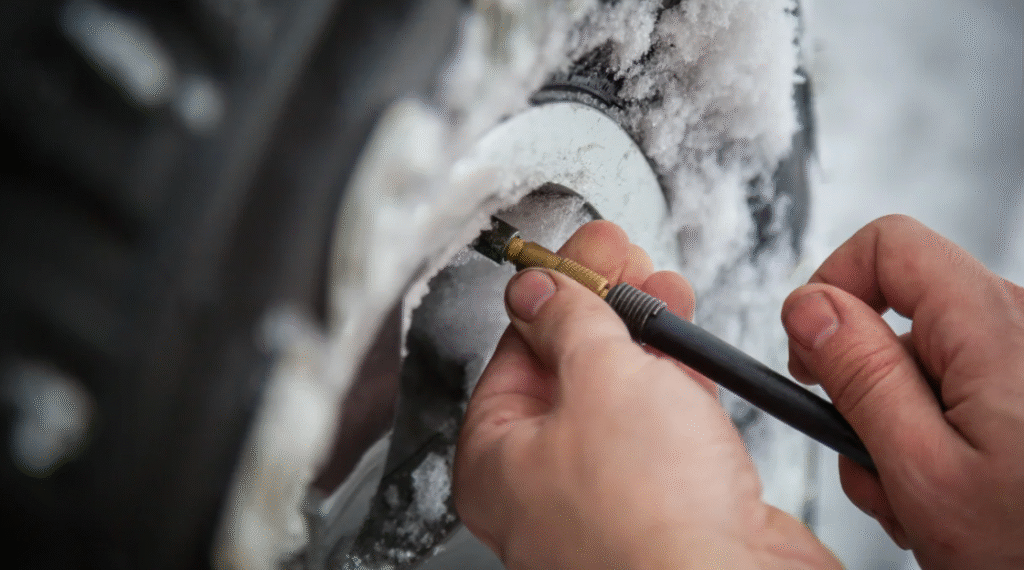
Cold weather causes tire pressure to drop as the air inside the tires contracts with lower temperatures. For every 10°F decrease in temperature, tire pressure can drop by 1-2 PSI, which can lead to under-inflated tires, affecting vehicle safety, fuel efficiency, and tire wear.
As winter rolls in, one of the first things to be affected is your vehicle’s tire pressure. Cold weather brings several changes, some of which are not immediately obvious but are critical for your safety, fuel efficiency, and tire longevity. Cold weather affects tire pressure in significant ways, and understanding this phenomenon can help ensure that you stay safe on the road, prevent tire damage, and improve your car’s overall performance.
In this post, we will explain how cold weather affects tire pressure, the science behind it, and practical tips on managing tire pressure during winter. By the end, you’ll have all the knowledge you need to keep your tires in great shape through the colder months.

Contents
- 1 The Science Behind Cold Weather and Tire Pressure
- 2 How Much Does Tire Pressure Drop in Cold Weather?
- 3 Why Tire Pressure Matters
- 4 How cold weather affects tire pressure for cars, trucks, and EVs
- 5 When Should You Check Your Tire Pressure in Cold Weather?
- 6 How to Fix Low Tire Pressure
- 7 Tips for Managing Tire Pressure for the Winter Months
- 8 Frequently Asked Questions
- 9 Conclusion
The Science Behind Cold Weather and Tire Pressure
Understanding the science behind how cold weather affects tire pressure is key to maintaining your vehicle’s safety and performance during the winter months. Let’s explore why temperature changes lead to a drop in tire pressure and how this impacts your driving experience.
What Causes Tire Pressure to Drop in Cold Weather?
Tire pressure is essentially a measure of the air inside your tires. When the temperature drops, the air molecules inside the tire slow down and take up less space, which decreases the tire’s internal pressure. This happens because gases naturally contract when cooled and expand when heated. It’s a basic principle of physics that applies to all gases, not just the air inside your tires. The colder the temperature, the more the air molecules contract, which results in a decrease in tire pressure.
The Physics of Tire Inflation: Tires are inflated with compressed air, which is made up of molecules. When the temperature drops, these molecules move slower and reduce in size, causing the air inside to take up less space. This leads to a reduction in the tire pressure.
Rule of Thumb: For every 10°F (about 5.5°C) decrease in temperature, tire pressure drops by about 1 to 2 PSI (pounds per square inch). This is why tires often appear under-inflated in cold weather, even if they were properly inflated during warmer months.
How Much Does Tire Pressure Drop in Cold Weather?
Understanding how much tire pressure decreases due to cold weather is essential for maintaining your vehicle’s safety. For example, if you fill your tires to the recommended PSI on a warm day and the temperature drops by 20°F (11°C), your tire pressure could drop by up to 2 PSI. This might not seem like much, but even small changes in tire pressure can impact your vehicle’s handling and safety.
For every 10°F temperature drop:
- Tire pressure decreases by about 1-2 PSI.
- This is particularly important during the first few weeks of winter when the temperature can fluctuate significantly.
If you live in an area where the temperature swings between warm and cold temperatures, the effect of cold weather on tire pressure can be more pronounced. For example, a tire that is set to 35 PSI in the morning could be down to 30 PSI by evening when the temperature drops.
Why Tire Pressure Matters
Maintaining the correct tire pressure is crucial for ensuring your vehicle operates efficiently and safely, especially in colder weather. Properly inflated tires not only improve safety but also enhance fuel efficiency and extend the lifespan of your tires.
The Importance of Proper Tire Inflation
Proper tire inflation is critical for several reasons, including safety, performance, fuel efficiency, and tire longevity. Low tire pressure can lead to various issues that negatively affect your driving experience. Here’s why tire pressure matters:
Safety: Tires that are under-inflated have a larger contact area with the road, which increases friction. This can reduce traction, especially in wet or icy conditions. Under-inflated tires are also more likely to overheat, which increases the risk of a blowout or tire failure.
Fuel Efficiency: Tires that are not properly inflated create more rolling resistance, meaning the engine has to work harder to move the car. This leads to decreased fuel efficiency.
Tire Wear: When tires are under-inflated, they wear unevenly, especially on the edges. This reduces the lifespan of your tires and leads to more frequent replacements.
Handling and Comfort: Low tire pressure reduces your vehicle’s handling ability, making it more difficult to control. Tires with insufficient pressure can also result in a rougher, less comfortable ride.
The Risks of Driving on Under-Inflated Tires
Driving on under-inflated tires during the winter can lead to a number of safety and vehicle performance issues.
Increased Stopping Distance: Under-inflated tires are more slippery without grip, especially on icy or snowy roads. This results in extended stopping distances and increases the chances of an accident in perilous conditions.
Hydroplaning: When a tire is under-inflated, there is a smaller area in contact with the road thus reducing the tire’s ability to channel water away from the tire’s surface leading to more of a risk of hydroplaning.
Blowouts: Low tire pressure can armor the tires into flexing more than usual causing them to overheat. Drive tires are most prone to fail due to overheating and especially when on a long road trip with a packed vehicle.
Uneven Tread Wear: Under-inflated tires also result in more uneven wearing, especially on the edges. This quickens the wearing of the tire causing issues with wheel alignment and suspension.
How cold weather affects tire pressure for cars, trucks, and EVs
Each type of car, trucks and EVs, respond a little differently to cold weather when it comes to tire pressure. Knowing how tire pressure responds to extreme cold of winter for these types of vehicles can help you control how you manage tire inflation.
Passenger vehicles
Passenger cars respond more quickly to changes in tire pressure because they have smaller tires than trucks and SUVs, and they suffer more when the temperature drops. Smaller tires generally respond more than larger tires do to temperature drops, and they have to have higher pressure in them to perform and be safe.
Trucks and SUVs
Trucks and SUVs flare generally have larger tires than cars, so they are are more tolerant of having less pressure, and because of the extra weight they have to carry, they can have more in them without having a major impact. Again, when the pressure drops, even a small amount, it can have a major impact on the load stability of the tire.
Electric Vehicles
Electric Vehicles (EV) have a different weight distribution than gasoline powered vehicles. This heightens the importance of monitoring tire pressure. Tires with lower pressure increases battery drain due to increased resistance. For most EV owners, conserving battery range makes monitoring tire pressure a priority especially during colder months.
When Should You Check Your Tire Pressure in Cold Weather?
Tire pressure, as with most gases, changes with temperature changes. This makes monitoring the pressure of your tires a must in colder months. Here are a few ways to check of your tire pressure:
Check When Tires Are Cold: For the most accurate results, tire pressure should only be checked when the tires are cold. Cold tires are defined as tires that have not been driven on for at least three hours or tires that have only been driven on for a distance of less than one mile. This makes sure you get the proper tire pressure.
After Temperature Drops: After a significant drop in temperature, check your tire pressure. A temperature drop of 10°F (5.5°C) will most likely cause a tire pressure drop of 1 to 2 PSI.
Every Two Weeks: If you can, check your tire pressure every two weeks in the winter months. This can help you solve little problems that may develop in the future.
How to Fix Low Tire Pressure
If you find that your tire pressure is low, you should fix this right away. Here is a safe way to fix low tire pressure:
Use a Tire Pressure Gauge: If you don’t already, consider buying a tire pressure gauge. You can find these gauges in gas stations, but for accuracy, it is good to have a personal one.
Inflate the Tires: Once you know the correct tire pressure for your vehicle, (this info is on the sticker inside the driver’s side door or your owner’s manual), you can inflate your tires to the correct pressure using a compressor.
Check Pressure Regularly: Tire pressure is always changing, especially in the winter when it’s cold outside, so make it a goal to check your tire pressure regularly during the winter months.
Visit a Professional: If you find your tire pressure low often, it is super helpful to have a professional inspect your tires for any leaks or problems.
Tips for Managing Tire Pressure for the Winter Months
Keeping tires in great condition for the winter starts with the following tips for managing tire pressure for the winter.
Invest in a Tire Pressure Gauge: A tire pressure gauge will let you monitor the pressure in the tires.
Don’t Overinflate: This leads to excess tire wear. Over inflation will make it extremely uncomfortable to drive. Tire inflation should always be to the recommended cold pressure.
Rotate Tire: Tire rotations help to ensure even tire wear. This is very important to do with winter tires because the pressures will change with the temperature.
Check for Any Tire Damage: If tire pressure is dropping consistently, check for punctures.
Use Winter Tires: In extremely cold temperatures, winter tires perform better and retain pressure much better than all season tires.
Frequently Asked Questions
Here are some FAQs about how does cold weather affect tire pressure –
1: How often should I check tire pressure in cold weather?
During cold weather, checking tire pressure every one to two weeks is suggested, especially after bigger temp drops. Checking only once a month may not be often enough to consider fluctuation in cold weather.
2: Should you depend on a TPMS (tire pressure monitoring system)?
TPMS is a great tool but shouldn’t replace checking your tire pressure manually. Sometimes, the system does not warn you until your tire pressure is too low, so it is important to also check the pressure yourself.
3: Is the tire pressure drop at the same rate of speed in all the different types of tires?
Tire pressure drop due to cold weather happens to all types of tires, but the rate at which it drops can depend on a few things. The tire size, the tire type, and the weight distribution of the car can all play a part.
4: What should I do if my tire pressure light comes on during cold weather?
You should check the tire pressure manually with a tire gauge. If it’s too low, fill the tire to the recommended cold pressure. If it doesn’t stop losing pressure over the next few days, get the tires inspected for leaks.
5: Is it possible for a tire to blowout in cold weather?
Driving with an under-inflated tire in cold weather can cause the tire to blowout. If the tire is already under-inflated, driving on it in cold weather is more likely to overheat the tire and cause a blowout. Keep tire pressure correct during the winter months.
Conclusion
You lose tire pressure over time, and winter just makes it worse. Tires are obviously really important, and and you have to watch for changes in fuel efficiency, wear, and is a major safety issue. Adjust and check pressure regularly especially in winter in order to be more safe while driving.
Your safety and comfort directly relate to properly functioning tires, as well as how much fuel you’ll use. Take winter tire pressure seriously, and always correct it as soon as you see it drop.


