How to check engine oil: To check engine oil, first locate the dipstick under the hood, remove it, and wipe it clean with a cloth. Then, reinsert it, pull it out again, and check the oil level, ensuring it’s between the minimum and maximum marks. If the oil level is low, add the recommended oil type gradually.
Imagine your engine oil to be the blood of your car’s engine. It lubricates the moving components in the engines prevents overheating and keeps it running smoothly. However, the oil can degrade, lose its effectiveness, or run low and this can lead to serious problems. The good thing is, checking oil for the car is an easy task.
In this post, we’ll show you how to check your engine oil, how to know when it is time for an oil change and how to keep your car in the best condition possible. There are many myths and misconceptions when checking oil dipsticks. We’ll talk about those myths and check the engine oil related problems you might be having.
Contents
- 1 The Purpose of Engine Oil
- 2 How to Check Engine Oil: A Step-by-Step Guide
- 2.1 1. Collection of Required Tools
- 2.2 2. Park on a flat surface
- 2.3 3. Make sure the engine is cold
- 2.4 4. Lift the Hood of the Car
- 2.5 5. Find the Oil Dipstick
- 2.6 6. Take Out the Dipstick
- 2.7 7. Clean the Dipstick
- 2.8 8. Put the Dipstick Back In and Take It Back Out
- 2.9 9. Assess the Oil Level
- 2.10 10. Inspect Oil Condition
- 2.11 11. Add Oil
- 2.12 12. Put the Dipstick Back and Close the Hood
- 3 How Often Should You Check Engine Oil?
- 4 Frequently Asked Questions
- 5 Common Mistakes When Checking Engine Oil and How to Avoid Them
- 6 Dealing with Problems While Checking Your Oil
- 7 Conclusion
The Purpose of Engine Oil
Let’s look more in-depth into why engine oil serves such an important purpose in vehicles before exploring the practical side of the job. Engine oil tends to the cars basic needs in the following areas:
Lubrication: Engine oil acts like a lubricant, and keeps the various moving parts that make your engine operate effectively and reliably to work together and not tear each other apart. It avoids the damage that would occur over time to the pistons, crankshafts, and valves. Without oil, the various metal components within the engine would grind together, causing damage in a short time.
Cooling: The radiator does its job of maintaining an even temperature throughout the engine. Engine oil absorbs heat and protect the critical components of the engine from damage and overheating. Oil levels will cause your engine to seize and make repairs immensely more expensive.
Cleaning: A variety of contaminants will find their way into your engine over time. Oil helps to eliminate these impurities and helps prevent engine from parts becoming damaged by becoming contaminated. It does this preventing sludge buildup which will eventually lead to engine failure.
Sealing: When it comes to engine oil, one of its most important roles is providing lubrication to the engine. It creates a seal between the engine’s pistons and the walls of the cylinder, which increases compression. This increases the engine’s running efficiency, as more of the engine’s power is maximized.
Rust and Corrosion Prevention: Additives present in engine oil also slow down the engine’s wear and the engine oil’s additives prevent the internal engine parts from being corroded. When there is no lubrication, water and contaminants will corrode parts within the engine, and this will lead to serious malfunctions in the engine over an extended period of running.
Considering the importance of oil in an engine, it is important to monitor oil levels and its condition in order to maintain the optimal performance of the engine. The next step is to monitor the oil level and condition, as well as check the performance of the engine.
How to Check Engine Oil: A Step-by-Step Guide
There is a specific method you should follow in order to check the engine oil accurately. This guide provides a step by step process on how to check the engine oil in your vehicle.
1. Collection of Required Tools
Before you start checking the engine oil, there are a few tools you will need.
- A dipstick for the engine oil: This is a tool that will help you check the level of the engine oil.
- Cloth or Paper Towel: Something to wipe the dipstick with to get a correct reading.
- Optional Owner’s Manual: The manual can provide you with the oil type you should use, and other very important information, such as the oil level marks.
2. Park on a flat surface
To get the most accurate answer, make sure the car is on flat land. If the car is on a slant, oil can shift to one side of the machinery, and you will most likely get a misleading reading. When the car is on flat land, the oil will settle evenly, and you will get a correct reading on the oil level.
3. Make sure the engine is cold
Always make sure the engine is cold before you go check the oil. If the engine is very hot, the oil can be spread all across the engine, and you will have a hard time getting a reading. When the engine is cool, oil will settle in the oil pan and you will get a clear reading.
4. Lift the Hood of the Car
To pop the hood of the car, find the hood latch release. It’s usually located under the dashboard or to the left of the driver’s seat. Once you pull the hood latch, lift the hood. If the car has a prop rod, use it to hold the hood open while you check the oil.
5. Find the Oil Dipstick
The dipstick is usually found around the engine. The dipstick tube is usually right there, and the dipstick itself has a handle that is bright in color – yellow, orange, or green. If you can’t find it, check the front or the back of the engine and consult the owner’s manual.
6. Take Out the Dipstick
After you find the dipstick, take it out of the tube. Some engine parts may still be hot, so make sure to be careful. Grab only the handle. This will expose you less to the hot engine parts while you handle the dipstick.
7. Clean the Dipstick
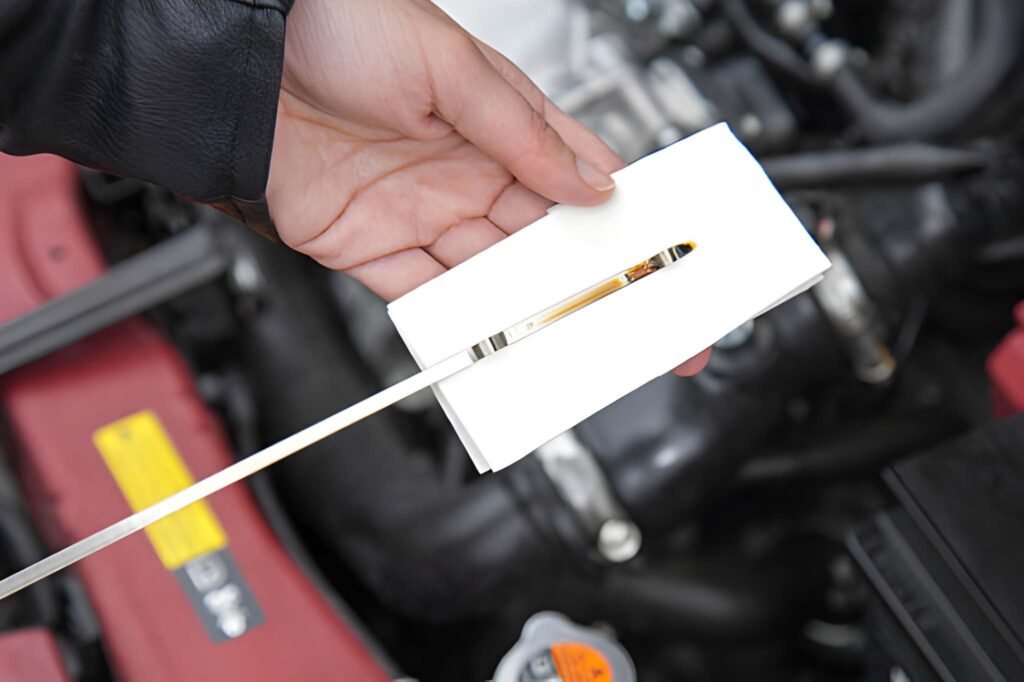
Using a clean paper towel, wipe the dipstick. This is important to get the best measurement because the dipstick could have oil from a previous check, which will interfere with the measurement.
8. Put the Dipstick Back In and Take It Back Out
Next, you will need to put the dipstick back into the tube all the way. This will ensure the best measurement. Then, pull it back out to get a measurement again.
9. Assess the Oil Level
To get the best assessment, the dipstick is marked with two levels: max and min. The oil level has to be between those two to be at a good level for the engine. If it is below the minimum, then oil needs to be added. If it’s at the maximum, then the engine has been overfilled.
10. Inspect Oil Condition
When checking car oil, examine both its quality and level. It is normal for the oil to become darker and eventually black due to impurities. This happens even in a healthy engine. If the oil is thick and gritty and it smells burnt, it is time to change the oil. If engine oil is not black but has become dirty despite not having burnt oil particles, that is a sign there is a lot of unburnt fuel in the oil and it also needs change.
11. Add Oil
Prior to adding oil, check the level on the dipstick first. If the level is low, top it up and consult the owner’s manual to determine the type of oil to use. It must be the right viscosity. Common ones are 5W-30 and 10W-40. It is advisable to use the recommended oil to keep the engine running optimally. Remove the oil filler cap on the top of the engine. Add oil in small intervals and recheck the dipstick oil level to avoid overfilling it.
12. Put the Dipstick Back and Close the Hood
After adding the oil, check the oil level one last time. Clean the dipstick and put it back into place. Finally, close the hood and make sure everything is in order.
How Often Should You Check Engine Oil?
In general, checking the engine oil depends on a variety of factors. The type of oil, the car make and model, and compounding driving conditions will all affect oil checking frequency. To simplify things here are some rules of thumb:
- Check Every 1,000 Miles or Once a Month: Checking the car oil every 1,000 miles or once a month is a good practice, even if the car features a long oil change interval. This will help you prevent sufficient oil levels from becoming a problem.
- Change Oil Every 3,000 to 5,000 Miles: For the majority of vehicles, you will need to change the oil every 3,000 to 5,000 miles. Certain vehicles with a system that includes synthetic oil are able to go 7,500 or more miles between oil changes. Please consult the owner’s manual for the particular car for the exact details.
- Check After Long Trips: Long road trips or driving under harsh conditions (extreme heat, towing, etc.) can make it necessary to check the oil levels even more frequently.
- Newer Cars with Oil Sensors: Some newer models of vehicles have an “oil life monitoring system” which will alert the driver when an oil change is due. Even with this technology, drivers must remember the manual oil checks to ensure that oil level problems do not arise.
Frequently Asked Questions
Here are some FAQs about checking engine oil –
- Why is checking my engine oil important?
Motor oil is a key component to the longevity, functionality, and performance of a car’s engine. Engine oil lubricates moving parts, is responsible for reducing friction, and prevents overheating. Regular oil checks will help you to avoid engine failure, and ensure that the engine is functioning the way it is supposed to. Detecting oil level problems, as well as oil going bad, is accomplished with periodic oil checks. Most importantly, oil checks can help prevent costly repairs by identifying problems with the engine oil early.
- How can I tell if the oil in my engine needs to change?
Engine oil might need to change if you notice the following indicators:
- Dirty and Gritty Oil: If you notice that the oil is gritty, thick, and black, that means that it is no longer effective, and needs to be replaced.
- Burnt Smell: If you notice an oil burnt smell, that means the oil is overheating which can damage your engine.
- Dropping Oil Levels: If you’re seeing a consistent drop in oil level, this signifies either a leak or fuel consumption. Either way, it’s critical to inspect the engine and, if necessary, perform an oil change.
- Engine Warning Light: A number of modern vehicles have an oil change indicator, or a low engine oil pressure warning light that illuminates when oil changes are required.
Regular oil checks, and the above pointers, are critical to ensuring your engine remains in great shape.
- Should the engine oil be checked when the engine is hot?
It is advisable to wait for the oil to cool down a bit before taking the level measurement. Wait for around 10 minutes before checking the level. This is to allow the oil to settle down into the oil pan. If the oil gets checked while still hot, it could give an inconsistent reading, and the level can’t really be trusted.
- What should I do if my vehicle has low oil?
To get your vehicle back to the proper oil level, you must first add the correct oil. You should consult your owner’s manual for the proper oil grade, which will be something like 5W-30 or 10W-40. When adding oil, do so carefully. After each addition, check the oil dipstick to avoid going over the max fill. If you notice that you keep having to add oil, that might indicate that you have an oil leak, and you should visit a mechanic.
- Does adding too much oil to the engine cause damage?
Overfilling the oil in an engine can cause serious problems. Adding too much oil can increase the compression in the engine, and may cause the oil to foam, which can lead to poor lubrication of the internals. It can also increase the chances of an oil leak, and in serious cases, may damage gaskets and seals in the engine. To avoid overfilling, always add oil a little bit at a time, and check the level after each addition.
Common Mistakes When Checking Engine Oil and How to Avoid Them
Measuring engine oil is a simple process, but there are some mistakes to avoid to get the most accurate measurement and avoid damaging your engine. Here are some mistakes to avoid when drawing an oil measurement.
- Not Cleaning the Dipstick: It is a very bad idea to take a measurement before cleaning the dipstick, and this is often done to save a few seconds. Used oil residue can create a false measurement and give you a lower or higher measurement than is accurate. Therefore, before reinserting the dipstick, wipe it with a clean towel to give the oil a better and more accurate measurement.
- Measuring Oil Immediately After Driving: It is a bad idea to measure oil immediately after driving the car because the oil is going to be very hot, and oil may still be running through the engine. Therefore, the measurement you get is going to be inaccurate because the oil may be unevenly distributed. In order to avoid this, let the engine cool down for at least 10 minutes after driving.
- Putting Too Much Oil In: As mentioned previously, filling engine oil to the top can cause foaming, lead to engine damage, and decrease the oil’s ability to the lubricate. Add oil in small increments and check the dipstick to see if you’re over the the max.
- Not Analyzing Oil Quality: Oil level checks in and of themselves are not enough. Consider the oil itself. Check the dipstick for consistency, especially for burnt smell and dirt. If you see any of this, oil needs to be changed. Don’t just throw the dipstick in, first check the oil.
- Not Using the Proper Oil: Not all oil works for all engines. Check and see for your engine if you need synthetic oil, conventional oil, or other blended oils. Check your owners manual to see what type and viscosity oil it recommend for your engine.
Dealing with Problems While Checking Your Oil
There are a few problems you might run into while checking your oil that require a little more work. Here are a few problems and how to solve them:
- Oil Level is Too Low: If you discover that your oil levels are too low, you need to add oil to your engine. Once you add oil, check the levels again to make sure that you don’t overfill. Find out how to check the oil leveling in your car manual so you don’t cause any problems. If you notice that your oil keeps disappearing, it means you might be leaking oil. If this happens, you need to go to a mechanic to fix the oil leak.
- Engine Oil is Dirt: When oil turns into a thick dark sludge it means that the oil is dirty. If you leave a dirty engine oil for too long without getting it changed, it can damage your engine. If you find dirty oil, you need to go to a mechanic as soon as possible to get it changed.
- Oil Smells Burnt: If oil smells burnt, that’s a sign that the engine is overheating, which could be caused by low engine oil or because the engine is working too hard. If engine oil smells burnt, it’s crucial to change the oil immediately and look to see what is causing the engine to overheat, which could be a faulty radiator or cooling system.
- Oil Leaks: If you see oil spots under your car when you park it, you could have an oil leak. Leaking oil can oil the engine, which can damage different parts and lower the oil level. If you cannot figure out the source of the oil spots, you should take your car to a shop so a mechanic can inspect and repair the oil leak.
Conclusion
Checking the engine oil is one of the most important things to keep your car running smoothly. Engine oil is responsible for lubricating and protecting the internal parts of the engine, as well as preventing overheating and trapping dirt so the engine stays clean. Following this oil change guide will help keep your engine running well for a long time.
Don’t wait for warning lights or weird sounds to pop up before you do an oil check. Putting in some effort now will save you in the future by making sure your vehicle runs smoothly.