


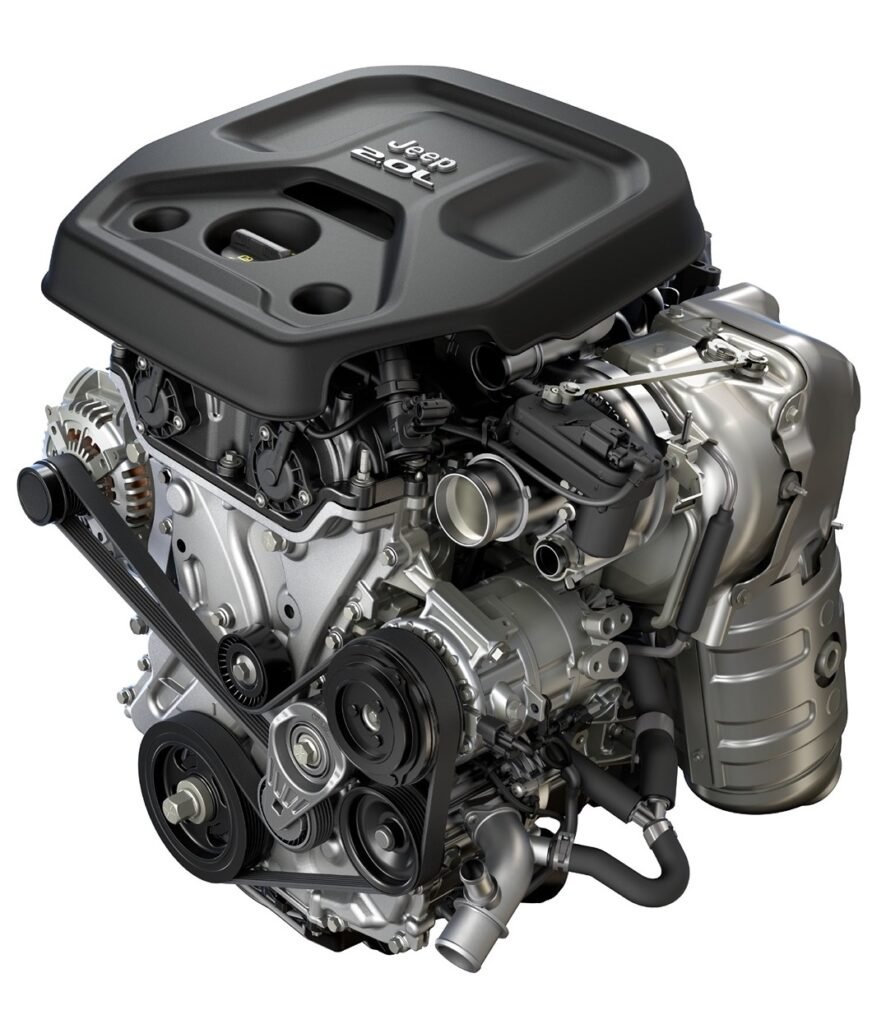
Jeep engine swap chart shows compatible engines for different Jeep models. It helps identify fitment, modifications, and performance options for a successful engine swap.
Engine swaps are one of the most impactful upgrades a Jeep owner can make. Many Jeep owners swap engines for better performance or to tackle tougher off-road obstacles. Others do it to restore an older Jeep to its original condition. For those considering an engine swap, a Jeep engine swap chart is an essential resource.
The chart shows potential engine upgrades for all Jeep models, from classic Jeep CJs to modern Jeep Wrangler JK and JL models.
A good engine swap chart provides an overview of the required modifications, such as custom mounts, harnesses, and transmissions. It makes the swap process easier and helps avoid unexpected complications. This article will explore the necessary information and factors for executing a successful engine swap for your Jeep.

Contents
What is a Jeep Engine Swap Chart?
A Jeep engine swap chart provides you with information on what types of engines will fit various Jeep models. If you planning on swapping an engine in an older Jeep CJ or when you want to powertrain upgrade to a newer Wrangler , it shows you what engines will fit, what will need to be modified to make the swap successful, what engine mounts will need to be used, and more.
What Makes a Jeep Engine Swap Chart Useful?
Charts like these are helpful for a number of reasons. These are a few of the reasons why you should always refer to a chart when making an engine swap:
- Avoids Purchasing Wrong Engines: Engine swap charts show you what types of engines will fit in the vehicle, and what types of engines will not fit in the vehicle, helping you avoid spending money on an engine that won’t fit.
- Time and Money Savings: Not having the right information can cause time and money to be wasted from avoidable changes and parts.
- Simplified Procedure: The maximally compiled information means a more organized and predictable swap procedure.
- Choosing the Right Engine: It helps to objectively assess and compare engines that suit your ultimate goal.
Using a swap chart, you can more easily tackle the intricacies of your engine selection, leading to a more optimal outcome for your performance goals.
Popular Engine Choices in a Jeep Engine Swap Chart
When planning an engine swap for a Jeep, Jeep engine swap charts offer a healthy number of engine options. However, for any engine options that may be chosen, you want to choose options that can be easily installed and will work with your Jeep’s current systems.
1. Inline Engines
When looking through Jeep engine swap charts, you’ll find a lot of mentions of inline engines because they are engine types that are very simple and very durable. These engines are also found in older Jeep models like the CJ series, Cherokee XJ, and early Wrangler models.
- AMC 4.0L Inline-6: One of the most recognizable Jeep engines, praised for its smooth operation and solid performance. Great choice for swap for older Jeep CJs and Cherokee XJs.
- Jeep 2.5L Inline-4: Commonly swapped into older Jeep models. While its displacement is smaller, it can provide a solid and reliable source of power.
Both these engines are known for being fairly easy to work on, making them excellent options for beginners.
2. V6 Engines
V6 engines, especially the Jeep 3.8L V6, are becoming commonplace in most modern Jeep models. When it comes to engine swaps, this V6 is one of the most recommended for a boost in power while keeping it level.
- Jeep 3.8L V6: Popular in Wrangler JK models, this engine is more powerful than the previous 4.0L inline-6 engine and has better fuel consumption.
- GM 4.3L V6: The GM V6 is a sophisticated option that is often referred to in swap charts. It has impressive performance, good reliability, and excellent aftermarket support for Jeep builders.
These engines provide a good mix of power and efficiency and are a great choice for daily drivers and off-road lovers.
3. V8 Engines
A V8 is an engine type Jeep enthusiasts want for adding big numbers to their horsepower and torque. In engine swapping, there is a wide range of V8 options, starting from small-block V8s to modern LS and Hemi options.
- Chevy Small Block V8 (350, 305, 327, 350): Jeeps are commonly swapped with the Chevy small-block V8 (350, 305, 327, 350). It is compact, powerful, and offers superb availability of aftermarket parts.
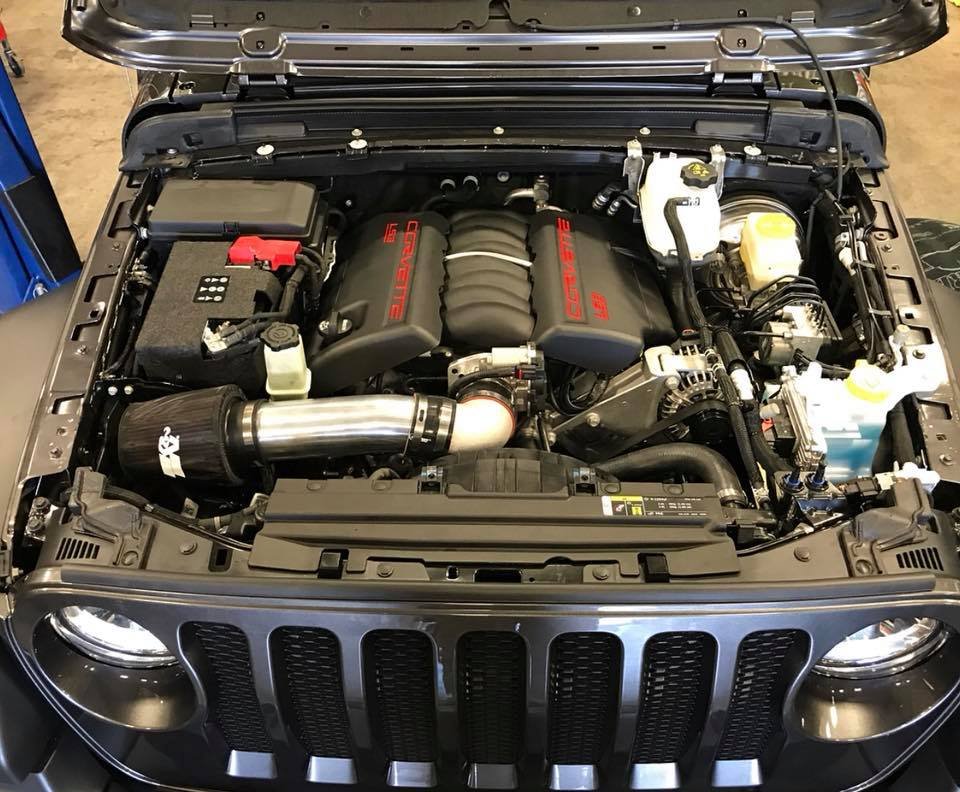
- GM LS V8 Engines: Among engine swaps, the GM LS V8 engines are a favorite. They are modern, powerful, and efficient. In fuel economy and torque, they outperform many. Because of this, they are good options to use for modern Wranglers.
- Mopar Hemi V8 Engines: Mopar Hemi V8 engines also command a presence in many engine swap charts. They are the benchmark for off-roading engines and are the definition of power and torque. V8s are generally big numbers in off-roading engines.
Installing the engines is obviously not easy. Custom engine mounts, transmission parts, and cooling system add-ons are a given.
4. Diesel Engines
Swapping diesel engines into builds is fairly uncommon for Jeeps; however, it is becoming more commonplace for heavy-duty off-road builds, especially those that will see very rugged use.
- Cummins 4BT Diesel: The 4BT diesel is one of the first engines seen on advanced swap charts. Because of the incredible torque this engine provides, it is a great option for heavy-duty Jeep builds requiring towing and off-roading ability.
- Mercedes OM617 Diesel: The OM617 is another excellent diesel option for Jeep swaps. With a reputation for being reliable and fuel efficient, it has become a go-to for diesel Jeep builds.
A diesel engine has excellent low-end torque which makes it a solid option for off-road use and in applications that require a lot of towing.
Example Swap Chart Breakdown
Here’s how a typical part of an engine swap chart might look (simplified):
| Engine Type | Jeep CJ | Wrangler TJ | Wrangler JK | Cherokee XJ | Gladiator JT |
|---|---|---|---|---|---|
| AMC 4.0L I6 | Easy | Easy | Easy | Yes | No |
| Chevy Small Block V8 | Yes (mod) | Yes | Yes | Yes | Yes |
| GM LS V8 | Yes | Yes | Yes | Yes | Yes |
| Hemi V8 | Mod | Mod | Yes | Mod | Yes |
| Cummins Diesel | No | Mod | Mod | No | Mod |
This table is illustrative; real compatibility depends on model year, mounts, and wiring.
Reading a Jeep Chart on Engine Swaps
Jeep engine swap chart shows different models and different engine types. Each type of model is on either the x or y axis, and each type of engine on the other axis. Each of the boxes then contain information on the engine and model pair. Here is how to read a chart.
- Engine Fit: If there is a check mark, or a yes, then you know the engine fits without modification.
- Custom Fitting: If the chart says something like “requires modification”, or “It needs custom mounts”, then you will know to build mounts.
- Transmission Modification: If the chart says anything about custom fittings then you will need to swap the transmission or something in the drive-train.
- Torque and Horsepower: Most charts will show the output for each engine. This is important to know the engine performance.
Knowing these things is important to know the swaps and custom parts in Jeep engine swaps.
Steps To Perform a Jeep Engine Swap
An engine swap is quite tedious, so it is good to know what to expect. Here are the steps that are considered basics for doing a Jeep engine swap.
1. Research and Planning: This is the most important step. It will be good to know the engine model you’re looking to acquire, the components you will need for the swap, and all the possible modifications you will need to do afterwards. An engine swap chart should tell you what engines will fit your requirements.
2. Prepare Your Jeep: This is the most tedious step and will require you to get good organizational skills. You will need to make the line engine removal as easy as possible, which including the exhaust, cooling system, wiring and transmission if it is not a part of the engine you are removing.
3. Install New Engine: Ensuring that the new engine is properly mounted to all of the mounts, wiring, and transmission will be the most important part of the installation, so be sure to make as few modifications to the engine bay as possible.
4. Electrical and Wiring Work: Modify the wiring and electrical system so that the new engine can be integrated with the Jeep’s ECU. This may require the addition of new relays, sensors, and wiring harnesses.
5. Cooling System Upgrade: Upgrades must be made to the cooling system to accommodate the increased power output. This may involve the installation of a larger radiator, as well as higher-flow fans and other cooling components.
6. Testing and Final Checks: When the engine is installed, check that everything is connected properly and run tests of the engine and drivetrain to ensure there are no issues and that everything is working, as well as no leaks.
Frequently Asked Questions
Here are some common inquiries about jeep engine swap chart –
- What does a Jeep engine swap chart do?
As a Jeep engine swap chart is a comparison guide for Jeep models and the engines they can have swapped in, providing details about engine fitment and power, and what modifications are needed.
- Is it common to swap a Jeep’s engine and put a diesel engine in?
It is less common, but a Jeep diesel engine swap is a growing trend among Jeep enthusiasts, especially for builds that are off-road and require more torque and better fuel economy.
- What is the best engine for a Jeep CJ?
For the CJ series the Chevy Small Block V8 and AMC 4.0L Inline-6 are both popular engine options as they both are a good mix of power, reliability and fitment.
- Can I put a new engine in an old Jeep?
Yes, but this would require custom engine mounts, a transmission adapter, and some modification to the wiring and ECU. Others are modern, and with the right modifications, a GM LS or Mopar Hemi V8 can go in older Jeeps.
- How do I determine what engine is best for my Jeep?
You should look at a Jeep engine swap chart. You should decide if you are doing this for better off-road capability, more power, or better fuel economy. You will then want to align the engine’s requirements with your Jeep’s frame, transmission, and drivetrain.
Conclusion
The Jeep engine swap chart is a helpful tool to use engine upgrades. It helps to understand the modifications that are crucial for a successful swap. It helps during decision making no matter whether you are aiming to get a small block V8 for performance, or going for a diesel engine for the torque. It’s advisable to always look design your modifications to.
Plan ahead and consult a professional for the necessary modifications. This is the only way to ensure you are fantastic engine-swap that takes your Jeep to another new level of performance and capability, and so you can really achieve the upgrade you were looking for.


