


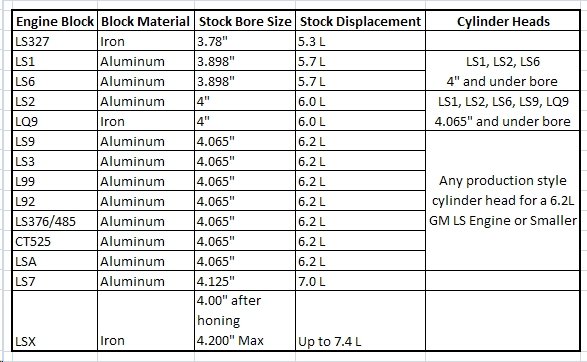
LS engine cylinder head chart lists key specs like port volume, valve sizes, and flow numbers to help builders select the right heads for performance. It ensures optimal airflow and power for your engine build.
The LS engine cylinder head chart is an invaluable tool that helps you understand the different specs of LS engine cylinder heads. The chart is essential in deciding what parts best fit your desired performance goals when upgrading your current LS engine or building a new one. The chart contains vital information on engine performance while helping you align your goals.
The chart provides information on the engine head’s intake and exhaust port volume, combustion chamber size, and a flow number. Also, help you decide which engine head to go for when building a performance vehicle, race vehicle, or a street vehicle, among other vehicle types.
At the end of this article, you will learn how to make best use of the engine cylinder head chart and to make reasonable and valid engine performance decisions for various heads.

Contents
- 1 What is an LS Engine Cylinder Head Chart?
- 2 The Importance of Cylinder Head Specifications
- 3 Important Features of LS Engine Cylinder Heads
- 4 How to Use the LS Engine Cylinder Head Chart for Building a Performance Engine
- 5 Mistakes When Using the LS Engine Cylinder Head Chart
- 6 Frequently Asked Questions
- 7 Conclusion
What is an LS Engine Cylinder Head Chart?
The LS engine cylinder head chart is a comprehensive table that provides various specifications of LS engine cylinder heads. The chart enables the engine designers, enthusiasts, and mechanics to analyze and evaluate different options among cylinder heads based on their needs.
Engine family LS contains several engines like LS1, LS2, LS3, LS6, LS7, and also LQ4 and LQ9 truck engines. There are many cylinder head options for each engine, and many different head options can affect how different each engine performs. This is why one could create a cylinder head chart for example for:
- Engine swaps
- Upgrading performance
- Maintenance
- Tune towards a specific target for horsepower or torque
The Importance of Cylinder Head Specifications
Cylinder heads are essential to engine performance and affect how a engine runs, how efficient combustion happens and how exhaust is managed. Out of all the LS engines, the right head to engine combination can significantly improves raw power, engine responsiveness, and performance.
Focus Areas of the Head Chart
The LS engine head chart details a number of specifications that a head design can have. The key one is:
1. Port Volume
The performance potential of any engine is significantly impacted by the volume of the intake and exhaust ports, as the ports determine the amount of air that can cycle through the combustion chamber. If a cylinder head has a larger volume, it will better facilitate the higher air flows necessary for performance driven builds, especially those targeting higher RPM operation.
2. Valve Sizes
Intake and exhaust valves are critical for providing a balanced combustion cycle. Valves sized too small in relation to an engine’s displacement can lead to poor combustion and unburned gas in exhaust. Too small valves can affect engines which are designed to stretch out and rotate quickly.
3. Combustion Chamber Volume
The size of the combustion chamber influences the engines compression ratio. Smaller combustion chambers can lead to the potential for increased engine power. This balancing act is where combustion chamber size and the pistons and camshaft need to be in sync.
4. Flow Numbers
Flow numbers express the amount of air one can expect a given cylinder head to move at a given valve lift. The Flow is predominant in relation to the amount of power created by an engine at high revs or RPMs. Compared to low revs, high revs are as an engine’s high flow is compared to its low flow.
5. Identifying Cylinder Head Designs
The numbers are used to identify the design of the cylinder head. They tell people where the head was made and whether it is original equipment or an aftermarket replacement part. They are valuable to people trying to verify the specs of a certain head.
Important Features of LS Engine Cylinder Heads
There are some key features of LS engine cylinder heads of LS engines that are very useful when deciding on specifications of your build. This guide looks at the essential ones to give you useful information.
1. Port Volume (Intake and Exhaust)
Port volume is a key aspect you will find on the LS engine cylinder head chart. This refers to the space within the cylinder head’s intake and exhaust ports. Bigger port volumes are better for more powerful engines since they allow for more airflow. However, if port volumes are not balanced with the rest of the engine components, larger ports can negatively affect low-end torque.
For example:
| Engine Type | Intake Port Volume | Exhaust Port Volume |
|---|---|---|
| LS1 | 185cc | 70cc |
| LS2 | 202cc | 80cc |
| LS3 | 205cc | 87cc |
| LS7 | 260cc | 90cc |
Why It Matters:
- Small ports: Improve throttle response and torque, especially at lower RPMs. Common in street builds and mild performance applications.
- Large ports: More suited for high-revving engines that need more air at high RPMs. Used in racing engines and high-horsepower builds.
2. Valve Sizes (Intake and Exhaust)
The intake and exhaust valves in an LS engine cylinder head determine the volume of air and exhaust gases that can flow into and out of the engine. Larger valves typically provide more flow, allowing the engine to breathe better at higher RPMs.
| Engine Type | Intake Valve Size | Exhaust Valve Size |
|---|---|---|
| LS1 | 2.00″ | 1.55″ |
| LS2 | 2.00″ | 1.55″ |
| LS3 | 2.165″ | 1.59″ |
| LS7 | 2.20″ | 1.80″ |
Why It Matters:
- Larger valves: Improve airflow and are beneficial for high-performance engines that are meant to produce higher power outputs.
- Smaller valves: Better for engines that require quick spool time and low-end torque.
3. Combustion Chamber Volume
The combustion chamber is where fuel and air mix and ignite in an engine. The volume of this chamber is directly related to the compression ratio, which is crucial for determining engine performance. A smaller combustion chamber results in higher compression, which can lead to more power if paired with the right fuel.
| Engine Type | Combustion Chamber Volume |
|---|---|
| LS1 | 64cc |
| LS2 | 64cc |
| LS3 | 62cc |
| LS7 | 70cc |
Why It Matters:
- Smaller chambers: Typically result in higher compression ratios, which can improve horsepower and torque.
- Larger chambers: Lower compression ratios, often found in truck engines, offer better towing capacity and durability.
4. Flow Numbers
Flow numbers are typically given at various valve lifts, such as at .100″, .200″, .300″, and .500″ lift. These numbers tell you how much air the cylinder head can move at a given valve position. For example, the higher the flow number at .500″ lift, the better the head will perform at higher RPMs.
| Engine Type | Flow @ .500″ Lift (Intake) | Flow @ .500″ Lift (Exhaust) |
|---|---|---|
| LS1 | 310 cfm | 220 cfm |
| LS2 | 320 cfm | 230 cfm |
| LS3 | 330 cfm | 240 cfm |
| LS7 | 350 cfm | 250 cfm |
Why It Matters:
- Higher flow numbers: Indicate more airflow at higher lifts, which translates to more horsepower, especially in high-performance or race applications.
- Lower flow numbers: Better for low-RPM torque applications or mild builds.
5. Casting Numbers
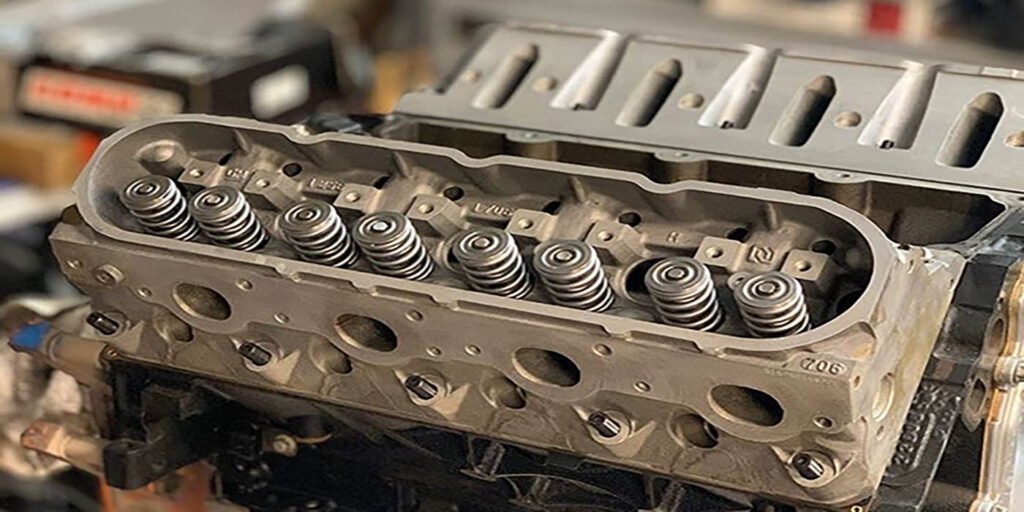
Casting numbers are identifiers for each particular head design. These numbers are typically stamped into the cylinder head and tell you the specific details about that head, such as whether it’s an OEM head or an aftermarket replacement.
Why It Matters:
- Casting numbers: Allow builders to verify head specifications before purchasing. They can also help identify the manufacturing history and performance characteristics of the head.
How to Use the LS Engine Cylinder Head Chart for Building a Performance Engine
The LS engine cylinder head chart determines the right headers for your performance results, and this section guides you on how to identify cylinder heads to your engine specifications and power output.
1. Performance Goal
The first thing to consider is your performance goals. Will this be set for the street, the track, or moderate performance? For street builds, LS2 or LS3 heads would be enough. But for track builds or high-performance builds, look for bigger heads like LS7 or L92.
2. Head-to-Engine Displacement Match
For every cylinder head, there has to be an engine displacement that matches. For instance, the LS1 5.7L engine would be better off using LS6 heads for better power and driveability, while for the LS3 6.2L engine, LS3 heads would be better for higher driveability.
3. Choosing Flow and Camshaft
The flow figures from the chart give a guideline on what camshaft works best with what particular head. Generally, aggressive cam profiles are needed to handle the airflow capabilities with high-flow heads.
Mistakes When Using the LS Engine Cylinder Head Chart
The LS Engine Cylinder head chart is a valuable resource. However, to utilize its value, you need to understand the data to avoid making mistakes. Here are the best ways to make the most of the chart.
Ignoring Engine Size: If you choose a head that is too big for your engine’s displacement, you will lose low-end power. If the head is too small, it will limit the peak horsepower. So, make sure to match the head’s flow and port numbers to the size of the engine.
Not Matching Valve Size: The valves need to match the lift of the camshaft you are going to use. Small valves with too much lift will interfere with each other. So will large valves and small ports, as they will create a situation of poor low-end.
Avoiding Support Mods: Cylinder heads are just part of the entire system. You also need to factor in supporting parts such as intake manifold, exhaust system, and camshafts. These parts must match the airflow characteristics of the heads for a balanced engine build.
Related Article
LS Engine Firing Order
LS Engine Bore and Stroke Chart
What LS Engine Will Fit in a 2015 Malibu?
Frequently Asked Questions
Here are some FAQs about LS engines cylinder heads –
1. What does the 8th character represent in the LS engines VIN?
The 8th character in the VIN shows the engine code of the car. It can be used to know which type of LS engine it is. For example, it could be pertaining to LS1, LS2, LS3, or some other variant.
2. Why is the port volume important?
The engine’s ability to move air is determined by the port volume. With more volume, the engine can operate at higher RPMs. However, it also means a decrease in throttle response and lower torque.
3. Are LS7 heads better than LS3 heads?
Because of the larger size and better airflow and valve dimensions, LS7 heads are more suited for more aggressive builds. However, LS3 heads are also good performers and are better suited for the majority of builds as they are more affordable.
4. Can I switch my LS1 heads out for LS3 heads?
Yes, you can switch LS1 heads for LS3 heads, which can provide better airflow and high RPM performance, as long as the heads are compatible with your block and the valves and cam work with LS3 heads.
5. What is the flow numbers for LS1 heads?
The LS1 heads flow around 310 cfm for the intake and around 220 cfm for the exhaust at .500” lift. This number is decent but aftermarket heads or porting can improve these numbers.
Conclusion
For someone who is interested in building, modifying, or maintaining LS engine, the LS engine cylinder head chart is important. The chart gives you the relevant port volume, flow numbers, valve sizes, and combustion chamber volume that an engine builder needs in order to choose the appropriate heads for a given application. It doesn’t matter if you’re constructing a mild street engine or a high revving race engine, using the LS engine cylinder head chart properly and efficiently will help you accomplish the engine performance you seek.
When you choose heads that suit your engine’s displacement and application, you can be sure that your LS engine will operate with maximum efficiency, resulting in increased horsepower, torque, and overall performance. A proper combination of cylinder heads and other components will help you tap into your engine’s true potential.


