LS engine firing order refers to the specific sequence in which the cylinders fire to ensure smooth engine operation. The standard firing order for most LS engines is 1-8-7-3-6-5-4-2, which helps balance power delivery, reduce vibrations, and optimize engine performance.
The LS engine has become one of the most popular engine types in modern vehicles due to its power, efficiency, and performance. It’s found in a variety of GM vehicles, including performance models like the Chevrolet Corvette and the Chevy Silverado. A key element that contributes to the performance of an LS engine is the firing order. Firing order refers to the sequence in which the engine’s cylinders ignite. A properly maintained firing order ensures optimal engine performance, reduces vibrations, and prevents engine misfires.
In this guide, we will explain the LS engine firing order in detail, including its significance, how to check it, and why it matters to vehicle performance.
Contents
- 1 What is LS Engine Firing Order?
- 2 How to Identify the Firing Order of an LS Engine
- 3 LS Engine Firing Order: The Sequence
- 4 Why Firing Order is Crucial for LS Engine Performance
- 5 How to Check and Correct the LS Engine Firing Order
- 6 Common Problems Related to Incorrect Firing Order
- 7 Frequently Asked Questions
- 8 Conclusion
What is LS Engine Firing Order?
The LS engine firing order is the specific sequence in which the engine’s cylinders fire during the combustion process. It is a critical part of how an engine functions. In a V8 engine, the cylinders fire in a particular order to keep the engine balanced and ensure smooth performance. This firing order controls how each cylinder in the engine produces power and is an essential factor in engine tuning.
For LS engines, the standard firing order is 1-8-7-3-6-5-4-2. This means that cylinder 1 fires first, followed by cylinder 8, then cylinder 7, and so on until cylinder 2 completes the cycle. The firing order is designed to keep the engine running smoothly and help the engine reach its full potential.
The Importance of Firing Order
The firing order is a critical element in ensuring that an engine runs efficiently and smoothly. It plays a vital role in how the engine’s cylinders ignite and work together to produce balanced power delivery and minimize vibrations.
- Performance: The firing order ensures the engine produces smooth and efficient power. If the cylinders fire out of sequence, the engine will misfire, leading to power loss and uneven performance.
- Balance and Smoothness: Firing the cylinders in the proper sequence helps distribute the forces evenly throughout the engine. This prevents excess vibration and minimizes engine stress, allowing it to run more smoothly.
- Efficient Combustion: The firing order helps optimize fuel consumption and power production. When the correct firing order is used, the engine runs at peak efficiency, which results in better fuel economy and reduced emissions.
How to Identify the Firing Order of an LS Engine
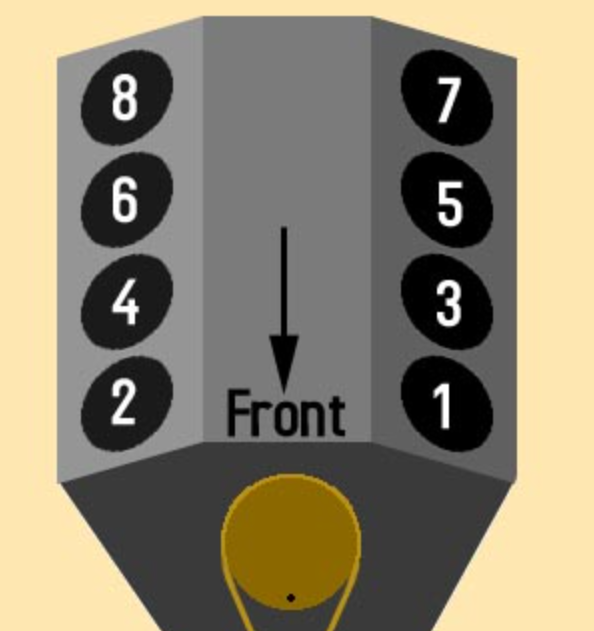
Before diving deeper into the specifics of LS engine firing orders, it’s important to know how to identify it in your engine. The LS engine is part of GM’s Generation III and IV V8 engines, and it uses an 8-cylinder configuration, which is numbered in a particular way. Here’s how the cylinder numbering typically works for LS engines:
- Odd-numbered cylinders (1, 3, 5, 7) are on the driver’s side.
- Even-numbered cylinders (2, 4, 6, 8) are on the passenger side.
Cylinder Layout for LS Engines
For clarity, here’s a layout of the LS engine cylinders based on their numbering:
| Cylinder Number | Side of the Engine | Cylinder Location |
|---|---|---|
| 1 | Driver’s Side | Front Left |
| 2 | Passenger’s Side | Front Right |
| 3 | Driver’s Side | Second Left |
| 4 | Passenger’s Side | Second Right |
| 5 | Driver’s Side | Third Left |
| 6 | Passenger’s Side | Third Right |
| 7 | Driver’s Side | Fourth Left |
| 8 | Passenger’s Side | Fourth Right |
By understanding the cylinder layout, you can easily follow the correct firing sequence when working on an LS engine.
LS Engine Firing Order: The Sequence
The LS engine uses a firing order of 1-8-7-3-6-5-4-2. Understanding this sequence is essential because the order in which the cylinders fire significantly impacts engine performance. Let’s break down this sequence:
- Cylinder 1 fires: The engine begins with the first cylinder, located at the front-left of the driver’s side of the engine.
- Cylinder 8 fires: Next, the eighth cylinder, located at the front-right of the passenger side, ignites.
- Cylinder 7 fires: After cylinder 8, cylinder 7 (third from the front on the driver’s side) fires.
- Cylinder 3 fires: Cylinder 3, located second from the front on the driver’s side, follows.
- Cylinder 6 fires: Cylinder 6, second from the front on the passenger side, is next.
- Cylinder 5 fires: Cylinder 5, third from the front on the driver’s side, fires.
- Cylinder 4 fires: Cylinder 4, third from the front on the passenger side, ignites.
- Cylinder 2 fires: Finally, the engine completes the cycle by firing cylinder 2, located at the front-right of the passenger side.
This firing order ensures that the engine runs smoothly, reducing vibrations and promoting efficient combustion.
Why Firing Order is Crucial for LS Engine Performance
Firing order plays a crucial role in how well an engine performs, especially in high-performance applications like LS engines. Here’s why it’s so important:
1. Balanced Power Delivery
The firing order ensures that each cylinder fires in a sequence that delivers power evenly. A balanced power delivery is critical for maintaining smooth engine operation, especially when revving the engine or running at high speeds.
2. Reduced Engine Vibrations
An incorrect firing order can lead to an imbalance in the engine’s power delivery. This imbalance causes the engine to vibrate more than normal, which can reduce the engine’s lifespan and negatively affect performance. The LS firing order is specifically designed to minimize these vibrations by keeping the firing events as evenly spaced as possible.
3. Smooth Combustion
Each cylinder’s combustion process is optimized with the correct firing order. If the firing order is incorrect, the combustion pressure may not be distributed evenly, resulting in poor fuel efficiency, reduced power output, and excessive wear on engine components.
4. Efficiency
A properly sequenced firing order allows for more efficient combustion. The timing of each spark plug’s ignition allows for maximum power output and minimal fuel waste. This results in better performance, improved fuel efficiency, and lower emissions.
How to Check and Correct the LS Engine Firing Order
Ensuring that your LS engine firing order is correct is essential for maintaining engine performance. If you’re building an LS engine, troubleshooting, or simply checking your firing order, here’s how you can go about it.
Step 1: Verify the Cylinder Layout
Before working with the firing order, verify the cylinder layout of your engine. As mentioned earlier, the LS engine has cylinders numbered 1 through 8, with odd-numbered cylinders on the driver’s side and even-numbered cylinders on the passenger side.
Step 2: Check the Ignition System
Inspect the ignition system to make sure the spark plug wires or coils are connected to the correct cylinders in accordance with the firing order. The wires must be attached to the spark plugs in the exact sequence as 1-8-7-3-6-5-4-2 to ensure proper ignition timing.
Step 3: Confirm the Timing
Once the spark plugs are connected properly, you can use a timing light to check the ignition timing for each cylinder. Correct timing is crucial for ensuring that the spark plugs fire at the right moment in the combustion cycle. Make sure to adjust the timing if necessary.
Step 4: Make Adjustments if Needed
If the firing order is incorrect, you may need to disconnect the spark plug wires and reattach them according to the correct firing order. Always ensure the engine is off before making these adjustments to avoid any electrical hazards.
Common Problems Related to Incorrect Firing Order
If the firing order is incorrect, several problems can occur. Let’s look at some of the common issues:
1. Engine Misfires
An engine misfire is the most common symptom of an incorrect firing order. When the firing order is wrong, the engine will fail to fire cylinders in the correct sequence, causing a loss of power and rough engine operation. You’ll likely hear a popping or sputtering noise, and the engine may shake.
2. Uneven Engine Vibrations
Incorrect firing order causes uneven firing of the cylinders, leading to imbalanced power delivery. This imbalance causes excess engine vibrations, which not only feel uncomfortable but can also damage engine components over time.
3. Decreased Performance
With an incorrect firing order, the engine won’t perform at its best. You may notice poor acceleration, reduced top speed, and overall sluggishness due to inefficient combustion.
4. Poor Fuel Efficiency
The firing order impacts how efficiently the engine burns fuel. When the firing order is off, fuel isn’t burned as effectively, resulting in poor fuel economy.
Related Article
Chevrolet Engine Firing Order
Frequently Asked Questions
Here are some FAQs about LS engine firing order –
1. What is the firing order for an LS engine?
The firing order for most LS engines is 1-8-7-3-6-5-4-2. This sequence ensures balanced power delivery and smooth engine operation.
2. How does the firing order affect LS engine performance?
The firing order impacts how the engine fires its cylinders, ensuring smooth power delivery, reduced vibrations, and improved combustion efficiency.
3. What can go wrong if the firing order is incorrect?
If the firing order is wrong, the engine can misfire, vibrate excessively, and perform poorly, resulting in reduced power and fuel efficiency.
4. How do I check the firing order of my LS engine?
To check the firing order, verify that the spark plug wires or coils are connected to the correct cylinders in the sequence of 1-8-7-3-6-5-4-2.
5. Can an incorrect firing order cause engine damage?
Yes, running an engine with an incorrect firing order can cause misfires, vibrations, and poor performance, which can lead to engine damage over time.
Conclusion
Knowing the LS engine firing order is key to ensuring optimal performance and efficiency. The firing order of 1-8-7-3-6-5-4-2 is designed to keep the engine running smoothly, balance power delivery, reduce vibrations, and improve fuel efficiency. Whether you’re building, maintaining, or troubleshooting an LS engine, knowing the correct firing order is crucial. Regular checks and maintenance of the ignition system, along with understanding how the firing order impacts engine operation, will ensure your engine performs at its best. Correct firing order and tuning are the foundation of keeping the LS engine running smoothly for years to come