


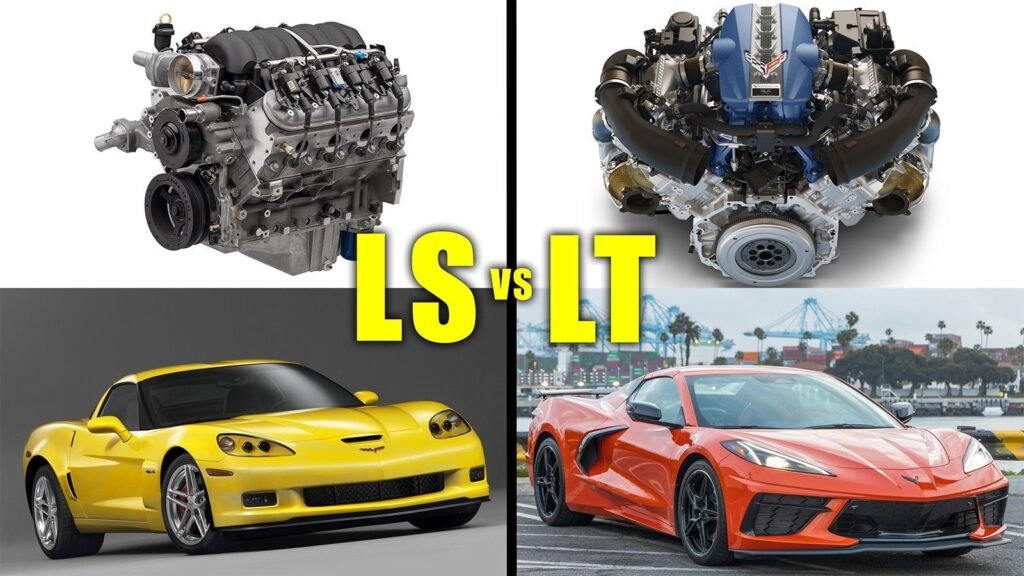
The LS vs LT engine debate comes down to the LS offering proven reliability and strong aftermarket support, while the LT features modern tech like direct injection and better fuel efficiency.
When engine swapping engine or creating high performing cars, an argument pertaining LS and LT engines crops up. The LS engine family, the first of its kind by General Motors, launched in 1997 and changed the V8 engine industry with its simplicity and raw power. The LT engine, LS’s sibling, incorporates new technologies such as direct injection and active fuel management. For those looking to customize and participate in high performance automotive activities, knowing the differences is essential.
In this article, we will dive into the features, technology, history and practicality of each to help you decide which best suits you.
Contents
GM’s Small Block V8 Engine’s Progression
A comparison of the LS and LT engines would be pointless without the history of GM’s small block V8 engines. The first V8 engines that were introduced in GM first started with the Chevy small block in 1955. Ever since that first V8, engines have continuously evolved.
Small-Block Engines History
When General Motors started to create its small-block engines, the engines were first made with the use of carbohydrates. The main purpose of the engines was to be reliable with enough power to be used in basic cars. With the development of more advanced automotive technology, GM was able to concentrate on more advanced power and fuel efficiency. This was the beginning of the design development with the LS engine in the late 1990s.
Starting with the LS engine
The LS engine started in 1997 with the start of the Chevrolet Corvette C5. The LS series was built to be more powerful, modern, and more efficient in comparison to its competitors. The LS series replaced its previous competitors, the Gen I small-block V8, which had been in the automotive industry for decades. Additionally, there were numerous advancements with the LS series such as compact and lightweight engines, better gas efficiency, and more powerful engines.
The LS engine achieved great success with the Corvette. The LS series was used in more GM cars including trucks, muscle cars, and performance cars. The LS series became the fav choice for car enthusiasts and racers due to its great aftermarket support.
The LS Engine: Overview and Key Features
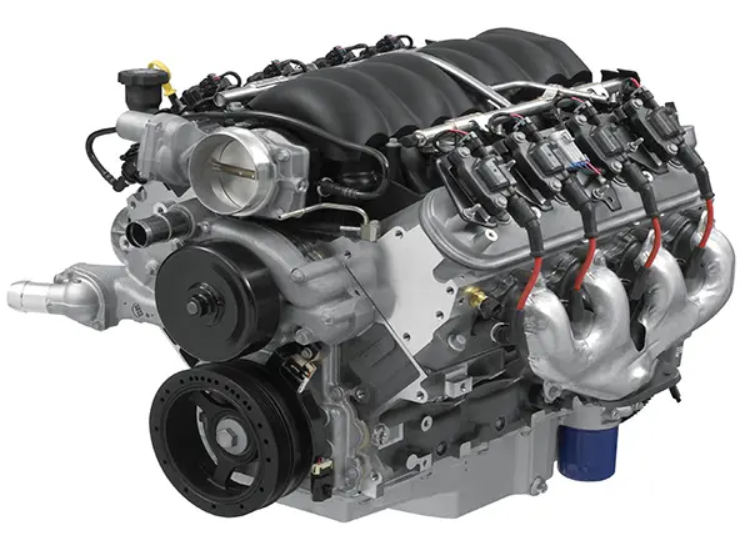
The LS engine family incorporates several advancements and improvements over previous designs. Considering modern benefits and performance features, the LS engine is a clear favorite for a multitude of performance builds and engine swaps. Key characteristics of the LS engine are as follows:
1. Reduced Weight
The LS engine features an aluminum block (on most variants). Weight is greatly reduced over conventional cast-iron engines, allowing for improved performance of the vehicle as weight on the front axle is decreased and handling is greatly improved.
2. Pushrod Engine Design
The LS engine features a pushrod design as opposed to an overhead cam design (OHC) like several contemporary engines. This design keeps the engine more compact and lower in height, providing an edge for engine swaps into older cars that have less space in the engine compartment. Although a pushrod design is utilized, the LS engine still provides great performance and the ability to reach high RPMs.
3. Variant Types
Within the LS engine family range the Corvette C5 LS1, to the LS7 which powers the Corvette Z06. They vary in terms of engine displacement, power, and use. For example:
- LS1: Put out 350 hp from a 5.7L V8.
- LS3: 6.2L V8 which produced 430 horsepower and was used in both the Corvette and Camaro SS.
- LS7: 7.0L V8 which produced 505 hp and was used in the Corvette Z06.
4. Reliability and Aftermarket Support
An engine is considered highly reliable if it has good durability, and that is true for the LS engine. Its reliability has made it a favorite for car enthusiasts who modify, or swap, the engine in other cars. The aftermarket support for the LS engine is also extensive which allows for easy upgrades to things like forced induction systems, revised ingestion and exhalation systems, and revised internal engine components.

LT Engine: An Upgrade
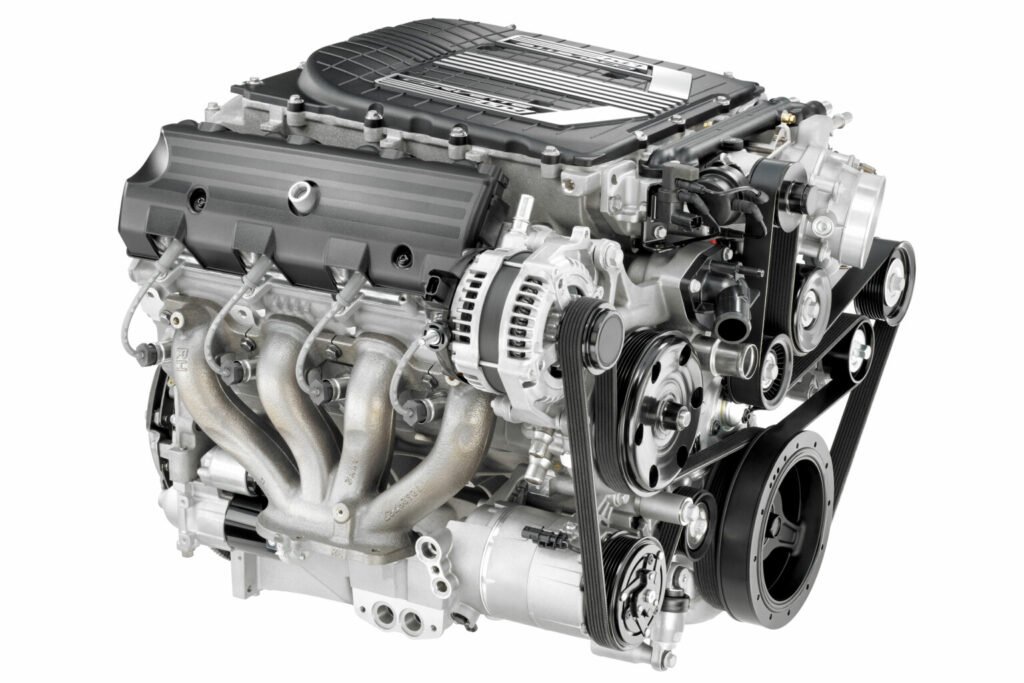
Despite the fact that LT has proven to be a success, it also incorporates advanced technologies such as direct fuel injection (DFI), variable valve timing (VVT), and active fuel management (AFM). This was in response to the demands for modern performance
1. Direct Fuel Injection
Improved performance of the LT engine comes from the transition to direct fuel injection, a technology that injects fuel directly into the combustion chambers. This offers more control over the amount of fuel used. Because of this fuel control, performance and fuel efficiency improve, and emissions decrease.
2. Variable Valve Timing (VVT)
The LT engine features Variable Valve Timing (VVT). This technology optimizes performance by adjusting the timing of the engine’s intake and exhaust valves. This gives rise to improved fuel efficiency and increased power that can be delivered over an extended range of RPMs.
3. Active Fuel Management (AFM)
The LT engine employs Active Fuel Management (AFM) technology, which enables cylinder deactivation at cruising speeds. This helps to noticeably reduce fuel consumption and to improve fuel economy.
4. Popular LT Engine Variants
Popular variants of the LT engine include:
- LT1: found in the Chevrolet Camaro SS and Corvette Stingray, the 6.2L v8 engine produces 455hp and 460lt-ft of torque.
- LT4: this variant is a supercharged version of the LT1. It can be found in the Chevrolet Corvette Z06, producing 650hp and 650lt-ft of torque.
- L83: A 5.3L V8 engine utilized in trucks such as the Chevrolet Silverado. It can produce 355hp and provides a good mix of performance and fuel economy.
The LT engine is better than the LS engine in fuel economy, more torque, and more features and is therefore very popular in today’s performance cars and trucks.

LS vs LT Engine: A Detailed Comparison
Now that we understand the basics of both the LS vs LT engine, let’s break down the key differences between the two. This comparison will help clarify which engine might be the best choice for different applications.
1. Fuel System
- LS Engine: The LS engine uses multi-point fuel injection (MPI), which is a reliable and proven system. However, it is less fuel-efficient compared to direct injection.
- LT Engine: The LT engine uses direct fuel injection (DFI), which delivers more precise fuel control, improving both performance and fuel efficiency.
2. Technology
- LS Engine: The LS engine uses traditional pushrod technology and lacks modern features like VVT and AFM.
- LT Engine: The LT engine incorporates VVT, AFM, and direct fuel injection, making it more efficient and technologically advanced.
3. Power Output
- LS Engine: The LS engine is capable of producing substantial power, especially in its higher-end variants like the LS7.
- LT Engine: The LT engine produces more power, especially with supercharged versions like the LT4, which can produce over 650 horsepower.
4. Fuel Efficiency
- LS Engine: The LS engine is relatively fuel-efficient, but it doesn’t feature the advanced technologies of the LT, such as direct injection and variable valve timing.
- LT Engine: The LT engine offers better fuel efficiency due to direct fuel injection and active fuel management, which helps improve efficiency by deactivating cylinders during low-load conditions.
5. Aftermarket Support
- LS Engine: The LS engine has been around for much longer and has extensive aftermarket support. There is a huge variety of parts available, including performance upgrades, which is why it’s the go-to engine for many swaps and performance builds.
- LT Engine: Although the LT engine is newer, it is quickly gaining traction in the aftermarket scene as more enthusiasts adopt it for performance builds.
LS vs LT Engine Comparison Table
Here’s a comparison table between the LS vs LT engine to highlight their key differences:
| Feature | LS Engine | LT Engine |
|---|---|---|
| Introduction Year | 1997 | 2014 |
| Fuel Injection | Multi-point fuel injection (MPI) | Direct fuel injection (DFI) |
| Variable Valve Timing | No | Yes |
| Active Fuel Management | No | Yes |
| Technology | Traditional pushrod design | Modern with VVT, AFM, DFI |
| Power Output | Varies (350 hp to 505 hp, depending on variant) | Varies (355 hp to 650 hp, depending on variant) |
| Fuel Efficiency | Moderate | Improved due to direct injection and AFM |
| Aftermarket Support | Extensive, widely supported | Growing, but newer compared to LS |
| Cooling | Relies on traditional cooling systems | Advanced cooling systems due to newer technologies |
| Engine Block Material | Typically aluminum or iron | Aluminum block with improved cooling and strength |
| Common Applications | Muscle cars, trucks, engine swaps, racing | Modern performance cars, trucks, and racing |
| Displacement Range | 4.8L – 7.0L | 5.3L – 6.2L |
| Notable Engine Variants | LS1, LS3, LS7 | LT1, LT4, L83 |
Which Engine Should You Choose?
The decision to go with an LS vs LT engine ultimately depends on your specific goals, budget, and intended use.
Choose an LS Engine If:
- You’re looking for an engine with a long history of proven performance.
- You need a broad range of aftermarket parts and support.
- You’re on a budget but still want great performance.
Choose an LT Engine If:
- You want a more modern engine with better fuel efficiency.
- You need advanced features like direct fuel injection and variable valve timing.
- You’re interested in a higher-performance engine with more power and torque.
Both engines are excellent choices, but understanding the LS vs LT engine differences will help you make an informed decision based on your specific needs.
Frequently Asked Questions
Here are some FAQs about LS and LT engines –
- How are LS Engines Different from LT Engines?
The LS engine uses older technology, such as multi-point fuel injection, and the LT has more updated technologies such as direct fuel injection, variable fuel timing, and active fuel management.
- LS Engine vs LT Engine, which is better?
This is determined based on what you are looking for. The LS engine is better for straightforward performance builds and requires less work, as it is easier supported by the aftermarket. The LT engine has better technology, improved fuel efficiency, and it is better for more complicated builds where higher power is sought.
- Can you swap an LS for an LT engine?
Yes, it is possible to swap an LS engine into a car that originally had an LT engine, but it is common for the LS engine to have aftermarket support, and it does require you to modify the wiring and fuel systems and potentially the engine mounts as well.
- Which engine has a higher output? LS or LT?
The LT engine has higher output, especially with the spinoffs like the LT4 engine that generates 650 horsepower, while the LS7 engine from the LS family only generates 505 horsepower.
- Can I turbocharge or supercharge LS or LT engines?
Turbocharging and supercharging are possible for both LS and LT engines. However, it should be noted that the LS has a more established aftermarket for forced induction kits and the LT is just starting to get support for supercharging, especially with supercharged variants like the LT4.
Final Thoughts
The LS engine vs LT engine argument comes down to personal preference and the distinct requirements of your vehicle build. The LS engine has reliability, a huge aftermarket support, and a proven history for use in high performance applications, which is great for the purists. However, the LT engine has newer and more cutting edge technology that enhances fuel economy, engine output and lowers the emissions, which is great for the newer builds or for people looking for that modern performance.
There are good arguments that can be made for both engines and with the proper adjustments, any engine can be built to fit almost any high performance purpose. The decision comes down to whether you value benchmark power and simplicity or modern technology and efficiency.


