Bypass parking brake Pioneer involves disabling the parking brake safety feature, allowing access to video and other functions while driving. This is usually done by wiring modifications or using a bypass harness, but it can pose safety and legal risks.
Regarding car audio systems, especially Pioneer audio systems, people like to say, “bypass parking brake.” Many car enthusiasts and tech-savvy drivers appreciate this feature because it allows more capabilities and access to more functions on the head unit while driving. What does this even mean? What does it mean to bypass the parking brake on a pioneer unit? Would you want to do that?
In this post, we will define and discuss head units bypassing the parking brake, the risks, legality, and steps involved. We will also discuss the reasons this option is sought and whether it is wise. This guide will clearly explain the processes involved whether you are a beginner wanting to improve your car’s entertainment system or simply interested.
Contents
- 1 What Does a Bypass Parking Brake Do?
- 2 What Is the Parking Brake Bypass Doing in Pioneer Units?
- 3 Why Do You Want to Bypass the Parking Brake?
- 4 The Legality of Modifying Parking Brake
- 5 How to Bypass the Parking Brake on Pioneer Head Unit
- 6 Risks of Bypassing the Parking Brake
- 7 Ways to Avoid Problems When Bypassing the Parking Brake
- 8 Frequently Asked Questions
- 9 Conclusion
What Does a Bypass Parking Brake Do?
As most other modern stereo systems, Pioneer head units are built with certain safety features. One of these features includes not being able to play any videos while the car is moving. This is to ensure that the driver is not being distracted with other activities that could take their attention off the road.
But many people find this feature quite inconvenient, especially if they want to watch a video and drive at the same time. Some people might refer to this as a ‘bypass parking brake.’ Essentially, this feature allows one to bypass the safety check of the parking brake, and enables videos, apps, and GPS navigation while driving.
This ‘bypass’ feature is not endorsed by Pioneer, and can have legal and safety repercussions. However, many people want to have this modification done to their car, and readily accept the consequences.
What Is the Parking Brake Bypass Doing in Pioneer Units?
To understand how the parking brake bypass works, we need to understand first how the parking brake restriction works in Pioneer head units. We will technically analyze how the bypass process tricks the system into thinking that the parking brake is engaged.
How the Parking Brake Works in Pioneer Units
To fully understand how the parking brake bypass works, it’s essential to first grasp the function of the parking brake feature in Pioneer head units. Most Pioneer units have a parking brake wire that is connected to a sensor that knows if the car is in park.
When the parking brake is engaged (meaning the car is not moving), the system checks this input and permits access to certain features that would be unsafe or distracting to use while driving, such as watching a video or certain apps.
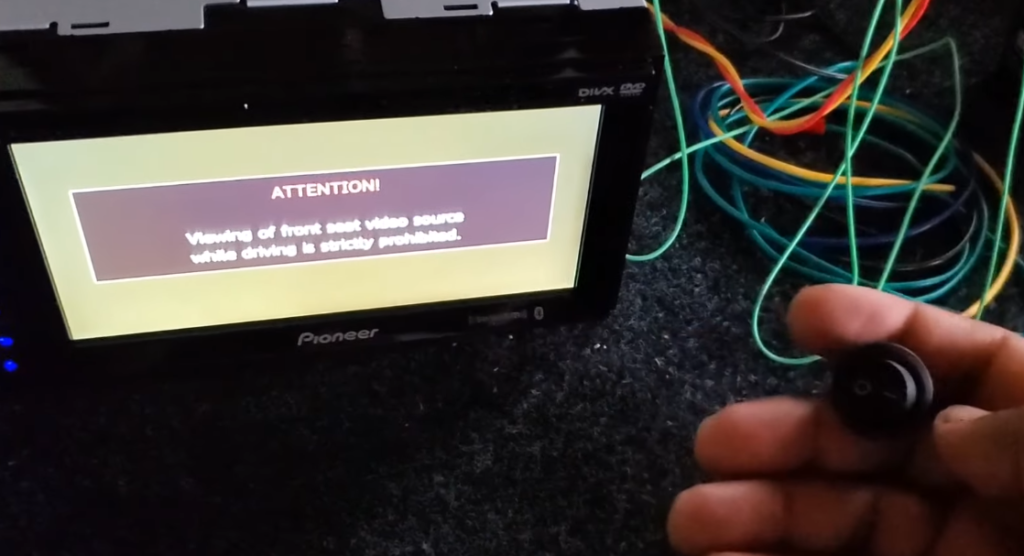
In its default state, the system is designed to keep the driver’s attention on the road. If you attempt to use these features while driving and the parking brake is not engaged, the system will not let you use that feature and will instead show you an error that says you can only access this feature while parked.
System Override
The main aim of bypassing the parking brake feature is to make the head unit think that the parking brake is always on even when the car is moving. There are different systems to achieve this that usually involve altering the wiring systems or using aftermarket devices.
1. Altering Wiring
One of the most frequently seen systems involves altering the head unit’s wiring. Parking brake wires can be found in the vehicle’s wiring system that is usually at the back of the unit or can be found behind the dashboard. The wires can be grounded or connected to a power source causing the system to think that the parking brake is always on regardless of the actual status of the car.
Many DIY enthusiasts enjoy this system because of its simplicity and the fact that no extra devices are needed. Doing anything with the wiring could also be risky because if done wrong it could damage the head unit or make it malfunction.
2. Using a Bypass Harness
If you would rather not deal with any hard wiring, a bypass harness is another option. These are designed to simply plug into any Pioneer head unit and will bypass the parking brake detection. It is a plug and play option and takes very little time to set up with the right modifications.
Though the harness will be the easiest to set up, there is some risk involved. Check local and state laws to see if the harness is legal to use where you live.
3. Software Bypass
More advanced users may, and it is a risk, choose to modify the software and/or firmware within the Pioneer head unit. To do this you would have to upload and flash brand new firmware that would get rid of the parking brake check. This is a tedious and very complex option that is certain to void the Pioneer warranty, along with posing the risk of damaging the head unit or creating other issues down the line.
Why Do You Want to Bypass the Parking Brake?
Before we begin, let’s take a look at the reasons to bypass the parking brake. There are a few reasons how bypassing the parking brake can benefit users.
1. Users Can Access More Features on the Head Unit: Users are usually able to play videos on head units, for example DVDs, Blu Ray’s, and even streaming apps. However, the customer can access these features while the vehicle is moving and the parking brake is on. This gives users the opportunity to play videos while driving and gives the chance for passengers to watch and enjoy while on the road.
2. Access to More Navigation Controls: Once again, when the parking brake is on, users can access certain navigation controls. The parking brake allows the user to access navigation control on the head unit. Bypassing the parking brake gives the user the opportunity to drive and set a navigation destination at the same time. This is beneficial during certain circumstances.
3. Passenger Experience: When you’re not behind the wheel, having the option to use the entertainment systems while the car is moving can really improve your experience. There are entertainment options, like video streaming, games, and fun apps, that passengers can use without waiting for the car to stop.
4. Accessing Features and Apps: A lot of new Pioneer head units have features and a variety of apps that are disabled while the car is moving. This can include apps for directions, media streaming, and social networking. Getting around the parking brake limitation gives the driver and passengers access to a lot more features.
The Legality of Modifying Parking Brake
The legal issues surrounding modifying a vehicle’s safety mechanisms, including a vehicle’s parking brake, are concerning. Safety restrictions on the parking brake are meant to keep the driver focused on the road. Many vehicles have the ability to display videos and use other distractive features, and drivers can modify their vehicle to use those features while driving. These modifications can lead to car crashes.
In most places, modifying safety features on vehicles is unlawful. Most places consider ignoring the parking brake to be a violation of the distracted driving laws, and a car crash is likely to lead to even more legal issues if the vehicle’s safety features have been bypassed.
Dangling a vehicle’s parking brake to modify an audio system may also void the warranty on the car if the modification damages the audio system or any other components in the vehicle.
State-Specific Legislation
In the US, each state has different laws regarding vehicle safety modifications, including parking brake bypasses. Some states have laws that keep you from doing anything that compromises driver safety. Before you bypass the parking brake, you should check your state’s driving laws or talk to an attorney to make sure you aren’t breaking any laws.
How to Bypass the Parking Brake on Pioneer Head Unit
In case you want to bypass the parking brake on your Pioneer head unit, here are simple step-by-step instructions to assist you with the procedure.
Step 1: Assemble Necessary Tools
Make sure to gather the following tools.
- Screwdriver set
- Multimeter (to test connections)
- Parking brake bypass harness (optional)
- Electrical tape (to cover the wiring)
- Wire strippers, and connectors (to modify the wiring, if necessary)
Step 2: Find the Parking Brake Wire
If you are unsure where the parking brake wire is, it is usually found behind the Pioneer unit, or inside the vehicle’s wiring harness. If you aren’t able to find it, refer the Pioneer manual or the wiring diagram. If the wiring harness is labeled, it should say ‘Park Brake’ or something similar.
Step 3: Alter the Wiring or Bypass Harness
You may now either alter the wiring, or attach the bypass harness to fool the system into thinking that the parking brake is on. This is very important because it allows your Pioneer head unit to work properly.
Option 1: Change the Wiring
- Cut the parking brake wire that connects to the head unit.
- Attach this wire to a ground or a 12V power source. This will make the head unit think the parking brake is engaged.
- Use electrical tape to make sure the wire is secured and to avoid short circuits.
Option 2: Use a Bypass Harness
- Insert the bypass harness into the specific area of your head unit and the vehicle’s wiring.
- Complete the setup according to the manufacturer’s instructions.
Step 4: Reassemble and Test
After connecting the wire or putting in the bypass harness, put the dashboard and head unit back together. Check your Pioneer system to see if the bypass worked so that you can access the videos and entertainment options while driving.
Risks of Bypassing the Parking Brake
Bypassing the parking brake on the Pioneer head unit’s system to access more features comes with potential risks.
1. Safety Issues: The most important safety issue is whether you will be distracted while driving. Playing videos or using apps while driving is dangerous. The more you divert your attention from driving, the more likely you are to cause an accident. Safety features are there to help protect you, and removing them can put you at much higher risk.
2. Legal Issues: As mentioned above, it is likely that bypassing the parking brake is illegal where you live. Before making this modification, you should investigate both the parking brake laws and the other laws in your jurisdiction, and speak to an attorney if you need to.
3. Warranty Issues: Bypassing the parking brake will likely void your warranty if there is damage to your Pioneer head unit. If they discover the warranty has been broken due to the removal of the safety function, they will charge you to repair it.
Ways to Avoid Problems When Bypassing the Parking Brake
If you are determined to bypass the parking brake, you should consider the following suggestions to avoid the most problems:
Use Features Responsibly: While driving, do not use the entertainment and video features. Use those features only when it is safe to do so.
Install a Switch: Think about setting up a toggle switch so you can turn the bypass feature on or off whenever you like. This gives you greater control over this feature.
Consult a Professional: If you still have doubts about this procedure, you can look for professional assistance to ensure the bypass is completed safely and effectively.
Related Article
How to Tighten Parking Brake
How Parking Brake Works on Disc Brakes
Why Does My Parking Brake Automatically Engage in My Jeep Compass?
Frequently Asked Questions
Here are some FAQs about bypass parking brake Pioneer –
1. Is bypassing the parking brake safe?
There is certainly an element of risk, considering a parking brake is an added safety feature to prevent distractions when driving. Entertainment features are intended to be used responsibly and are not meant to be used while driving.
2. Do all Pioneer head unit models have the same parking brake override options?
There are different models of Pioneer head units. That makes it essential to check the user manual or wiring diagram of the specific unit to determine the parking brake bypass options.
3. Does parking brake bypass void warranty?
Warranty on the head units is void when the parking brake bypass is done because it is altering the safety mechanisms of the unit.
4. Are there any repercussions of bypassing the parking brake?
Overriding the parking brake can be against the law in some areas. Bypassing the parking brake can cause distractions while driving, which is even more dangerous. Check your local laws before doing this.
5. How can I lessen the dangers of bypassing the parking brake?
Responsible usage when driving is the best way to minimize the dangers of using the bypass. You may add an on/off toggle switch to help reduce the risk.
Conclusion
In summary, bypassing the parking brake on a Pioneer head unit is something a lot of drivers and passengers seem to like because of the convenience and functionality, however, it’s important to understand the possible risks, safety concerns, legal issues, and warranty being voided.
If you decide on parking brake bypassing, ensure you do it responsibly and follow the installation instructions as closely as you can. Always practice safety and make the decision of whether access to these features is worth the possible risks.