


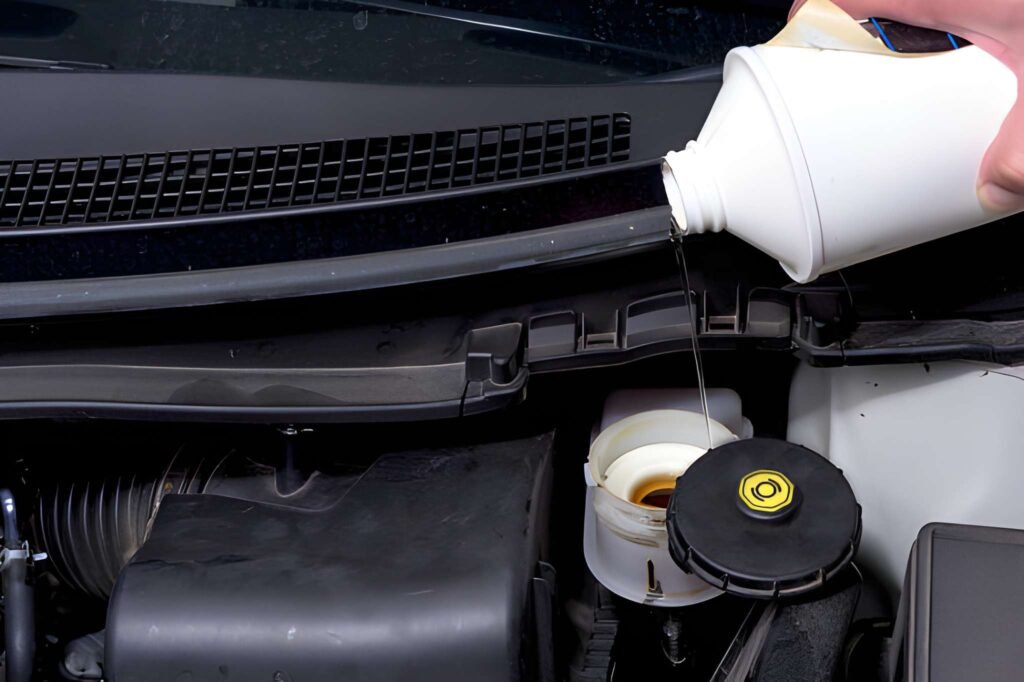
Should car be running when adding brake fluid? No, the car should be off when adding brake fluid. This prevents fluid spillage, avoids pressurizing the brake lines, and ensures a safe, mess-free process. Always check fluid levels with the engine off for optimal results.
Many people ask, “Should I keep the car running when adding brake fluid?” The answer is no, there’s no need to keep the car running, and it is actually dangerous to do so, since adding brake fluid to a car that is running can cause fluid to leak and air to get trapped in the brake lines, which can result in brakes becoming less effective.
This article will explain the risks of adding brake fluid when a car is running, the function of brake fluid in a car’s braking system, the risks of running a car when adding brake fluid, when to contact a mechanic regarding problems with brake fluid, and the need to keep brake fluid at safe levels.
Contents
Should You Add Brake Fluid With The Engine Running?
There are several cases to be made for and against adding brake fluid to the reservoir while the engine is running. Some of the more dangerous scenarios are with the car running. There are certainly more reasons to not do this than to do this, and in the coming paragraphs, we will discuss these.
1. Ease Of Access Of The Brake Fluid Reservoir
Situations like this could be viewed as emergencies and in these cases, do not try and access the brake fluid while the engine is running. Sure, you could wheel your car to the nearest brake fluid, but you should try and avoid that for multiple reasons. Most importantly, in the off position, the brake fluid reservoir is under no sort of pressure, while the driver is ultimately control of the pressure applied to the control. If the car is in the on position and you are trying to mess with the reservoir, not having the cap sealed is likely to cause the brake fluid to leak.
2. Preventing Fluid Spills and Contamination
While the engine is on, the brake system is under pressure. If you try to add brake fluid while the engine is running, the pressure in the brake fluid lines can cause the fluid to spill over the reservoir. Spilled brake fluid can contact hot engine parts or the exhaust and cause a fire. In addition, fluid can spill on the engine and damage paint, electrical parts, and other components.
If the car is off, brake fluid will stay in the reservoir and there will be no pressure to cause a spill. This means you can add brake fluid without the need to clean up a mess since brake lines and the system will be unpressurized.
3. Safety Concern
It is not safe to work on the brake system of a vehicle that is running. It is even possible that a running engine can create a fire hazard because brake fluid may come into contact with the engine. It is very possible that a person may mishandle brake fluid and get it on the paint of a vehicle, and if that happens the paint will be damaged permanently. This is very important to know because of the fact that brake fluid is extremely corrosive, and you would then have to deal with the stain that is created from the contact.
It is also very important to note that the engine may be off for a long period of time and that would then make sure that you would not have to deal with the engine at all and that the brake system also does not have to deal with any additional problems because of the heat or movement of the engine.
4. Balanced Distribution of Brake Fluid
When the engine is off, the brake fluid is in the reservoir and is straight forward to top off. When the engine is on the brake system is pressurized, which can change the amount of fluid in the brake lines. All of the above makes it unsafe to adding fluid while the car is running. It can cause brake fluid to disrupt it’s flow, which may create air bubbles in the system. A reservoir with air can make break pedals feel soft, which significantly prolongs stopping time. It may cause the driver to think bleeding the brakes is necessary when in fact, stopping time is prolonged due to air in the brake lines.
5. Confusing Brake System Sensors
When running, adding brake fluid can create faulty readouts, or in the case of modern cars with brake fluid system sensors, cause the sensors to not read fluid levels correctly. If a car contains a brake fluid system sensor, it may confuse it to the point of lighting the warning signals on the dashboard.
In modern cars, running the brake system while adding fluid gives the sensors a flow of readings, which ultimately means they can give the sensor a flow of readings to confuse them. When the car is off, the brake system is not running and therefore gives the sensors accurate flow readings to prevent confusing signals when fluid levels are actually safe.
How to Properly Add Brake Fluid: A Step-by-Step Guide
We know that the vehicle must be off in order to add brake fluid, and now we are going to review the steps to add brake fluid to a brake system. Following these steps will guarantee that your brake system will stay operational, respectful of the addition of brake fluid.
Step 1: Get the Vehicle Ready
The vehicle must be on a flat surface. Activate the parking brake, as this will stop the vehicle from rolling. Turn the vehicle off, and take the key out from the ignition.
Step 2: Find the Brake Fluid Reservoir
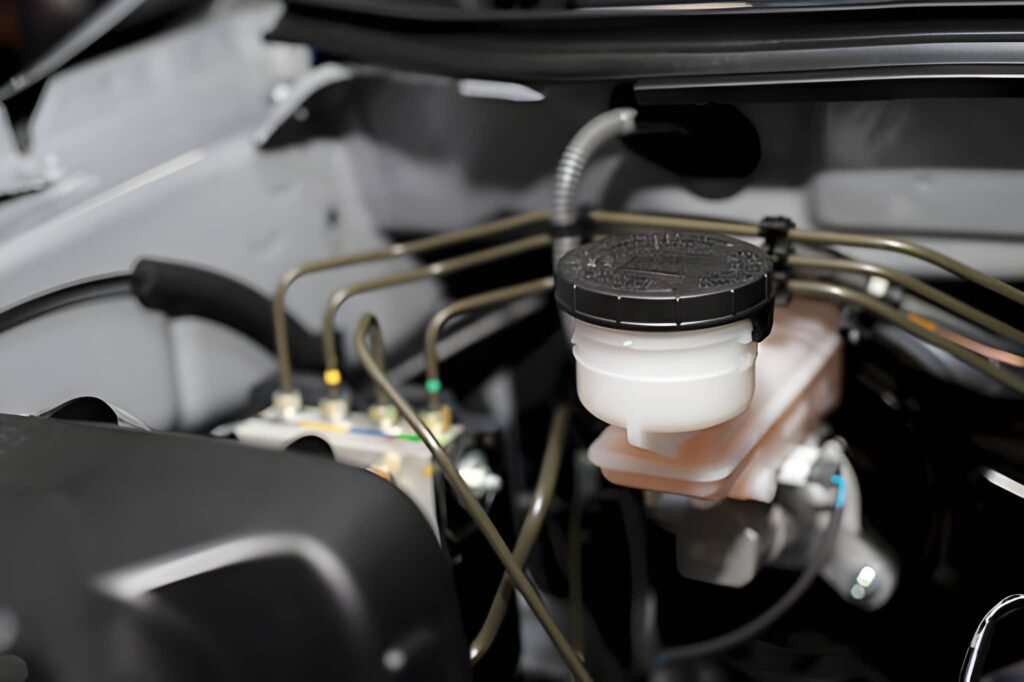
Open the hood of your vehicle, and find the brake fluid reservoir. You will likely find the reservoir at the back of the engine bay, the driver’s side. There should be a ‘brake fluid’ label on top of the brake fluid reservoir. If you cannot find the label, you are best of consulting your vehicle’s manual to find precise directions.
Step 3: Fluid Level Assessment
To find your reservoir’s fluid level, check along the side of the brake fluid reservoir. Most of these are labeled with minimum and maximum levels. It is also true that if the fluid level is below minimum, more fluid is needed.
Step 4: Selecting the Right Fluid
Owner’s manuals list what brake fluid is compatible with your vehicle. Options available are DOT 3, 4, 5, and more. Picking the wrong brake fluid can seriously impair your vehicle’s brake system, and so picking the right fluid and brand is crucial.
Step 5: Brake Fluid Addition
Using your funnel, pour fluid into the reservoir, and do not overfill. Adding fluid is done in steps, and so watch the level closely. Overfilling will have you clean brake fluid which can ruin exposed surfaces such as paint and plastic.
Step 6: Cap Tightening
This is the final step and so if your level is good, ensure the top is right and closed snugly, so that leak or fouling are nonexistent.
Step 7: Check the Brake Pedal
Turn on the engine and depress the brake pedal. It should respond and feel firm. If it still feels soft, the system may need to be bled to remove air pockets in the brake lines.
Common Issues With Brake Fluid and When to Consult a Professional
Though adding brake fluid yourself seems simple and easy, other problems may show up that would need additional professional work outside of this simple task. Let’s look at a few of the possible problems regarding brake fluid and at what point you would need to bring in a professional.
- Fluid Loss: If you are finding yourself adding brake fluid, there may be an issue with a brake system leak, such as a leak in the brake lines or the master cyclone or even the calipers. If you’re losing brake fluid frequently, you need to get your brake system checked by a professional mechanic.
- Brake Fluid Contamination: Moisture, dirt, and air give rise to brake fluid contamination. Aside from brake fluid worsening your brake system’s performance, the contamination may corrode the parts of the brakes. When the brake system fluid systems are dark or murky, that is a sign that it needs to be flushed and replaced by a professional.
- Spongy or Soft Brake Pedal: If after adding the brake fluid, the pedal feels soft or spongy, it may mean that there is some trapped air in the system. If the fluid level has been too low, air can enter the system. Thus, in this case, there may be the need to bleed the brake system to remove this air.
Frequently Asked Questions
Here are some FAQs about adding brake fluid –
- Is it safe to add brake fluid with the car running?
No, it is never safe to add brake fluid with the vehicle running. Add the fluid with the vehicle turned off to avoid the risks of spillage, sensor malfunctions, or introducing air to the brake lines.
- What are the signs of low brake fluid?
Low fluid levels can be accompanied with a spongy or soft brake pedal. Make it a point to add fluid once the levels are low.
- Can I use any brake fluid available?
No, it is illegal to use any brake fluid. Each vehicle contains a list of manufacturer specifications that must be followed. The brake system can be ruined if the incorrect fluid is added.
- What are the consequences of overfilling the brake fluid reservoir?
Overfilled brake fluid can cause brake fluid to spill, damaging nearby components, or may result in the complete loss of fluid.
- What is the recommended practice for checking the levels of brake fluid?
Checking levels should be done during every oil change or a minimum of once every 6 months.
Conclusion
So, should the car be running when adding brake fluid? The answer is certainly not. Adding brake fluid should always be done with the vehicle turned off. This is to avoid fluid loss, brake system interference, and to avoid trapping air in the brake lines. It is worth noting that brake fluid is an important aspect of the braking system, and adding it is important for safe driving. Feel free to ask professionals to examine the brakes to avoid uncertainties.


