


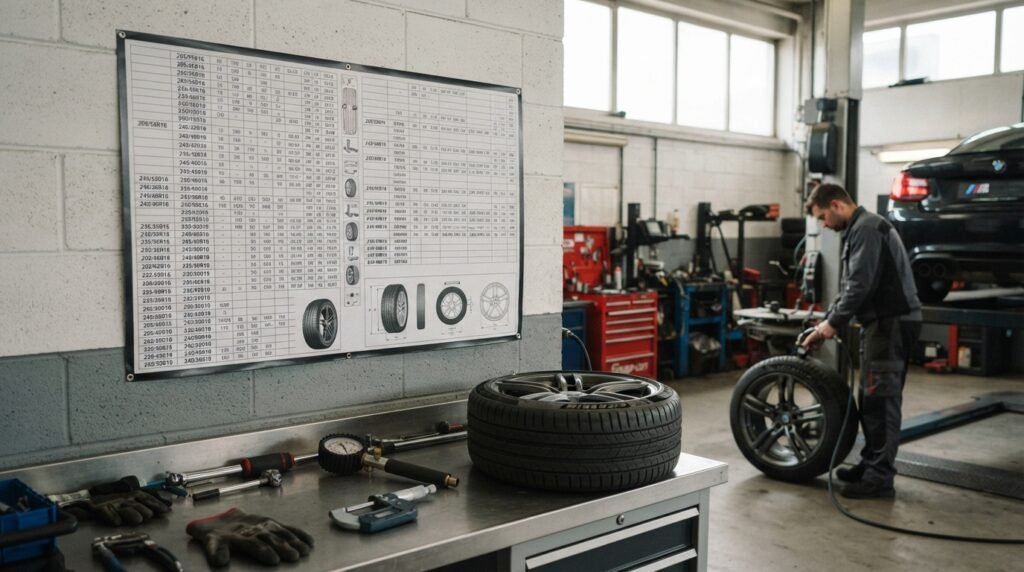
A tire size chart lists the exact dimensions, load ratings, and speed ratings for passenger, light truck, and specialty tires. Use it to confirm a replacement tire matches your vehicle’s original equipment specifications for safe handling.
Tire size codes look like random strings of numbers and letters to most drivers, but getting the match wrong can throw off your speedometer reading, ruin fuel economy, and even compromise cornering stability in wet weather.
Far too many car owners pick replacement tires based on price or brand alone, only to run into unexpected handling issues a few weeks after installation.
This guide breaks down how to decode the numbers on your tire sidewall, how to use a standard tire size chart to find compatible replacements, and the small but critical details most shoppers overlook.


Contents
Decoding Your Tire Size Code
Every tire size code follows a standardized format set by the Tire and Rim Association, so the numbers and letters mean the same thing regardless of brand. Learning what each segment represents is the first step to using a tire size chart correctly.
Section Width
The first number in the code is the tire’s section width, measured in millimeters across the tread from sidewall to sidewall. A higher number means a wider tire that typically provides more grip, but may also increase rolling resistance and reduce fuel economy slightly.
Aspect Ratio
The number after the slash is the aspect ratio, expressed as a percentage of the section width. A 65 aspect ratio, for example, means the sidewall height is 65% as tall as the tread is wide.
Lower aspect ratios (55 or lower) produce stiffer, performance-focused tires, while higher ratios (70 or higher) offer a softer, more comfortable ride.
Construction Type
The single letter after the aspect ratio describes the tire’s internal build. R stands for radial construction, the standard for nearly all modern passenger and light truck tires.
D stands for diagonal bias ply, a rare older design used almost exclusively for trailers, vintage vehicles, and off-road equipment.
Rim Diameter
The next two-digit number is the wheel diameter the tire is designed to fit, measured in inches. A 17 in this slot means the tire fits a 17-inch wheel, and will not mount safely on a 16-inch or 18-inch wheel.
Load Index
The two – or three-digit number before the final letter is the load index, a standardized rating for the maximum weight the tire can support when fully inflated to its recommended pressure.
A load index of 95, for example, translates to 1,521 pounds per tire, so a full set of four can support a total vehicle weight of just over 6,000 pounds.
Speed Rating
The final letter is the speed rating, the maximum sustained speed the tire is engineered to handle safely. Common ratings for passenger vehicles include H (130 mph), T (118 mph), and V (149 mph), while high-performance tires may carry W (168 mph) or Y (186 mph) ratings.
The table below breaks down real-world tire size codes to show how each segment translates to actual tire dimensions and capabilities.
Tire Size Chart
The table below summarizes the relevant differences at a glance.
| Tire Size Code | Segment | Translation |
|---|---|---|
| P215/65R17 95H | P | Passenger vehicle tire (for cars, crossovers, minivans) |
| P215/65R17 95H | 215 | 215mm section (tread) width |
| P215/65R17 95H | 65 | 65% aspect ratio (sidewall is 65% of tread width) |
| P215/65R17 95H | R | Radial construction |
| P215/65R17 95H | 17 | Fits 17-inch diameter wheels |
| P215/65R17 95H | 95 | Load index: 1,521 lbs maximum per tire |
| P215/65R17 95H | H | Speed rating: 130 mph maximum safe speed |
| LT265/70R17 121/118R | LT | Light truck tire (for pickups, full-size SUVs, cargo vans) |
| LT265/70R17 121/118R | 265 | 265mm section width |
| LT265/70R17 121/118R | 70 | 70% aspect ratio |
| LT265/70R17 121/118R | 121/118 | Dual load index: 1,369 lbs (front axle) / 2,833 lbs (rear axle) per tire |
Light truck (LT) tires have significantly higher load ratings than standard passenger (P) tires, so they are required for heavy-duty vehicles even if their section width and rim diameter match your original passenger tire size.
How to Use a Tire Size Chart for Replacement Tires
A standard tire size chart lists all common tire sizes alongside their dimensions, load capacities, and compatible vehicle applications. You don’t need to be a tire expert to use one, as long as you know your vehicle’s original equipment tire size.
First, locate your original tire size on the driver’s side door jamb sticker, or on the sidewall of your current tires if they are the original equipment. Look for that exact size on the chart first, as it is guaranteed to fit and perform as intended by your vehicle’s manufacturer.
If you want to change your tire size for performance, off-roading, or cost reasons, the chart will list allowable substitutions that fit your existing wheels.
When using a tire size chart to compare replacement options, prioritize these three compatibility checks first:
- Exact match to your vehicle’s original tire size (guaranteed safe fit and performance).
- Rim diameter compatibility (you cannot mount a tire designed for a 16-inch wheel on an 18-inch wheel, or vice versa).
- Load index equal to or higher than your original tire’s rating (to support your vehicle’s weight).
If you upsize your tires for better ground clearance, have a tire shop confirm the new size won’t rub against your wheel wells or suspension components at full turn.
Never select a size that changes your overall tire diameter by more than 3% from your original size. Even small diameter changes will throw off your speedometer and odometer readings, leading to inaccurate speed readings and faulty maintenance interval tracking.
Common Tire Size Chart Mistakes to Avoid
Even experienced drivers make avoidable errors when matching tires to their vehicles using a size chart. These three mistakes are the most common, and all can lead to unsafe driving conditions.
Mixing Passenger and Light Truck Tire Sizes
Passenger (P) and light truck (LT) tires may share the same section width and rim diameter, but they are engineered for very different use cases. LT tires are heavier, stiffer, and have higher load ratings, so installing them on a vehicle designed for passenger tires will reduce ride comfort, hurt fuel economy, and may not fit properly inside your wheel wells.
Ignoring Load Index Requirements
Your original tire’s load index is calibrated to support your vehicle’s gross vehicle weight rating (GVWR), including passengers and cargo. Choosing a tire with a lower load index than your original size risks overloading the tire under heavy loads, which can cause overheating, uneven wear, and sudden blowouts.
Choosing a Size That Alters Overall Tire Diameter
A change of more than 3% in overall tire diameter will cause your speedometer to read incorrectly, and may also alter your transmission shift points on modern vehicles. For example, swapping from a 215/65R17 (28-inch overall diameter) to a 215/55R17 (26-inch overall diameter) creates a 7% diameter change, which could lead to speeding tickets and premature transmission wear.
Where to Find Reliable Tire Size Charts
Not all tire size charts are created equal, and outdated or incomplete charts can lead to bad fitment choices.
Use these trusted sources to get accurate, up-to-date compatibility information:
- Your vehicle’s owner’s manual or driver’s side door jamb sticker.
- Official fitment guides from major tire brands like Michelin, Goodyear, and Bridgestone.
- Third-party tire retailer fitment tools, which let you input your vehicle’s make, model, and year to pull compatible sizes.
- The official Tire and Rim Association size database for hard-to-find specialty and off-road tire sizes.
Avoid generic tire size charts from unvetted blog posts or random forums, as they often contain outdated or incorrect compatibility data for newer vehicle models.

Frequently Asked Questions
These are the most common questions drivers have about using tire size charts for replacement tire purchases.
Q: What does the first number on a tire size chart mean?
A: The first number is the tire’s section width, measured in millimeters across the tread from sidewall to sidewall. Wider tires generally provide more grip but can reduce fuel economy slightly.
Q: Can I use a different tire size than what’s listed on my door jamb?
A: Yes, but only if the new size is listed as a compatible substitution in a tire size chart for your vehicle. Stick to sizes within 3% of your original overall tire diameter to avoid speedometer errors.
Q: How do I know if a tire size from a chart will fit my wheels?
A: Match the rim diameter number in the tire size code to your wheel’s size in inches. A tire marked for 17-inch wheels will not fit a 16-inch or 18-inch wheel, no exceptions.
Q: Do tire size charts include load and speed ratings?
A: Most comprehensive tire size charts list load index and speed rating alongside dimension data. These ratings are critical for confirming the tire can support your vehicle’s weight and safe top speed.
Q: What happens if I put the wrong size tires on my car?
A: Wrong-size tires can throw off your speedometer reading, reduce fuel economy, and cause uneven tread wear. Severe mismatches may also compromise handling and increase blowout risk.
Conclusion
Tire size charts don’t have to be confusing tools only for tire shop employees. Once you know how to decode the numbers on your sidewall, you can use a standard chart to find compatible replacements quickly and confidently.
For most drivers, sticking to the exact tire size listed on your door jamb sticker is the simplest, safest choice. If you do want to experiment with different widths or sidewall heights, use the chart to confirm the new size is rated for your vehicle’s weight and won’t alter your overall tire diameter by more than 3%.
When in doubt, ask a certified tire technician to confirm fitment before you make a purchase. A quick 2-minute check can save you from costly returns, uneven tread wear, and avoidable safety risks down the road.


