


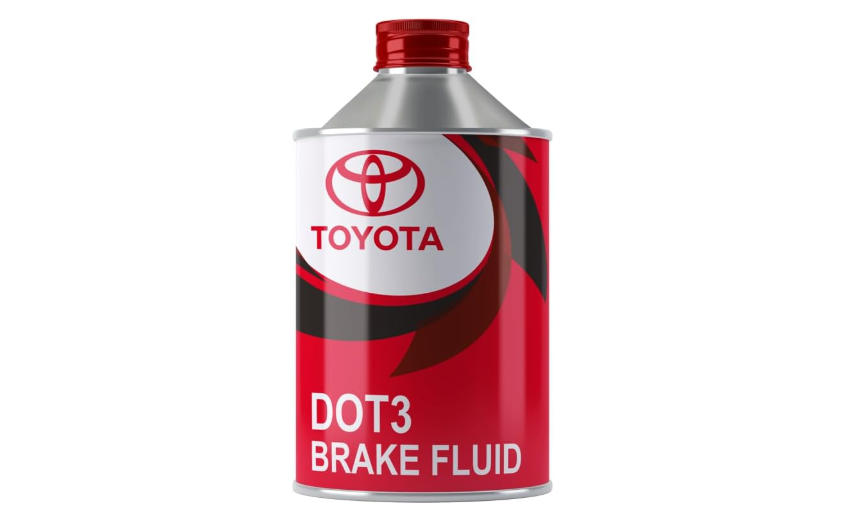
Toyota brake fluid manufacturer provides high-performance fluids tailored for Toyota vehicles, ensuring safety and reliability. These fluids are designed to meet Toyota’s strict quality standards for optimal braking performance.
Choosing the best Toyota brake fluid helps keep your Toyota vehicle safe and reliable. There’s no question that brake fluid is a crucial element in the vehicle’s ability to stop. Toyota brake fluids work best for Toyotas from best performance and dependability. Because all drivers from casual to hard-core need to keep the brake system solid and avoid expensive repairs, brake fluids are essential.
This article explores the different Toyota brake fluids, the process of how they are made, and the importance of using the right one. Toyota owners, new and old, brake fluids are part of keeping Toyotas at the top of the game.

Contents
- 1 What Exactly is Brake Fluid? Why is it Important?
- 2 What Kinds of Brake Fluid Does Toyota Use?
- 3 How Toyota Brake Fluid Manufacturers Guarantee Quality
- 4 How to Select Appropriate Toyota Brake Fluid
- 5 How Frequently Should You Change Your Brake Fluid?
- 6 How to Change or Top Off Brake Fluid in Your Toyota
- 7 Why Use Toyota Brake Fluid
- 8 Frequently Asked Questions
- 9 Conclusion
What Exactly is Brake Fluid? Why is it Important?
Without brake fluid in a car, it wouldn’t be able to stop or slow down at all. This is because, in a car’s braking system, brake fluid is responsible for turning a force into pressure. The brake fluid performs just that when a car’s driver pushes down on the brake pedal. The fluid performs the task of stopping the wheels, and therefore making the car, stop.
When it comes to choosing a brake fluid for your Toyota, it’s important to keep in mind that Toyota brake fluid is manufactured to be high quality and designed to meet the necessary requirements for brake fluid to be in a Toyota. This means that using Toyota brake fluid is important in making sure that your Toyota’s brakes work effectively.
What Kinds of Brake Fluid Does Toyota Use?
Because every car is made differently, there are a variety of brake fluid types that Toyota has to offer, and just like nearly all other automotive manufacturers, there are varying types of brake fluid that can be chosen depending on the types of vehicles. The differences in the brake fluids has to do with its chemical structure, and with the types of fluids varying in their boiling points and performance. These varying types of brake fluids are the ones that you would commonly find in any of the Toyota vehicles or other automotive manufacturers.
1. DOT 3 Brake Fluid
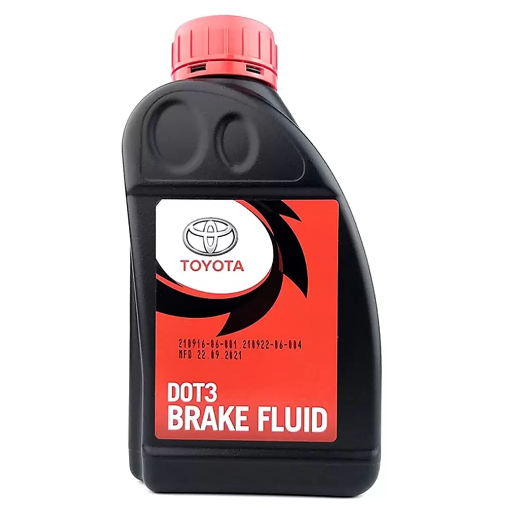
One of the brake fluids most frequently used in Toyotas and other vehicles is DOT 3 brake fluid. It is typically glycol-based and is capable of providing good moisture retention while still providing decent braking performance. It has a good boiling point and decent consistency making it a suitable choice for routine driving.
Benefits of DOT 3 Brake Fluid:
- Good moisture retention
- Good compatibility with most braking systems
- Good boiling point for most driving conditions
Drawbacks of DOT 3 Brake Fluid:
- Considered unsuitable for high-performance vehicles due to the lower boiling point when compared to DOT 4 and DOT 5.1
2. DOT 4 Brake Fluid
Being the higher grade version of DOT 3, DOT 4 Brake fluid has better heat resistance and a higher boiling point. This fluid is better suited for vehicles that do heavy braking or quick accelerations; be it sports cars, trucks, or anything else that offers a higher top end. For some of their models, especially the ones requiring more performance during prolonged braking, Toyota recommends DOT 4 brake fluids.
Benefits of DOT 4 Brake Fluid:
- Higher boiling point than DOT 3.
- Better heat resistance than DOT 3 making it more suitable for high-performance braking systems.
- More heat resistant than DOT 3.
Drawbacks of DOT 4 Brake Fluid:
- More expensive than DOT 3.
- Less compatible to older braking systems that use DOT 3.
3. DOT 5 Brake Fluid
Some Toyota Vehicles – although it’s rarely used in Toyota vehicles it may be require in certain models. DOT 5 is a silicone based brake fluid that has high resistance to moisture and temperature. Silicone-based brake fluid is different than others in that it does not absorb water. However, DOT 5 is not compatible with brake systems that use glycol based fluids, which include DOT 3 and DOT 4.
Benefits to Using DOT 5 Brake Fluid:
- Outstanding moisture resistance
- Excellent temperature fluctuation tolerance
- Enduring and stable, even under extreme conditions
Drawbacks of Using DOT 5 Brake Fluid:
- Unsuitable for vehicles utilizing glycol-based fluids
- Pricey compared to DOT 3 and DOT 4 fluids
4. DOT 5.1 Brake Fluid
When compared to DOT 4, performance of DOT 5.1 is similar, as it has been designed to be compatible with both glycol-based and silicone-based fluids. Offers a higher boiling point making it suitable for extreme driving conditions. It is recommended for Toyota models with high-performance braking, as well as those driven at high speeds and/or subjected to frequent braking.
Benefits of Using DOT 5.1 Brake Fluid:
- Highest boiling point compared to other fluids for extreme driving conditions
- Is compatible with glycol-based fluids
- Greater heat resistance compared to DOT 4 and DOT 3
Drawbacks of Using DOT 5.1 Brake Fluid:
- Relatively high compared to DOT 3 and DOT 4
- Less Brake Fluid availability
How Toyota Brake Fluid Manufacturers Guarantee Quality
When it comes to brake fluid, avoiding breakdowns is a matter of lifesaving. Failure to brake fluid means your brakes can become unresponsive and cause a brake delay. For Toyota brake fluid manufacturers, this is how they optimize performance:
1. Quality Control of Raw Materials
Glycol or silicone, and the additives that make a fluid a Toyota fluid, are the foundation of every Toyota brake fluid. Toyota brake fluid manufacturers select the components that compose the fluid and are ready to integrate it into a Toyota braking system.
Production and purification of brake fluid is done to avoid contamination from moisture, dirt, or any other elements, to ensure that the quality of glycol is on a higher level. Also, to make a brake system more lubricated and less corroded, additives are also included.
2. Testing and Certification
After being combined with the rest of the components of the brake fluids, Toyota manufacturers subject the brake fluids to a certain number of tests which include checking the fluids’ moisture, anti-corrosion, and boiling point. These tests are determine the varied functions the brake fluid can perform. The tests are performed to ensure that the fluid can be exposed to the following conditions: high heat, extreme cold, and moisture.
- Boiling Point Testing: The fluid is exposed to high temperatures and kept there until the fluid raises it’s boiling point. The higher the boiling point, the more heat the fluid can endure before it loses the ability to absorb heat and can start to vaporize and hence it can lead to a brake failure.
- Viscosity Testing: Viscosity testing ensures that the brake fluid maintains the right flow and consistency under various temperatures. Fluid that’s too thick or too thin can lead to poor brake performance.
- Corrosion Resistance: The fluid prevents rust and corrosion of the brake components which is important for the longevity of the brake system. Toyota fluids are formulated with corrosion inhibitors to ensure that the system functions over time and preventing corrosion in the system.
3. Compatibility Tests
Because brake fluids are an important part of the hydraulic system, the fluid must be compatible with all the materials that comprise the braking system such as the seals, hoses, and master cylinders. Given the sensitive nature of these components, Toyota brake fluid manufacturers are careful to not damage any of the hydraulic brake components during their tests.
How to Select Appropriate Toyota Brake Fluid
Selecting suitable Toyota brake fluid involves weighing various considerations. Failing to do so can cause performance issues with the braking system, or, worse, damage to the system.
1. Model of the Vehicle and Year
When it comes to brake fluids, various Toyota models may require different variations. A case in point, a Toyota Corolla may only require braking fluids of the DOT 3 variety whereas a Toyota Land Cruiser will typically require either DOT 4 or DOT 5.1 because of the extensiveness of its braking system and performance requirements. Always check the owner’s manual of the particular vehicle type to identify the recommended brake fluid type for that vehicle.
2. Driving Conditions
The sort of driving dictates what kind of brake fluid is required. Driving in extreme heat or with heavy braking (for instance mountain driving or towing) requires the use of brake fluid with higher boiling point like DOT 4 or DOT 5.1. In everyday driving conditions, DOT 3 is adequate.
3. Climate Conditions
The brake fluid used in extreme weather conditions (hot or cold) should be able to withstand those conditions. In the heat, using brake fluid like DOT 5.1, which has a higher resistance to heat, will be optimal.
How Frequently Should You Change Your Brake Fluid?
Absolutely, the brake fluid has an expiry date. It will begin to absorb the moisture in the brakes, which will ultimately start to corrode the brake system and neutralize the fluid’s boiling point. The moisture content in brake fluid can cause brake fade, which is when the brakes lose their effectiveness due to high temperatures and heavy use.
Flushing Brake Fluid
There are no company standards saying when exactly brake fluid should be flushed. Most Toyota vehicles say to do it every 2-3 years, or 30,000 miles, whichever comes first. If you have any fluid signs such as dark or muddy fluid, you should replace it sooner.
How to Change or Top Off Brake Fluid in Your Toyota
You can choose to change or top off the brake fluid on your own, or you can elect to let a mechanic do it. You will be able to do it much more safely if you let a professional handle it, so here’s a quick tutorial if you want to do it yourself:
Step 1: Find the Brake Fluid Reservoir: You will need to open the hood and find the reservoir. It will be fairly close to the back of the engine, and it should have a brake fluid symbol on it.
Step 2: Examine Fluid Levels: If the fluid is below the full line, add some Toyota brake fluid. Make sure to be careful, as spilled brake fluid can damage the paint on the car.
Step 3: Look for Leaks: If your fluid levels drop on a constant basis you may need to go to the mechanic, as you have a leak in the brake fluid system.
Step 4: Frequently Replace Fluids: It’s time to replace the fluid if it looks dirty or discolored. Remove old fluid and pour new fluid into the reservoir.
Why Use Toyota Brake Fluid
Although there are plenty of other options for brake fluids on the aftermarket, using Toyota approved fluid is the best choice, for the following reasons.
Perfectly Compatible: Since the fluid is made for Toyotas, it works best with the Toyota braking systems.
Better Reliability: Using fluids that are not approved by the manufacturer can jeopardize the entire braking system and cause brake failure.
Better Brake Fluid: Toyota brake fluid is designed to last longer and better than other brake fluids.
Frequently Asked Questions
Here are some FAQs about Toyota brake fluid manufacturer –
1. Should I use a brake fluid branded non-Toyota for my Toyota?
Yes, it may work but not using Toyota accessories will compromise the performance of the brakes
2. How do I know if my brake fluid is contaminated?
Contaminated brake fluid gets darker or will be cloudy with dirt. Clear brake fluid is not contaminated and dirty brake fluid is contaminated.
3. Is it okay to use different brake fluid types?
No, you should stick to one type of brake fluid as its chemical structure and performance can differ. It’s best to go for the one recommended for your vehicle.
4. How do you know if you have enough brake fluid?
By removing the brake fluid reservoir cap, you can see if there’s enough brake fluid. The reservoir should be clear enough to see the fluid level and most Toyotas have it marked for the minimum and maximum levels.
5. How often do you need to change the brake fluid on your Toyota?
You should change the brake fluid every 2-3 years or 30,000 miles, but it can differ for different vehicle models and different driving conditions.
Conclusion
When Toyotas balance safety and performance, we look at brake fluid. Mixing brake fluid with components of with brake fluid with brake fluid manufactured by Toyota is designed with complimenting components for your Toyota. Be it DOT 3, DOT 4, or DOT 5.1 brake fluid, each model Toyota proposes a guide to the brake fluid required. Use the model and abide by the mechanic.


