


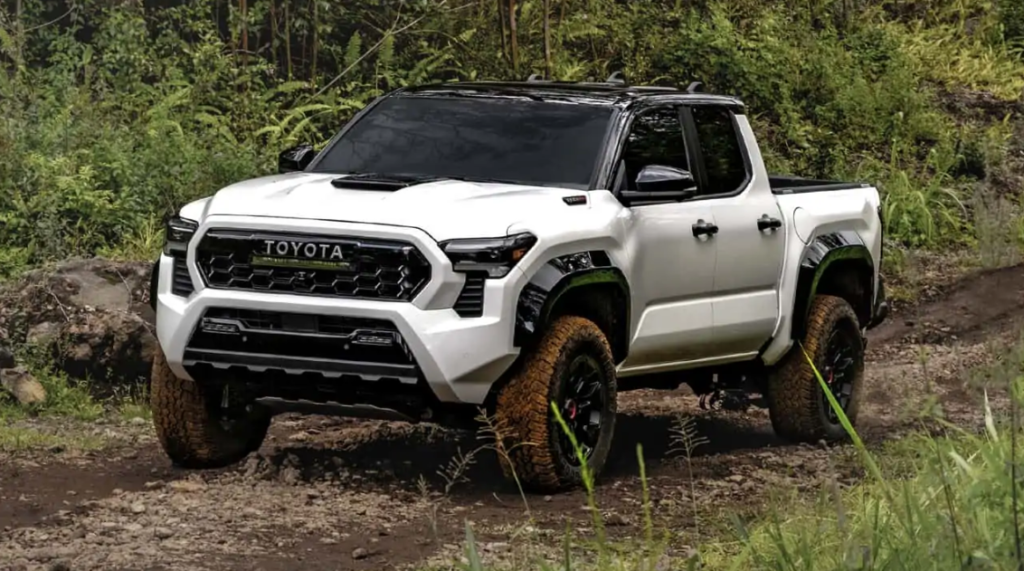
Engine is in a Toyota Tacoma depends on the model and trim. Most Tacoma come with either a 2.7-liter 4-cylinder engine, a 3.5-liter V6 engine, or the newer hybrid gasoline-electric option. Each engine offers a different balance of power, fuel efficiency, and towing capability to suit various driving needs.
Toyota Tacoma is a mid-size pickup truck, which is famous due to its off-road capability, ruggedness, and long life. The information about the type of engine used in a Toyota Tacoma is essential to the buyers, truck enthusiasts and ordinary drivers. The engine is also not only the determinant of performance and fuel efficiency, but also of towing capacity, off road performance and long term reliability. You can drive in the metropolis, transport machinery, or navigate over bad roads, but the correct choice of an engine can make a significant difference in your Tacoma experience.
Within the years, Tacoma have been altered in the sense that they have diverse engines that can match a wide range of drivers. This guide has identified all the engines available on the Tacoma, given specifications, strong and weak points, as well as the tips on how to perform maintenance.
Contents
Why Engine Choice Matters
The engine is everything in a vehicle and the Toyota Tacoma is not an exception. Having knowledge about the engine Toyota Tacoma possesses will make you know the performance, fuel economy and the durability of the engine. Over the years, Toyota has offered several engines to the Tacoma which include the efficient four cylinder engines, powerful V6 engines and even hybrids.
The applications of the Tacoma owners are quite diverse and may include traveling to work, off-road, carrying trailers, or heavy loads. In each of these tasks, the engine characteristics are needed. Proper information about the kind of engines, performance indicators and maintenance needs can either lead to smooth ride or deep pockets.
This teaching manual will be applied by amateurs as well as the professionals. We break down engine requirements, performance and provide you with a detailed analysis to help you make a good choice. By examining the nature of each engine, its benefits, and weakness, you will have the entire picture of what is driving the Toyota Tacoma.
Toyota Tacoma Engines
The Toyota Tacoma is known to have a high level of durability, versatility and ability to travel off-road. One of the major causes of this reputation is its engines. Toyota has provided various powertrains over the years to suit various driving requirements such as efficient work around the city, and challenging towing and off-road adventures.
Tacoma engines are built to last with high technology to maximize on the performance, fuel efficiency and reliability. They come with manual and automatic transmission based on the trim and model year. Knowing these engines can assist buyers to make the appropriate decision, be it the aim is to drive on a daily basis, hard labor or adventure.
Tacoma engines are now divided into three key categories: 2.7-Liter 4-Cylinder, 3.5-Liter V 6 and the Hybrid Gasoline-Electric. The engines are used to serve various purposes and have distinct strengths and trade-offs.
1. 2.7-Liter 4-Cylinder Engine
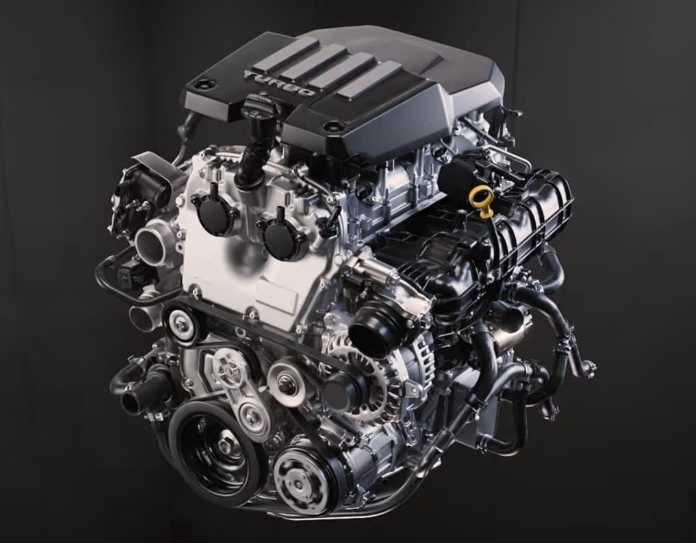
The Toyota Tacoma has a 2.7 liter 4-cylinder engine as the entry-level option. First offered on early models of Tacoma and developed over the years, it is intended to give a combination of fuel economy, reliability and enough power to do light-duty work.
Specifications:
- Horsepower: 159 hp
- Torque: 180 lb-ft
- Fuel Economy: 20-23 MPG city/23-26 MPG highway.
- Transmission: 6 speed manual or automatic.
Performance Overview: Although it is not the highest engine in the range, the 2.7L is perfect in urban driving, commuting, and light hauling. Its acceleration is smooth and its handling can be predicted, which makes it easy to use by beginners who are new truck owners. Its torque can be used on small trailers, boats or light equipment but it cannot be used on heavy-duty towing.
Technology and Design:
- Light alloy block made of aluminium to ensure less weight and ease of handling.
- Dual Overhead Camshafts (DOHC) to allow efficient flow of air.
- Multi-Point Fuel Injection to achieve accurate fuel injection and high efficiency.
Pros:
- Excellent fuel efficiency
- Minimal maintenance and cheap repairs.
- Long lasting and durable provided they are well maintained.
Cons:
- Limited towing capacity (~3,500 lbs).
- Small change in acceleration of fully loaded trucks.
- Not suitable in rough off-road use.
Practical Insights: The 2.7L engine is ideal to drivers who are more concerned with reliability and fuel economy than maximum engine power. It is appropriate with small business owners, urban commuters, and casual drivers in Tacoma who do not require a lot of towing or off-road performance.

2. 3.5-Liter V6 Engine
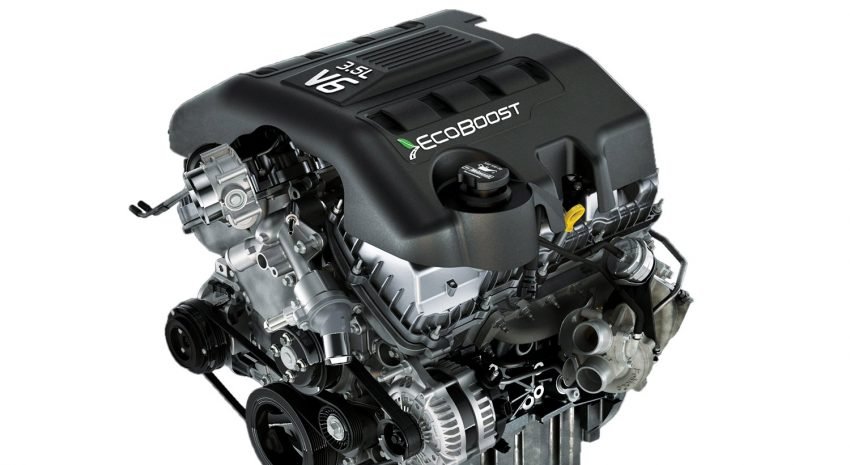
The most popular among the Tacoma customers is the 3.5-liter V6, which in turn presents a considerable boost in power and flexibility. This engine will suit individuals who need to tow, off-road and generally better truck performance.
Specifications:
- Horsepower: 278 hp
- Torque: 265 lb-ft
- Fuel Economy: 18-20 MPG city / 22-24 MPG highway.
- Gearbox: 6-speed automatic (older models have 5-speed manual)
Performance Overview:
The V6 has a power of 278 horsepower and provides the car with a sense of acceleration, a smooth delivery of power, and strong torque to be used in towing and off-road driving. It is capable of towing 6,800 lbs, and thus it can be used in trailers, boats, or equipment. The engine offers a quick, involving driving experience in the highways and off-road.
Technology and Design:
- Dual VVT-i (Variable Valve Timing with intelligence): Timing is optimized to optimize fuel economy and power.
- Lightweight aluminum engine block with no compromise in durability.
- Multi-point fuel injection and contemporary ECU tuning to feel the engine.
Pros:
- Large towing capacity and hauling capacity.
- Strong off-road performance
- Durability, which can be longer than 200,000 miles when well maintained.
Cons:
- A little bit less fuel economy than 4-cylinder.
- Increased maintenance expenses in the long run.
- The heavier engine decreases handling agility over 2.7L.
Practical Insights:
V6 is the versatile engine of the Tacoma owners. It is perfect to the outdoor lovers, the small business owners who tow equipments, and the drivers who would like to have a truck that can be used in the city streets and still in the rough roads. Its power and dependability balance make it the engine of choice in the majority of Tacoma trims.

3. Hybrid engine (gasoline-electric)
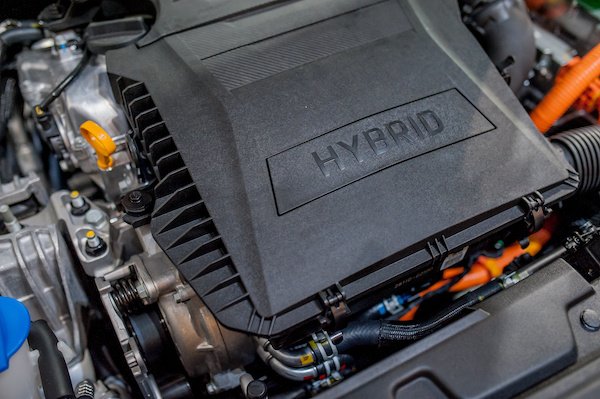
The latest Toyota Tacoma powertrain, the hybrid engine, consists of a gasoline engine and an electric motor in order to offer power and efficiency. This engine is indicative of the increasing need to have fuel efficiency in trucks without reducing the capabilities.
Specifications:
- Horsepower: 302 hp
- Torque: 350 lb-ft
- Fuel Economy: 25+ MPG combined
- Transmission: Automatic with electric control.
Performance Overview:
The hybrid engine provides instant torque in low speed, thus suitable during off-road climbing and pulling heavy loads. Its total power output makes it competitive to the V6 with a significant increase in the fuel economy. This arrangement is especially useful in road rage and commuting to work.
Technology and Design:
- Hybrid system with gasoline and electricity-powered electric motor with 2.4L engine.
- Regenerative braking in order to recharge the battery and increase efficiency.
- High tech power management system which turns to electric and gasoline power smoothly.
- Contemporary engine control system to maximize the performance under any driving conditions.
Pros:
- Better fuel efficiency than V6.
- High off-road and towing low-speed torque.
- Reduced emissions among environmentally friendly drivers.
- Smooth, quiet operation
Cons:
- Greater price than standard engines.
- Less specialized and more complex maintenance required.
- Minor loss in towing power to the V6 (approximately 6,500 lbs).
Practical Insights:
The hybrid Tacoma would suit those customers who would like to enjoy the advantages of a V6 but not at the expense of fuel economy. It is ideal when you have to commute a long way, have to drive to the city and may need to pull something, and have environmentally friendly drivers who do not need to lose the power and strength of the truck.

Comparing Tacoma Engines
The selection of the appropriate engine of a Toyota Tacoma will be based on your driving requirements, financial considerations, and performance requirements. All engines have different power to fuel efficiency ratios and towing capacities, and it is worthwhile to learn the differences between them before making a choice.
| Engine Type | Horsepower | Torque | Fuel Economy | Towing Capacity | Best For |
|---|---|---|---|---|---|
| 2.7L 4-Cyl | 159 hp | 180 lb-ft | 20-26 MPG | 3,500 lbs | City driving, light hauling |
| 3.5L V6 | 278 hp | 265 lb-ft | 18-24 MPG | 6,800 lbs | Towing, off-road, hauling |
| Hybrid | 302 hp | 350 lb-ft | 25+ MPG | 6,500 lbs | Efficient power, long trips |
How to Find the Engine in a Tacoma.
It is not merely a matter of curiosity to know what engine is in a Toyota Tacoma but it influences maintenance, performance, towing capacity, resale value and even modifications. Tacoma engines are different in power, fuel efficiency, and technology, and knowing what you have would mean that you can take proper care of the truck, and make better decisions when purchasing accessories, doing upgrades, and troubleshooting.
Luckily, identifying the type of engine is possible in a number of certain methods, regardless of whether you are a first-time owner, a used truck purchaser, or a fanatic.
1. Check Under the Hood
The simplest method of identifying your Tacoma engine is by simply inspecting the engine compartment. Here’s how:
- Open the hood: Stand in front of the truck and remove the hood latch.
- Find the label on engine cover: The engine cover on most Tacoma engines has a label that easily shows the type and the engine displacement. As an example, there could be V6 embossed on the 3.5-liter engine or 2.7L 4-Cyl on the base model.
- Check other labels: Sometimes, there are labels on the radiator support, firewall or strut towers, which show engine specifications, such as horsepower and torque and engine code.
- Why this is effective: Toyota installs engine covers and labels which are hardly removed and this method is quite effective. It also provides a visual confirmation of the engine type within seconds without any paperwork or tools.
2. De-Code the VIN (Vehicle Identification Number)
A 17 character code that is unique to each Tacoma is the Vehicle Identification Number (VIN). Some of the VIN has the specifics of the type of engine. Here’s how to decode it:
- Find the VIN: It is either on the drivers side dashboard near the windshield, driver door jamb or the registration and insurance paperwork.
- Determine the engine code: Toyota identifies the engine with the help of specific letters or numbers in VIN. As an illustration, one of the characters may recognize the truck as either a 3.5L V6 or 2.7L 4-cylinder engine.
- Check an online VIN decoder: There are numerous websites and applications that will decode your VIN and inform about your engine type, model year, and trim.
- The reason why this works: VIN is an official and standardized source of data about the vehicle. It would particularly be helpful with used trucks where the labels or covers can be removed or changed.
3. Consult the Owner’s Manual
Each Toyota Tacoma is provided with an owner manual, and the engine specifications of all the trims and model years are listed.
- Find the manual: It is usually in the glove compartment. In case of unavailability, there are digital copies in the official site of Toyota.
- Check the engine section: Find tables detailing engine displacement, horsepower, torque, and fuel type in each trim.
- Select your trim: Check what engine your truck has depending on the trim level (e.g., SR, SR5, TRD Sport, TRD Off-Road, Limited).
- How this is effective: The owner manual is the official source of information and includes other information like the recommended oil type, the intervals of the maintenance, and warnings related to the engine.
4. Review the Vehicle Documentation
Paperwork can also tell the engine type:
- Title and Registration: These normally include engine displacement/type.
- Service Records: The service type records (Occasionally) record the engine type during oil changes, belt replacement and other services.
- Window Sticker (Monroney Label): In the event that it is present, the original sales sticker contains engine type, horsepower, and transmission choice.
- Why this works: Paperwork is a trustworthy, official source of information, especially in case of older cars or modified cars.
5. Apply the Online Tools or Dealership Support of Toyota
Toyota offers online services to find the specifications of vehicles:
- Toyota Official Page: You can use your VIN to access all the specifics on your Tacoma, including the engine type, transmission, and trim.
- Local Dealership: Toyota service departments would be able to determine the type of engine according to the VIN or by sight.
- Reason why this works: This can be particularly helpful with hybrid or newer models where the engine identification can not be easily detected at a glance. Dealerships can have access to the entire Toyota database and can verify even the most specifications.
6. Other suggestions and points of consideration
Engine Visual Features: There are some engines with distinguishing characteristics. As an illustration, the V6 3.5L will have a large engine cover with a label of V6 and the hybrid has an extra component of the electric motor that can be seen under the hood.
- Avoid Assumptions: Do not use just sound or weight of truck- various engines can have an external similarity.
- Note Your Results: Capture an image of the engine cover or sticker and write down the VIN to use later.
The importance of Correct Identification
- Maintenance Accuracy: It is important to know what type of engine when it comes to using the correct type of oil, filters, and spark plugs.
- Resale Value: Customers usually question about engine type prior to the acquisition of used Tacoma.
- Towing and Off-Roading: Towing and off-road capabilities differ greatly depending on the engine.
- Upgrades and Modifications: Engine performance upgrades need to be done with the precise knowledge of the engine type and specifications.
Conclusion
There is a lot of importance on knowing what engine comes in a Toyota Tacoma so as to make the right purchase. The engines have their own benefits:
- 2.7L 4-cylinder: Low-cost, efficient and light load.
- 3.5L V6: Powerful, good to pull trailers and off road.
- Hybrid: Fuel economy and high power and technology.
Correct maintenance will make Tacoma engines reliable in years. In commuting, towing or going off-road, the engines on the Tacoma are powerful, reliable and diverse. The selection of the appropriate engine will allow you to enjoy and make the most out of this classic mid-size pickup.


