An organic brake pad is made from non-metallic materials like rubber and carbon. They are quieter and gentler on rotors but wear out faster and perform poorly under high heat.
When you activate your vehicle’s braking system, several things happen in response, and one of them is the application of the braking pads. These pads clamp down on the brake rotors and create the friction needed for stopping. The composition of brake pads consists of different elements, and in all instances, the elements come with their pros and cons.
For example, the composition of organic brake pads has no metals. It is designed for braking systems of standard automobiles, and has the tendency to provide a seamless experience for the driver and minimize noise.
In this article we will discuss what organic brake pads are, how they function, and the rationale for a possible selection of organic brake pads for your vehicle.
Contents
- 1 What are Organic Brake Pads?
- 2 How Do Organic Brake Pads Work?
- 3 Main Compounds in Organic Brake Pads
- 4 Pros of Organic Brake Pads
- 5 Disadvantages of Organic Brake Pads
- 6 Organic Brake Pads vs. Other Types
- 7 When to Choose Organic Brake Pads
- 8 Maintenance for Organic Brake Pads
- 9 Frequently Asked Questions
- 10 Conclusion
What are Organic Brake Pads?
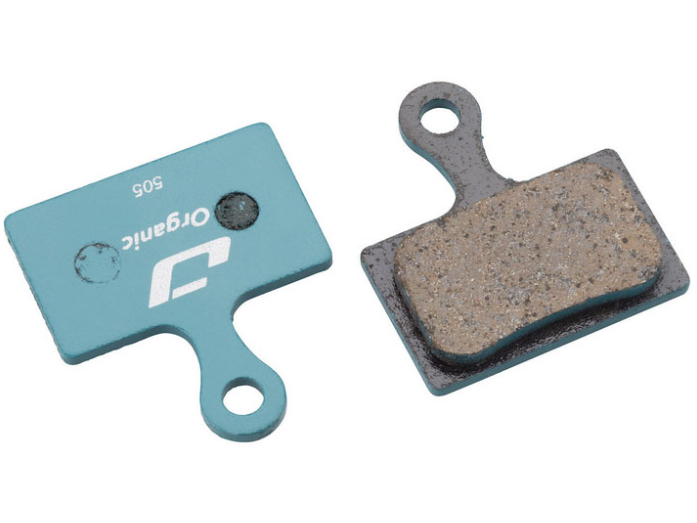
An organic brake pad is a brake pad that I made of non-metal materials including rubber, carbon, aramid fiber (like Kevlar), and other organic substances. These materials are fused together with resins to come up with a friction surface. The material that is placed on the brake pad crunches against the brake rotor to help collect and disperse the braking heat of the braking system. Organic pads are typically a lot softer than and quieter than the metallic brakes, but they also have the most rapid degradation of material in the instances of excessive and aggressive brake use.
Another notable difference between organic brake pads and other brake pads like ceramic and semi-metallic brake pads, is that they are completely free of any metal fibers, which leads to advantages like reduction in noise, and better impact on rotors. Unfortunately, because of the softness, those pads are prone to quicker wearing in higher temperature and heavy duty situations.
How Do Organic Brake Pads Work?
The most basic and important function of any brake pad is to initiate and maintain friction between the brake rotor and stop the vehicle. Organic brake pads do that by using a combination of natural materials to create pressure against the metal brake rotor, which is done by the driver on the organic brake pad. Here’s a brief explanation of the operation of the organic brake pads:
- Application of Brake Pedal: When the driver presses the brake pedal, the hydraulic brake mechanism is triggered, and the brake pads are moved to the brake rotor.
- Friction is created: The friction part of the organic brake pads touches the brake rotor and generates enough friction to slow the vehicle, which is the initial and basic requirement. The friction does not remain friction; it is converted to heat.
- Heat is created: Organic pads suffer from the heat created by friction. The pads are softer, which leads to a relative inability to slow the heat.
- Friction and Heat: After an automobile has come to a stop, the materials in the brake pads will have lessened due to the heat and friction generated. More friction and heat will have been generated the more times repeated stops are made.
Main Compounds in Organic Brake Pads
Some critical materials that make the construction and performance of organic brake pads optimal include:
- Fibers: These make the core of the pad, and they are composed of glass, rubber, carbon, or aramid fibers, such as Kevlar. These materials provide an adequate structure to endure the stresses of a tire in motion.
- Binders: Resins are used to bond the fibers and provide both the shape and strength to the pad. The binder will also contribute the Aids in heat dispersion caused by braking.
- Fillers: Some performance additives ( clay, etc.) are incorporated to aid in the improvement of the pad’s parameters. These additives aid in the regulation of the wear rate and rate of heat destruction.
- Lubricants: Some brake pads have the inclusion.
Pros of Organic Brake Pads
Choosing which type of brake pad to use in your vehicle can be difficult as multiple options are available to you. That said, Organic Brake Pads often win out due to their many positive aspects. Among other benefits, they improve your driving experience by quieting your braking, and reducing wear on other brake components.
1. Less Drive Distraction
Less driving distraction is the defining feature of Organic Brake Pads. Soft pad materials and the use of sound absorbing components in their construction means they are always the noiseless option. Semi-metallic and ceramic brake pads are guaranteed to be noisier than any organic option. This is why many who live in cities, which are commonly populated and can be very noisy, appreciate their use.
2. Improved Brake Component Lifespan
Because they are softer than organic pads, and other types, they are less damaging to the components of the braking system, especially the brake rotors. This means they can be used for longer periods of time as they are less likely to be damaged, and so won’t require replacement as often.
Damage to brake rotors is not only detrimental to the braking system as they can cause unsteady or uneven breaks, but also lead to increased repair and replacement needs. It is for the above reasons that Organic Brake Pads are so highly recommend for cost efficient and low annoyance driving.
3. Gentle on Brakes
Organic brake pads are usually designed to allow the driver to have a smooth feeling when pressing down on the brake pedal. Everyday drivers usually prefer to have a nice gentile feeling when stopping with a brake pedal. Organic pads would be the best fit for those drivers.
4. Cost Saving
For most drivers, the manufacture design simplicity is a positive when it comes to the organic brake pads due to the organic brake pads usually costing a lot less than the brake pads that are made out of semi-metal and ceramics.
5. Environmental Benefits
Unlike most brake pads, organic brake pads are made of biodegradable materials. Because of this, organic pads do not produce dust when the brakes are used. This protects the environment. Organic brake pads do not have metal pieces in their design, so when the organic brake pads are disposed of, they do not harm the environment like most brake pads do.Disadvantages of Organic Brake Pads
Disadvantages of Organic Brake Pads
Organic brake pads do not work for all drivers. Some disadvantages include high use driving situations, which can affect performance, and cause faster wear to the pads.
1. Wear Faster Under Heavy Use
Organic brake pads are generally softer than semi-metallic and ceramic pads, which means they get worn down faster under more extreme circumstances. Drivers that operate their vehicle in mountainous conditions, or do a lot of extensive extreme braking, may want to stay away from these types of pads.
2. Heat Dissipation Limitations
Since organic brake pads are a composite of softer materials, they are not suited to deal with extreme situations or even the high heat that can cause brake pad fade. If this occurs, the pads will become ineffective. This occurs the most in high performance or heavily loaded situations in order to ensure no brakes are engaged for long periods of time.
3. Average Dust Emission
Organic brake pads brake dust emission is categorized as average. It is true that they create less dust than metallic pads, but still will create a significant enough quantity that will end up accumulating on your wheels and other components and will require frequent brake dust cleaning. Luckily, the dust produced is less harsh and abrasive than the dust produced from semi-metallic pads or ceramic pads.
Organic Brake Pads vs. Other Types
When it comes to picking the right brake pads, knowing how organic brake pads work against other pads, like semi-metallic pads, and ceramic pads, is important. Each type of brake pad has its benefits and fits varying driver needs and conditions.
Organic and Semi-Metallic Pads
Semi-metallic pads have a higher percentage of metal fibers, which gives it more heat resistance and improves its durability. That said, semi-metallic pads are louder and do more to wear the rotors. Organic brake pads are more quiet and do not wear the rotors as quickly as other pads.
Organic and Ceramic Pads
Ceramic pads are far more expensive than organic pads, due to the fact that they consist of ceramic material and other bonding agents. While organic pads do offer a less expensive option for everyday drivers, they are not as durable, and do not transport heat as good as ceramic pads do, which in turn, means organic pads have a higher brake dust production.
When to Choose Organic Brake Pads
Organic brake pads are ideal for drivers who:
- Primarily drive in city or highway conditions with little heavy braking.
- Value quieter braking performance and smoother feel.
- Want to preserve the brake rotors and reduce wear.
- Prefer an affordable option for everyday driving.
However, if you frequently engage in heavy braking, towing, or off-road driving, semi-metallic or ceramic brake pads may be a better fit. Organic brake pads are not recommended for high-performance vehicles or heavy-duty use.
Maintenance for Organic Brake Pads
The organic brake pads can continue to function properly as long as there is a consistent maintenance routine in place to ensure their function is not degraded, and their routine is not disrupted by failures in the braking system. Your brake pads and system can function in peak condition for longer if you follow a few simple rules.
- Frequent Inspections: Because of the affordability of organic brake pads, the cost of frequent inspections of your brakes and the brake pads will be reinforced by the organic brake pads. Most of the vehicles have a revised inspection and recommendation in a schedule where customer service representatives will contact the customer at intervals that are close to the range of ten to fifteen thousand miles. If your brakes are unable to function and you hear a noise that is not a normal noise, you should expect to have your brake pads replaced.
- Stay Away From Hard Braking: For organic brake pads, the lifespan can also be extended if there is a consistent brake wear and fade. Extreme brake pads are the pads that will be the least consistent due break fade. Normally a brake should be used at intervals for the purpose of setting the brake and all brake pads to ensure a consistent range of all the brake pads. If there are organic brake pads along, then you should be able to ensure that the pads are able to cool down, otherwise the pads will heat up and will brake.
- Brake Dust Cleaning: Brake dust can build up on the wheels and compromise the braking system. To improve the system’s performance, and to avoid dust build up, clean your wheels periodically.
Frequently Asked Questions
Here are some FAQs about organic brake pads –
- What materials are used to make organic brake pads?
Materials like rubber, resin, and some carbon or aramid fibers (as Kevlar) plus some other materials are bonded together to make the friction surface.
- What Makes Organic Brake Pads Quieter?
Organic brake pads are quieter than metallic pads because they are better at absorbing vibrations, and their braking surface is softer than that of metallic pads.
- Do organic brake pads help rotors last longer?
Wear on rotors is less serious when using organic brake pads compared to semi-metallic or ceramic because they are gentler.
- What is the lifespan of organic brake pads?
Depending on the driving conditions and quality of the pads, organic brake pads typically last between 25,000 and 40,000 miles.
- Are organic brake pads suitable for high performance vehicles?
Since they have low heat resistance, organic brake pads are unsuitable for high performance vehicles or heavy-duty use.
Conclusion
If you want an affordable, quiet, and easy on the braking system option, an organic brake pad is the best option for you. These pads have excellent rotor feel for city and highway driving, and you won’t have to worry about excessive rotor wear. However, due to the low heat tolerance and higher wear rate, they are not a good option for performance driving or heavy-duty uses. Knowing the pros and cons of organic brake pads will help you choose the best pads for your car.