When to change brake pads (mm)? Brake pads should be replaced when their thickness reaches 3 mm or less. At this point, they can no longer provide sufficient braking power, potentially compromising vehicle safety and causing damage to the rotors.
Knowing when to change brake pads (mm) is essential for the safety of your car and the braking system of the car. Brake pads are essential for safety as they help in stopping your vehicle. Due to the pads being made of friction material they will naturally wear down over time. The greater the remaining thickness (measured in mm) the greater their effectiveness at stopping the vehicle.
As a rule of thumb, brake pads should be replaced when they are at or below 3 mm in thickness. However, many vehicle manufacturers specify their own unique mm thickness for when replacement should occur.
This blog will be addressing multiple issues related to brake pads. We will discuss brake pads wear and it’s consequences, factors that will affect the life of the brake pads and how to measure the thickness of the brake pads, we will also explain to you what the different mm measurements mean.
Contents
How to Check Brake Pad Thickness (mm)?
Are you wondering how to know when to replace your brake pads (mm)? The first thing you need to know is how to measure your brake pads to know when to replace them. Luckily, there’s multiple techniques for doing them and you may even be able to do them on your own by possibly bringing your car to an expert mechanic to do a brake inspection for you. To help you measure brake pads and understand what all the numbers mean, follow these guides.
1. Measuring Brake Pad Thickness with a Caliper
In simple terms, a caliper is a tool you can measure as thick as about 10 brake pads measured in most cases in millimeters (mm). If you want to know the most accurate answer to the exact condition of your brake pads, this is the answer. Follow the most simple guide I can give you.
- Raise the Vehicle: You want to make sure the car gets lifted and is properly supported at the right height (this guides includes a combination of a car jack and multiple jack stands to ensure the height is adequate).
- Detach the Wheel: To most people this means to disassemble part of the vehicle’s brake system, meaning you can do this with most brake parts using a lug wrench or powered tool.
- Measuring Thickness: To begin with, measure the distance between the brake pads and the brake rotor with the caliper, and then note the measurement. New brake pads range from 8 to 12 millimeters, and this varies with the material used.
- Taking Measurements: The thickness is compared against the manufacturer’s recommended thickness. Experts suggest that brake pads are to be replaced when they reach or drop to 3 millimeters or less.
2. Inspecting the Brake Pads
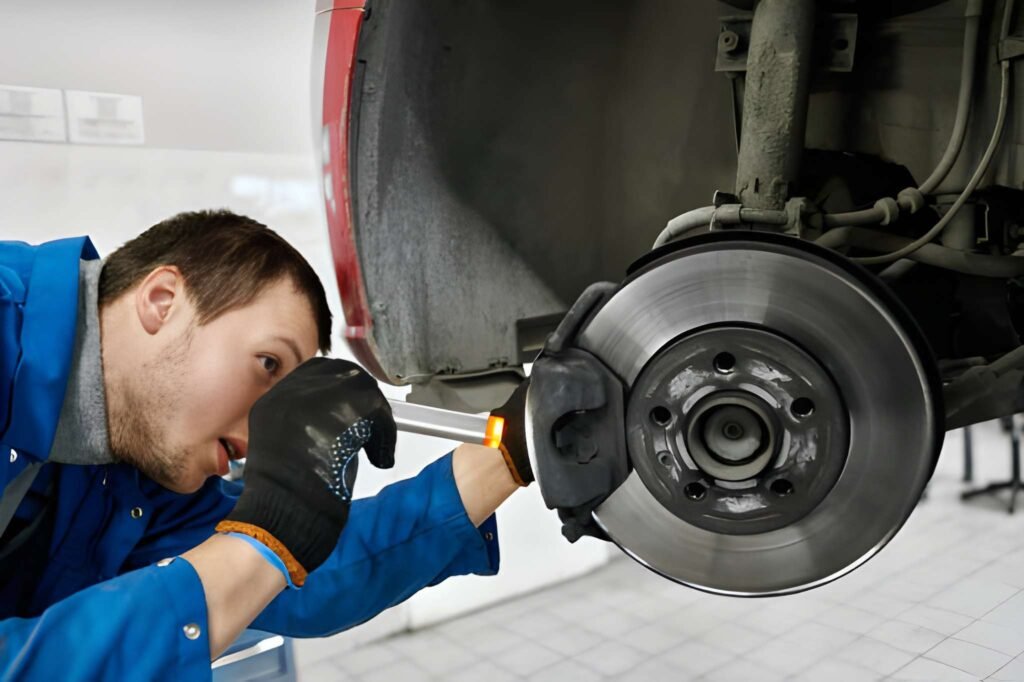
You could inspect the pads without a caliper by merely looking at the pads from the side. Most vehicles are designed with gaps that allow you to push brake pads back so that you can see the material remaining on each brake pad.
- Visual Checks: You probably would be able to see some of the vehicle’s brake pads behind the wheel, at least in most vehicles. Enough light would be required that using a flashlight would be recommended to assist you in seeing the pads more clearly.
- Estimate the Thickness: Assess your brake pads’ condition based seeing them from the service opening. If the pads look very thin or are very close to being flush with the rotor, they likely need to be replaced. Generally, if you do not see any, or very little, pad material, it’s likely time to replace them.
3. Checking for Wear Indicators
Many newer models of brake pads come with these built-in wear indicators. These are installed clips, or grooves, that create a squeak or squeal when the pads are worn. If you are hearing these sounds your pads are likely at a critical thickness, and it is time to replace them. Even though you will pull a measurement from your pads at some point, it is still a good early warning.
What is the Minimum Brake Pad Thickness (mm)?
The minimum brake pad thickness (mm) is important for restoring safety to any vehicle. Brake pads that get too thin cannot create enough friction to stop the vehicle. To guarantee proper braking and to spare the brake rotor from further damage, brake pads need to be changed before they get too thin.
Recommended Thickness for Replacement
A basic rule for safety is to replace brake pads when they get to 3 mm. At that point the pads are too thin to create enough stopping power. Most manufacturers save their customers from rotor damage weeks or months following the replacement and recommend changing pads when the thickness is between 2 to 3 mm.
Though, there may be exceptions to this rule for some high-performance or heavy-duty vehicles. In those cases, the manufacturer’s guidelines should be followed.
New Brake Pads Thickness Range
- 8 to 12 mm: New brake pads should measure between 8 and 12 mm for maximum effectiveness.
- 4 to 5 mm: Although still functional to some extent, the extent of wear remaining at 4 to 5 mm means that they should be more closely observed. 4 to 5 mm on brake pads is often seen as the ‘halfway’ mark, meaning that they would need them to be changed in the near future.
- 3 mm or Less: It is critical to change brake pads when they wear down to 3 mm or less; checking the brake pads becomes critical at that point. Driving with brake pads that wear down to 3mm or less is dangerous. This situation means that you would find yourself having to make considerable extensions to your brake distance; 3 mm or less will cause your rotors to become damaged; and the brake pads will wear beyond your rotors.
Why Is It Important to Replace Worn Brake Pads?
Certain brake pads need to be changed and it is about time that they are changed, which is essential to the safety of the vehicle; there are more reasons that can be explained further, but they are of considerable importance.
1. Ensuring Safe Braking Performance
As brake pads become worn, they become less able to produce friction against the brake rotor and will therefore be less able to stop the car. Driving with worn brake pads is dire and will cause you to have to put in considerable amounts of time on the brakes, will lead to an increased difficulty in bringing everything to a complete stop, and will lead to an increased risk of collisions.
2. Stopping Rotor Damage
Deep scoring on rotors can happen when the metal backing plate of the brake pads hits a rotor. When this happens, new brake pads really struggle to fit to the rotor. By replacing your pads before they get dangerously thin, you can prevent this and save your rotors from expensive, premature replacement costs.
3. Preventing Brake Fade
If your brake pads are worn down too far, you can experience a phenomenon called brake fade. This is dangerous, as your brakes lose stopping power as they get hot. This is especially problematic when driving on a hill, or if you are in heavy traffic and need to stop and go repeatedly. By replacing your brake pads, you can ensure that your brakes are working as they should in all driving situations.
How often should brake pads be checked and replaced?
Various factors determine when brake pads should be replaced. Most drivers should be replacing their brake pads after every 30,000 – 70,000 miles. Factors such as driving behaviors and road conditions determine when brake pads should be replaced. It is ideal that the thickness of the break pads is checked once a year, sometime after the 12,000 mile mark to ensure the pads are thick enough to be of use. Brake pads for thick skinned vehicles will need to be replaced more often and in more harsh driving conditions.
It is time to replace your brake pads if:
- brake pads make a squeal or squeaking sound.
- brake pads make a grinding sound which might mean that your brake pads are in need of replacement and your vehicle is in need of some maintenance because your pads might be in contact with the brake rotor.
- when the brakes are applied and the vehicle vibrates or shakes.
- when a vehicle takes a longer than usual time to stop.
- brake pads can be seen through the momentum of the rotation of the wheel.
Frequently Asked Questions
Here are some FAQs about brake pads mm changing time –
1. What is the minimum thickness for brake pads before you should change them?
3mm is generally regarded as the minimum safe thickness, and below this, you should replace your brake pads.
2. Is it possible for me to check the thickness of the brake pads?
Yes, it is possible. You may use a caliper, or you may check the thickness of the brake pads via the wheel rim.
- How many miles can I travel on a set of brake pads?
Depending on the vehicle type and the conditions of driving, brake pads can last from 30,000 to 70,000 miles.
- What will happen to me if I do not replace the worn brake pads?
If the brake pads are not replaced, it will decrease the braking power of the vehicle, increase the distance required to stop the vehicle, and damage the rotor brake.
- How often is the brake pad inspection performed?
To guarantee the brake pads are not too worn, the brake pads inspection is performed at a minimum, once a year, or every 12,000 miles.
Conclusion
Knowing when to change brake pads (mm) could save you from an accident. Safety should always come first. If your brake pads have thinned to a level of below 3mm, you need to change them. You can monitor the condition of your brake pads by performing regular checks whether visually or using a caliper.
The best practice to prolong the life of your car’s braking system is to change brake pads before the pads have worn down completely. This practice will also prevent the brake rotors from sustaining further damage. It will also ensure optimal braking performance. It is always your safety that is at the core of this practice. It is also important to understand that aggressive driving habits, the weight of the vehicle, and the driving conditions can impact the rate at which brake pads wear out. Change them at the right time.