


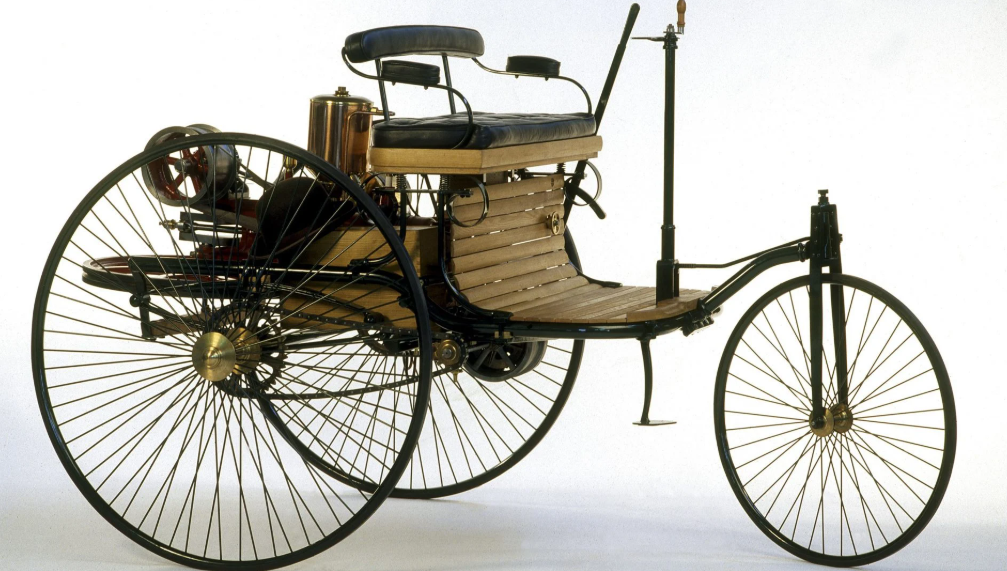
When was the first car engine invented? The first car engine was invented in 1885 by Karl Benz, powering the Benz Patent-Motorwagen, the first practical gasoline-powered automobile.
One of the most significant milestones in the history of human transport is the invention of the car engine. Though many historians argue about the exact moment the first engine was created, a great deal of them agree that Karl Benz constructed the first fully operational vehicle powered by an internal combustion engine. His creation in 1885 was, in fact, the first step toward an automobile industry, though many other innovators made the industry engine technology secondary inventions as well.
Early automotive engines underwent a great deal of change from inefficient, bulky designs to the sophisticated and high fuel economy machines of today.
This article will explore the journey of the first car engine and examine the most significant contributors.

Contents
The Pioneering Era: Early Engines and Experimentation
Before a fully realized car engine existed, there were many other types of engines and fuels that early inventors tried to create. The numerous attempts to create an engine to sufficiently and efficiently power a vehicle included everything from steam to gas, and electric powered engines. Instead, early designs never had the practicality and reliability that was needed for manufacturing.
Steam Engines: The Beginning of the Automobile
Before the engine we know today as the automobile engine existed, the first use of engines in vehicles were steam engines. The first steam engines were developed for trains and ships in the 18th century, but by the 19th century, steam engines were being used in road vehicles.
One of the first road-going steam powered vehicles was built by British engineer Richard Trevithick. In 1801 he built the Puffing Devil, which was the first steam powered carriage to successfully drive down a road in England. Steam engines were also large and took a long time to heat, so in the end, they were inefficient and unrealistic for personal and consumer vehicles.
The Shift to Internal Combustion Engines
Internal combustion engines (ICE) represented a watershed moment of development in the automobile industry. The need for a lighter, more practical motor led to the construction of ICE, which unlike steam engines, were powered by burning fuel internal to the engine. With this game-changing development, the internal combustion engine replaced steam engines in road going vehicles.
The earliest versions of internal combustion engines were pioneered by Belgian inventor Etienne Lenoir. In 1859, Lenoir created an engine that ran on gas. It was one of the first engines to use the internal combustion principle. Lenoir’s engine was, however, very inefficient, and the use of it in vehicles was very unreliable.
The Advancement of the Automobile Engine
The development of personal transportation was greatly enhanced by the use of automobile engines. With fast-paced engine development, and the ability of manufacturers to mass-produce automobiles, internal combustion engines quickly became a common and practical way to power vehicles. We shall look at the ways automobile engines developed in this important period.
Nikolaus Otto and the Four-Stroke Engine
Nikolaus Otto was one of the key contributors to automobile engine development. Otto invented the four-stroke engine, known as the Otto engine, in 1876. This engine became the basis on which all modern car engines were built. The four-stroke engine is unique as it has 4 phases in 1 complete cycle which are the intake, compression, power, and exhaust phases.
Otto design Otto engines with an aim of making them more versatile and compact than its predecessors. This helped achieve more flexibility than any of its predecessors. This was an important revolution in solidifying internal combustion engines for vehicular use. The Otto engines helped Otto gain phenomenal acclaim and also helped solidify an Otto engine based revolution in almost a century of vehicular engine technology.
Otto’s Innovation Brought To Life The First Vehicle Engine: Karl Benz
Although Otto’s combustion engines were extraordinary, a German engineer and inventor, Karl Bens, is also credited for successfully creating the first functional automobile engine.
1985 is when Karl Bens introduced the Bens Patent Motorwagen: the first of its kind automobile. It also carried a four-stroke cylinder with an Otto design engines. It was also one of the first to use petrol.
- Practical Use: Benz design was distinct in its offering of a contemporary approach. It was the first that offered reliable and assured control for effective movement with the use of a petrol engine.
- Mobility: An engine small enough to fit and powerful enough to drive for a reasonable distance made Benz’s engine the first operational engine for a road car.
- Efficiency: Opel’s steam engines could not match the distance a car could travel on gas alone.
The Success of Benz’s Patent-Motorwagen
Besides being a technical marvel, Benz’s car was a commercial success. Benz’s wife, Bertha, drove the first-ever automobile on a 106-kilometer (66-mile) round trip from Mannheim to Pforzheim, ending and beginning in the same city. This trip was the first-ever long-distance trip in an automobile and it showcased the feasibility of the car’s engine.
Benz’s car attracted a lot of interest as it was a first of its kind. He was awarded the first patent for an automobile engine in 1888.
The Evolution of Car Engines: From Benz to the Mass Production Era
After Benz achieved building the first car, car manufacturing boomed worldwide. Engineers also started to develop affordable car engine designs to differ from Benz.
Henry Ford and the Mass Production of Cars
Although Benz developed the first car, it was Ford who mass produced the first accessible car, the Model T, using the still in development assembly line for car production. Ford’s Model T was the first car to incorporate an improved version of Benz’s car engine, which included more than one cylinder, and also improved fuel systems that were used in many other cars.
The Model T and other cars produced using Ford’s assembly line were also the first cars that were affordable for many Americans. Ford’s assembly line production methods also lowered the costs of car production. This also started the first mass production line in the car manufacturing industry. Ford’s mass production methods in his assembly line also offered his competitors lowered production costs, kicking off major competition in the car manufacturing industry.
The Advancements of the 20th Century: More Power, More Efficiency
In the 1920’s, 30’s, and 40’s, when the Model T was one of the most prominent cars on the market, the automotive industry worked primarily on refining how within an engine could be most efficiently implemented. Performance, dependability, reliability, and fuel consumption were the primary focus of improvements and innovations among their competitors:
- V8 engines: With the introduction of V8 engines in the 1920’s, cars became able to travel faster and carry larger loads because of the increased power.
- Fuel Injection: By the 1950’s and 1960’s, Many car engines obsoleted carburetors to fuel injectors, and fuel consumption became more efficient.
- Turbocharging: In the 1970’s, the introduction of turbocharging technologies enabled faster and more fuel efficient machines to be made, as more power could be made without increasing the physical size of the engine.
- Electronic Control Systems: 1980’s and 1990’s aftermarket electronic control systems became popular and more efficiently utilized fuel and reduced the amount of waste of fuel burned.
The Push for Green Engines
In the 21st century, the rise of environmental awareness encouraged the automotive industry to pursue engines that were powerful and clean. Hybrid engines and electric vehicles (EVs) became more popular, marking the transition to practical alternatives to traditional engines driven by gasoline.
Modern Car Engines: The Future of Transportation
Today’s car engines have advanced to include hybrids, electric motors, and internal combustion engines with high power, fuel efficiency, and less environmental impact. Coaches like Tesla and Nissan use electric motors which provide zero-emission transportation.
The automotive industry is also looking at options like hydrogen fuel cells and self-driving cars which could change the way we have car engines forever.
Frequently Asked Questions
Here are some FAQs about the time of first car engine invention –
1. Who invented the first car engine?
Karl Benz invented the first real car engine in 1885. He created the Benz Patent-Motorwagen, which was the first gas-powered car that could drive on public streets.
2. What type of engine did the first car have?
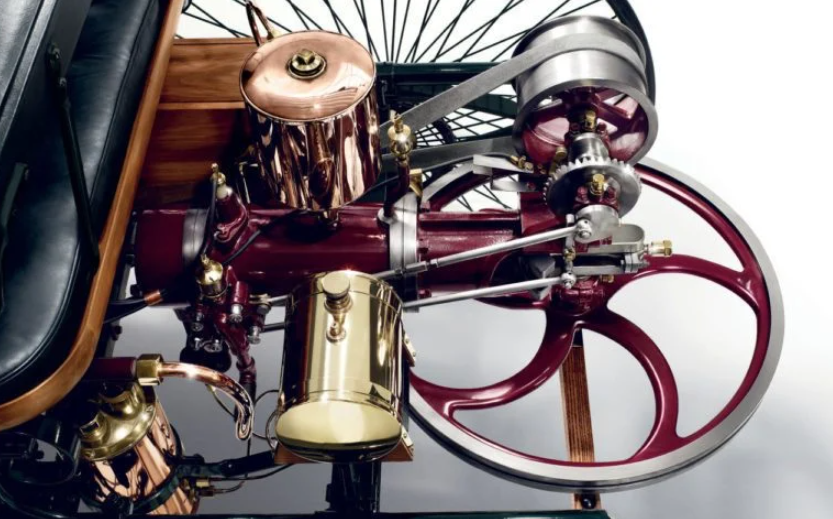
The first car engine used in the Benz Patent-Motorwagen had one internal combustion engine with one cylinder that was 4-stroke and was powered by gasoline.
3. What was the first automobile powered by an engine?
The first auto that was powered by an engine was also Karl Benz’s Benz Patent-Motorwagen. This car was created in 1885 and is the first real automobile.
4. How did early automobile engines develop?
Early automobile engines were single-cylinder engines. Eventually, automobile engines evolved to having multiple cylinders, and added features such as fuel injection, turbocharging, and electronic controls to improve efficiency and performance.
5. What developments came after the first automobile engines were built?
After the first automobile engines were built, developments included the first V8 and hybrid engines, fuel injection systems, and mass production of engines by Henry Ford.
Conclusion
Karl Benz built the first car engine in 1885, making it the first engine in modern transportation. This invention led to the revolution of the world and the automotive industry. The introduction of the four-stroke engine by Nikolaus Otto led the world to continuously improve car engine technology. Modern technology such as electric and hybrid engines show how far the automotive industry has evolved. The industry is now building self-driving cars, showing us the future of transportation.
The evolution of the car engine from its simple beginnings to the sophisticated mechanisms of today is a testament to unparalleled creativity and foresight of numerous inventors and engineers. Advancements in green technologies and self-driving systems continue to shape the future of the car engine.


