


Where does brake fluid leak from? Brake fluid can leak from the brake lines, master cylinder, calipers, wheel cylinders, or the reservoir due to damaged seals, corrosion, or wear.
Nobody likes dealing with vehicle issues, and perhaps even less with the effects of those issues, such as messy driveways. One of the most crucial parts of any vehicle is the braking system and even more vital is the brake fluid. It is the fluid that allows the force of the brake to be applied. Without it, stopping at traffic lights, or slowing down to avoid a collision, is impossible. If the system is leaking, it needs urgent addressing to avoid a collision and possible loss of life.
Simply put, a leaking fluid system is a time bomb that is not even being serviced. The major components that allow the vehicle’s braking system to function properly and avoid becoming a ticking time bomb to the driver and everyone else share the same road, and it’s brake fluid. As soon as brake fluid leaks from a major component of the braking system, the driver and everyone else using the road are at risk. The driver needs to fix the brake component system urgently.
This blog is focused on the major components of the system and what the driver needs to check and monitor. The major components are identified and even described in a way that is user friendly so the driver can adequately monitor the components.

Contents
The Purpose of Brake Fluid
Brake fluid is a hydraulic fluid used in the system of your car’s brakes. When you step on the brake pedal, the fluid gets pressurized and sent through the brake lines, transferring that pressure to the brake components. This includes the brake calipers and wheel cylinders, causing them to press on the brake pads. This action is what slows down your car.
The entire brake system relies on hydraulic pressure, and brake fluid is responsible for that. The brake system also relies on there being a sufficient amount of fluid in the system. If the fluid is dirty, or there is not enough of it, your car’s brake system will not function properly. Also, brake fluid can take in water over time which can change the quality of the fluid and in turn effects the performance of the brakes.
Common Locations for Brake Fluid Leaks
Often, there are many places where brake fluid can leak from in the brake system and knowing where it leaks is important for repair. Some of the common places in a vehicle where brake fluid leaks are listed below.
1. Brake Lines
Brake lines are one of the areas brake fluid leaves the system. Steel or braided stainless steel lines are used to transport fluid from the master cylinder to the brakes, and are then covered in a protective rubber. Like the protective rubber, the steel can deteriorate from corrosion, impacts, or age.
Signs of Leaks in Brake Lines:
- Puddles of brake fluid that are often located under the brake lines, or under the vehicle, near the wheels
- Brake systems that are less efficient and brake pedals that feel soft and spongy, signaling a loss of fluid.
- Brake lines that show signs of rust that can decrease the lines’ rigidity and increase the chances for cracking.
The construction of the brake line is intended to stand the pressure of the braking system; however, the presence of corrosion and/or physical damage can damage the construction integrity, which leads to leaks. If the brake lines are visibly damaged, or rusty, it is imperative that these lines are changed before further damage is done.
What to Do:
- Inspect brake lines for any signs of rust, cracks, or any signs of damage.
- Have any damaged lines replaced by a mechanic.
- After your brake lines have been repaired, bleed the lines and bring the brake fluid up to proper levels to ensure that the system is working and the brake lines are repaired correctly.
2. Master Cylinder
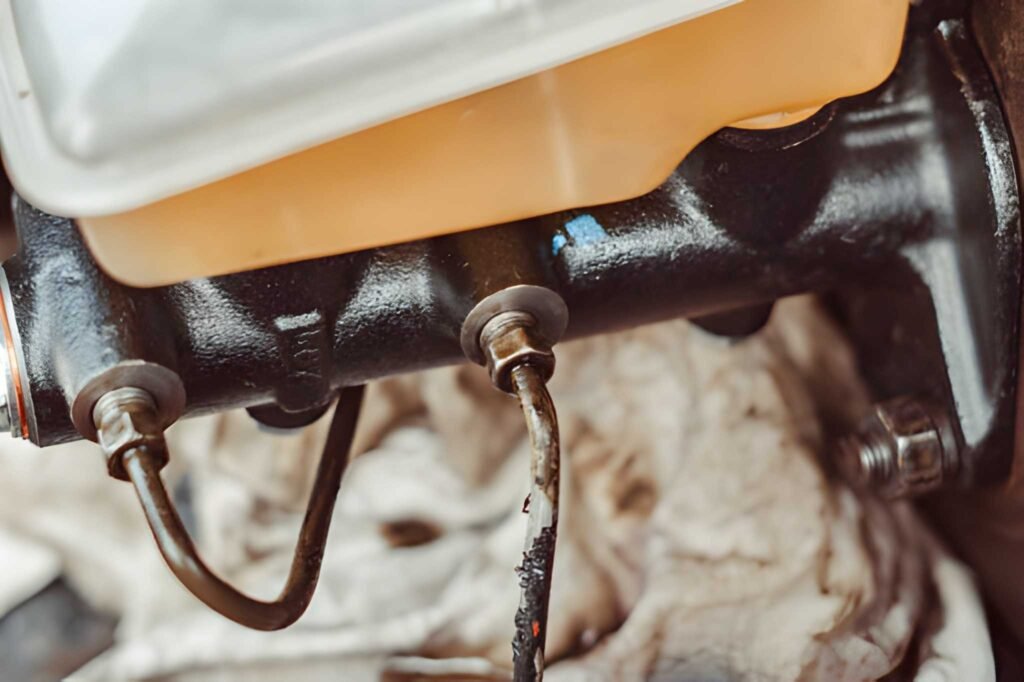
The master cylinder is one of the most crucial parts of the brake system. It is found in the center of the brake pedal. The master cylinder contains a fluid called brake fluid and a piston which moves to transfer the hydraulic pressure from the brake pedal to the brake lines. The master cylinder has also sealed brake fluid in, which is to expect to erode the seals and cause the master cylinder to leak.
Symptoms of a Master Cylinder Leak:
- Leakage of brake fluid from the base of the brake pedal.
- Pooling of brake fluid above the master cylinder (this is typically found under the hood, near the firewall).
- Soft or Spongy Brake Pedal.
In some instances, the brake pedal may go all the way down to the floor or may feel a bit soft.
If the master cylinder begins to leak, it is crucial to get that repaired right away. A leaking master cylinder can lead to a loss of brake fluid, and may even decrease the brake effectiveness, and therefore make it even harder to stop the vehicle.
What Should be Done:
- Check the master cylinder often to see if there are any fluid leaks around the area of the pedal.
- If fluid is sitting around the master cylinder or if there are any braking issues, get it replaced or repaired by a mechanic.
- After repair or replacement of the master cylinder, refill the brake fluid to make sure the brake system is at the right fluid level.
3. Brake Calipers
Located close to the wheels, the calipers are an integral part of the stop process. Calipers contain pistons which press the brake pads against the brake rotor, causing the vehicle to slow down. Calipers need brake fluid to work, and the piston seals, which are susceptible to the elements, exhaust, and other road debris, are especially prone to wear and tear. If these seals wear too much, a brake fluid leak will occur because of the calipers.
The Signals that a Brake Caliper Leak is Occurring:
- Fluid leaking from the calipers or wheel area.
- Lessening braking capabilities, such as more distance to stop or a spongy feeling to the brake pedal.
- Fluid pooling around the wheels, especially after a stop.
- Brake pads wearing too much because of too much braking pressure.
Brake fluid leaking from the calipers is a problem which begs immediate repairs, as it will create compounding problems in the braking system.
Here’s What You Should Do:
- Look for any damage or corrosion around the calipers.
- If brake fluid is leaking from the area of the calipers, you will need to either replace the piston seals or replace the calipers themselves.
- Refill the brake fluid and perform a brake system bleed to ensure proper distribution throughout the system.
4. Wheel Cylinders (For Drum Brakes)
If your vehicle has drum brakes rather than disc brakes, the wheel cylinders are responsible for applying pressure to the brake shoes. Wheel cylinders are placed inside the brake drum and are pushed by a hydraulic system to expand the brake shoes that contact the drum to slow the vehicle down. Like brake calipers, wheel cylinders also have seals that can wear down, and brake fluid can leak out.
Symptoms of a Wheel Cylinder Leak:
- Brake fluid is leaking from the wheel drums.
- Brake pedal that is soft and hard to press.
- Braking performance is decreased, especially hard braking.
- Noisy brakes, or vibrations when brakes are applied, which may signal uneven wear of the brake shoes.
Wheel cylinders are predominantly leaking because of worn seals that cause brake fluid to leak out. If left alone, the leaking seals can cause a lot of braking power to become lost.
What to Do:
- Check for visible fluid leakage on the wheel cylinders around the drum.
- If needed, replace the seals, or the entire wheel cylinder.
- Once repairs are completed, always check the level of brake fluid and bleed the brake system.
5. Brake Fluid Reservoir
A brake fluid reservoir is the container that holds the brake fluid, and allows you to check and refill the brake fluid. It’s usually found near the master cylinder, and is made of translucent plastic, allowing you to see how much fluid is left. If the brake fluid reservoir is warped or damaged, it may lead to brake fluid leaking either on the engine or to the ground.
Signs of a Brake Fluid Reservoir Leak:
- Brake fluid collecting near the master cylinder.
- Noticeable damage to the brake fluid reservoir.
- An illuminated low brake fluid warning light on the dashboard.
- Brake fluid needing to be topped off repeatedly and being at low levels.
Order for a brake fluid reservoir leak to be identified, you need to check the area directly underneath the reservoir, where the fluid would be. This is often due to physical damage, be it a hit that was taken or a crack that comes from thermal cycling or use over time.
Actions:
- Check the brake fluid reservoir for any cracks or leaks.
- If the reservoir is damaged, replace it.
- Refill the brake fluid after replacing the reservoir.
6. ABS System (Anti-lock Braking System)
Modern braking systems rely on an anti-lock braking system (ABS). The ABS system prevents the wheels from locking up while driving, which helps the driver retain better control and stability. The ABS system offers a variety of different hydraulic valves and components, and the system is engineered to prevent brake fluid loss, which protects the vehicle from insufficient braking. If the ABS system begins to leak, it may lead to a loss of brake fluid, which will impact the vehicle’s braking system.
ABS System Fluid Leak Symptoms:
- Puddles of fluid near the ABS module and/or under the vehicle.
- ABS warning light on the dashboard is lit.
- Braking system works inconsistently or jerks while braking.
There can be fluid leaks from the ABS system when other braking components are functioning properly. The source of the ABS fluid leak is often from damaged seal, valves, or other ABS components.
What to Do:
- ABS system components should be inspected to check for any fluid leaks.
- If there are any signs of braking issues or fluid loss, the ABS system should be inspected by a professional mechanic.
- If the ABS module or any other components are damaged, replacement will be required.
Frequently Asked Questions
Here are some FAQs about brake fluid leak –
- Why do I have brake fluid leaks?
There can be multiple reasons for a brake fluid leak. Damaged brake lines and cracked master cylinders, damaged calipers or wheel cylinders, and broken seals can all be factors. Additionally, rust, corrosion, and road debris can cause leaks, too.
- How can I tell if there’s a fluid leak in the breaks?
A few of the signs for leaks include decreased brake response, a warning light on the dashboard, or a fluid leak under the car. You might also notice that the brake pedal feels soft or spongy.
- Is it safe to drive with a brake fluid leak?
Not at all. A brake fluid leak is dangerous and can impact your car’s ability to stop. The system can only work properly with sufficient brake fluid.
- How often should you inspect for brake fluid leaks?
As a rule of thumb, fluid levels should be inspected on a monthly basis. Checking the fluid should be part of routine maintenance, but if you notice problems with the brake pedal or see a puddle of fluid under the car, an inspection should be done immediately.
- How To Repair A Brake Fluid Leak
In order to fix a brake fluid leak, you’ll need to find the source and repair or replace the broken parts, like brake lines, master cylinders, or calipers. After repair, refill the brake fluid and bleed the brakes.
Conclusion
The sources of brake fluid leaks can be coming from the system’s brake lines, master cylinder, calipers, wheel cylinders, or the abs. Finding the leaks source is important to the safety and performance of your vehicle. Checking the brake system for leaks is regular maintenance that can help prevent a more severe problem. Addressing your brake fluid leaks should always be your first concern to prevent accidents.


