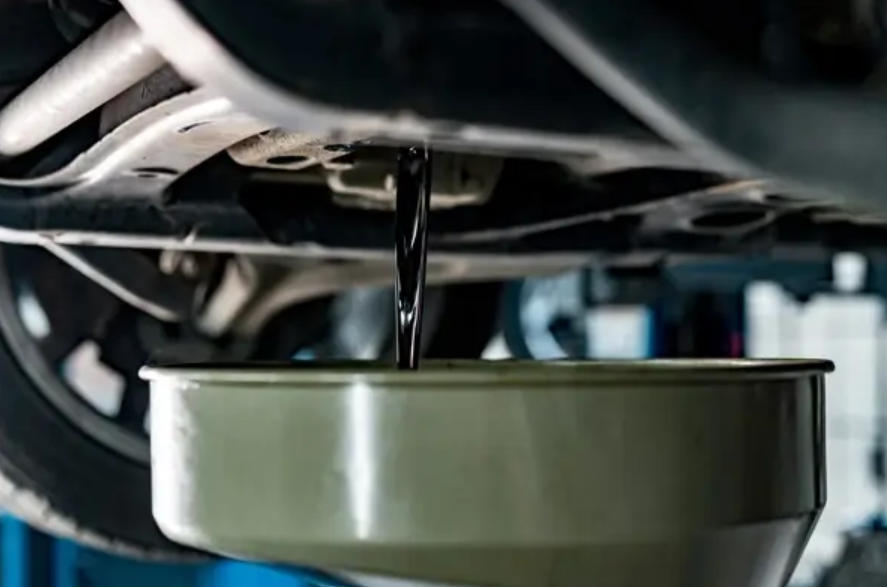
Why engine oil turns black is mainly due to soot and contaminants from normal engine operation. Darkening is usually normal and shows the oil is doing its job.
The sight of a pitch-black dipstick can strike fear into the heart of even the most seasoned car owner. It feels like a bad omen, a dark ink warning of impending mechanical doom. You might find yourself wondering, “Is my engine melting? Did I wait too long for an oil change? Is this the end of my road trip dreams?”
Take a deep breath. Before you start shopping for a new engine—or a new car—it is important to understand that engine oil turning black is often a sign that the oil is actually doing its job perfectly. Engine oil is the lifeblood of your vehicle’s internal combustion engine, and like blood, its appearance can tell you a lot about the health of the system it inhabits. However, unlike blood, turning dark isn’t necessarily a sign of a wound; it’s often a sign of active defense.
This comprehensive guide will dive deep into the chemistry, mechanics, and myths surrounding black engine oil, helping you distinguish between a normal operational phase and a genuine mechanical emergency.
Contents
- 1 The Multidimensional Role of Engine Oil
- 2 The Visual Spectrum: Decoding Oil Color
- 3 Why Engine Oil Turns Black: The Deep Dive
- 4 When Black Oil Becomes a Red Flag
- 5 Common Myths Debunked
- 6 Proactive Maintenance: Keeping the “Lifeblood” Healthy
- 7 Advanced Monitoring: Used Oil Analysis (UOA)
- 8 Final Thoughts
The Multidimensional Role of Engine Oil
To understand why oil changes color, we must first appreciate the Herculean tasks it performs every second your engine is running. Modern engine oil isn’t just a “slippery liquid”; it is a sophisticated chemical cocktail designed to survive an environment of extreme heat and pressure.
1. Lubrication: The Primary Shield
The most obvious role is lubrication. Inside your engine, metal components—pistons, crankshafts, and camshafts—whir at thousands of revolutions per minute. Without a thin film of oil separating these parts, the friction would generate enough heat to weld the metal together in seconds. Oil creates a microscopic barrier that allows these parts to glide past each other.
2. Cooling: The Unsung Hero
While your car has a dedicated cooling system (radiator and coolant), it can’t reach everywhere. The oil circulates through the deepest recesses of the engine, absorbing heat from the pistons and the “bottom end” of the engine, then carrying that heat back to the oil pan where it can dissipate.
3. Cleaning: The Internal Janitor
This is where the color change primarily begins. Engines are surprisingly “dirty” environments. Tiny amounts of soot, carbon, and microscopic metal shavings are produced during the combustion process. Engine oil is formulated with detergents and dispersants that pick up these contaminants and keep them suspended in the liquid so they don’t form heavy deposits on engine parts.
4. Sealing and Protection
Oil helps seal the gap between the piston rings and the cylinder walls, ensuring maximum compression and power. Simultaneously, it contains corrosion inhibitors that prevent moisture (a byproduct of combustion) from rusting the internal iron components.
The Visual Spectrum: Decoding Oil Color
If you want to be an “oil whisperer,” you need to know what the colors mean. While color isn’t the only indicator of oil health, it is the most accessible one for the average driver.
| Color | Status | What it Means |
| Clear Amber / Golden | Fresh | The oil is new or has very low mileage. All additives are at full strength. |
| Dark Brown | Transitional | The oil has been exposed to heat and has started picking up some soot. Perfectly normal. |
| Deep Black (Translucent) | Mature | The oil is full of suspended carbon. In many modern engines, this can happen in as little as 500 miles. |
| Jet Black (Opaque/Thick) | Aged | The oil is likely near the end of its service life or is heavily saturated with soot. |
| Milky / “Chocolate Milk” | CRITICAL | A sign of coolant leaking into the oil (often a blown head gasket). Stop driving immediately. |
| Creamy / Frothy | Warning | Often seen on the oil cap; usually caused by condensation from frequent short trips where the engine doesn’t get hot enough. |
Why Engine Oil Turns Black: The Deep Dive
There isn’t just one reason for the darkening of oil; it is usually a combination of several chemical and mechanical processes working in tandem.
1. The Soot Factor (Combustion Byproducts)
Every time a spark plug fires, a miniature explosion occurs. While most of the exhaust goes out the tailpipe, a tiny amount of gas and soot slips past the piston rings—this is known as “blow-by.” This soot is essentially pure carbon. Because oil contains dispersants, it grabs these carbon particles and keeps them in suspension. If it didn’t, those particles would stick to your engine walls and form “sludge.” Because carbon is black, it doesn’t take much to turn five quarts of amber oil into a dark, opaque liquid.
Note on Diesel Engines: If you drive a diesel, your oil will likely turn black almost immediately after an oil change. Diesel combustion is inherently “sootier” than gasoline, and this rapid darkening is a completely normal characteristic of diesel operation.
2. Thermal Degradation and Oxidation
Your engine operates at temperatures often exceeding 100°C (212°F). At these temperatures, oil molecules react with oxygen in a process called oxidation. Think of it like an apple turning brown after you cut it and leave it on the counter, but accelerated by extreme heat.
Oxidation causes the oil’s molecular structure to break down and reform into larger, darker molecules. High-quality synthetic oils are designed to resist this process much better than conventional oils, but eventually, even the best oil will succumb to “heat soak.”
3. Additive Interaction
Modern oil is roughly 75–80% base oil and 20–25% additives. These additives include:
- Detergents: To wash away high-temperature deposits.
- Dispersants: To keep contaminants from clumping.
- Viscosity Index Improvers: To help the oil flow well in both cold and hot weather.
As these additives do their jobs, they undergo chemical changes. The very act of a detergent neutralizing an acid or a dispersant wrapping around a soot particle can change the refractive index of the oil, making it appear darker to the human eye.
4. The Influence of Driving Habits
How you drive determines how fast your oil “ages” visually.
- The Highway Cruiser: Engines that run for long periods at steady speeds stay at an optimal temperature, allowing moisture to evaporate and ensuring efficient combustion. The oil stays cleaner longer.
- The City Commuter: Short “stop-and-go” trips are brutal on oil. The engine never reaches a full, stable operating temperature. This leads to increased moisture buildup and more “blow-by” gases, darkening the oil rapidly.
When Black Oil Becomes a Red Flag
While black oil is usually fine, you shouldn’t ignore it entirely. You need to look for “secondary symptoms” that indicate the oil has moved from “working hard” to “failing.”
The “Feel” Test (Sludge)
When you check engine oil, rub a bit between your thumb and forefinger. It should feel smooth and oily. If it feels gritty (like it has sand in it) or sticky (like molasses), you have a problem. This is the beginning of engine sludge. Sludge can block oil passages, leading to “starvation” where parts of your engine aren’t getting lubricated at all.
The “Sniff” Test
Give the dipstick a quick sniff.
- Burnt Smell: If it smells like a campfire or burnt toast, the oil has been severely overheated. This could mean your engine is running too hot or you’ve exceeded your oil change interval by a significant margin.
- Fuel Smell: If it smells strongly of raw gasoline, you may have a leaking fuel injector or worn piston rings allowing too much fuel into the crankcase. Fuel thins the oil, destroying its ability to lubricate.
Visual Debris
If you see actual metal flakes or “glitter” in the oil when holding it up to the sun, this is a sign of internal engine wear. This usually points to bearing failure and requires immediate professional attention.
Common Myths Debunked
In the world of automotive maintenance, “old wives’ tales” die hard. Let’s clear up some of the most common misconceptions about oil color.
Myth 1: “If the oil is black, it’s lost its viscosity.”
The Truth: Viscosity (the thickness of the oil) and color are not directly related. Oil can be jet black but still have the perfect 5W-30 flow characteristics. The only way to truly know the viscosity is through a laboratory oil analysis or by feeling the texture.
Myth 2: “You should change your oil as soon as it turns dark.”
The Truth: If you did this, you’d be changing your oil every two weeks. Following the manufacturer’s recommended interval (or the “Oil Life Monitor” on your dashboard) is much more effective than relying on a visual check. Modern oils are designed to hold a massive amount of contaminant before they fail.
Myth 3: “Synthetics don’t turn black.”
The Truth: Synthetic oils are more stable and resist oxidation better, but they still contain detergents. They will still pick up soot and carbon just like conventional oil. In fact, because synthetics are often better at “cleaning” old deposits, they might turn black faster in an older engine that has existing buildup.
Proactive Maintenance: Keeping the “Lifeblood” Healthy
Since you can’t stop oil from turning black, your goal should be to ensure that the darkening process happens within a healthy framework.
1. The Quality Filter Matters
The oil filter is the kidney of your engine. While the oil suspends the soot, the filter is responsible for catching the larger particles. Never skimp on a filter. A high-quality synthetic-media filter can trap much smaller particles than a cheap paper one, keeping the oil “cleaner” even as it darkens.
2. Respect the Intervals
Whether your car calls for changes every 5,000 miles or 10,000 miles, stick to it. If you do a lot of “severe” driving (towing, extreme heat, or constant short trips), consider changing it more frequently.
3. Use the Right Grade
Using a 10W-30 when your engine calls for 0W-20 can cause increased friction and heat, accelerating the darkening and breakdown of the oil. Your owner’s manual is the “bible” for your specific engine.
4. The PCV System Check
The Positive Crankcase Ventilation (PCV) system is responsible for removing harmful vapors from the crankcase. If the PCV valve is clogged, those vapors stay trapped in the oil, causing it to turn black and turn into sludge much faster. It’s a $10 part that can save a $5,000 engine.
Advanced Monitoring: Used Oil Analysis (UOA)
If you are genuinely concerned about the state of your black oil—or if you want to extend your drain intervals safely—consider a Used Oil Analysis.
Companies like Blackstone Laboratories allow you to send in a small sample of your used oil. They use a spectrometer to analyze the levels of wear metals (like aluminum, iron, and copper) and the remaining “TBN” (Total Base Number), which tells you how much active additive is left. This is the only way to know with 100% certainty if your black oil is still protecting your engine or if it’s “spent.”
Final Thoughts
The next time you pull your dipstick and see that the oil has lost its golden luster, don’t panic. It is a sign of a working system. It means the detergents are scrubbing your cylinder walls, the dispersants are capturing the soot from your morning commute, and the oil is successfully shielding your engine from the violent heat of combustion.
Black oil is a working oil. It only becomes a concern when it changes its texture, its smell, or when it’s accompanied by strange noises from under the hood. By monitoring your oil regularly and sticking to a disciplined maintenance schedule, you ensure that even if the oil is black, your engine’s future remains bright.