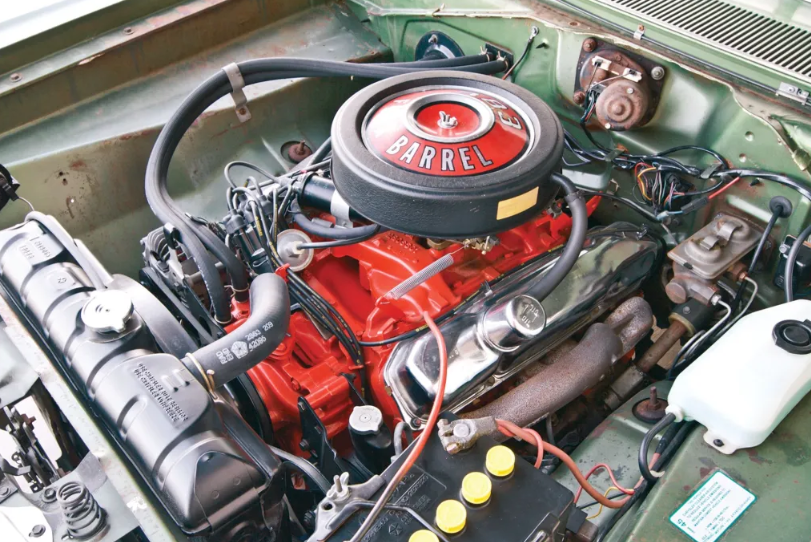
273 Dodge engine identification is done by checking the casting and stamped numbers on the block and heads. These numbers reveal the engine’s model year and displacement, confirming its authenticity.
The discovery of a 273 Dodge engine is one of the necessary variables to the actual work of the vintage car to the classic car lovers and restorers. As one of the V8 engines of the LA series of the Chrysler engines, the 273 engine was initially introduced in the early 60s and has been a history maker in most of the popular models of Dodge and Plymouth. The news about the 273 engine discovery is significant to any person who works with old Mopar cars whether it is restoring the car or replacing a part or even authenticity.
It was an elaborate guide to the entire process of finding the 273 Dodge engines. We are taking whatever you desire to know; we will read castings and stamped numbers to the background and differences of the engine to verify that you are seeking the right engine 273.
This guide shall assist you to draw a conclusion on the engine without any doubts whatsoever on whether you are making a deal on a restoration project or you are just curious to know more about this engine.
Contents
What Is the 273 Dodge Engine?
It is the inaugural V8 engine of the LA series of Chrysler that was introduced in the year 1964. The 273 engine was reported to be small yet effective and played a significant role as the 1960s towards the driving of smaller muscle cars produced by Chrysler. It could hold 273 cubic inch (4.5 liters) of liter capacity and was intended to be stronger than 225 slant-six engine that was widely used in automobiles at that period.
The 273 came in performance and in regular trim with varying power output depending on whether they were made as a general consumer car or high-performance cars like the Dodge Dart or the Plymouth Barracuda.
The principal features of 273 engine were:
- Displacement: 273 cubic inches (4.5L)
- Engine: V8, overhead valves (OHV).
- Bore x Stroke: 3.63″ x 3.31″
- Compression Ratio: 9.2:1 (depends on the trim)
- Power: 180-235 hp, depending on the condition.
- Torque: 230-280 lb ft (varying according to the model).
The fact that this engine was a balanced engine and had the ability to produce good power simultaneously and at the same time was efficient was an admirable aspect of the engine.
The 273 Dodge Engine
An individual has to be detail oriented in arriving at the decision of whether there was a 273 Dodge engine and may even be aware of the location of significant casting and stamping number. This section will guide you through the relevant processes that would make you sure when deciding which engine to run and render it valid.
Casting Numbers-The Casting Process
In case an individual wants to identify a 273 Dodge engine, the best method that the individual might identify the identical may be the casting numbers that were inscribed on the engine block when it was being manufactured. The numbers are quite high to determine the authenticity of the engine as it depicts significant information about the block itself.
The Casting Numbers – Where to be Found
The search of the correct casting numbers is the other significant point of identification of 273 Dodge engines. These numbers are usually imprinted or cast in the specific locations of the engine and the knowledge of the location will assist in locating the engine.
- On the engine block: The numbers of the casting will be typically found on the engine block driver side just below the cylinder head flange. You may have to clean it in order to see the numbers that have been raised.
- On the cylinder heads: The most common case is to have the numbers of the casting on the cylinder heads above the intake runners or below the valve covers.
- On intake manifold: It is made up of 273 engines, in which the casting number is on the intake manifold at the front or the back of the intake manifold.
Common 273 Casting Numbers
There are many numbers in which the 273 engine can be cast depending on the year of manufacture, model and design. In general, the following of the 273 engine are most popular casting numbers:
- 2463252 – This is the figure of early 273 blocks that were produced in 1964-1965.
- 2465330 – One of the casting numbers used on the 273 that was manufactured in the mid-1960s and used in the 1966-1967 models.
- 2536130 – This is the production casting number of the majority of the late 273s in the 1960s.
These figures should all know the year of manufacture and engine capacity of engine.
Decoding the Casting Numbers
Although the figures cast might say much about the engine, the number decoding might be conducted by performing it against the existing databases and professional manuals. The casting number should have regulation to the requirements of the set 273 engine block so as to make sure it is a genuine one.
Stamped Identification Codes
In addition to shedding off numbers, the stamped identification codes also contain additional details about the engine like the model year in which the particular engine was manufactured as well as the date of manufacture of the engine. These stamped codes are typically on a flat pad on the front side of the engine block which may typically be under the cylinder head.
What Stamped Codes Tell You
The important information on the model year, the engine displacement and the date of manufacture of the engine is contained in the stamp codes of the 273 Dodge engine. The information about these codes will be vital in making sure that the engine is genuine and it is in its original specifications.
Stamped Code: The coded number normally incorporates a letter that is the model of the year of the car. As an example, “A” is 1965, “B” is 1966, etc.
Displacement: the mark should be used to indicate the number of 273 so that the engine may be moved a distance of 273 cubic inches.
Assembly Date: Assembly date normally follows as a date code (month-day) which gives the actual date of the engine assembly. A case in point is that C 273 12-2 will be used to display a 273 engine that was made on 2 nd December, 1967.
These codes will help you save on the amount of time within which the engine will be produced and ensure whether the engine will match the specification of the vehicle or not at all.
Where to Find the 273 Engine Identification Codes
To know how to call the 273 Dodge engine the right name, a person should know where to find the corresponding marking.
Block identification of the engine
This is located below the cylinder head, normally the casting numbers, in the engine block. The casting number is expected in the driver side of the block. The numbers lifted can be seen very easily as long as the engine itself is not very dirty.
Intake Manifold and Cylinder Head
The casting numbers of the cylinder heads of 273 engine may also be engraved and this may serve as a testament to the authenticity of the engine. Identifying marks (such as a number on the casting) may also be added to the intake manifold which can then be cross-referenced to known 273 manifolds.
Strauss Street on the Block
The stamped letter of the year, the engine displacement and the assembly date is normally stamped on the flat machined pad on the driver side of the block. It will also have to check the date of the manufacture and ensure that the engine is in accordance to the specifications of the car.
Common Mistakes When Identifying a 273 Dodge Engine
The reasons that can cause a mismatching of an engine owned by a 273 Dodge can include; the other casting number or the substitution of the parts in an engine. The following are some of the inaccuracies that can be made during the identification process:
Mistake 1: Confused With Other Small-Block Engines
LA series of small block V8 engines, 273, is similar to other comparable engines such as 318 or 360. These engines will be cast under the same casting numbers other than 273 that will be smaller in size but they will have performance needs. Record the numbers and the displacement appropriately in a manner that they are not confused.
Mistake 2: Date Code Oversight
In some instances date code of stamped pad is difficult to read or even can be overlooked and false identification perpetrated. It is of urgency to include the fact that the stamped date code will be mandatory in the process of determining whether the engine belongs to a certain model year.
Mistake 3: Stamped Codes Lost or Crossed
The stamped numbers on the engine block or engine heads can be lost or destroyed by either the time or intention. With this occurring, it is more substantial to cross tabulate the figures in the casting with the databases of the professional.
Other Identification Resources
During the development of a 273 Dodge, there are some materials that could be applied that would help in the casting and stamping of the number.
- Forums: Engine identification is discussed in many threads of the forum like ForBBodiesOnly.com and ForABodiesOnly.com. Many of the Mopar fans would be happy to solve the numbers and verify authenticity.
- Engine Identification Guides: Engine identification guides typically contain detailed stamped number and casting number charts and databases.
- Mopar Specialists: At this point, the second thing would be to call a Mopar Specialist or a classic car mechanic who will be able to provide professional advice and know what engine it is certainly.
- Service Manual Factory: Original service manual and parts catalogs can be an excellent source of information on casting and stamping codes, whereupon you can know what parts are applicable to a particular engine.
Frequently Asked Questions
Here are some FAQs about 273 dodge engine identification –
Which are the top selling Dodge engine castings 273?
Dodge engine 273 This engine is cast in the years 2463252, 2465330 and 2536130 to different years of production in the middle of the 1960s.
Where are the 273 engine identification numbers?
The identification numbers are stamped on the permanently stamped flat machined engine block driver side that is immediately below the cylinder head.
How do I prove that the 273 engine is original?
To find out that the engine is or is not original, one can compare the stamped codes, cast numbers and date of assembly with the existing sources.
Will the 273 engine suffer an identity crisis against the other small-block engines?
Yes it mixes with other engines of the LA series such as the 318 and the 360. Watch the displacement and casting numbers to ensure that they are a 273.
Why does it have proper engine identification?
This will ensure that the vehicle is original since it will be properly identified and this will assist in restoring the vehicle and ensure that you use the correct parts when carrying out the maintenance.
Conclusion
The restorations, part purchase and authenticity in the old Dodge and Plymouth cars require identification of Dodge engine 273. By using the steps listed in the guide, as well as reading the stamped codes, and other materials of the experts, you will know beyond reasonable doubt whether or not an engine is true 273. One of the throwbacks to the old American muscle cars is the engines, and keeping them will be among the means of keeping the history.
You are restoring an old car, you are buying an old car or you are simply asking yourself what is the car with the 273 engine and what you need to know is how you can establish which will help you in the maintenance of the history of the car as well as value addition to the car. It is a good one to place on the shelf to consult during the process of determining what it is along with to have fun being told more about one of the best little block V8 engines that Mopar has ever produced.