


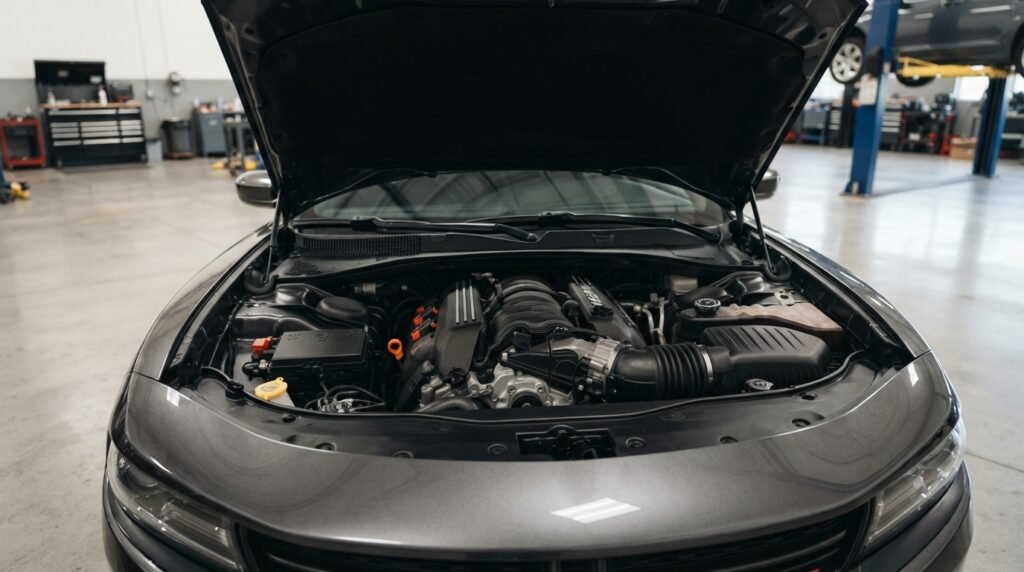
The 5.7L Hemi is Chrysler’s long-running 345-cubic-inch V8, first launched in 2003 for Dodge Ram trucks. It produces 345 to 395 horsepower and 375 to 410 lb-ft of torque depending on model year and application.
If you’re shopping for a used Dodge, Chrysler, Jeep, or Ram vehicle, or planning a build or repair for a 5.7L Hemi, knowing the engine’s core specs will help you compare it to competing V8s, source the right parts, and set realistic performance expectations.
One of the most popular modern Mopar V8s ever produced, the 5.7 Hemi has powered everything from half-ton work trucks to sports sedans and off-road SUVs since its 2003 debut.
This guide breaks down its core mechanical specs, performance variations across generations and applications, common uses, and key maintenance notes for owners and buyers.

Contents
Core 5.7L Hemi Engine Specs at a Glance
The 5.7L Hemi’s core mechanical specs have remained largely consistent across its 20+ year production run, with small updates for emissions and performance over time.
Below is a breakdown of its baseline factory specifications, with notes on variations across generations and applications.
Summarizes Table of 5.7L Hemi Engine
The table below summarizes the relevant differences at a glance.
| Spec Category | Baseline Factory Detail |
|---|---|
| Total Displacement | 345 cubic inches (5,654 cc) |
| Configuration | 90-degree V8 |
| Bore x Stroke | 3.917 in x 3.622 in (99.5 mm x 92 mm) |
| Compression Ratio | 9.5:1 (Gen 1, 2003–2008); 10.5:1 (Gen 2/3, 2009–Present) |
| Valvetrain | 16-valve, overhead cam (SOHC) with MDS on most models |
| Fuel System | Sequential multi-port fuel injection |
| Redline | 6,200 RPM |
| Block Material | Cast iron |
| Head Material | Aluminum alloy |
Note that power and torque outputs vary significantly based on vehicle application and tuning, with truck-focused models prioritizing low-end torque and performance models tuned for higher RPM power. Minor spec tweaks across three production generations account for small output differences over time.
Gen 1 (2003–2008)
The original 5.7L Hemi launched in 2003 as a replacement for the 5.9L Magnum V8, with a standard 9.5:1 compression ratio and 345 hp / 375 lb-ft of torque in most applications. It introduced Chrysler’s Multi-Displacement System (MDS), a variable displacement technology that shuts down four of the eight cylinders under light load (like highway cruising) to improve fuel economy by up to 10% in ideal conditions.
Gen 2 (2009–2020)
A 2009 refresh boosted compression to 10.5:1 for most applications, raising output to 360–395 hp and 390–410 lb-ft of torque depending on the vehicle. Updated MDS components and revised hydraulic lifters fixed the common ticking and misfire issues that plagued early Gen 1 models, making Gen 2 builds far more reliable for high-mileage use.
Gen 3 (2021–Present)
The latest 5.7 Hemi revision for 2021+ model years added minor emissions updates to meet stricter EPA standards, plus slight power bumps for select Ram 1500 applications. It retains the same core 345 cubic inch displacement and 10.5:1 compression ratio as the Gen 2, and remains in production for Ram 1500 trucks and heavy-duty commercial models as of 2024.
Common 5.7L Hemi Vehicle Applications
The 5.7 Hemi has been fitted to a wide range of Chrysler, Dodge, Jeep, and Ram vehicles over its production run, with power outputs tuned for each use case.
The most common applications include:
- Dodge Ram 1500/2500 (2003–2013 half-ton and light-duty heavy-duty models)
- Jeep Grand Cherokee (2005–2022 high-output and Trailhawk trims)
- Dodge Challenger (2009–2023 base and GT trims)
- Jeep Wrangler (2012–2023 Rubicon and Sahara trims)
- Chrysler 300 (2005–2023 base and Touring trims)
- Dodge Charger (2006–2023 base and GT trims)
- Ram 1500 (2013–2024 half-ton models)
Truck and SUV versions of the 5.7 are tuned for low-end torque to support towing and off-road use, with peak torque arriving at just 1,600 RPM in most Ram 1500 applications. Sedan and sports car versions are tuned for higher RPM power to improve acceleration, with peak horsepower arriving at 5,200 RPM in most Challenger and Charger trims.
Real-World 5.7L Hemi Performance Expectations
While factory specs give a baseline, real-world 5.7 Hemi performance varies based on vehicle weight, drivetrain, and factory tuning. Stock models produce enough power for most daily, work, and off-road use, with minor bolt-on modifications like a cold air intake and tune adding 20–30 horsepower for enthusiast builds with no major reliability risks.
Towing and Payload
Truck-tuned 5.7 Hemi models can tow up to 8,500 lbs in half-ton Ram 1500 configurations, with peak torque available as low as 1,600 RPM. This low-end grunt eliminates the need to downshift for steep grades or heavy loads, and makes the 5.7 a favorite among work truck owners who need consistent low-speed power.
Daily Driving
The V8’s smooth power delivery and low-end torque make it feel effortless for daily commutes, highway merging, and passing. Unlike some competing V8s, the 5.7 does not require premium fuel in any stock configuration, keeping running costs lower for daily drivers.
All 5.7 Hemi models run safely on regular 87-octane unleaded gasoline, with no benefit to using higher-octane fuel in stock form.
Fuel Economy
EPA combined fuel economy ratings range from 14 to 18 MPG depending on the vehicle and drivetrain. Half-ton trucks and large SUVs like the Grand Cherokee typically fall on the lower end of that range, while rear-wheel-drive sedans like the Charger and 300 achieve slightly higher MPG thanks to lower curb weights and more efficient drivetrains.
Key Maintenance Considerations for 5.7L Hemi Owners
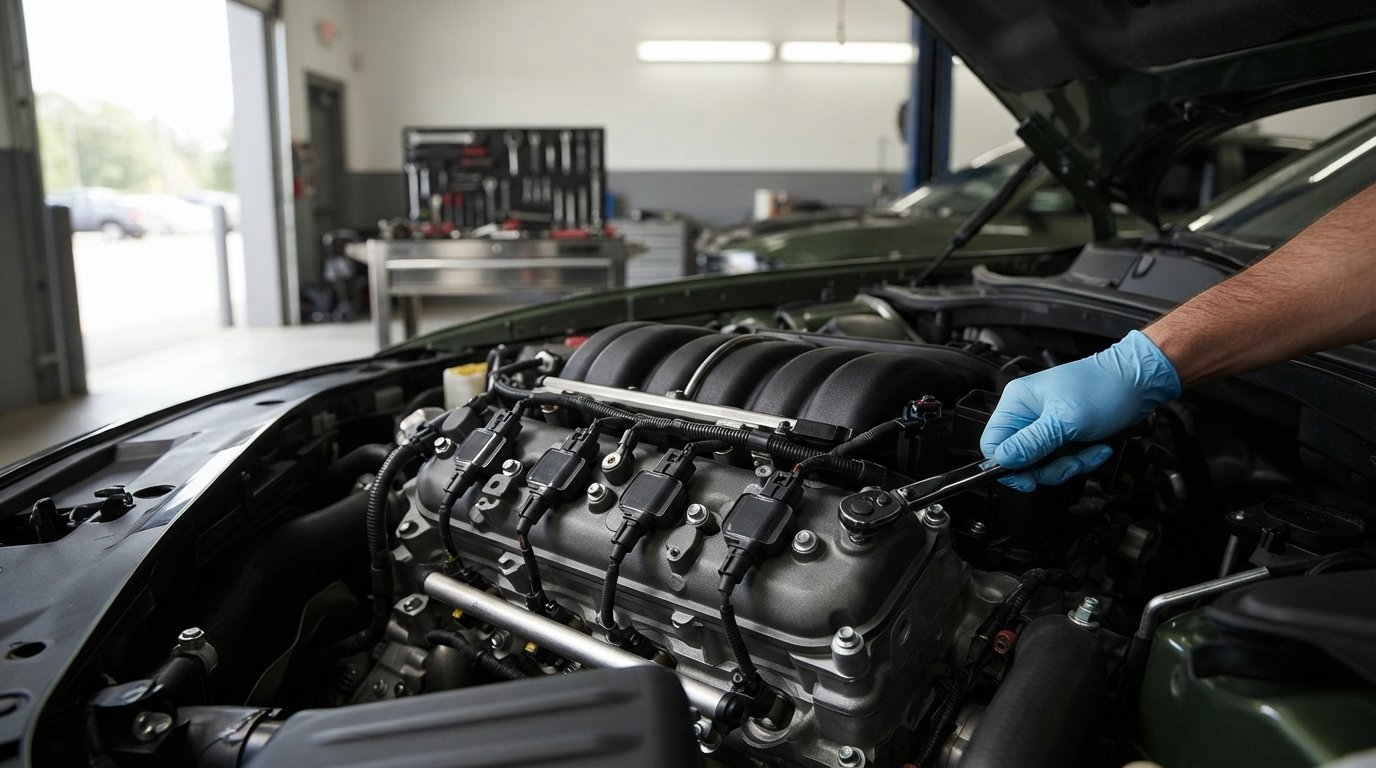
Like any high-performance V8, the 5.7 Hemi has a few common maintenance points to watch for to avoid costly repairs and extend its lifespan. The 5.7’s cast iron block and aluminum heads are designed to handle moderate power increases for builders, making it a popular platform for mild to moderate performance builds without needing internal engine work.
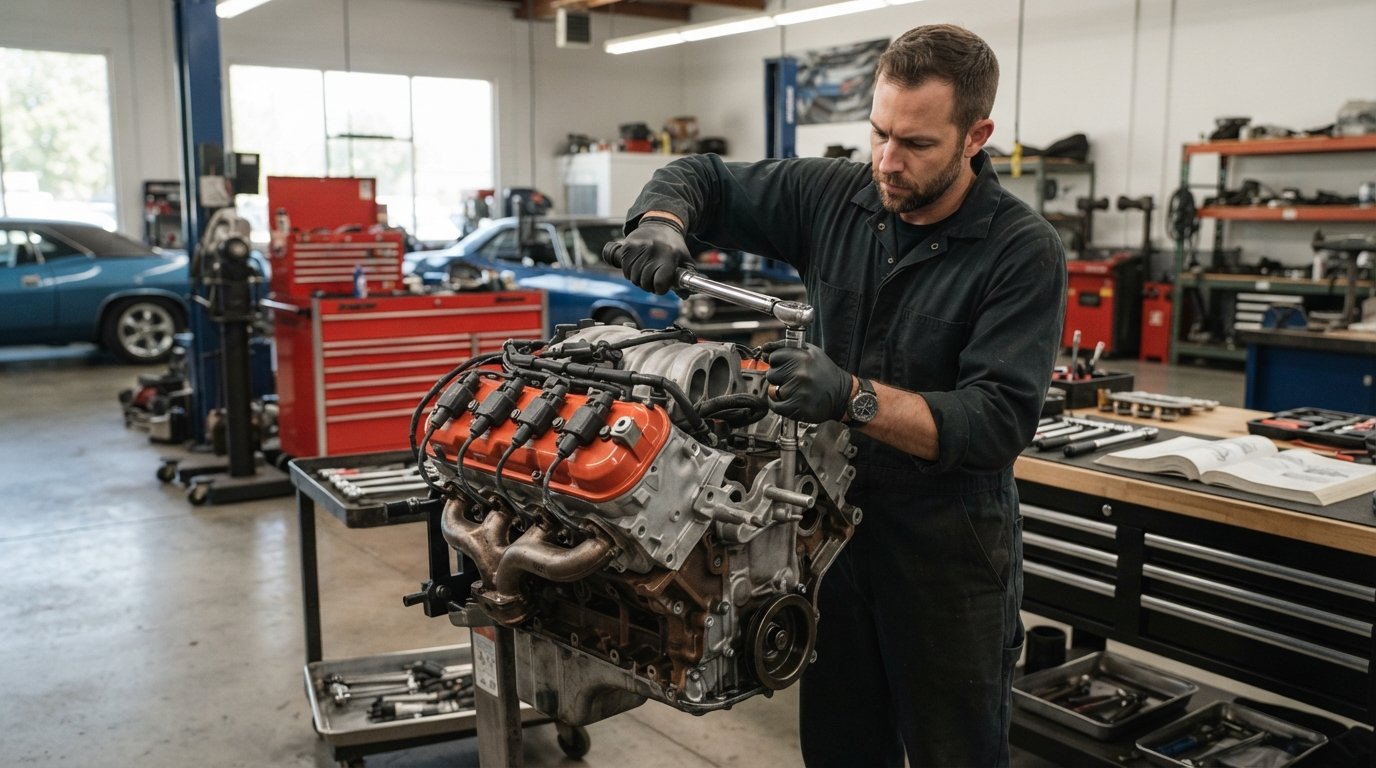
Ignoring persistent lifter ticking on 2003–2008 Gen 1 5.7 Hemi models can lead to catastrophic engine damage if the lifter fails completely. Address the issue with a qualified mechanic as soon as the noise appears.
Common Known Issues
The most widespread issue with 5.7 Hemi models is MDS lifter failure on early Gen 1 builds, caused by a design flaw in the hydraulic lifters that leads to oil aeration and premature wear. Later Gen 2 and Gen 3 models use updated lifter designs and revised MDS components that have largely eliminated this problem.
Other minor common issues include minor oil consumption on high-mileage models (typically less than a quart between oil changes, which is normal for most V8s) and failing mass airflow sensors, both of which are inexpensive to repair. The 5.7’s timing chain is a major durability win over competing V8s that use rubber timing belts, which require replacement every 60,000 to 100,000 miles.
Recommended Service Intervals
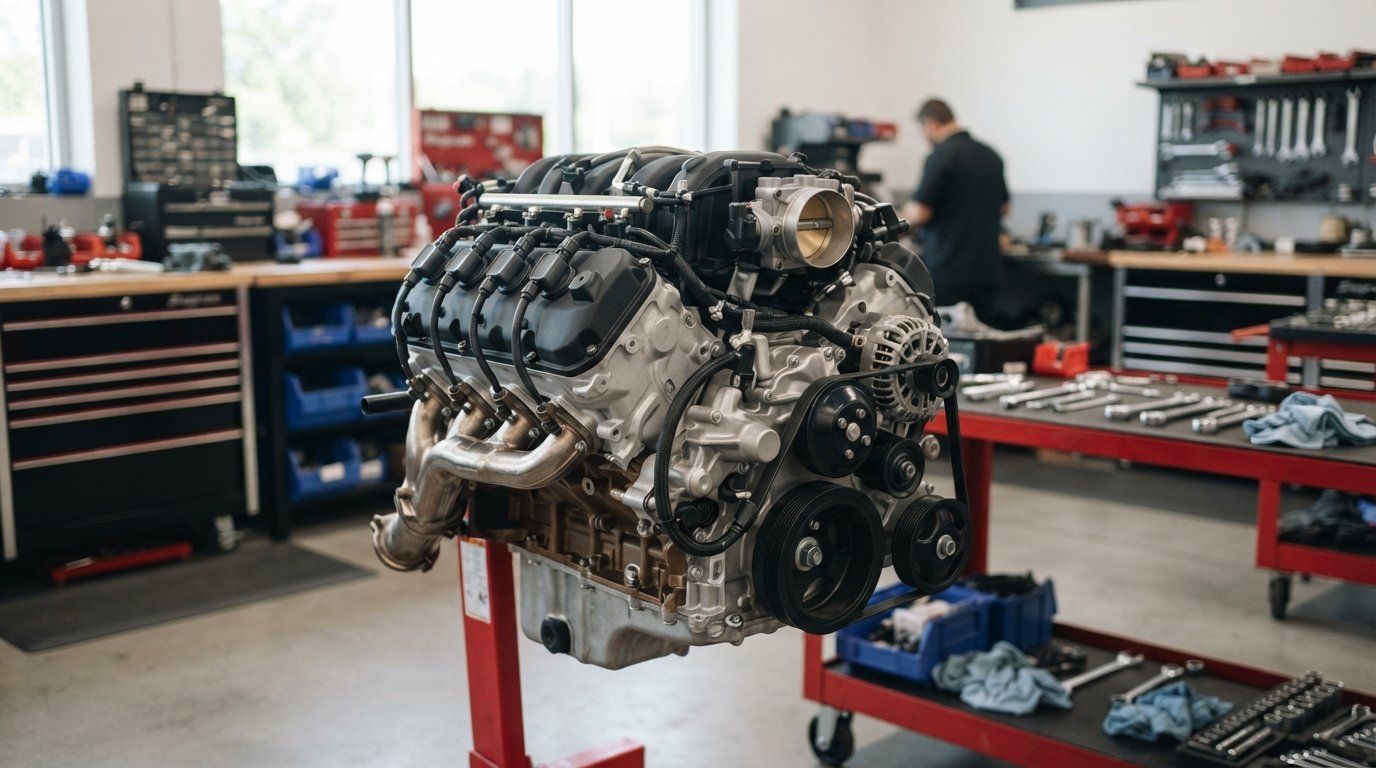
The 5.7 Hemi uses a timing chain instead of a rubber timing belt, so timing service is only needed if the chain shows signs of wear, typically at 150,000 to 200,000 miles for most drivers.
Stick to these factory-recommended service schedules for optimal reliability:
- Oil and filter changes every 7,500 to 10,000 miles with 5W-20 or 0W-20 full synthetic oil
- Spark plug replacement every 100,000 miles
- Air filter replacement every 15,000 to 30,000 miles depending on driving conditions
- Coolant flush every 5 years or 150,000 miles
Related Article
6.4L HEMI Engine Specs
Frequently Asked Questions
We answer the most common questions about 5.7L Hemi engine specs below.
Q: Is the 5.7L Hemi a reliable engine?
A: Yes, the 5.7 Hemi is widely considered one of the most reliable modern V8s, with many lasting over 200,000 miles with proper maintenance. Early Gen 1 models had MDS lifter issues that were fixed in later revisions.
Q: How much horsepower does a 5.7L Hemi have?
A: Factory output ranges from 345 to 395 horsepower depending on model year and vehicle application. Truck-tuned versions prioritize torque over peak horsepower for towing use.
Q: What is the displacement of a 5.7L Hemi?
A: The 5.7L Hemi has a total displacement of 345 cubic inches, or 5,654 cubic centimeters. It uses a 3.917-inch bore and 3.622-inch stroke for its eight cylinders.
Q: What octane gas does a 5.7L Hemi require?
A: All 5.7L Hemi engines run safely on regular 87-octane unleaded gasoline. Higher-octane fuel will not improve performance or fuel economy for most stock models.
Q: Does the 5.7L Hemi have a timing belt or chain?
A: The 5.7L Hemi uses a timing chain for its valvetrain, not a rubber timing belt. Timing chains typically last 150,000 to 200,000 miles before replacement is needed.
Q: What vehicles use the 5.7L Hemi engine?
A: The 5.7 Hemi has been used in Dodge, Ram, Jeep, and Chrysler vehicles since 2003, including the Ram 1500, Wrangler, Grand Cherokee, Challenger, Charger, and 300.
Conclusion
The 5.7L Hemi remains a standout workhorse V8 for Mopar fans, blending solid reliability, usable low-end torque, and straightforward maintenance for most owners. Whether you’re shopping for a used truck, planning a performance build, or troubleshooting a minor issue, these core specs give you a reliable baseline to work from.
If you’re in the market for a used 5.7 Hemi, prioritize 2009 or later models to avoid the Gen 1 MDS lifter design flaw, and always get a pre-purchase inspection to check for timing chain wear or other common high-mileage issues.
For current owners, sticking to the manufacturer’s recommended maintenance schedule and addressing unusual noises or performance drops early will help you get the most life out of your engine, with many 5.7 Hemi models lasting well over 200,000 miles when cared for properly.


