Antifreeze in engine coolant helps regulate the engine’s temperature, preventing overheating and freezing. It absorbs heat and transfers it to the radiator, ensuring smooth engine performance. Regular antifreeze checks and maintenance are essential for engine health.
To avoid extreme temperatures that could stop an engine from functioning antifreeze is used to maintained its temperature. When an engine is not kept at optimal temperatures, it is susceptible to severe damage, possibly leading to an engine being beyond reasonable economic repair. To avoid major engine damage, antifreeze is used. In this article, we will provide an overview antifreeze in engine coolant including its purpose, its types, how to maintain it, and the issues that can arise.
Whether you are learning the basics of working on a car or just trying to gain more information, this guide will provide information on how antifreeze works and why you antifreeze is so important to how your car works.
Contents
- 1 What is Antifreeze?
- 2 Why Is Antifreeze Important?
- 3 Importance of Antifreeze in Engine Coolant
- 4 Types of Antifreeze and Coolant
- 5 How Engine Coolant and Antifreeze Work Together
- 6 How Antifreeze Works in Engine Coolant
- 7 The Importance of Antifreeze Maintenance
- 8 The Essential Points of Antifreeze Maintenance
- 9 How to Add Antifreeze to the Engine Coolant
- 10 Common Problems with Antifreeze in Engine Coolant
- 11 How Often Should You Change Antifreeze?
- 12 Frequently Asked Questions
- 13 Conclusion
What is Antifreeze?
Antifreeze is a substance that can lower the temperature at which a liquid freezes and raise the temperature at which a liquid boils. In an automobile, it is one of the most important fluids used to maintain the engine cool as it removes excess heat from the engine and, in the process, reduces the temperature of the engine.
Engine coolant is the term used to refer to antifreeze mixed with water. To maintain an engine at its optimal operating temperature, engine coolant is cycled through the engine where it absorbs heat which is then dissipated in the radiator.
Why Is Antifreeze Important?
Fuel and Antifreeze are important for the engine’s’ optimal functioning. Antifreeze, without the help of fuel, keeps the engine from overheating during the summer and freezing in the winter, both being extremely damaging to the engine.
- Prevents Freezing: If the fuel and coolant are to freeze, the engine would be at risk for severe internal damages during the winter months due to the coolant’s potential inability to circulate.
- Prevents Overheating: Engine overheating is one of the foremost reasons for damaging the engine. The antifreeze allows for the engine’s’ temperature to be managed by soaking in heat and allowing the overall internal system to vent some of that heat.
- Protects Against Corrosion: Antifreeze does contain additional materials that are resistant to rust and help the engine’s anti-corrosive materials.
- Improves Longevity: It Is important that your antifreeze is replaced periodically to prevent excessive wear and extension of the overall operating time of the engine and its components.
Importance of Antifreeze in Engine Coolant
Engine coolant would not be able to perform its job without antifreeze. In the winter, antifreeze would prevent the engine from freezing, and in the summer, antifreeze would stop the engine from overheating. Here’s how antifreeze helps:
- Engine Cooling: The antifreeze in the engine coolant absorbs heat from the engine and helps to move it to the radiator. The radiator then uses air to help it dissipate the heat.
- Engine Temperature Control: Engine coolant + antifreeze = optimum engine temp. The coolant mixed with antifreeze circulates within the engine and radiator, through engine components and up to the radiator. If this circulation does not take place, components of the engine will be irreversibly damaged.
- Protection from Boiling and Freezing: Antifreeze improves the boiling point and freezing point of the engine coolant. Antifreeze allows engines to be used in freezing winters and boiling summers.
Types of Antifreeze and Coolant
Multiple types of antifreeze are manufactured for a range of automotive applications and knowing which one to select for your vehicle’s needs is necessary. Described below are the more popular options available on the market today.
1. Antifreeze From Ethylene Glycol
The majority of automobiles utilize this type of antifreeze. Ethylene glycol antifreeze helps prevent the vehicle’s coolant from freezing. Ethylene glycol also helps increase the point at which the coolant boils. When the coolant overheats, this feature is very critical. The anti-freeze is green and due to its efficiency and low cost, it is highly regarded and favored.
2. Antifreeze From Propylene Glycol
Propylene glycol antifreeze is less hazardous than its counterpart, which entails that it is more suitable for use when the coolant is more likely to spill, which could be a concern for the environment. However, it is less effective than ethylene glycol at maintaining a vehicle’s coolant at high temperatures which makes it less popular among automobiles.
3. Antifreeze From Hybrid Organic Acid Technology (HOAT)
HOAT antifreeze employs a combination of organic acid technology and conventional silicates to further add to the anti-corrosive properties of the antifreeze and the protective components that will help prevent damage to the engine. This variety of coolant is favored and commonly used in many car manufacturers from Europe and Asia, and they tend to be colored orange to yellow.
4. Organic Acid Technology (OAT)
OAT antifreeze is usually orange or red in color. Compared to the others, OAT is believed to be more environmentally friendly because it is made with fewer additives. OAT is mostly found in newer vehicles. This type of antifreeze is able to protect the vehicle from corrosion for a greater amount of time. However, it may not protect as well in extreme temperatures.
How Engine Coolant and Antifreeze Work Together
The work antifreeze does in engine coolant is a mix of simple and complex. When the engine is running, it gets hot and the heat must be moved away from the engine, otherwise it will overheat. Antifreeze is part of the heat management system and works in the following ways:
- Circulation of Coolant: In the engine is the antifreeze mixture that absorbs heat. The coolant will gain heat as it runs around the engine block to the radiator.
- Cooling of the Radiator: The coolant gets hotter and moves to the radiator. The radiator will be cooled by air that passes through the radiator fins. During driving and stopping the fins will be pushed by a fan to cool the fluid.
- Control of Temperature: The flow of the coolant is controlled by the thermostat. If the coolant is too hot, the thermostat will open and more coolant will be needed to flow to the radiator. This is how the engine temperature is lowered.
Antifreeze helps coolants to be more efficient with distributing temperature throughout the engine. It prevents the engine from overheating or freezing.
How Antifreeze Works in Engine Coolant
Antifreeze works in engine coolant in both a simple and complex manner. When an engine is in operation, it creates heat that has to be removed otherwise it will overheat. Antifreeze works at managing transfer of heat in the following way:
- Circulation of coolant: The antifreeze mixture moves through the engine, and assimilates heat. It is the engine block that it picks the heat from then moves to the radiator.
- Cooling the radiator: The coolant that has assimilated heat is directed to the radiator, and here it loses the heat to the air that is flowing through the radiator fins and cooling the radiator. The fan for cooling the radiator fluid works in low speed driving or the car is at a stand still.
- Control of coolant temperature: The thermostat dictates the flow and expansion of coolant. In cases where heat is massive, the thermostat opens to let more fluid into the radiator, and so the temperature of the engine is lowered.
Antifreeze serves as a coolant and also flows through the system, so it helps maintain the temperature of the engine and the engine does not overheat or freeze.
The Importance of Antifreeze Maintenance
Your engine’s cooling system needs to maintain the right amount of antifreeze to help your engine last longer. The antifreeze’s protective features deteriorate over time leading to antifreeze not working to protect the engine from damage. It’s important to perform antifreeze maintenance regularly to check the coolant level, check for potential leaks, and drain old, damaged, or contaminated antifreeze.
The Essential Points of Antifreeze Maintenance
Regular antifreeze maintenance will allow the engine cooling system to function properly. These tasks may seem trivial, but they will help save you from expensive repairs, and will prolong the life of the vehicle.
- Keep an Eye on the Coolant Level: You should develop the habit of checking your coolant level if you want to avoid your engine overheating. Make sure you use the same type of antifreeze to refill the coolant, otherwise the mixture will be disrupted.
- Check the Color of the Antifreeze: Depending on the type antifreeze, new antifreeze should be green, pink, or orange. If you find it discolored or brown, it is time to drain, refill, and replace it.
- Flush and Replace Antifreeze: Anti-freeze/preserver needs to be drained and replaced every 2 to 5 years depending on the recommendations from your vehicle manufacturer. Flushing the entire system captures the older and degraded coolant to avoid corrosion and buildup within the cooling system.
- Check for Leak: Leaking coolant can be a major factor to cause the engine to overheat and can cause major engine damage. Inspect the radiator and hoses for leak signs, especially look for puddles of coolant underneath the vehicle.
How to Add Antifreeze to the Engine Coolant
Generally, adding antifreeze to the coolant of the engine is a simple operation, but it is important to follow the right way to prevent potential damage to the engine.
- Step to Add Antifreeze: Adding antifreeze to the coolant of the engine is a simple operation, but it is very important to do it correctly to avoid possible damage to the engine. Follow the steps mentioned to have vehicle maintenance and operation within the correct temperature.
- Check the Coolant Level: Before adding antifreeze, engine must be cool. Then open the radiator cap and check the coolant level
- Prepare the Right Mixture: Antifreeze is to be mixed with water in 50:50 ratio, but, some coolants are pre diluted and can be used as is. Always check the guide provided by the manufacturer instructions.
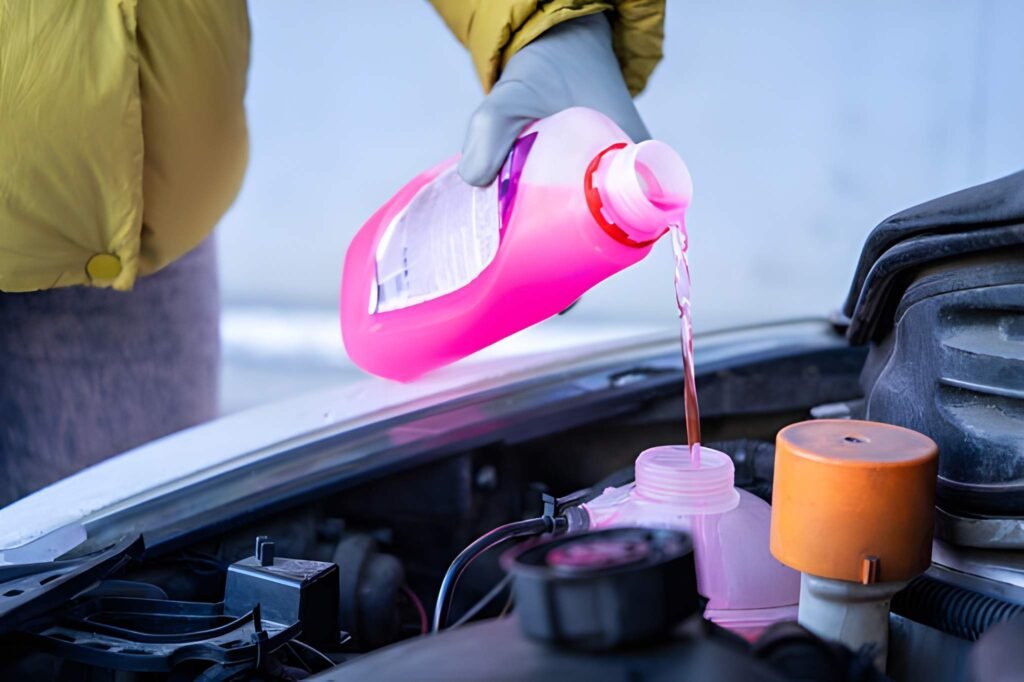
- Add Antifreeze: Pour antifreeze into the coolant reservoir or radiator. Make sure you do not fill it too high, because that may cause the coolant system to overflow and become damaged.
- Start the Engine: After adding antifreeze, you will want to start the engine and let it run for a few minutes, this will help the coolant move through the system.
- Check the Temperature Gauge: While the engine is running, keep an eye on the temperature gauge to be sure it is running at the optimal temperature.
Common Problems with Antifreeze in Engine Coolant
Antifreeze is an important element in the cooling of an engine, and there can be problems due to lack of maintenance or improper use. Problems include the following:
- Leaks: Once an engine block, radiator, or hoses develop a leak, coolant will escape, resulting in a drop in levels and overheating of engine.
- Contamination: Antifreeze in a cooling system can become compromised with dirt, rust, or other materials, which will lessen its useful life. Old antifreeze will also lose its added corrosion inhibitors.
- Corrosion: If antifreeze is not changed often enough, the coolant will lose its protective properties and cause rust and corrosion within the engine cooling system.
Insufficient antifreeze results in an overheated engine, so always remember to check the coolant levels and top them off as needed.
How Often Should You Change Antifreeze?
How fast antifreeze breaks down depends on the type, the driving conditions, the manufacturer, and what antifreeze is used. However, a rule of thumb is as follows:
- Regular Antifreeze: Change every 2 -3 years, or every 30,000 miles (48,000km).
- Long-Life Antifreeze: Change every 4 – 5 years, or every 100,000 miles (160,000 km).
If you drive in extreme conditions, the antifreeze may need to be replaced more frequently.
Frequently Asked Questions
Here are some FAQs about antifreeze in engine coolant –
1. What should I do if I notice my antifreeze is low?
If you see the antifreeze is low, top it off with the same type of antifreeze. If the coolant is still dropping, check for leaks or a bad thermostat.
2. Is it safe to use any type of antifreeze in my car?
No. You have to use the antifreeze specified in the owner’s manual. Antifreeze has different chemical compositions, and using the wrong one can damage the engine or cooling system parts.
3. Is it ok to mix different colors of antifreeze?
Mixing antifreeze is not recommended. Mixing different types of antifreeze can create chemical reactions that reduce the antifreeze’s performance and can cause corrosion or overheating of the engine.
4. How can I determine if my antifreeze needs to be changed?
Look at the antifreeze’s color and consistency. If the antifreeze is dark brown or if there is floating debris, the fluid needs to be changed. Also, if the vehicle is overheating, that is a sign antifreeze is not working and may need to be changed.
5. Is it safe to drive my car with no antifreeze?
Driving a car with no antifreeze is not safe. Your car’s engine will overheat during hot days and freeze during cold days. This can result in damage to the motor and can be very expensive to fix.
Conclusion
For a vehicle’s engine cooling system to work optimally, the automotive antifreeze helps to ensure its protected from extreme heat and potential damage. Regular maintenance, proper mixing, and correct replacement helps mitigate losses from replacing the engine from the damage. Following the guidelines from the manufacturer and taking note of the state or conditions of the engine antifreeze can help keep the car running.