


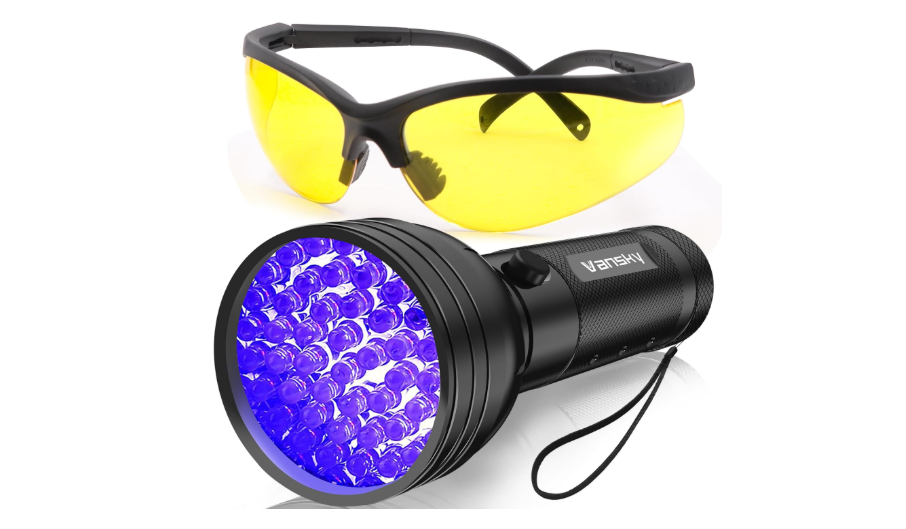
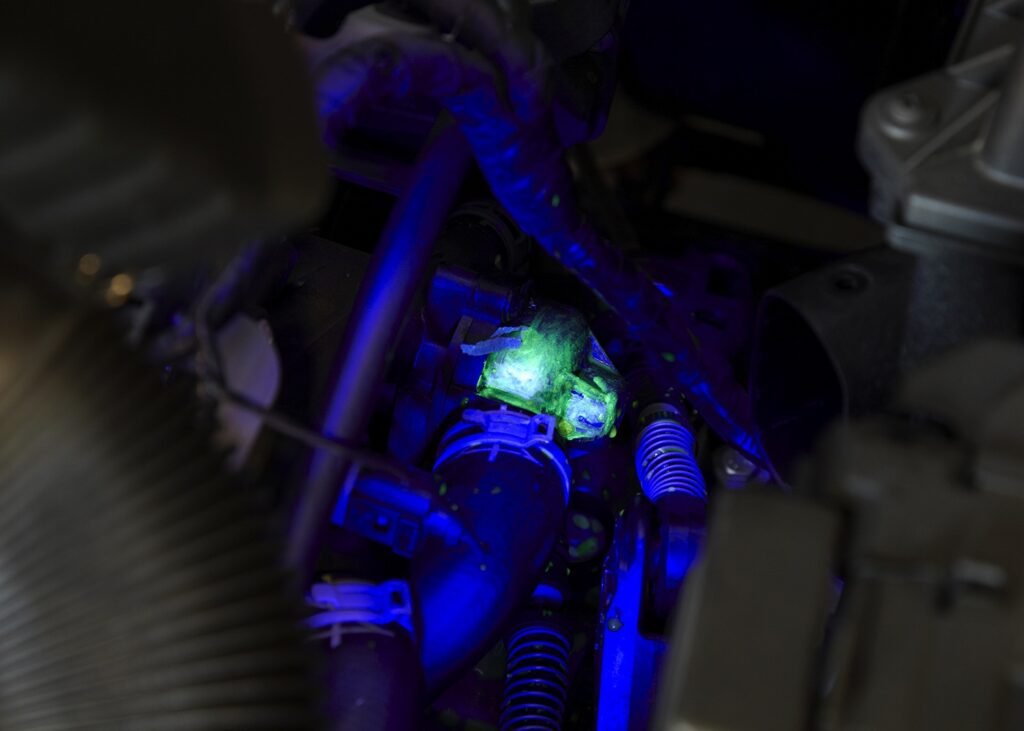
Black light to detect coolant leak on engine uses UV dye in the coolant, which glows under a black light, revealing leaks. It’s a quick and accurate way to find even small leaks.
Detecting small coolant leaks can be difficult to do, but it is very important because it can lead to overheating or complete engine failure. Early detection can help prevent serious damage to your engine. You can use black light to detect coolant leaks on engine. By using special UV dyes, the system’s leaks will be highlighted and will be easy to find.
This guide will focus on black light detection and the steps to make it work. The black light detection will help you see the dye and also help find other engine problems.

Contents
How Do Black Lights Find Coolant Leaks?
In order to find engine leaks, you can use black light and UV dyes. First, you will put the UV dye in the coolant system. This will flow with the coolant through the radiator, and water pump. If you have a leak, the UV dye will escape through the leaks and will glow under a black light.
System Components:
- UV Dye: This dye is mixed with the coolant and is designed to be invisible to the naked eye. However, the dye will glow under a UV (black) light.
- Black Light: UV (black) lights are the only way to view the dye without taking apart the system. Black lights emit a type of radiation that cause the dye to glow, allowing you to view the dye (and leaks) in places that are not visible.
A black light is the best way to view a coolant leak for the first time because you will be able to view even the smallest and most hard to find leaks. Because the UV dye leak detector is a leak filler as well as a UV dye, it makes sure that the leak is fully visible. Black light leak detection actually allows you to see the leaks and pinpoint the location of the leak.
The Process of Using Black Light to Detect Coolant Leaks
Detecting leaks is simple, but there are some tools and a simple understanding of the auto system that are required. This is a simple, but complete, guide to the best result using this technique.
Step 1: Gather the Necessary Tools and Supplies
Here are the tools and supplies you will need:
UV Dye: Buy an automotive coolant UV dye. Check what dyes are suitable for your type of coolant as some dyes work only for organic acid technology (OAT) coolant dyes.
Black Light/UV Flashlight: You are going to need a good black light or UV flashlight to see the fluorescent dye.
Rag or Cleaning Supplies: Get something to clean up any spilled dye or coolant.
Gloves/Face Shield: Handle dye and coolant only with protective gear to avoid skin irritation.
Jack and Jack Stands: If you need to go under the car for the engine or coolant system, you will need to lift the car.
Coolant and Radiator Cap: If dye has been added to the coolant you will need to cap it, and make sure it is secured. Also, have fresh coolant available.
Step 2. Introducing the UV Dye into the Coolant System
To continue, it’s time to put the UV dye into the vehicle cooling system. This is generally done by inserting the dye into the radiator or coolant reservoir. Here’s how to do this:
- Lift the Radiator Cap: Open the radiator cap or coolant reservoir cap. Ideally, the engine should be off so it is not hot. This is because the coolant system gets pressurized, which increases the risk of injury.
- Pour in UV Dye: Check the directions to see how much dye is required. Most guides vary from 1 to 1.5 ounces. However, it may be more or less, depending on how much dye is needed based on the vehicle’s coolant system size.
- Re-Cap the Radiator Cap: After this, you can close the radiator cap or reservoir cap.
- Start the Vehicle: This will allow the UV dye to begin its circulation of the full coolant system. Let it run for a minute.
Step 3: Look for Leaks Using the Black Light
After the dye has been in the system, the engine must be inspected for leaks. The black light or UV flashlight will show you where dye is. Here is how to do it:
- Turn off the Lights: Bring the area’s illumination to the minimal you can. Black lights work best in low-light situations.
- Inspect the Engine: Light the black light over different parts of the engine, especially towards the areas of the radiator, the hoses, the water pump, and the connections. Make sure to pay extra attention in the areas with bad visibility where leaks usually occur.
- Look for the Glow: The UV dye will strongly illuminate areas with leaking coolant, so identifying the source of the leak should be easy.
Step 4: Repairing the Leak
The area of the leak is usually easy to spot. However the source is harder to locate. Common leak areas are as follows:
- Hoses: As a cracked or overly loose hose can lead to coolant leaks.
- Radiator: Calm yourself. In the radiator, small cracks or punctures are still in the coolant beforehand and will allow it to escape.
- Water Pumps: A water pump that is no longer functioning properly can leak coolant from its gasket or seals.
- Radiator Cap: Leaks can develop due to a worn or loose radiator cap.
Once you have located your leak, you can start with the repairs. In the case of a small leak and it is determined to be a hose or clamp, you may be able to adjust, tighten or replace the broken piece. If it is the radiator or water pump, it will likely require a full replacement.
Step 5: Clean Up
After finishing the repairs, there may be residual coolant and dye that needs cleaned up. To clean, just use any cloth or cleaning product to clean the spill. To avoid a potential mess from the dye, it is a good idea to clean it up right away as it can stain surfaces that have not been cleaned.
What are the Advantages of Using a Black Light for Coolant Leak Detection?
Professional car mechanics and DIY enthusiasts are fans of the black light method for coolant detection because of the following:
- Reliability: The black light method works wonders in identifying tiny leaks that go unnoticeable.
- Speed: Compared to other methods such as pressure testing and taking apart components to inspect, the black light method is quite fast.
- Simplicity: No parts of your vehicle’s cooling system needs to be uninstalled.
- Affordability: Diagnosing leaks with a black light method is very cheap when compared to taking it to a mechanic.
- Use In Different Areas: The method works in identifying leaks in other parts of the cooling system such as hoses, radiators, water pumps, and even leaks in the engine block.
Common Problems That Can Be Found with a Black Light
Black lights help detect coolant leaks to target specific problems with the engine coolant system. Some examples include:
- Radiator Leaks: Radiators can be very difficult to detect. Black lights help detect any of the small gaps or cracks that start to leak coolant.
- Hoses and Clamps: Over time hoses can become stiff and brittle which can cause visible cracks. Black lights are used to help detect visible cracks.
- Leaking Water Pumps: If the water pump has a leak, the black lights will detect water and highlight the leak.
- Gaskets: The engine coolant system has gaskets that can become worn. The gaps between components of the engine can also leak which will be highlighted with black lights.
- Leaking Radiator Cap: The seal of the radiator cap can become worn and cause small leaks. These can be hard to detect without the black lights.
Frequently Asked Questions
Here are some FAQs about the engine coolant leak detection –
- Are black lights able to identify all leaks?
If there is a dye that reacts with a black light coolant, you can find and identify most leaks.
- What leaks can be used with black lights?
Most automotive coolants use black light dyes that are UV-sensitive. You can call your toner supplier for advice if you are not sure.
- Will I need special equipment for this technique?
Every technique will require special tools. For this method, you will need a UV dye and a black light or UV flashlight. These are tools that are inexpensive and easy to find and use.
- How frequently should I monitor for coolant leaks?
You should monitor for leaks at each service interval. If you find that coolant below the engine or overheating. If you find coolant below the engine, overheating, low coolant or engine light up, be sure to check for leaks at each service interval.
- Is this something I can do on my own or do I need to go to a mechanic?
This is a simple process that can be done by a DIY enthusiast, however, if you are uncomfortable dealing with your car’s coolant system, it is recommendable to go for the professional option.
Conclusion
Usually, if there is a problem with the engine, you can use a black light to locate a coolant leak. There are several simple and easy steps you can use to search for a leak in the engine area. A black light will help you to locate leaks that are difficult to reach and are sometimes overlooked. As a mechanic, you will save time and money by using a black light to locate a leak, and you will also reduce the amount of damage done to the engine.
In the future, using a black light to locate leaks will probably be the best decision you have made for your engine. Always inspect the engine running system as the repairs can be expensive to fix.


