


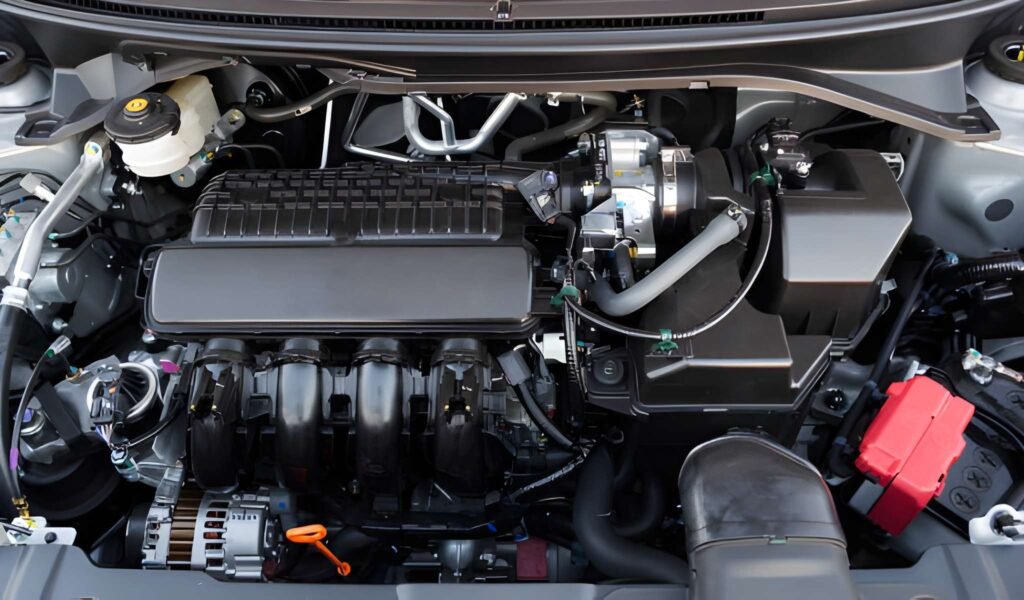
The components of an automobile engine include critical parts like the engine block, cylinders, pistons, crankshaft, camshaft, valves, and spark plugs. These components work together to convert fuel into mechanical energy, powering the vehicle.
The engine is the most important part of any vehicle. It takes fuel and turns it into energy making the vehicle mobile. How does the engine manage to do this? To better understand the engine’s inner workings, one must understand the inner workings of the engine. The engineering of the engine is highly sophisticated and includes countless parts working in unison to create the power needed to move the vehicle.
In this guide, we attempt to examine every part of the engine, how they function as one, and why they are important.

Contents
- 1 The Primary Components of Automobile Engine
- 2 The Importance of Engine Maintenance
- 3 Frequently Asked Questions
- 4 Conclusion
The Primary Components of Automobile Engine
The most important parts and the primary block of any engine are the performance contributing components. Individually, these components perform specific tasks that are important to consider. We will examine each one of these in depth.
1. Engine Block
The engine block is the most important part of the engine. The biggest part of the engine is a large, solid, and thick part of the engine that contains a lot of the engine’s most vital components. It is constructed using cast iron or aluminum. The block is made to endure extreme temperatures and pressure.
The engine block is the main piece to the engine’s setup. It contains the pistons, crankshaft, camshaft, and cylinders. It also contains water jackets where coolant flows through to regulate the temperature of the engine and to prevent overheating. The engine block is also called the “heart of the engine” due to its significance in holding everything, The design of the engine block is meant to endure the large amount of forces produced and keep the engine functioning smoothly and safely.
Considerations and Materials
The materials used to design engine blocks are cast iron and aluminum. Though cast iron is heavy, It is very durable and can withstand large amounts of torque. While aluminum is lightweight and manages heat dissipation better. It can also make modern engines more fuel efficient and powerful.
With the ability of modern engines to balance power and fuel efficiency, aluminum has become a more common choice. Engine blocks are made with water jackets that allow coolant to absorb heat produced from combustion which helps to maintain the engine’s temperature and prevent overheating.
2. Cylinders
Among all internal combustion engine elements, the most vital are the cylinders. They’re the spaces in the engine block where the fuel combustion happens. Modern-day cars can have an average of 4-8 of these. More cylinders equate to more power, but reduce fuel economy.
Function:
- The cylinders house the pistons and are the locations where the engine’s power is generated through the combustion process.
- Each cylinder contains a piston that moves up and down, driven by the combustion of fuel and air.
Cylinders can be positioned in a few different ways, like a single row of blades placed all in a line (which is called an inline), two banks of blades at an angle to each other (V-shaped), or two banks of blades all in the same horizontal plane (flat). The way they are arranged can effect the engine’s balance and power.
Cylinder Configuration & Engine Performance
The arrangement of cylinder sets helps determine how much power an engine can produce, how smooth of an operation can it provide, and how economical can it run on fuel. A good example of this would be an inline engine (I4), which displays four cylinders in an inline configuration. It is compact and quite easy to maintain, resulting in good fuel economy. A contrasting configuration would be the v engine (V6 or V8), in which the cylinders are structured in two sets of banks shaped like a letter “V”.
This arrangement provides a lot more power and an overall smoother experience, but it often becomes a lot heavier and more economical. Subaru and certain Porsche models use a flat engine, which has cylinders arranged in a latticed configuration horizontally. This means the cylinders are facing each other, which helps in reducing the weight of the engine and as a result improves the handling of the overall vehicle.
3. Pistons
Pistons are responsible for the several cycle strokes of an engine, which are located in each cylinder. The crankshaft is connected to the piston via a part called the connecting rod, and it is the pistons converting an engine’s fuel combustion into mechanical energy that moves the vehicle.
Function:
- Pistons are connected to the crankshaft by connecting rods, which transfer the linear motion into rotational motion.
- Pistons receive the force of combustion and move up and down within the cylinders.
- The movement of the pistons is what ultimately turns the crankshaft, which drives the vehicle’s wheels.
Extreme temperature and pressure during operation subject pistons to extreme conditions, which are handled with durable materials such as aluminum alloy. The pistons also help keep the cylinders sealed tight from leaks because maintaining proper compression is necessary for good burning of the fuel.
Different Types of Pistons
Flat top, dome, and dish are the three types of pistons used in engines. The combustion process in flat top pistons is the most common and most effective for performance as they provide a flat surface that combustion can occur against. For high performance mechanically supercharged engines, dome pistons are also common as they provide a higher compression ratio, and therefore higher power. Engine performance that requires a lower ratio of compression for knocking control, dish pistons are used.
4. Crankshaft
The crankshaft is a vital part of any car engine. Made of durable steel or iron, a crankshaft’s primary job is to convert the up-and-down motion of the pistons into the rotational motion needed to turn the wheels.
How it works:
- The car crankshaft accepts the rotational force from the pistons, then transfers the energy to the car’s transmission to move the wheels.
- The crankshaft is supported by several bearings. This is to ensure it is able to withstand the current forces.
- To better operate the engine, the crankshaft has several counterweights that balance the rotational force to minimize vibrations.
A crankshaft is important in converting energy from an engine into usable mechanical force. When it is broken or faulty, it can cause an engine to lose performance or even completely fail. Because of the influence a crankshaft can have in an engine’s overall performance, it is critical to choose the right one. A crankshaft that is engineered right will greatly improve engine longevity and performance.
Forged crankshafts are some of the best and are commonly used in advanced performance car engines, to better handle the intense conditions of high-speed driving.
5. Camshaft
The camshaft helps in controlling the engine’s intake and exhaust valves. It rotates with the crankshaft to help the engine valves open and close. This is important in making the engine work great.
Function:
- The camshaft helps open and close the intake and exhaust valves, making air and exhaust gas come in and out of the combustion chambers.
- The engine’s valves need to open and close at the right time to create fires and produce power.
- In today’s engines, camshafts are mostly moved with a timing belt or a chain.
The camshaft’s role in the timing of the valves makes it better to help improve the engine’s performance and efficiency. If the camshaft is out of time, the engine won’t work great. There are different types of camshafts, for example a single overhead camshaft (SOHC), double overhead camshaft (DOHC) and cam-in-block camshaft.
The number of camshafts and their position really helps the engine to control the amount of air going in and out, and makes it super better to perform.
6. Valves
Valves manage how air and combustion gases flow in and out of the engine’s cylinders. An engine typically has two kinds of valves – the intake and the exhaust valves.
Function:
- Intake valves admit the air fuel mixture in the cylinders to be burnt.
- Exhaust valves expel exhaust gases after the fuel has been burnt.
- The camshaft opens and closes these valves to ensure that fuel goes to the valves in time.
A broken valve, or a valve that opens or closes at the wrong time may have negative effects on the engine such as increased fuel consumption and engine misfires. Valves may also be subject to wear out or damage caused by the combustion process which can cause loss of compression, inefficiency, and poor performance of the engine.
Types, Materials, and Valve Usage:
Poppet valves are the most common type of valves used in modern engines, while rotary valves are sometimes found in specialized engines. Valves are made of alloy steel or stainless steel, which is a combination that provides high temperature strength and durability.
7. Timing Belt/Timing Chain
A timing belt or a timing chain connects the crankshaft and the camshaft of an engine. If the timing belt or chain breaks, or slips, the engine’s timing will be off and the engine’s valves will open and close at the wrong times. This can lead to serious problems with the engine’s performance.
Function:
- It is crucial for precise valve operation, which in turn impacts fuel efficiency, power production, and overall engine performance.
- The timing belt or chain links the crankshaft to the camshaft, ensuring both rotate in sync.
Most timing belts will need to be replaced at 60,000, 75,000, or 100,000 miles, depending on the manufacturer. If a timing belt breaks, it can cause serious engine damage, such as bent valves and broken pistons. Because they tend to break and need to be replaced more often, many newer engines use timing chains instead of timing belts. Timing chains can last as long as the engine does. While timing belts can wear out and break.
Timing Belt vs Timing Chain
Timing chains require less maintenance than timing belts because they are more durable and do not need to be replaced as often. However, timing chains are noisy and heavy. On the other hand, timing belts are quiet and light, but they require a lot more maintenance. Regardless of what is in the car, they both have to be replaced at the car manufacturer’s advised intervals to avoid expensive repairs. Read more about Timing Belt vs Timing Chain.
8. Oil Pump
An oil pump is a critical component in the engine that circulates oil to the various moving parts. It is a component that keeps the engine lubricated. Without lubrication, the engine parts can rub against each other, causing too much friction. This can lead to excessive and premature engine component wear, and can cause overheating of the engine due to the friction. With lubrication, the moving engine parts can slide past each other easily, reducing wear and dissipating heat.
Function:
- It helps maintain proper oil pressure, ensuring that the engine runs smoothly and stays well-lubricated.
- The oil pump ensures that oil flows through the engine, reaching critical components such as the crankshaft, camshaft, and pistons.
The crankshaft or camshaft powers the oil pump, and without it, an engine would seize from lack of lubrication. For oil pumps and the engine to function properly, oil changes must be performed regularly. Oil also acts as a cleaning agent, carrying dirt and debris from the engine. Therefore, changing oil and using the correct type of oil as per the recommendations of the manufacturer is important.
Oil Pump Failures
In the event of an oil pump failure, the engine will lose oil pressure, and engine components will begin to rub together without sufficient lubrication. This will cause serious engine damage in a short time. Engine knocking, overheating, and low oil pressure are signs of oil pump failure.
9. Spark Plugs
In the engine cylinders, the air-fuel mixture must be ignited, and this is the duty of the spark plugs. The spark from the spark plugs leads to combustion, and that’s what powers the engine. For the fuel efficiency and performance of the engine in a car, spark plugs are very important.
Function
- The mixture of air and fuel in the cylinders, is ignited, and a spark is generated at a precise moment.
- The spark plugs fuel the combustion, creating the force to move the pistons.
If the spark plugs are damaged, fuel economy will decrease, engine power will weaken, crushing engine will become rough, and the engine will idle more without firing to the correct spare idle. This disaster proves the need for spark plugs, specially after a long drive. The spark plugs are made of several materials. Surpassing the periods Standard copper plugs will last lesser than the modern engines spark plugs, which will be made of Iridium or Platinum.
Spark Plug Maintenance
Car Maintenance for the Spark plugs should be done in the course of 30,000 to 100,000 miles, then in the course of 30,000 miles to 100,000 miles. Fuel combustion will become insufficient if the spark plugs become insufficient neglected to be replaced. This will result in in increased emission and a decrease in fuel economy.
10. Exhaust System
An automobile’s exhaust system has many critical functions, such as diverting the potentially harmful fumes away from the engine, deadening the noise, and reducing harmful emissions.
Functions:
- The exhaust manifold collects exhaust gases from the cylinders and funnels them to the catalytic converter.
- The catalytic converter helps reduce harmful emissions by converting toxic gases into less harmful substances.
- The exhaust system also includes the muffler, which reduces the noise created by engine combustion.
A well-functioning exhaust system is critical not only for reducing environmental impact but also for optimizing engine performance and efficiency. If any part of the exhaust system fails, such as the muffler or catalytic converter, it can lead to performance issues, increased emissions, and louder engine noise.
Exhaust System Components
- Exhaust Manifold: As the name states, it collects the engine exhaust.
- Catalytic Converter: This component also helps the environment by decreasing the harmful gases’ concentration.
- Muffler: One of the critical components of the exhaust system is the muffler. While mufflers help reduce the noise made by an engine, they can get clogged or rust, resulting in making the engine run louder!
- Exhaust Pipes: When an engine burns fuel, it creates exhaust gases that need to get expelled from the engine. Exhaust pipes transport this gas to the back of the vehicle.
The Importance of Engine Maintenance
Maintaining the engine is as important as knowing its components. While understanding engine components is critical, knowing how to properly take care of an engine is equally important. Taking care of an engine ensures it performs properly, runs longer, and costs you fewer repairs!
- Regular Oil Changes
Changing an engine’s oil is non-negotiable. Engine oil lubricates the moving parts and reduces the friction that can cause overheating and wear. If oil is not changed, it can become dirty and lose its ability to properly lubricate.
At every oil change, the oil filter must be changed as well. Not doing so will allow dirty oil to get back into the engine and cause damage.
- Monitor Coolant Levels
An engine can overheat, and when that happens, it’s damage is severe and costly. Keeping engine coolant handy is critical as it helps an engine lose its heat. But, too much coolant is never a good thing! There is a sweet spot. If there is too little of it, an engine can overheat, and the damage can be severe. Keeping an eye on engine coolant levels and maintaining them is imperative to an engine’s longevity.
An essential part of maintaining your car’s engine is to check coolant levels. Also called antifreeze, coolant works to disperse heat throughout the engine. Because coolant can build up contaminants, and to maintain its effectiveness, coolant must periodically be replaced. This is part of regular engine maintenance.
- Replacement of Timing Belts and Chains
Timing belts and chains must get replacement from time to time. A timing belt can severely damage an engine if it breaks. This can happen, for example, with bent valves or damaged pistons. Timing chains are the more durable option. Frequent replacement of them isn’t needed. However, they must be inspected from time to time.
To minimize high-cost repairs and catastrophic engine issues, timing belts and chains bites replacement before they break.
- Inspect and Replace Spark Plugs
Spark plugs need replacement from time to time. This is necessary to enable proper combustion and to avoid misfires. Also, it helps to boost fuel economy and engine-power, and reduces the risk of misfires.
Spark plugs need replacement to enhance acceleration, reduce emissions, and maintain fuel economy. Regular inspections of them are important to keep an engine in optimal conditions.
- Clean the Air Filter
An air filter prevents dirt and debris from getting into the engine. However, a dirty air filter can restrict airflow to the engine which can lead to a decrease in performance and fuel efficiency. For the best performance, it is a good idea to check and clean air filters regularly.
Frequently Asked Questions
Here are some FAQs about the parts of car engine –
- What is the most important part of an automobile engine?
The most important part of an engine is the engine block. This is because it contains the most vital components of the engine and serves as the engine’s main structure.
- How often should I change my engine oil?
Generally, engine oil is changed every three to five thousand miles. However, it is also dependent of the oil being used and the specifications provided by the manufacturer.
- What happens if the timing belt breaks?
If the timing belt is broken, the engine will stop functioning. This will in some cases cause extensive damage to the inner components like the valves and pistons.
- What does the oil pump do?
An oil pump’s job is to circulate oil around the engine. This helps lubricate moving parts which in turn prevents parts from overheating due to friction.
- Why are spark plugs important?
Spark plugs are vital because they initiate the combustion process by igniting the air-fuel mixture in the engine. Without them, the engine would not be able to produce the energy needed to power the vehicle.
Conclusion
An automobile engine is composed of various parts that are designed to work in a coordinated manner to help the vehicle function properly. Every component in the engine block, exhaust system, etc. is important to help convert the fuel to motion. Driving the vehicle will require increased engine maintenance to help the parts work together and will prolong the vehicle’s life. Knowing the parts of the engine will help you be able to maintain the car, fix the car, and understand the issues that come up.


