


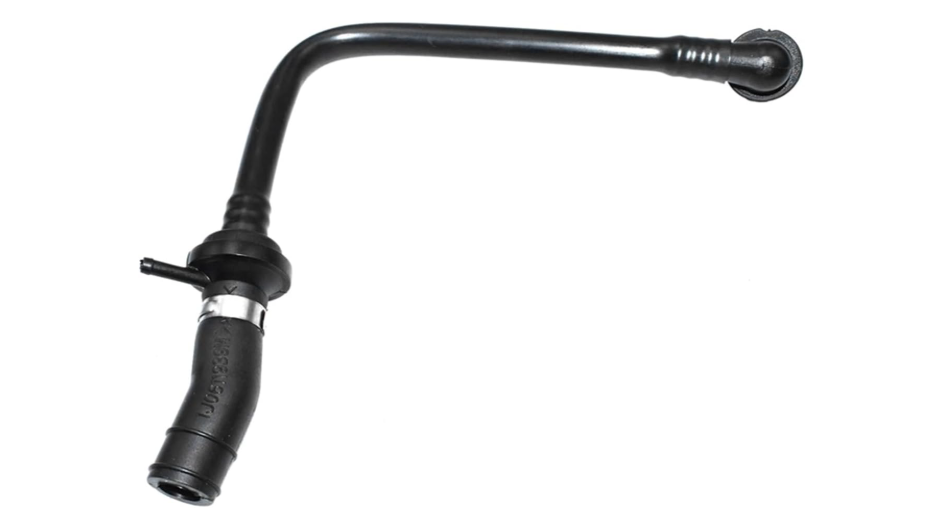
The brake booster vacuum hose diagram shows how the vacuum hose links the engine’s intake manifold to the brake booster, providing power-assisted braking. It highlights the connections and check valve needed for effective brake function.
Your car needs a functioning brake booster vacuum hose for your vehicle braking system to work properly. Every time you hit the brake pedal, a brake booster allows the car to stop easier and faster as it amplifies the force. The vacuum hose is what links the brake booster to the engine’s intake manifold. They work together to create the vacuum that the brake booster relies on to help in braking.
This article will help you understand how some parts work together to create a system that allows you to brake your car effortlessly. We will be focusing on the vacuum hose and taking an in-depth look at the diagrams for the brake booster vacuum hose for guidance.

Contents
- 1 What is a Brake Booster Vacuum Hose?
- 2 How the Brake Booster Vacuum Hose Works
- 3 Brake Booster Vacuum Hose Diagrams
- 4 Step-by-Step Guide to Brake Booster Vacuum Hose Routing
- 5 Common Mistakes When Installing a Brake Booster Vacuum Hose
- 6 Identifying Problems Related to Brake Booster Vacuum Hose
- 7 Frequently Asked Questions
- 8 Conclusion
What is a Brake Booster Vacuum Hose?
The brake booster vacuum hose is what connects the intake manifold, a part of the engine, to the brake booster which is a part of the braking system that is designed to increase the force of braking. With the vacuum hose, the engine can provide a vacuum assist which allows you to push the brake pedal down easier. Without a working vacuum hose, it will be increasingly difficult to brake.
Because of the vacuum pressure and heat that is created from the engine, brake booster vacuum hoses are constructed of a durable and flexible mate rial so that they can withstand the pressure that will be created.
When the engine is off, the system uses one-way check valves to keep the brake booster in vacuum. This lets you have some braking help after the engine is off.
How the Brake Booster Vacuum Hose Works
The hose plays a big part in how the braking system works. Here is a description of how the system works:
Vacuum Source: A vacuum is created in the engine’s intake manifold when the engine is on. This vacuum is used to power the brake booster.
Vacuum Hose: A vacuum is transported through a hose, which is connected to the intake manifold and brake booster.
Check Valve: A check valve is used on the vacuum line so the vacuum stays in the brake booster when the engine is turned off.
Brake Booster: The brake booster uses the vacuum to have a mechanical advantage over the brake pedal, making the deceleration of the vehicle easier.
Master Cylinder: The master cylinder is attached to the brake booster and converts the pedal force to hydraulic pressure, which is required to activate the brakes.
Brake Booster Vacuum Hose Diagrams
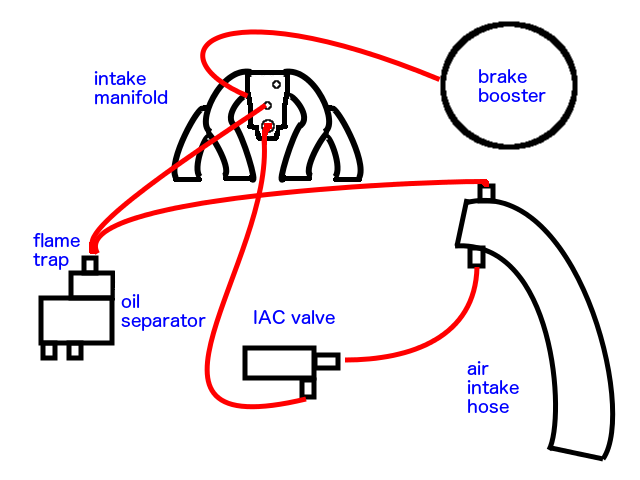
Vacuum hose diagrams show how each component in a system works together in a vacuum hose system. This vacuum hose system starts at the engine and ends at the brake booster. To better understand how to read these diagrams, here’s a breakdown.
1. Source of the Vacuum (Intake Manifold)
The starting point vacuum hose system is the intake manifold. This component creates the vacuum needed for the brake booster to function and the diagram will indicate connection points on the intake manifold.
2. Check Valve (One-Way Valve)
The engine vacuum system would lose vacuum to the atmosphere, and the brake booster would sit at ambient pressure without the use of a check valve. This valve only allows vacuum into the brake booster and keeps the system sealed. It’s essential for the system to operate correctly.
3. Vacuum Hose
The vacuum hose is usually a flexible, black tube made of rubber or plastic. This hose connects the brake booster and the intake manifold. The vacuum hose must be properly secured at points along the system to keep the vacuum from leaking and to ensure proper vacuum flow along the system’s entire length.
4. Brake Booster
The brake booster, which helps the driver press the brake and stop the vehicle, is a large, round canister located between the brake pedal linkage and the firewall. The booster supercharges the brake pedal with the power of a vacuum, decreasing the amount of pedal pressure the driver must exert.
5. Master Cylinder
The master cylinder is the component that is attached to the brake booster, and it converts the extra force into pressure, which is used to brake.
Each of the parts of the brake system is usually marked up in the diagram, and there are arrows on the parts to show what way the vacuum is going, as well as other parts of the vacuum.
Step-by-Step Guide to Brake Booster Vacuum Hose Routing
In this section, we are going to explain the way to operate removing the brake booster vacuum hose from a vehicle. This guide is to assist both beginners and experienced mechanics with the correct route of the valve and help solve any problems where there is no vacuum.
1. Vent Proxy from the Intake Manifold
To connect the vent hose, the first step is finding the vent proxy at the intake manifold, which is normally located around the throttle body or intake manifold and is also very easy to see. If the car has a vacuum-operated component, such as an EGR valve or a Janus-type vacuum actuator, the brake booster will probably have the same vacuum source as well.
2. Set Up the Check Valve
In most cases, the check valve is already positioned in the vacuum hose before the connection to the brake booster. Make sure there is proper orientation, as the flow pointing is going toward the brake booster, which should go to the valve. If there is a check valve on your car and it is not even functioning, it should be replaced to help keep the vacuum.
3. Attach the Vent Hose
Get one of the ends with the check valve to connect with the lift and the other end should go to the brake booster. Be sure the hose is securely in place to help with any air leaks. Make sure the hose did not get pinched, bend, or get exposed to the engine and is at an excessive heat.
4. Route the Hose Properly
Avoid routing the vacuum hose around hot engine parts, sharp edges, or any moving parts. Make sure that the hose is positioned securely and does not interfere with the engine bay components.
5. Secure the Hose and Check for Leaks
Use clamps to secure the vacuum hose at both ends. Ensure that the hose is not too tight as that could damage the hose or the check valve. Once the installation is complete, start the engine and listen for any vacuum leaks, checking for hissing sounds and rough engine idle.
Common Mistakes When Installing a Brake Booster Vacuum Hose
When installing or diagnosing the brake booster vacuum hose look out for these common mistakes:
1. Routing the Hose Near Exhaust Components: Avoid routing the vacuum hose near exhaust components or other heat sources. Excessive heat from exhaust components can cause the vacuum hose to degrade or heat crack, which can lead to leaks and reduced brake assist.
2. Wrong Check Valve Installations: The check valve is very important when it comes to holding vacuum pressure. Having it installed incorrectly with the arrow facing the wrong way may lead to losing vacuum assist, which causes hard braking.
3. Wrong Vacuum Source Use: Certain vehicles may have more than one vacuum source. If the incorrect port is chosen, it may create problems with how the brakes perform, and could even affect how the engine runs. Always check the vehicle’s service manual to find the correct vacuum port.
4. Vacuum Hose Kinks or Pinches: Any odd resolutions with the vacuum hose will bring about reduced efficiency with the brake booster as the vacuum gets restricted. Always make certain that the hose is secured so that no bends are made that could lead to restricted airflow getting to the brake booster.
5. Not Properly Securing the Hose: Loose or unfastened hoses may slip out and lead to loss of vacuum pressure, which would cause the brakes to fail. Always make sure that the vacuum hose is secured on both ends.
Identifying Problems Related to Brake Booster Vacuum Hose
Understanding how the braking system works can make it easier to understand how the brake booster vacuum hose may be the problem. Some issues are described below:
1. Brake Pedal Isn’t Going Down: If this pedal feels hard or stiff at all, it’s probably an indication that the brake booster hose is having a vacuum leak. If so, check out that hose and see if there are any cracks or leak issues. If there is a damaged hose, it will need to be changed out for a new one.
2. Problems with the Engine Idling: If there is a vacuum leak, it can also affect how the engine functions. If there is a vacuum hose that is leaking, the engine may be idling in a rough manner, or it may also be stalling. It is also a good idea to check for any long gaps in the hose.
3. Air Leakage: If you hear a hissing noise while the engine is on it is an indication that there is a vacuum leak. Be sure to listen to the area around the vacuum hose, check valve, and brake booster to check for any air leaking out.
Frequently Asked Questions
Here are some FAQs about brake booster vacuum hose diagram –
1. What is a brake booster vacuum hose diagram?
This is a diagram showing the path of the vacuum hose from the intake manifold to the brake booster, and what each of the components does.
2. Why is the brake vacuum hose important?
The hose is pivotal because it provides the brake booster with a vacuum to make it easier to pull the brakes.
3. How can I tell if my brake booster vacuum hose is leaking?
Signs of a brake booster vacuum hose leaking include if the hose is damaged, hearing a hissing sound near the hose, and a hard brake pedal which likely means there is a vacuum leak.
4. Is It Safe To Drive With A Damaged Brake Booster Vacuum Hose?
No. A damaged vacuum hose can lead to a defective vacuum system, which results in a lack of brakes. You should replace the vacuum hose immediately.
5. How Often Should You Inspect Your Brake Booster Vacuum Hose?
You should look at the vacuum hose during normal maintenance checks, but also especially if you are experiencing any issues in braking performance, engine idle, or hearing any odd sounds coming from the engine compartment.
Conclusion
The brake booster vacuum hose diagram is a valuable resource to aid in comprehending how your car’s braking system works. You can ensure the reliability of the brake system by following the booster vacuum hose diagram and installing it accordingly. Proper installations reduce the amount of force needed to bring your car to a stop and improve the system’s power assist.
For the braking system to work in the best condition possible make sure there are no leaks, replace old and damaged hoses, and ensure the check valve is in working order.


