Do Teslas have brake fluid? Yes, Teslas do have brake fluid, although their regenerative braking system reduces the need for traditional braking. Brake fluid is still essential for the mechanical braking system, which is used in emergency stops or when more stopping power is required.
Tesla and other electric vehicles (EVs) have had the biggest impact on the automotive world. Tesla vehicles have become very popular in recent years. Customers have many questions about how their new cars work. One question involves the fluids in the car’s brake system. Some people wonder if Teslas have brake fluid. It’s understandable considering electric vehicles operate quite differently than gas-powered vehicles. The answer is yes, Tesla vehicles do have brake fluid.
However, their braking systems are different and include both traditional and electric components. In this article we will explain Tesla’s braking system, the importance of brake fluid, and discuss why brake fluid needs may be different than most cars because of Tesla’s regenerative braking system.
Contents
- 1 What Is Brake Fluid and What is It’s Purpose?
- 2 How Do Tesla’s Brakes Function?
- 3 Why Do Teslas Have Brake Fluid if They Use Regenerative Braking?
- 4 Less Brake Wear, Not Eliminated
- 5 What is the Process of Brake Fluid in a Tesla?
- 6 Brake Fluid Maintenance in Teslas
- 7 Signs That Brake Fluid Needs Attention
- 8 How to Check Brake Fluid in a Tesla
- 9 Tesla Brake Fluid Maintenance: DIY vs. Professional Help
- 10 Comparing Tesla’s Brake Fluid System to Traditional Cars
- 11 Frequently Asked Questions
- 12 Conclusion
What Is Brake Fluid and What is It’s Purpose?
No matter if it’s a regular internal combustion engine (ICE) vehicle or an electric vehicle (EV) like a Tesla, brake fluid is an important component of every car’s brake system. Brake fluid is a special hydraulic fluid that is used in the brake system of every vehicle. When a driver steps on the brake pedal, the brake fluid engages the pressure in the lines, and that makes the brake pads squeeze on the rotors. This is done to create the friction that makes the car slow down, or even come to a full stop.
The fluid has to be able to endure the extreme pressure and heat that is generated when braking. Apart from that, it also has to be able to withstand extreme temperatures and a low boiling point so that it doesn’t evaporate while in action. Brake fluid also helps preserve the performance of the brake system. Old, low, or contaminated brake fluid can compromise the brake system and can lead to unsafe driving.
How Do Tesla’s Brakes Function?
Tesla, like every other EV, makes use of regenerative braking, though Tesla must also use traditional braking parts as there are some scenarios which require immediate response braking systems. We will break down each piece of the braking system and how they work together.
Tesla Brakes: Regenerative Braking
Every other EV on the market uses regenerative braking, however, Tesla has mastered the method. When the driver of a Tesla removes their foot from the accelerator, the electric motor which normally propels the vehicle, reverses its function and begins to work as a generator. This process captures the car’s kinetic energy (the energy of motion), and turns it into electrical energy which is store in the battery. Also as a bonus, the regenerative braking system is able to slow the vehicle and at the same time recycle energy, boosting the efficiency and driving range of the vehicle.
The first advantage of regenerative braking technology is that it reduces the vehicle’s dependence on traditional braking components. Because the regenerative braking system is responsible for most of the vehicle’s deceleration, Tesla owners tend to get more extended use out of their brake pads and brake fluid.
This is due to the limited use of traditional braking system components as a vehicle decelerates. In fact, some drivers don’t realize the braking system is activated, unless they have to come to a complete stop, because the system is so smooth and controlled.
The Need for Brake Fluid to Parts of a Traditional System
Although regenerative braking handles most of the acceleration and deceleration, there are instances when a driver may need to stop a Tesla quickly. This is why traditional braking systems, along with their components, are still a necessity.
Traditional braking systems incorporate elements of conventional automotive design, utilizing the same systems. In Tesla’s case, when the driver applies the brake pedal, some brake fluid is forced from the brake fluid reservoir to the brake calipers. This causes the brake pads to press against the brake rotors, and as a result of this friction, the vehicle begins to stop. Without the brake fluid, the process of braking would not be possible. The necessary hydraulic pressure required to engage the brake pads and rotors are needed for the system to work.
Why Do Teslas Have Brake Fluid if They Use Regenerative Braking?
Tesla has several reasons for needing brake fluid and for why the traditional braking system is still important for overall vehicle safety.
The Need for Immediate Stopping Power
In most cases, one would expect regenerative braking to be sufficient, and while it works for decelerating and driving normally, it does not support quick stopping. If there is ever an emergency where the driver must hit the brakes, regenerative braking alone will not be adequate, and so the traditional mechanical brakes will take over, and use brake fluid to transfer the pressure to the calipers.
Less Brake Wear, Not Eliminated
There is no denying that Tesla’s regenerative braking system reduces the need for mechanical braking, but brake pads and fluids still need to be replaced and are still subject to wear and tear. The repair and maintenance of a Tesla’s brake system is needed more than traditional vehicles, but still needs to be done. Brake fluids can degrade and absorb moisture over time, which causes corrosion in the brake system. Because of this, brake fluid must be replaced in the system and is still needed to regularly clean the system.
What is the Process of Brake Fluid in a Tesla?
Like other vehicles, a Tesla’s braking system has the same basic components, however, the system is somewhat extended and different due to the focus on regenerative braking. This is a good starting point to detail the process of brake fluid and system integration and functionality.
The Brake Fluid Reservoir
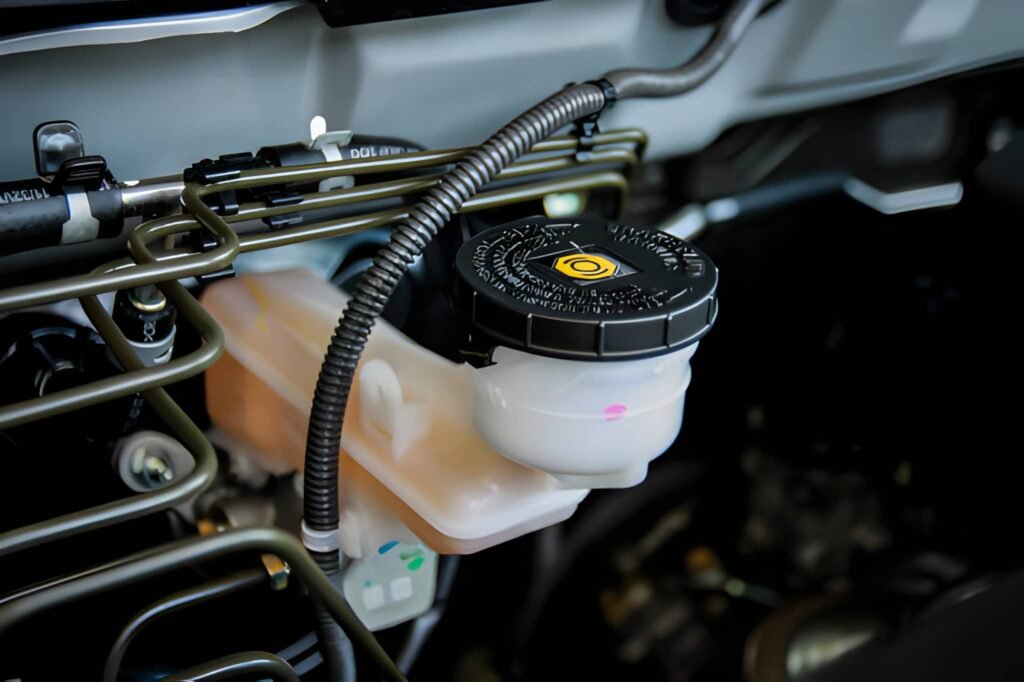
In Tesla vehicles, the brake fluid reservoir is found at the front of the car, typically close to the front trunk. It is a small plastic container with a clear side, so both owners and technicians can check the fluid level. When the brake pedal is pressed, fluid from the reservoir is pushed through the brake lines to the master cylinder. There, the pressure is increased and sent to the brake calipers.
The Master Cylinder and Brake Lines
Tesla’s hydraulic brake system has several master cylinders, but each of them has the same function. Each master cylinder converts the pressure from the brake pedal into hydraulic pressure and sends it through the brake lines to the brake calipers. The brake lines are designed to carry fluid under pressure to the calipers, where brake pads are engaged to slow the car down.
Brake Calipers and Pads
Brake calipers push the brake pads against the brake rotors. The resulting friction slows the wheels and stops the vehicle. The brake fluid helps control the process by transmitting the force that press the pads against the rotors.
Brake Fluid Maintenance in Teslas
Tesla recommends the brake fluid be checked at the time of servicing, but due to model and driving conditions, the timing is not prescribed. The brake fluid needs to be checked more frequently than every service appointment since the fluid changes in composition based upon moisture gain, which can lead to a boiling and brake issue.
Tesla’s Brake Fluid Maintenance Guidelines
Like every other maintenance issue with the brakes, Tesla recommends that the brake fluid be checked at regular service visits. During service, the fluid may have to be replaced if there is a fluid contamination, a fluid deficiency, or if the fluid has to be drained for some other reason.
Related Article
Honda Acura Vehicles Brake Pedal Recall
Signs That Brake Fluid Needs Attention
There are several signs that the brake fluid may need to be checked.
Soft or spongy brake pedal: If the brake pedal feels soft or takes longer to engage, the fluid is low, or the brakes need some maintenance.
Brake warning light: If the brake warning light is illuminated, this may be due to low fluid or an unrelated issue in the brake system.
Reduced braking performance: Issues with brake fluid can be characterized by difficulty slowing down the vehicle or an increase in stopping distance.
Apparent fluid leaks: If you notice fluid pooling around the brake system or under the car, you should get it inspected immediately.
How to Check Brake Fluid in a Tesla
Tesla provides a very simple and painless method of checking brake fluid on their vehicles. While most owners let Tesla service technicians handle the fluid checks, knowing the procedure in DIY form can be beneficial to you. Here is how to check brake fluid in a Tesla.
- Identify the brake fluid reservoir: In most vehicles, the reservoir is found in the front of the car. In Tesla Model 3 and Model S, it can be found in the front trunk area. Look for a plastic container with a fluid level indicator on the cap.
- Assess the fluid level: The fluid in the reservoir should be within the “MIN” and “MAX” level indicators on the side. If the fluid level is at a level lower than the “MIN” line, then the fluid should be topped up or be checked.
- Inspect the Condition of the Brake Fluid: The ideal brake fluid is clear or light amber. If it’s dark or murky, it likely needs to be replaced.
- Have It Professionally Checked: Checking the fluid level is easy enough to do yourself, but it’s best to have a professional look at the brake fluid every so often. They will be able to look for leaks, corrosion, or anything else that could be problematic.
Tesla Brake Fluid Maintenance: DIY vs. Professional Help
You are able to check the brake fluid yourself, but when it comes to replacing the fluid, that is best left to a professional. Teslas have very complicated systems, and improper maintenance can be dangerous.
Tips for DIY Maintenance
While most of the brake fluid maintenance for your Tesla should be handled by a professional, there are some simple checks you can perform on your own. Regular monitoring can help you catch issues early and ensure that your braking system stays in top condition.
Make sure to check the level of your brake fluid: You should be watching the fluid level for your brake fluid often, especially if you are experiencing any problems with the braking system, or if you see the brake warning light is on.
Do not use different brake fluid types: Always use the recommended fluid for your brakes, and you should also avoid mixing different fluids.
Do not overlook the brakes: If you notice any lack of performance, noises, or leaks in the brake system it should be checked out right away.
Comparing Tesla’s Brake Fluid System to Traditional Cars
When it comes to braking systems, Tesla’s approach is slightly different from traditional vehicles, thanks to regenerative braking. Let’s take a look at how the two systems compare:
| Feature | Tesla Brake System | Traditional Brake System |
|---|---|---|
| Brake Fluid | Yes, for mechanical brakes. | Yes, for hydraulic braking system. |
| Regenerative Braking | Yes, captures energy to recharge the battery. | No, uses only mechanical brakes. |
| Brake Wear | Lower wear due to regenerative braking. | Higher wear from frequent brake use. |
| Maintenance Frequency | Less frequent brake fluid changes. | More frequent brake fluid changes. |
Tesla’s regenerative braking system allows for less reliance on mechanical braking, which in turn reduces the wear on brake fluid and pads. Traditional cars, on the other hand, use mechanical braking for most of their deceleration, resulting in more frequent brake fluid replacements.
Frequently Asked Questions
Here are some FAQs about teslas brake fluid –
- Do Teslas Need Brake Fluid Replaced?
Yes, brake fluid is replaced due to contamination or when its level is too low.
- Does Regenerative Braking Use Brake Fluid?
No, regenerative braking just uses the electric motor by itself to brake the car.
- Where Is the Brake Fluid Reservoir in a Tesla?
In most models, it is usually in the front trunk area.
- What Type of Brake Fluid Does Tesla Use?
They usually use DOT rated fluid, so it’s either DOT 3 or 4.
- How Do I Know If My Tesla’s Brake Fluid Is Low?
If the brakes feel soft, if there are warning lights, or if braking is less powerful, those may be also signs of brake fluid needing replacement.
Conclusion
Yes, they do, but they use brake fluid less than other cars. That’s because Teslas use a combination of mechanical braking and regenerative braking, so they don’t wear down brake pads and fluid as quickly as other cars do. However, fluid is still needed for extreme braking situations. To keep braking systems working, maintenance and fluid checks should be done.