Engine bearing clearance chart shows the recommended gaps between crankshaft journals and engine bearings to ensure proper lubrication and prevent wear. It helps mechanics and engine builders measure and maintain correct clearances for reliable engine performance.
Engines are complex machines that rely on precise engineering to function efficiently. One of the most critical aspects of engine performance is bearing clearance, the tiny gap between crankshaft journals and engine bearings. A proper gap allows oil to form a protective film, reduces friction, and prevents metal-to-metal contact. The engine bearing clearance chart provides these recommended tolerances for different engines, bearings, and operating conditions.
Understanding and applying these charts correctly is essential for both hobbyist engine builders and professional mechanics. This guide covers everything from the basics of engine bearing clearance to advanced measurement techniques and practical tips for using the chart in real-world applications.
Contents
- 1 What Is Engine Bearing Clearance?
- 2 Why Engine Bearing Clearance Matters
- 3 How to Read an Engine Bearing Clearance Chart
- 4 Typical Engine Bearing Clearance Chart Values
- 5 How to Measure Bearing Clearance
- 6 Factors Affecting Bearing Clearance
- 7 Why Using a Chart Is Better Than Guessing
- 8 Example: Full Engine Bearing Clearance Chart
- 9 Frequently Asked Questions
- 10 Conclusion
What Is Engine Bearing Clearance?
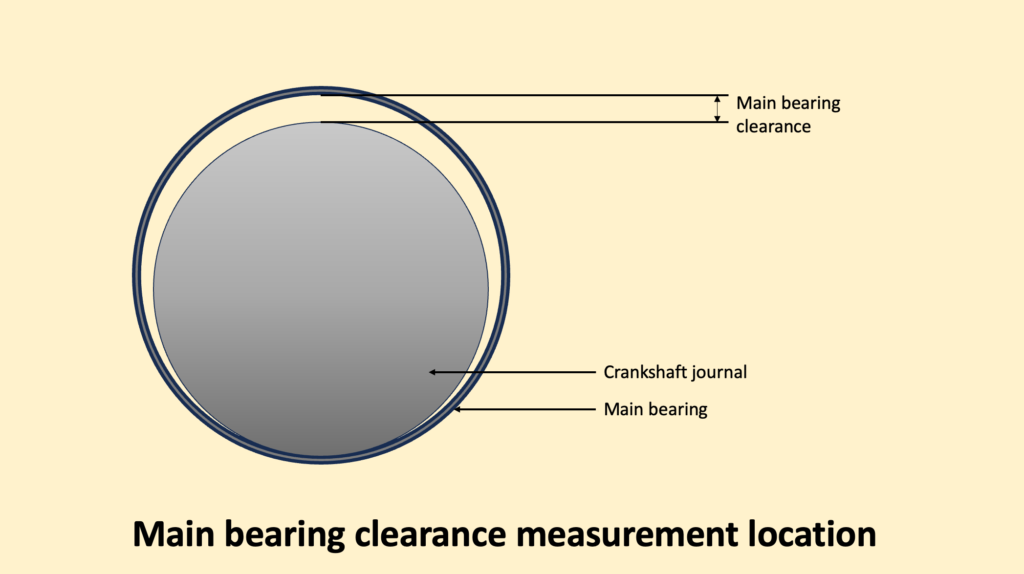
Engine bearings are precision components designed to support rotating parts such as the crankshaft and connecting rods. They allow smooth rotation under load while maintaining a thin layer of oil between metal surfaces. The engine bearing clearance refers to the precise gap between the inner surface of a bearing and the outer surface of the crankshaft journal.
This small gap — often only a few thousandths of an inch — is vital because it determines the oil film thickness. A correctly sized gap ensures the oil forms a hydrodynamic wedge that supports the engine’s loads. Too little clearance prevents adequate oil flow and causes friction and heat. Too much clearance allows oil to escape too quickly, reducing lubrication and pressure.
The engine bearing clearance chart provides recommended tolerances for main bearings, rod bearings, and sometimes thrust bearings. It ensures the engine operates safely and reliably under different operating conditions.
Key Points About Bearing Clearance:
- Supports engine loads without direct metal contact
- Maintains stable oil pressure
- Reduces wear and friction
- Ensures efficient heat dissipation
Why Engine Bearing Clearance Matters
Bearing clearance affects multiple aspects of engine operation:
1. Lubrication and Hydrodynamic Film Formation
A correct bearing gap ensures the engine oil forms a protective layer, preventing metal contact. This oil film acts as a cushion that absorbs engine loads and reduces friction. Without proper clearance, this film may break, leading to scuffing or bearing failure.
2. Oil Pressure Stability
Clearance impacts oil pressure directly. Too large a gap allows oil to escape quickly, lowering system pressure. Too small a gap restricts oil flow, causing high local pressures and heat build-up.
3. Heat Management
Bearings operate under significant friction and load. Proper clearance allows heat to be transferred to the oil and dissipated efficiently. Incorrect gaps may cause uneven heat distribution, increasing the risk of bearing distortion or damage.
4. Engine Longevity
Following the engine bearing clearance chart ensures wear is minimized and bearings last longer. Clearances beyond service limits accelerate fatigue and reduce engine lifespan.
Tip: Always measure multiple positions on the journal to account for out-of-round conditions.
How to Read an Engine Bearing Clearance Chart
An engine bearing clearance chart contains several critical pieces of information:
- Bearing Type: Main, rod, or thrust bearings
- Journal Diameter: Size of the crankshaft surface
- Recommended Clearance Range: Minimum and maximum gaps for normal operation
- Service Limits: Maximum allowable wear before replacement
- Units: Millimeters (mm) or inches (in)
Example Table from a Typical Chart:
| Journal Diameter | Main Bearing Clearance | Rod Bearing Clearance | Service Limit |
|---|---|---|---|
| 2.000 in | 0.0015–0.0020 | 0.001–0.0022 | 0.0031 in |
| 2.500 in | 0.0019–0.0025 | 0.0011–0.0024 | 0.0032 in |
| 3.000 in | 0.0023–0.0030 | 0.0012–0.0028 | 0.0035 in |
Each chart is engine-specific. Always cross-check with the engine manufacturer’s service manual to ensure accuracy.
Typical Engine Bearing Clearance Chart Values
Knowing common clearance ranges helps beginners visualize expected numbers.
Main Bearings
Main bearings support the crankshaft in the block. Typical values for passenger cars:
- Standard engines: 0.0015–0.0025 inches (0.038–0.064 mm)
- High-performance or hot rods: Slightly larger clearances, up to 0.0030 inches (0.076 mm)
Rod Bearings
Rod bearings operate on the connecting rod journals:
- Typical ranges: 0.0010–0.0022 inches (0.025–0.055 mm)
- Performance engines: May increase by 0.0005 inches for high RPM operation
Service Limits
Most charts include a service limit, which marks the maximum allowable clearance before replacement is needed:
- Rod bearing: ~0.0030 inches (0.075 mm)
- Main bearing: ~0.0035 inches (0.088 mm)
Rule of Thumb: 0.001 inch of clearance per inch of journal diameter is a common guideline.
How to Measure Bearing Clearance
Proper measurement ensures you can use the chart effectively. There are two main methods:
1. Plastigage Method
Plastigage is a thin strip that compresses under load to measure clearance.
Steps:
- Place a Plastigage strip on the journal
- Install and torque the bearing cap
- Remove the cap and measure the width of the compressed strip
- Compare the measurement to the chart
Pros: Quick, simple, inexpensive.
Cons: Slightly less precise than micrometer methods.
2. Micrometer + Dial Bore Gauge
For precise measurements:
- Measure the journal diameter with a micrometer
- Measure the bearing bore with a dial bore gauge
- Subtract journal diameter from bearing bore to get clearance
- Compare with the chart
Pros: Highly accurate
Cons: Requires more tools and skill
Factors Affecting Bearing Clearance
Several factors influence the correct clearance values:
- Engine Material: Aluminum blocks expand more than iron, requiring slightly larger clearances
- Oil Viscosity: Thicker oils can tolerate tighter gaps; thinner oils need more clearance
- Performance Requirements: High-RPM or boosted engines often require looser clearances
- Temperature and Thermal Expansion: Clearances measured cold will change when the engine reaches operating temperature
- Machining Tolerances: Variations in journal and bearing sizes can affect clearance.
Why Using a Chart Is Better Than Guessing
Guessing clearance values can cause serious engine damage. Charts are based on years of engineering tests and real-world performance data. Using a chart ensures correct oil film formation, correct oil pressure, and long engine life.
Example: Full Engine Bearing Clearance Chart
| Journal Size | Main Clearance | Rod Clearance | Service Limit |
|---|---|---|---|
| 2.000 in | 0.0015–0.0020 | 0.0010–0.0022 | 0.0031 in |
| 2.500 in | 0.0019–0.0025 | 0.0011–0.0024 | 0.0032 in |
| 3.000 in | 0.0023–0.0030 | 0.0012–0.0028 | 0.0035 in |
Frequently Asked Questions
Here are some FAQs about engine bearing clearance chart –
1. What does an engine bearing clearance chart show?
It lists recommended gaps between crankshaft journals and engine bearings to maintain proper lubrication.
2. How is clearance measured?
Using Plastigage or micrometer + dial bore gauge techniques.
3. What happens if clearance is too tight?
Friction increases, oil flow is restricted, and bearings may overheat or fail.
4. What happens if clearance is too loose?
Oil pressure drops, bearings wear faster, and engine noise may increase.
5. Are charts universal?
No, every engine model has specific clearance requirements. Always use the manufacturer’s chart.
Related Article
LS Engine Bore and Stroke Chart
Conclusion
The engine bearing clearance chart is a vital reference for engine builders and mechanics. It ensures proper lubrication, oil pressure, heat management, and bearing longevity. Measuring accurately and following the chart guarantees reliable engine performance. Beginners should study the chart, understand how to measure clearances, and consider factors like engine type, oil viscosity, and temperature. Using this knowledge, you can prevent failures and build engines that last.