


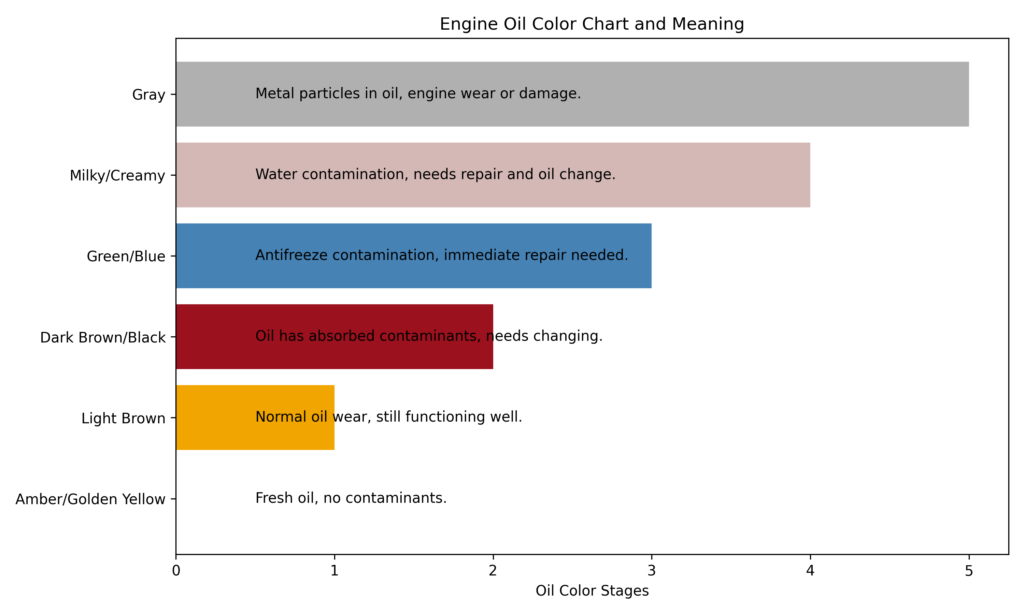
Engine oil color chart helps identify oil condition. Fresh oil is amber, while dark oil indicates contamination. Colors like green or milky oil signal serious engine issues.
The appearance of engine oil is not only for looks. It is used as a quick way to see if the oil is still doing its job, the health of the engine, and if there are any visible complications. Regular sight checks can identify if the oil is due for a change, or if there are issues, such as the engine running hotter than normal, the oil is dirty or the components of the engine are not lubricated properly.
In this article, we will analyze all of the shades of engine oil and what those colors represent. Knowing the engine oil color chart will help you to understand the condition of your engine and when to change the oil to avoid serious problems.

Contents
What Is an Engine Oil Color Chart?
An engine oil color chart helps to explain and understand the engine oil color changes over time. A brand new engine oil is light amber, and as time goes, and becomes contaminated, the oil gets darker, i.e., brown, and then black. This is useful for vehicle owners and mechanics to decide whether the oil is still useful or it has to be replaced.
Knowledge about the engine oil color changes and what is engine oil color chart helps to identify potential engine issues and save the vehicle owner’s money. Thus, it is a useful chart for preventative maintenance.
When evaluating the color of engine oil, it’s important to remember that engine oil doesn’t get dark just because an engine has been used for a long time. Driving conditions, engine type, and type of oil used all play a role as well. Engine oil darkens quickly at high-performance engines and at extreme operating conditions compared to standard conditions.
Common Colors of Engine Oil and What They Mean
To keep your engine in optimal condition, your engine oil’s cleanliness needs to be evaluated regularly. The oil can tell you the condition of the oil and of the engine, as well as tell you what needs to be done, if anything. This particular engine oil color chart will give you the most common colors of oil and their meanings.
1. Amber or Golden Yellow (Fresh Oil)
Engine oil that has just been added to the engine will have an amber or golden yellow color. This is how oil is supposed to look, and for the fresh oil to be free of contaminants This oil is brand new and has not been used to lubricate any parts of the engine, hence, it will reduce the engine’s parts’ friction, and it will protect them from overheating. Also, the oil is doing what it needs to be doing.
What It Means:
- Oil is free of contaminants.
- Engine is lubricated, and working at peak performance.
- Oil change is not immediately needed.
New engine oil has a perfect combination for the engine’s needs, with no dirt or debris and a golden or amber color. For the first five thousand miles, new oil should show no signs of aging or contamination. If the oil has changed color, it’s doing its job of protecting engine components and allowing for smooth operations.
2. Light Brown (Slightly Used Oil)
At the start of its wear cycle, engine oil begins changing color and transitioning to light brown. Engine oil collects dirt and carbon which causes engine oil to change color. Engine oil that isn’t contaminated changes to brown after a few thousand miles and a few heat cycles. Light brown engine oil is a piece of mind and is still fully functioning and effective.
What It Means:
- Normal oil wear.
- Initial contamination of oil.
- Oil is still working as it should but should be monitored.
It may not be necessary to change the light brown oil yet, however, you should still keep an eye on the oil. If you keep driving the vehicle without changing the oil, the oil will blacken and will not lubricate the engine properly, which can lead to serious issues.
3. Dark Brown or Black (Heavily Used Oil)
The longer the oil is used, the more dirt, carbon, and other contaminants get into the oil and engine. This is why oil gets darker. Even though black oil may still work in some capacity, it’s effectiveness is really decreasing. The black oil has picked up so much dirt and heat that it cannot effectively lubricate an engine anymore.
What it means:
- The oil has collected dirt and debris.
- The oil is too old and runs the risk of causing friction.
- It is time for an oil change.
Oil that is dark brown or black shows that the engine is burning the oil. If this continues for a long enough time, the oil will start to break down and damage the engine. Oil this color should be changed soon.
4. Green or Blue (Oil Mixed with Antifreeze)
Oil that is green or blue means that antifreeze or coolant has mixed with the oil. This is a serious issue and usually means that the head gasket has blown, the engine block is cracked, or that there is a problem with the radiator. If you see green or blue oil you need to fix it immediately, because having antifreeze in the oil is really bad for the engine. The oil will not lubricate the engine enough and the engine may suffer from overheating or there will be corrosion.
What It Means:
- Oil that has been contaminated by antifreeze or coolant.
- Serious engine issues, such as a blown head gasket.
- Repair and attention needed immediately.
Presence of coolant mixing with the oil indicates that the engine has severe mechanical problems which need to be resolved before the vehicle is driven again. Running the engine further will cause irreversible damage to the engine parts.
5. Milky or Creamy (Oil Contaminated with Water)
When water is mixed with engine oil, the oil becomes creamy or milky. This is usually caused by a blown head gasket, engine block that is cracked, or a fault in the engine cooling system. Water in oil creates a liquid that compromises the lubrication capability of oil by forming a milky cloudy appearance in the oil. This issue can cause immeasurable damage to the engine if the issue is not resolved in time. Milky oil must be the reason to inspect the engine.
What It Means:
- Water contamination in the oil.
- Possible head gasket failure or cracked engine block.
- Immediate repairs needed.
Creamy or milky oil should be a priority. Continuing to operate the vehicle can result in irreversible engine damage. This oil is proven to be running coolant which indicates a blown head gasket or worse. Milky oil is a serious issue.
6. Gray Oil Mixed with Metal Particles
The engine is suffering severe damaged if its oil is gray. It is possible that particles from the engine oil components (bearings or walls of the cylinder) are peeling off and mixing with the oil, indicating a more serious issue. This oil needs an urgent change. An oil inspection is imperative to ensure that more particles do not end up in the oil and to determine the source of the gray oil.
What It Means:
- Metal particles in the oil.
- Possible internal engine damage or excessive wear.
- Immediate inspection and oil change necessary.
The gray oil indicates a severe issue in the engine. It could be the result of damage or wear to components such as the bearing and pistons. It is crucial that this issue is addressed in a timely manner to avoid additional damage or a complete engine failure.
Why Does Engine Oil Change Color?
As oil circulates through an engine’s various components, it undergoes numerous changes based on the conditions it experiences. Here is what leads to changes in the oil:
- Contamination: Dirt, carbon, and other contaminants get trapped in the oil. This is what causes the oil to change color.
- Heat: Engine oil breaks down and is less effective due to extreme temperatures, which also causes high wear on engine components.
- Oxidation: As oil ages, it starts to oxidize because it constantly comes into contact with air and the oil’s viscosity is reduced, resulting in it becoming darker and less effective.
- Water or fuel contamination: If fuel or water enters the oil, it can cause it to turn milky or creamy. This indicates serious engine trouble.
How to Check Engine Oil Color
It is important to regularly check the engine oil, because it is part of your car maintenance. To check your engine oil color:
- Make sure the engine is turned off: Also, make sure the car is placed on an even surface. This is to ensure your oil dipstick reading is accurate.
- Warm Up the Engine: Starting the engine helps warm the oil in the engine, allowing it to flow easier and getting a more accurate reading on the dipstick.
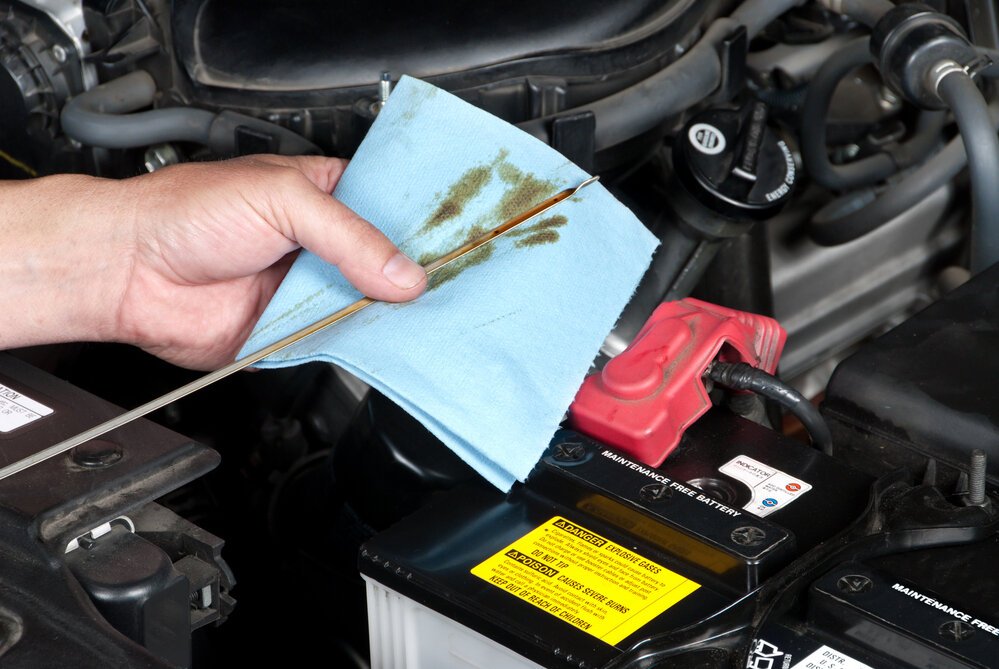
- Locate the Dipstick: The dipstick is usually located near the engine, and is labeled so it is easier to find. Pull the dipstick out and use a cloth to clean it.
- Insert the Dipstick Again: Insert the dipstick into the tube and pull it out.
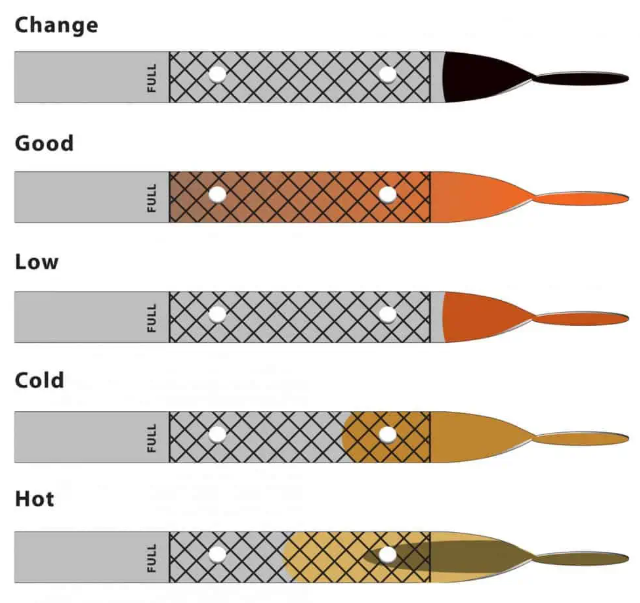
- Inspect the Oil: Check the dipstick to see how low the oil is, and how clean or dirty it is.
When to Change Engine Oil Based on Color
Changing engine oil is critical for engine longevity. By regularly checking the oil color, you can determine when it’s time for an oil change. Here’s a quick guide:
- Gray: Metal particles present, needs inspection and oil change.
- Amber/Golden Yellow: Fresh oil, no action needed.
- Light Brown: Normal wear, still good, but monitor closely.
- Dark Brown/Black: The oil has reached its end of life, change it soon.
- Green/Blue: Antifreeze contamination, urgent oil change and engine inspection needed.
- Milky or Creamy: Water contamination, immediate attention and oil change needed.

Tips for Keeping Engine Oil Healthy
Engine oil, when maintained, healthy, keeps an engine working well for longer and reduces repairs. Here are tips on keeping engine oil healthy.
- Check Oil Monthly: Checking oil once a month should be a habit, it keeps an eye on oil amount and color.
- Quality Oil: Use oil that is recommended by the manufacturer. This ensures the oil is as good as it can be for the engine.
- Follow Oil Change Intervals: Change oil when recommended by the manufacturer. This keeps the oils in the engine working together for as long as they can.
- Address Issues Promptly: If the color of the oil is off and the condition is abnormal, fix it. This will save the engine from damage.
- Monitor Driving Conditions: Change the oil frequently if the driving condition are extreme. This is is to keep the engine in good condition.
Related Article
How to Get Engine Oil Out of Clothes
How to Dispose of Engine Oil
Does Engine Oil Go Bad?
Frequently Asked Questions
Here are some FAQs about engine oil color chart –
- How often should you check your oil?
While you should check your oil regularly, if you find that your oil is particularly dark or has a lot of contaminants you may want to check it more often to avoid issues.
- How old is my oil?
The condition of oil changes relies on how well the oil is lubricating the engine and if there is dirt and other contaminants in it that could cause the oil to darken over time.
- What does my engine oil color mean?
The condition of the oil, the level of dirt and how well it is lubricating the engine is reflected in the color of the oil.
- Why does my oil look dirty?
If there is dirt and other contaminants in it, the oil could darken over time.
- Can I drive my car if the engine oil is milky?
No. If the engine oil is milky, that is a sign that the oil has been contaminated with water. If you keep driving the engine like that, it will damage the engine severely. You need to address the problem and get the engine oil changed immediately.
Conclusion
Learning how to read an engine oil color guide is a valuable tool to the owner of the vehicle. Each color comes with a lot of different meanings so understanding the engine oil color guide could help to determine the overall condition of the engine oil and how it affects the health of the oil in the engine. Checking the oil regularly will help to improve specific oil issues and allow to continue for several miles to come.


