Engine oil filter cross reference chart helps you find compatible oil filters from different brands by comparing part numbers and specifications. It ensures a proper fit and saves time when selecting the right filter.
One of the essential aspects of keeping your engine in working order is looking after the oil filter as the oil filter maintains clean oil in circulation in your engine. Unfortunately, choosing the right filter for your engine isn’t always as easy as taking a part number and buying an oil filter. Fortunately for you, there is a way you can find the oil filter that you need for your car no matter what brand you choose to buy from. The purpose of this guide is to explain what an oil filter cross-reference chart is, what you can do with it, and how to optimize your engine for peak performance by selecting the best oil filter available.
This article is aimed to give a detailed and easy to comprehend explanation of what oil filter cross-reference charts are and how you can use them to your advantage. Even if you have no prior experience when it comes to working with cars, cross reference charts will help you to find oil filters that are cost effective.
Contents
- 1 What is an Engine Oil Filter Cross-Reference Chart?
- 2 How Does an Engine Oil Filter Cross-Reference Chart Work?
- 3 Why Are Oil Filter Specifications Important?
- 4 Example of Engine Oil Filter Cross-Reference Chart
- 5 Some Common Engine Oil Filter Brands Found in Cross Reference Charts
- 6 Common Oil Filter Problems and How to Avoid Them
- 7 Frequently Asked Questions
- 8 Conclusion
What is an Engine Oil Filter Cross-Reference Chart?
An oil filter cross reference chart shows oil filters from different manufacturers that are interchangeable for the same engine or vehicle. Oil filter manufacturers often use different part numbers. However, things like size, thread pitch, gasket diameter, and the type of filter media are often identical. A cross reference chart helps you find an alternative oil filter brand in case your favorite brand is out of stock or unavailable.
What is the Purpose of an Oil Filter Cross Reference Chart?
An oil filter cross reference chart is useful if you want to find the correct oil filter for your engine without wasting too much of your time and without putting yourself at risk of making an expensive mistake. It provides you with interchangeable filter options from different brands that are compatible with your engine.
1. Convenience and Time Saving
Oil filter cross reference tools save users time and effort as it helps find compatible filters for different brands. Instead of guessing which filter you could buy and spending hours going through multiple brands, a cross reference chart helps find filters based on the part number of the oil filter users already have.
2. Cost Effectiveness
In addition to finding compatible filters more quickly, cross reference tools can save users money. Some of the filters for sale under OEM (Original Equipment Manufacturer) brands that are compatible can be more expensive and have availability issues. Cross reference charts can be less expensive alternatives that are compatible with the user’s engine specifications.
3. Access to More Brands
Users have access to filters from more brands from the cross reference charts. Most filters sold from big auto part retailers and manufacturers have different part numbers. Cross reference charts can find different alternatives for users to choose based on filter preference, availability, and performance.
How Does an Engine Oil Filter Cross-Reference Chart Work?
Simply put, an oil filter cross reference chart helps you see other brands with compatible filters. To grasp this concept, you must understand some key elements that identify a compatible oil filter.
1. Thread Size and Pitch
The thread size and pitch are essential for ensuring that the oil filter fits securely onto your engine. If the thread size is too large or too small, the filter won’t attach properly, which could result in oil leaks or a loose filter. Most oil filters have standardized thread sizes, but it’s important to match them correctly, which is why a cross-reference chart is helpful in identifying filters with compatible thread sizes.
2. Gasket Diameter
The gasket is the rubber or silicone ring that seals the oil filter to the engine. A proper seal prevents oil leaks and ensures that the oil filter stays in place during operation. Gasket diameters vary between filters, and it’s important to choose a filter that has the correct gasket diameter for your vehicle. A cross-reference chart will help you match the correct gasket size across brands.
3. Height and Filter Media
There are many heights of filters, and the height of each oil filter can affect oil flow and filtration capability. Because taller filters can contain added filter media, they can result in more degrees of functional filtration. Filter media, the part of the filter used to trap contaminants varying from filter to filter and brand to brand. Using a cross-reference chart helps in ensuring media type and filter height match your engine needs.
4. Bypass Valve and Anti-Drain Back Valve
Certain filters have bypass valves that allow oil to flow even when filter media are clogged. The oil anti-drain back valve is important to filter because it stops oil from draining out of the filter when the engine is off which prevents dry starts. The other filters without it will accelerate the engine wears and cross-reference chart highlights the filters with similar bypass and anti-drain back valves to provide adequate engine protection and correct selection.
Why Are Oil Filter Specifications Important?
Cross-reference charts cover specific oil filter specifications for a good reason. Here’s why each one is important:
1. Size And Pitch Of Threads
If there is an incorrect thread pitch or size, there will be issues such as poor filteration, difficulty installing the filter, and oil leaks. The filter will not screw on properly and oil will be able to leak out and will cause oil pressure loss, and that is very dangerous for the engine. Cross referencing filters makes sure that the thread size is the same as the part you are replacing.
2. Diameter Of The Gasket
Gaskets are responsible for sealing the oil filter so that there are no leaks. If the size of the gasket is too small or too large, the gasket will not seal properly, and there will be oil leaks. Over time, an oil leak will cause severe engine damage due to insufficient lubrication. The cross-reference chart makes it possible to find filters that have the correct gasket size, and to achieve a secure fit.
3. Filter Media and Effectiveness
Oil filters cannot function as intended if the filter media is blocked. Do not worry; though, if you use an oil filter with higher efficiency, you have ensured the engine will be protected better since dirt and metal shavings, as well as carbon, won’t be able to stay with the oil. Supplementary filtering media compare chart: helps you select filters expected to perform well.
4. Bypass and Anti-Drain Back Valves
If an oil filter is clogged, oil will still be able to circulate, and this is the function of bypass valves. Anti-drain back valves stop oil from moving out from the filter if the engine is stopped, and this is their main function. These valves add to minimizing wear to the engine when it starts to be cold. \ They can also survive extreme conditions and do the same to the engine. Bypass and drain back valves will be included in the best cross-reference chart to help in valve selection for filter optimally protecting engines.
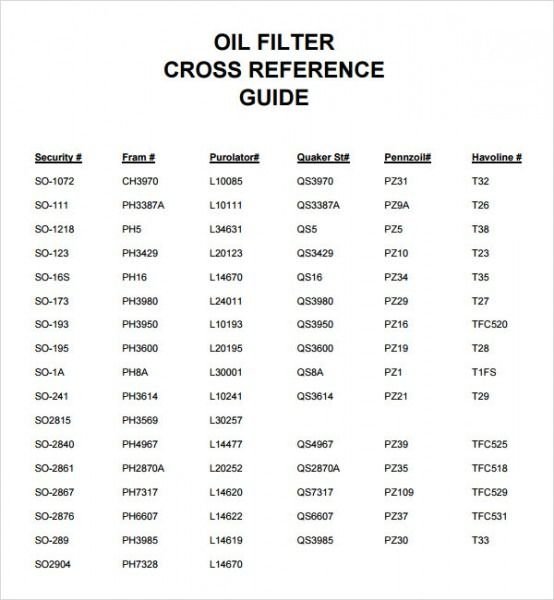
Example of Engine Oil Filter Cross-Reference Chart
This is an example of how different brands may offer equivalent oil filters for various vehicles. The chart below compares oil filter part numbers from several popular manufacturers.
| Vehicle Make | Vehicle Model | OEM Filter Part Number | Fram Part Number | Wix Part Number | ACDelco Part Number | Bosch Part Number |
|---|---|---|---|---|---|---|
| Honda | Civic | 15400-PLM-A02 | PH4967 | 51348 | PF63 | 3330 |
| Toyota | Corolla | 90915-YZZF2 | CH11015 | 51334 | PF46 | 3312 |
| Ford | F-150 | FL-820S | PH16 | 51348 | FL820S | 3330 |
| Chevrolet | Silverado | 12634835 | PH4967 | 51348 | PF63 | 3330 |
| Nissan | Altima | 15208-9E000 | PH7317 | 51085 | 15208-9E000 | 3300 |
How to Use an Engine Oil Filter Cross-Reference Chart
Understanding cross-reference charts can be tricky. However, there are some techniques you can use to best position yourself to get the filter you want. Here are some tips to get you started.
Step 1: Locate The Part Number of the Engine Oil Filter
The first step is to find the part number of the oil filter, which is usually located on the side of the filter. If you’re unable to access the filter directly, consult the vehicle owner’s manual. This manual typically contains information on the recommended oil filter, including its part number.
Step 2: Check The Cross-Reference Charts
When searching for cross-reference charts, it’s important to note that many auto parts stores provide them. Some stores even allow you to search by filter part number, while others, such as FilterXRef, allow you to search by manufacturer. Fram, Wix, and ACDelco are examples of store brands that offer these charts on their websites.
Step 3: Add the Part Number
After locating the cross-reference chart, you will need to add the part number corresponding to your current oil filter. This will present you with a table containing filters from varying manufacturers with the same specifications. Each filter will be displayed along with their part number, allowing you to seamlessly identify substitute options.
Step 4: Review Specifications
Take your time to review the specifications documented in the chart before acquiring a substitute filter. Specifications such thread size, diameter of the gasket, height of the filter, media type, and active special features such as a bypass valve. It is vital to guarantee that the filter you select is aligned to the precise parameters of your engine.
Step 5: Validate Fitment
Some charts provide fitment options. You can input your vehicle’s make, model, and year to determine if the filter is compatible with your engine. If you still have reservations, consider having a professional mechanic validate your filter choice.
Some Common Engine Oil Filter Brands Found in Cross Reference Charts
Here are some brands that are common in oil filters:
- Fram Filters: Fram has extensive market reach in the automotive industry. They manufacture oil filters that can protect customers from oil contamination. They also have market accessibility in almost any kind of vehicle. Their cross reference charts can be obtained from online and brick and mortar auto parts dealers.
- Wix Filters: Wix Filters are market leaders in even filtration. Their oil filters are geared of heavy duty filtration and high efficiency filtration. They are suitable for both passenger and commercial vehicles. They have extensive cross reference charts that are easy to compare with competitors.
- ACDelco Filters: ACDelco is a highly regarded oil filter supplier to GM. They provide high performance and durable filters. Their cross reference charts are highly accurate.
- Bosch Filters: Bosch is also a market leader in automotive parts, oil filters inclusive. Their filters have exceptional filtration and high durability. Bosch is also cross referenced against other brands to provide equivalent substitutes.
- Mann Filters: Mann filters is also a good German company. Mann filters can also be fitted on luxury cars and performance cars. Mann filters also provide Cross Reference Charts for you to compare other filters to Mann filters.
Common Oil Filter Problems and How to Avoid Them
Oil Filters are a very simple part but there are many different issues that can occur during their use.
- Leaks: Leaks occur when the filter is not placed on correctly or the gasket is the wrong size. Leaks are avoidable if the gasket size is the same as the diameter of the filters.
- Oil Levels: When filters are placed on wrong or are the wrong type, then a lot of oil is trapped inside and this can result in a lot of engine issues. The filter can clog oil and prevent the engine from getting enough oil.
- The Valve does not Bypass: A valve that is clogged is a valve that is not allowing the oil to keep moving so the engine can be damaged. The filter that you choose should always have a functioning valve that bypasses oil.
Frequently Asked Questions
Here are some FAQs about engine oil filter cross reference chart –
1. What is an engine oil filter cross-reference chart used for?
To locate alternative oil filters from other companies for cross-referenced engine specifications.
2. Is it okay to use any oil filter that is cross-referenced?
It is important that the oil filter cross-reference you choose matches your engine’s specifications for thread size, gasket diameter, and filter media type. Always verify the specifications beforehand.
3 How reliable are cross reference charts?
When cross reference charts are used incorrectly, issues occur. Always check specifications and seek professional guidance before concluding.
4. Is it okay to use a cross referenced filter for a performance engine?
You may do so, just ensure that the filter will meet performance standards expected from high performance engines. Go through specifications once more.
5. What are some good cross reference charts I can find on the internet?
Several websites offer the same information about comprehensive cross reference charts for oil filters. Free sites include FilterXRef and even sites like Fram, the manufacturer.
Conclusion
If you want to keep your car running well, an engine oil filter cross-reference chart identifies oil filter substitutes from different companies to help you locate the oil filter you need. This can help save both time and money.
When using the chart, pay special attention to and keep in mind thread size, and the diameter of the gasket, height of the filter, and different types of valves. Choosing the right oil filter is vital to the health of your engine, as it helps keep harmful dirt and debris out. Cross-reference charts can help both professional mechanics and do-it-yourselfers.