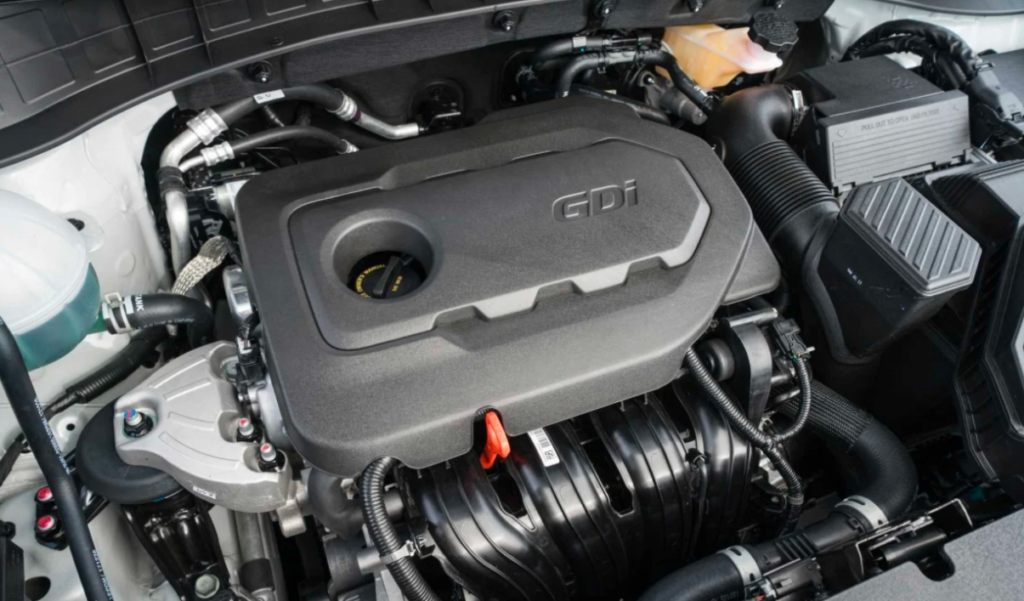
Engine spec on a hyundai 1600cc turbo engine features an inline-4 GDI layout producing 177–201 horsepower and 195 lb-ft of torque. This 1.6-liter powerplant is a punchy, fuel-efficient choice for daily driving in popular models like the Tucson and Veloster.
A small powerhouse resides under the hood of many popular cars. We are talking about the Hyundai 1.6L turbocharged engine. Drivers often find it in models like the Elantra, Veloster, Tucson, and Sonata. This engine balances power with fuel economy. It uses turbocharging to punch above its weight class. Understanding the engine spec on a hyundai 1600cc turbo engine can reveal a lot about its real-world performance. Drivers may wonder about power, torque, and long-term reliability.
This guide aims to clear up all those details in simple terms. We will explore what makes this engine special. Our journey starts with the core measurements and the turbo system. This knowledge helps drivers make informed choices.
Contents
- 1 What Is a 1600cc Turbo Engine?
- 2 Core Engine Spec on a Hyundai 1600cc Turbo Engine
- 3 Performance Specs
- 4 The Engine in Real Vehicles
- 5 Transmission Pairings
- 6 Materials and Build Quality
- 7 Maintenance and Reliability
- 8 Pros and Cons
- 9 How Specs Translate to Everyday Driving
- 10 Frequently Asked Questions
- 11 Conclusion
What Is a 1600cc Turbo Engine?
What exactly is the engine spec on a hyundai 1600cc turbo engine? We can break it down easily. The “1600cc” part refers to engine displacement. It is the total volume of the engine’s cylinders. A cylinder is where fuel and air explode to create power. More volume usually means more potential energy. To make it simpler, we use liters. A 1600cc engine is a 1.6-liter engine.
The “Turbo” part changes the game. It is short for a turbocharger. This is basically an air pump. It takes exhaust gas that usually goes out the tailpipe. It uses that gas to spin a fan. That fan forces extra air into the engine intake. Imagine someone gently blowing air into a mouth. It helps a person take a deeper breath. That is what a turbo does for a motor. It forces air in under pressure. This allows a tiny 1600cc engine to act like a much bigger one.
Small engines with turbos are popular now. They offer the power of a large engine when you step on the gas. However, they keep the fuel efficiency of a small engine during a steady cruise. It is a smart way to get the best of both worlds. Drivers get speed and savings at the same time. This balance is the reason Hyundai puts this engine in so many different cars.
Core Engine Spec on a Hyundai 1600cc Turbo Engine
The foundation of any motor is its physical build. The engine spec on a hyundai 1600cc turbo engine features a high-tech design. It is built to be light and strong. Let’s look at the specific parts that make it work.
Displacement and Configuration
This engine uses an Inline-4 layout. All four cylinders stand in a straight line. This design is compact. It fits well in front-wheel-drive cars. The engine block is made of aluminum. The cylinder head is also aluminum. This keeps the weight low. A lighter engine helps a car handle better. It also helps with fuel economy.
The “bore” is the width of the cylinder. The “stroke” is how far the piston moves up and down. This engine has a “square” or “near-square” design. This means the width and height are similar. This setup helps the engine rev smoothly. It creates a good balance between low-end pull and high-end speed.
Turbocharger Details
Hyundai uses different turbo types for different cars. Some use a single-scroll turbo. This is a basic, reliable design. Others use a twin-scroll turbocharger. A twin-scroll unit is special. It separates the exhaust pulses from the cylinders. This makes the turbo spin up faster. It reduces “turbo lag.” Lag is the delay between pressing the gas and feeling the power.
The turbo uses an electronic wastegate. This part controls the air pressure. It makes sure the turbo does not blow too much air. This protects the engine from breaking. It also helps the car deliver power smoothly. You don’t feel a sudden, scary jolt of speed. Instead, the power feels steady and strong.
Fuel System and Valve Train
This motor uses Gasoline Direct Injection (GDI). In old engines, fuel mixed with air before entering the cylinder. In a GDI engine, fuel is sprayed directly into the combustion chamber. It happens at very high pressure. This results in a cleaner, more powerful burn. It is a major part of the engine spec on a hyundai 1600cc turbo engine.
The engine has two camshafts on top. This is called Double Overhead Cam (DOHC). It has 16 valves. Four valves per cylinder help the engine breathe. It also uses variable valve timing. This system changes when valves open and close based on speed. It saves gas at red lights. It adds power when you are on the highway.
Performance Specs
Performance numbers tell us how the car feels. The engine spec on a hyundai 1600cc turbo engine is impressive for its size. Horsepower and torque are the two numbers to watch.
Power Output
Horsepower is about top speed and sustained work. Most Hyundai 1.6L turbos make between 177 and 201 horsepower. In a Tucson SUV, it might be on the lower end. This provides steady power for a heavy vehicle. In a Veloster Turbo, it hits the 201 mark. This makes the car feel fast and sporty. It allows for quick passing on the highway.
Torque Figures
Torque is the “push” you feel in your seat. It is great for taking off from a stoplight. This engine makes about 195 lb-ft of torque. What makes it special is when that torque starts. In many engines, you have to rev high to feel the pull. This turbo engine gives full torque at very low RPMs. You feel the strength almost as soon as you touch the pedal. This makes the car feel very responsive in city traffic.
Fuel Efficiency
Turbos can save gas if driven correctly. When you are not rushing, the engine acts like a small 1.6L motor. It uses very little fuel. Many Hyundai models with this engine get 30 to 35 miles per gallon on the highway. However, if a driver stays “on the boost” all the time, efficiency drops. The turbo requires more fuel to match the extra air it pumps in.
The Engine in Real Vehicles
How the engine spec on a hyundai 1600cc turbo engine behaves depends on the car. Hyundai tunes the software for each model.
Elantra N-Line
The Elantra N-Line is a sporty sedan. It uses the 201-horsepower version of the engine. It is built for fun. The car feels zippy. It makes daily commutes more exciting. It has a stiff suspension to match the engine’s energy.
Veloster Turbo
The Veloster is a light, three-door hatchback. Because the car is light, the 1.6L turbo feels very strong. It can go from 0 to 60 mph in about 6.5 to 7 seconds. It is a “hot hatch.” It thrives on winding roads where the quick torque can shine.
Tucson 1.6 Turbo
In the Tucson SUV, the engine is tuned for comfort. It might have less peak horsepower but a very smooth torque curve. This helps the SUV pull away from stops with ease, even when full of groceries. It makes the vehicle feel more premium than an SUV with a loud, non-turbo engine.
Sonata 1.6 Turbo
The Sonata uses this engine for “SmartStream” efficiency. It focuses on a smooth ride. It uses a special technology called Continuously Variable Valve Duration (CVVD). This is an advanced engine spec on a hyundai 1600cc turbo engine. It controls how long valves stay open. This boosts performance by 4% and efficiency by 5%.
Transmission Pairings
The engine creates power, but the gearbox moves the car. This motor is usually paired with three types of transmissions.
- 6-Speed Manual: This is for enthusiasts. It gives full control over the engine. It is simple and durable.
- 7-Speed Dual-Clutch (DCT): This is the most common pairing. A DCT uses two clutches to shift gears incredibly fast. It feels like an automatic but is more efficient. It keeps the turbo in its “power band.”
- 8-Speed Automatic: Some newer models use a traditional automatic. This is the smoothest option. It is great for long highway trips.
The DCT is the best for performance. It shifts faster than a human can. This keeps the engine spec on a hyundai 1600cc turbo engine working at its peak at all times.
Materials and Build Quality
Hyundai did not just add a turbo to a cheap block. They reinforced the whole motor. The pistons are often made of a stronger alloy. The crankshaft is forged steel. This is important because a turbo increases the pressure inside the cylinders.
The aluminum block has “cast-iron liners.” This means the holes where the pistons move are lined with tough iron. This prevents the aluminum from wearing down. It also helps with heat. Turbos create a lot of heat. The cooling system has been upgraded to handle this. There are extra paths for oil and water to flow around the hot spots.
Maintenance and Reliability
A turbo engine needs more love than a regular one. If you take care of it, it will last a long time.
Oil Is Everything
The turbo spins at over 100,000 RPM. It gets very hot. The engine oil lubricates the turbo bearings. You must use high-quality synthetic oil. Do not skip oil changes. Old oil can turn into “sludge.” Sludge will clog the tiny oil lines going to the turbo. If the turbo loses oil, it will fail. This is an expensive repair. Changing oil every 5,000 miles is a safe bet for this engine spec on a hyundai 1600cc turbo engine.
Let It Cool Down
After a long, fast drive, do not turn the car off immediately. Let it idle for 30 seconds. This allows oil to circulate and cool the turbo. If you shut it off while hot, the oil inside the turbo can “cook.” This leaves carbon deposits that damage the bearings.
Air Filters and Spark Plugs
Turbo engines are sensitive to air. Keep the air filter clean. A dirty filter makes the turbo work harder. Also, check the spark plugs. Turbo engines put more stress on plugs. They might need to be changed more often than in a normal car.
Pros and Cons
Every engine has trade-offs. Here is the quick list for the 1.6L turbo.
Advantages:
- Great Torque: It pulls hard from a stop.
- Lightweight: It makes the car easy to steer.
- Small Size: It leaves room in the engine bay for easier repairs.
- Efficiency: It saves gas when you drive normally.
Disadvantages:
- Heat: It runs hotter than non-turbo motors.
- Complexity: There are more parts to break, like the wastegate or intercooler.
- Maintenance: You cannot be lazy with oil changes.
How Specs Translate to Everyday Driving
On a typical Tuesday morning, the engine spec on a hyundai 1600cc turbo engine feels very polite. It is quiet at stoplights. The GDI system keeps it idling smoothly. When you pull away, the car feels light. You don’t have to floor it to keep up with traffic.
On the highway, the turbo shines. When you need to merge, the turbo kicks in. You feel a surge of power. It makes the car feel confident. You don’t have to worry about whether you can make a gap in traffic. The engine has the “legs” to get you there safely.
In the winter, the engine warms up quickly. The aluminum block transfers heat fast. The turbo also helps heat up the exhaust system. This means your heater starts working sooner. It is a small detail, but it makes life better.
Frequently Asked Questions
Here are some FAQs about the engine spec on a hyundai 1600cc turbo engine –
1. What does “1600cc turbo” mean?
It means the engine has a 1.6-liter capacity and uses a turbocharger to force more air into the cylinders for extra power.
2. How much power does it produce?
Most versions produce between 177 and 201 horsepower, depending on the specific car model.
3. Is this engine reliable?
Yes, it is very reliable as long as you use synthetic oil and change it every 5,000 miles.
4. Which cars use this engine?
You can find it in the Hyundai Elantra, Veloster, Tucson, Sonata, and Kona.
5. Does turbocharging reduce fuel efficiency?
No, it usually improves it by allowing a smaller engine to do the work of a larger one, but only if you drive gently.
Conclusion
The engine spec on a hyundai 1600cc turbo engine shows a masterpiece of modern engineering. It proves that you do not need a massive V6 to have a fun car. By using a 1.6-liter block and a smart turbo, Hyundai has created a motor that works for everyone. It is strong enough for an SUV and fast enough for a sport compact. Understanding how the GDI and turbo systems work helps a driver appreciate the tech under the hood. It also reminds us why good maintenance is so important.
This engine is a great choice for anyone who wants a balance of thrift and thrills. Take care of the oil, keep the filters clean, and this little turbo will provide many years of happy driving. Knowing your specs is the first step to being a better car owner.