


Should you always use your parking brake? Yes, you should. Using your parking brake helps prevent your car from rolling, reduces stress on your transmission, and extends the life of your vehicle. It’s a simple habit that ensures better safety and car maintenance, especially on inclines.
It may seem that parking your car is easy and there is nothing that can go wrong, but there is one small step that can be overlooked and that is even important for your safety. Using the parking brake on your car is important because it is designed so that your car will not roll over on a slope. A lot of people depend on the “Park” shift of the automatic car, but that doesn’t mean it is safe. Using the parking brake is better because it saves your car’s brakes and transmission system, and if done regularly, it can help save the life of your car.
In this post, we will help explain the importance of a parking brake, the situations when it is ok to not engage the brake and the consequences of not doing it. Read on to learn about the importance of engaging your parking brake every time you park your car.
Contents
What Is a Parking Brake and Why Is It Important?
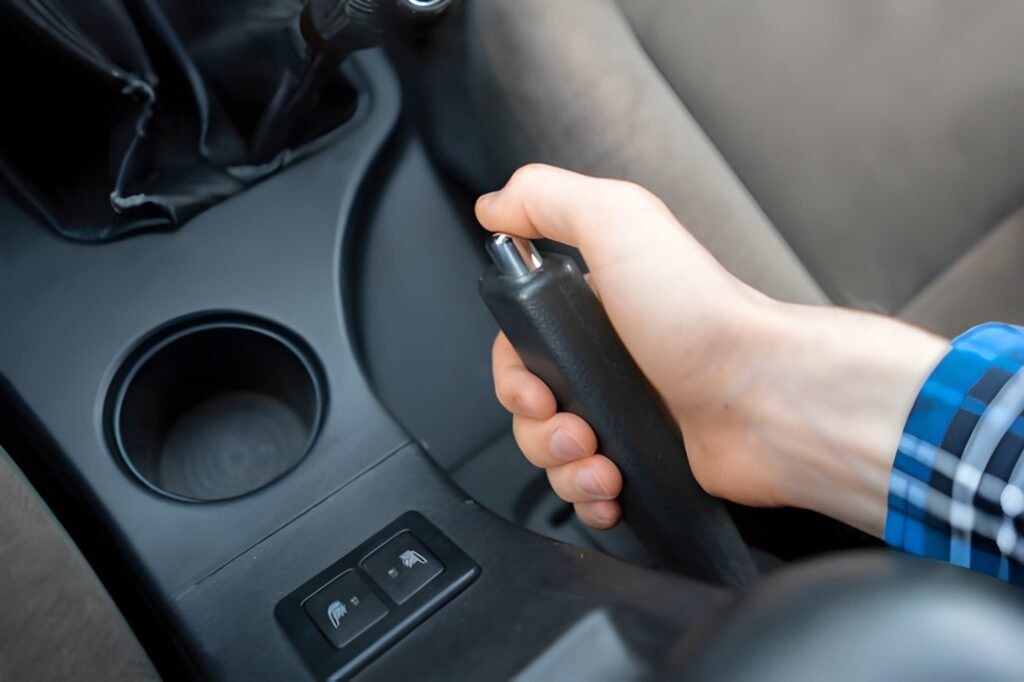
One of the most basic features that all vehicles have in common is a parking brake. Also called an emergency brake or handbrake, a parking brake keeps a car from rolling away when it is parked by locking the rear wheels. It is a simple, yet effective way to make sure a vehicle doesn’t move on an incline.
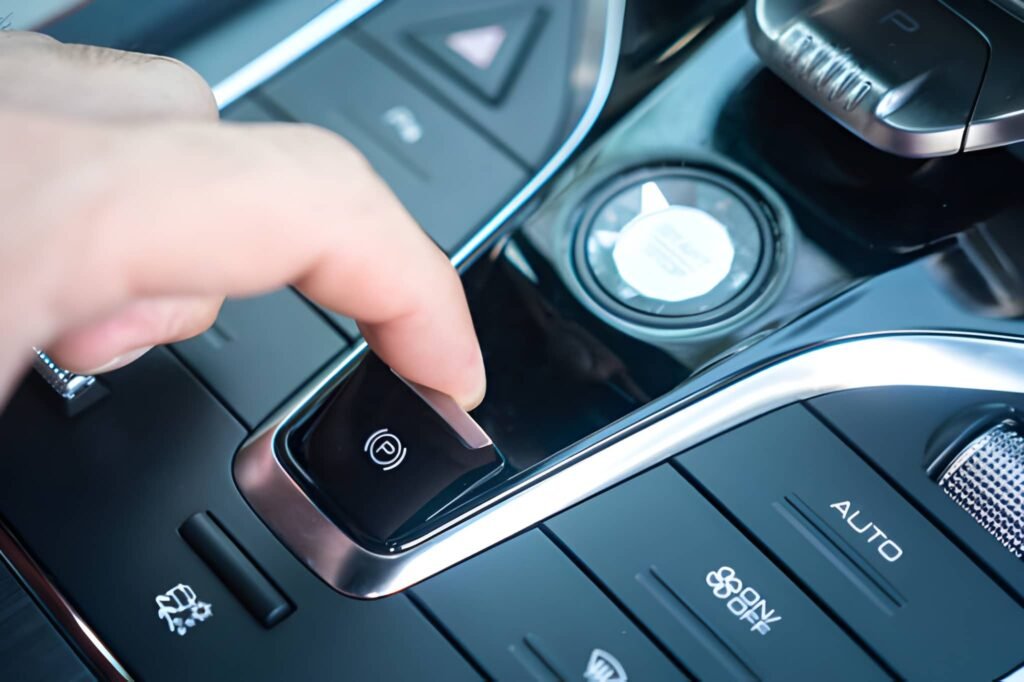
Some modern cars use a parking brake lever, while others use a foot pedal or an electronic button. Systems may vary, but the purpose is the same: to keep the car from rolling away after it is parked.
Parking Brake Mechanics
Parking brakes work by using a different system than the one that is used for the regular brakes. In an ordinary braking system, a driver must depress the brake pedal to engage them, and a hydraulic system is used to squeeze brake pads or shoes against the wheels, which creates friction and slows the car down. In contrast, parking brakes use a different method of working. Most of the time, they operate by using a system of cables and little to no hydraulic components that cause the wheels to lock.
When you pull a handbrake, the braking system gets engaged on the rear wheels of the vehicle. Newer vehicles have electronic parking brakes, which operate differently. They have a button that you push, which activates an electronic system that locks the rear wheels. Regardless of the system, all have the same principle. They keep a parked vehicle stationary.
Why Should You Always Use Your Parking Brake?
Some people assume that when a car is in the \”Park\” position, that is sufficient to keep the car in place. However, there are many reasons as to why the parking brake should be used every time you park the vehicle.
1. Keeps Vehicle From Rolling
It may seem like a simple task to just put the car in “Park”. However, the system isn’t completely foolproof. Your vehicle may roll, in particular when parked on an incline. The parking brake is there to provide an extra layer of functionality by keeping the wheels locked in place. Using parking brakes is essential as they help secure your car from rolling back or forward, whether parked on a steep or slight slope. Leaving your car unbraked can lead to accidents by crashing into parked vehicles or running over pedestrians.
2. Saves Transmission
Engaging parking brakes provides additional benefits, such as relieving stress from your car’s transmission system. When parking brakes are left disengaged, the weight of the car is held in place by a small metal piece of the transmission gear called the parking pawl. This is designed to keep the car in place, however, relying solely on this metal piece over time causes excessive wear on the internal parts of the transmission system, especially in cars regularly parked on a slope. Using parking brakes protects the transmission system from expensive repairs.
3. More Protection
Every time you park your vehicle, there are risks. If you don’t engage your parking brake, your car could potentially roll away If there’s something wrong with the transmission, or if your vehicle is on an incline, the parking brake is an extra safety feature that keeps you, your car, and others safe.
Without a parking brake, a vehicle could roll into other cars, hit people, or crash into a building. If you live in an area with lots of hills or tight parking lots, the brake keeps your car safe and keeps others safe.
4. Keeps Vehicle Healthy
To keep your vehicle healthy, use your parking brake regularly. Using the parking brake allows the one of the internal technologies of your vehicle that keeps your vehicle in place to be used instead of relying on your vehicle’s standard brake system. Using the parking brake helps reduce damage on your vehicle’s internal wires and other components.
Activating the parking brake can keep unnecessary stress off the brake system, ensuring that the regular brakes are only used for their intended purpose resorting the car to its moving state.
5. Avoiding Brake Fade and Overheating
Relying on brakes can cause the to overheat, creating something called “brake fade.” Fadation results in the need for more recurring replacements and diminishes performance.
Using the parking brake ensures that the regular brake system is used only when necessary, avoiding brake fade and ensuring that the regular brake pads last for a longer time.
6. Protecting Brake Pads
Regular brake pads are not meant to hold the car in a stationary manner for a long time. Instead of overworking the car pads, using the parking brake will allow the brake pads to focus on their primary job of stopping the car when you’re driving.
This will save you money over time on repairs and replacements.
When Is It OK to Skip the Parking Brake?
Most of the time, parking brakes should be used, but there may be exceptions. You should try to make it a practice to engage the parking brake, but in some circumstances it may be safe to skip using it.
1. Automatic Vehicles with Flat Surfaces
In most modern cars with automatic transmissions, “park” puts the vehicle into a mode that keeps it in place. If it is a flat surface, the car will stay put even without using the parking brake. That said, it is still a good idea to use the brake to add an extra layer of security.
2. Your Stops Are Temporary
When your vehicle is not in motion for only a brief period of time, for example at a stoplight, or even a very quick stop to run an errand, using the parking brake should not be necessary. Parking brakes are intended for longer breaks not moments where a driver is simply stepping away from their vehicle.
3. Well-Taken Care Of Vehicles
If your car is serviced often, and the brakes and transmission systems are good, the “Park” mode on your automatic transmission may be good enough to keep the car stationary on flat ground. Even so, you should always get in the habit of using the parking brake, and do so especially when on an incline.
What Risks Come with Not Using the Parking Brake?
Many people think they can get away with not using the parking brake. Not using the parking brake can be very bad for you.
1. The Vehicle Could Roll Away: If you do not use the parking brake, the risks are even greater when you are in an incline. The vehicle can always move, especially when in flat an area, if the “Park” mode is not fully engaged or working.
2. Transmission Problems: If you are being dependent on the transmission to say in one position, brakes are not the only thing you should be concerned about. The parking pawl inside the transmission can be damaged, and so will the rest of the transmission components. When this happens, you can be looking at repairs that are expensive, and can even lead to the failures of the transmission itself.
3. Brake System Overload: When the parking brake isn’t applied, the car’s braking system needs to handle all the work to keep the car in place. This pressure leads to quick brake pad wear, and can even cause the car’s braking system to malfunction.
4. Increased Risk of Accidents: When the parking brake is not used, the car can roll into another car or other nearby objects. This can be especially dangerous in a crowded parking lot and cause damage to the car or other cars. Using the parking brake helps to prevent these kinds of problems.
How to Properly Use Parking Brake
In complete harmony, Using your parking brake like this will ensure lesser wear to your other car components, and in addition, use the parking brake like this:
When Parking:
- Aside from using the car brakes to slow down the car, stop the car completely by using the brakes.
- If you are driving an automatic car, change the gear to ‘Park’.
- Then, to put the parking brake on, pull the lever or press the button.
- Then, to check if the parking brake is working, release the brake pedal to check if the parking brake is working.
On an Incline:
- If you are parking on a slope, make sure you always turn the car’s wheels towards the curb, or any other safe direction.
- Once you’ve set the parking brake, double-check that the vehicle is no longer moving before you step out.
Vehicles With Manual Transmissions:
When it comes to cars with manual transmissions, always apply the parking brake before shutting the engine off. Besides the parking brake, keep the car in gear in order to add more protection.
Frequently Asked Questions
Here are some FAQs about the use of parking brake –
1. Is it safe to park on a hill without using the parking brake?
No. Even with the car in “Park” mode, you have to use the parking brake when you park on a hill.
2. Can not using the parking brake damage your car?
It can. Not using the parking brake can stress the car’s transmission and brake system. This can cause them to wear out faster and lead to costly repairs.
3. Is using the parking brake in an automatic car necessary?
Yes. While automatic cars stay in place when in the ”Park” position, it is still good practice to engage the parking brake, particularly on hills.
4. How can I tell if my parking brake works?
Your parking brake is working if, after you engage it, your car does not roll backward when it is parked on a hill.
5. Should you ever, in any circumstance, drive with the parking brake engaged?
No, you should not, particularly if parked on an incline. But you can cause damage to your brake system if you drive with the parking brake engaged, so remember to release it before you drive.
Conclusion
While it may not always be undoubtedly necessary, in the end, you should always apply the parking brake whenever you can. It helps the car stay put and helps avoid accidents. It also helps the car’s transmission, brakes and other internal parts, stay in decent condition. It’s a simple habit to develop and can help in a many ways. Parking brakes can also help you avoid expensive and dangerous problems, even when you feel there is no need for it.


