Spilled some oil on engine block can lead to overheating, fire hazards, and damage to engine components if not cleaned properly. To fix it, immediately turn off the engine, absorb the excess oil, use a degreaser to clean the area, and rinse it off with water. Always check for oil leaks to prevent future spills.
While spilling oil on the engine block might not seem too problematic, you should take concerns seriously. Oil on the engine block can cause numerous issues such as the engine overheating and even catching fire. Whether you’re doing an oil change and spilling oil while adding an oil, as a DIY project, you need to understand the actions to minimize the risk to the engine and also avoid an accident.
This guide will focus on the problems caused by oil on an engine block, the importance of resolving the issue, the cleaning process and the prevention of oil spill.
Contents
Why Oil Spills on Engine Blocks are Dangerous
Oil spills on engine blocks lead to serious engine and vehicle safety issues. Here’s how quickly things can go wrong.
1. Engine Will Overheat
The first concern with oil on an engine block is that the engine may overheat. An oil spill on an engine block may cause the engine block to burn oil. Burning oil can cause an engine to overheat. Failing to cool an engine can damage the cylinder heads, the pistons, and the bearings.
The damage caused by the warp can be costly. If the oil and debris are not cleaned, then the debris will burn creating an increase in the overheating problem. This is called an endless cycle.
2. Risk of Fires
Liquid caught under the engine covers can promote the risk of fire. Engine blocks run hot enough to ignite spilled oil. In addition to potentially causing an engine fire, spilled oil can start a fire via the oil-soaked air filter by catching fire to unburnt hydrocarbons during a reversion event. Fires as a direct result of oil spillage on the engine block can occur from the smallest amounts of oil.
Even though spillage of oil onto the block of an engine is uncommon, the ignition of an oil fire should still be avoided. Oil is self-combustible and will ignite if hot enough when near sufficient oil.
3. Component Damage
Seals and hoses made of rubber become more brittle as the result of constant exposure to unburnt hydrocarbons. In the event rubber cracks, unburnt hydrocarbons and coolant can start leaking, which is a more dangerous situation. In addition, the more oil there is on engine components, the more difficult it will be to identify potential problems because the area will look dirty.
Moreover, the build-up of oil and grime on parts of the engine can lead to a deterioration of engine performance. This build-up can insulate heat and improper lubrication cause parts to overheat, malfunction, or cease to operate.
Actions to Take When There is an Oil Spill on the Engine Block
You need to minimize the risk of further problems if you spilled oil on the engine block. These are the steps to take to clean the engine and minimize the damage to the engine.
1. Turn Off the Engine and Let It Cool: The oil can get hotter and cause a fire if the engine is still running so the first step is to shut it down. Wait a couple of minutes for the engine to cool down before you start the clean up to avoid burns. The clean up can also be made more difficult if you clean it before it cools down.
2. Evaluate the situation: When the engine cools down, try to assess the amount of oil that has spilled. If the tragedy is not major, a rag may be sufficient, but large spills will require great effort, and maybe multiple tools, to be cleaned sufficiently. Be on the lookout for oil that has collected on and around sensitive areas, like hoses, wires, and the exhaust system. If the oil has collected around the exhaust manifold, the oil is a fire hazard.
3. Collect the cleaning tools: Try to gather all the necessary tools and cleaning supplies before the cleaning starts:
- Rags or paper towels: To soak up the excess oil.
- Engine degreaser: To remove the oil phone that is stuck.
- Soft bristled brush: For scrubbing.
- Hose and Water: For rinsing.
- Protective gloves: To avoid contact with oil, and the cleaning supplies.
4. Eliminate the Oil: Start by using paper towels or old rags to contain as much of the oil as possible. Blot, do not wipe, the oil, as wiping will spread the oil further onto the engine block. After oil has been absorbed, the rags will need to be disposed of. Because oil rags can be a fire hazard, disposed of the rags in the manner required by your local authority’s regulations.
5. Put Degreaser and Scrub the Area: Then, place engine degreaser or engine cleaner onto the areas of concern, and let sit for a few minutes to help dissolve the oil. After the allotted time has passed, and the degreaser, or cleaner, has broken the oil down, gently scrub the area with a brush. Any brush that may be too aggressive can scratch the surface of the engine block.
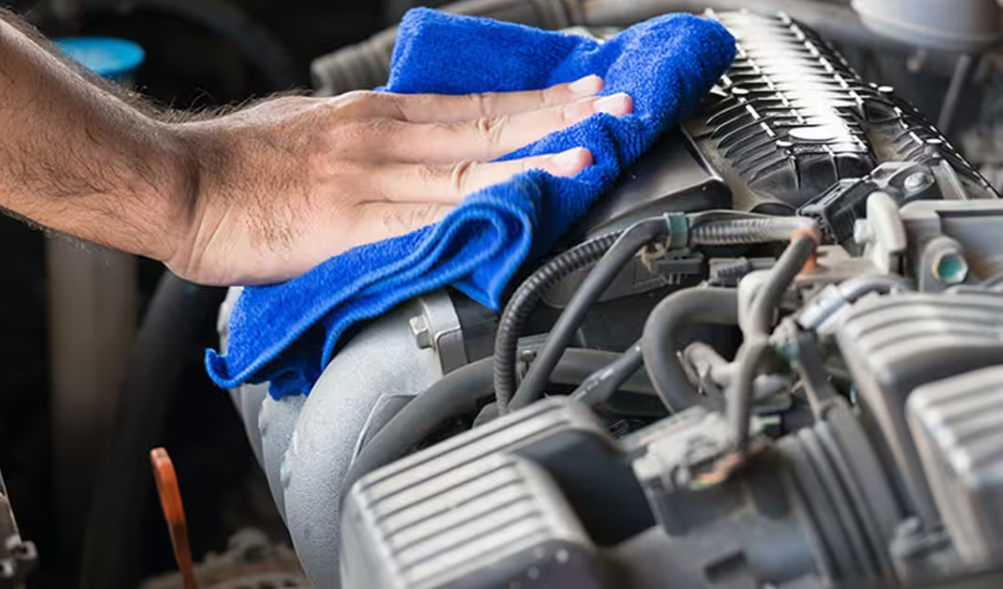
6. Rinse and Dry: Once you have finished scrubbing, the area should be clean of all residual oil, and should be clean of all residual cleaner. You should remain careful when washing the area to avoid splashing any of the engine’s important parts, such as the alternator and electrical connections. Make sure to avoid the engine’s important parts. Lastly, to ensure all moisture is removed, thoroughly dry the area with some clean rags.
7. Remaining Oil Check: Following your first round of cleaning, do another inspection of the engine block to see if any cleaning products and residual oil are left. If so, repeat the process you’ve done.
Potential Risks of Not Cleaning Oil Spills on the Engine Block
If you fail to clean the oil spill there will be a handful of potential problems that we will go through.
More Engine Heating: There might be no visible signs of spilled oil, but the oil continues to burn every single time the engine heats up. More engine burning oil can damage the engine as the parts will warp and seals will break.
Fire Hazard: Oil can be a fire hazard when mixed with engines and spilled oil on a hot engine will only create a recipe for fire. Any oil left on the engine will ensure that the potential fire hazard stays.
Damage to Engine Parts: When oil spills on the engine block, the rubber hoses and seals as well as gaskets will get damaged. These parts are necessary for the engine to function and when they fail, engines will develop leaks which will require more expensive repairs.
Buildup from Dirt and Debris: Oil can trap dirt and debris leading to grime buildup on engine parts. This grime buildup can create obstacles punctuate other problems like cracks and leaks and it can insulate parts that need to release heat making your engine less efficient.
Preventing Oil Spills on the Engine Block
Cleaning spills is necessary, but preventing them is even more desirable. Here are a few strategies that can help to reduce spills when dealing with engine oil.
Utilize a Funnel to Pour Oil: When adding new engine oil, a funnel should always be used to guide the oil into the engine. This not only helps prevent spills, but also ensures that the oil is directed to the correct area. A funnel can also help prevent the oil from splashing on the engine block or other components.
Exercise Caution When Changing Oil: When your making an oil change, be sure to position your oil pan so that it can catch all of the oil that is being drained. Your pan should be big enough to accommodate all of the oil. If your oil filter leaks be sure to check that before putting it on so you don’t create any spills.
Look for Oil Leaks: Check your vehicle for oil leaks, especially around the oil filter, drain plugs, or engine seals. If there is a leak, plug it so oil does not escape and leak onto the engine block.
Use a Drip Pan: When working on the engine, especially by adding or refilling oil, please put a drip pan underneath to avoid oil spills.
Related Article
Oil Pressure Low Stop Engine
How to Fix Milky Oil in Engine Ran in Puddles
Engine Starts but Won’t Stay Running Medium
Frequently Asked Questions
Here are some FAQs about spilled oil on engine blocks –
- Are there any dangers when oil spills on an engine block?
If oil is not cleaned from an engine block, it can cause damage to engine components, overheating, and fires.
- What is the best way to clean oil spills on engine blocks?
To clean spills, use absorbent rags to soak up excess oil. Then, use a brush to scrub a degreaser into the spill. Rinse the area with water, and dry the area.
- What happens when oil spills are left on an engine block?
If oil spills are left on an engine block, it causes overheating, fires, and damage to engine components.
- What can I do to stop oil spills on engine blocks?
When adding oil to an engine block, use a funnel. Look for any oil leaks and use a drip pan to catch any oil spills.
- What about oil spills? Do they change how an engine works?
Spills cause oil to burn, cause dirt to create a layer of buildup, and cause dirt to block engine components. When this happens, the engine will work worse and less efficiently.
Conclusion
When there is engine block oil spillage, it is essential to clean it to avoid overheating, fires, and damage to some components. Using the techniques in this guide, you can soak up the engine oil and clean the engine block to avoid more oil spills. By being careful when handling oil during the oil changes and servicing your engine, you will not experience the above problems.
Handling oil spills the right way is how you ensure your engine does not experience issues for the longest time.