


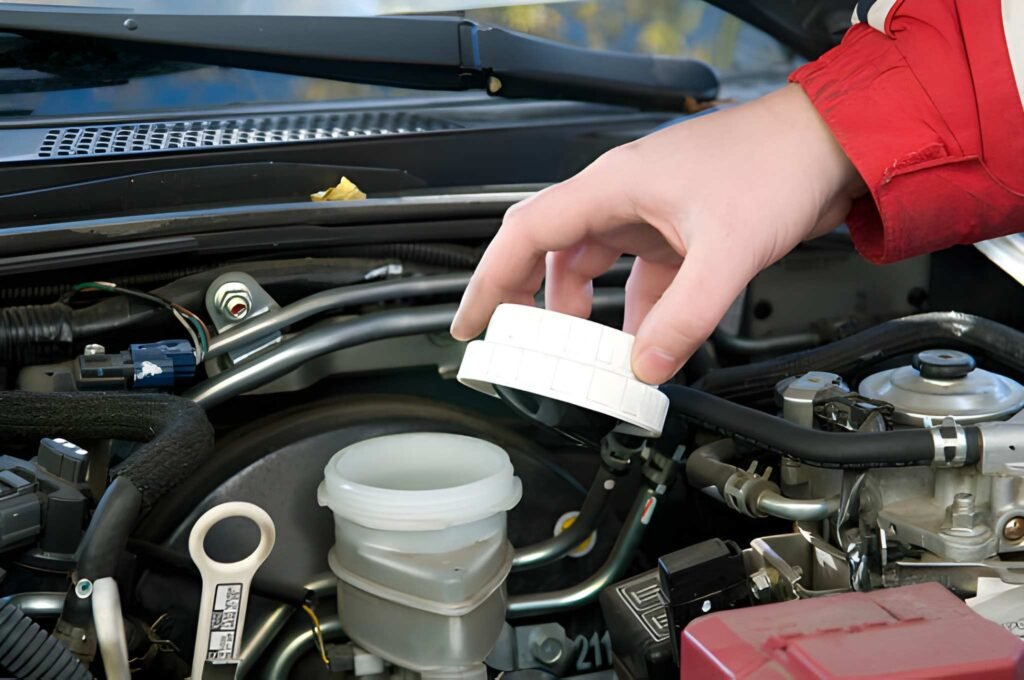
Symptoms of no brake fluid include a soft brake pedal, increased stopping distance, and the pedal going to the floor. These indicate a serious brake issue and require immediate attention.
When it comes to your safety behind the wheel, knowing the clear symptoms that indicate a vehicle has no brake fluid is of the utmost importance. The fluid that helps the brakes work is called brake fluid, and it is a type of hydraulic fluid that is used to transfer and convert the force applied to the brake pedal into an equal and opposite force at the brake wheels. If brake fluid is absent or at an extremely low level, the vehicle is likely to put you at risk of an accident since it may no longer be able to stop when needed.
In the sections that follow, we will include a list of common occurrences as well as a guide to maintaining the brake system to help you avoid brake fluid problems.

Contents
What Happens If You Have No Brake Fluid?
The lack of brake fluid will not let the brake system function, as there will be no hydraulic pressure in the system, leading to brake failure. The pedal may still feel firm when braking, but it will not be able to slow or stop the vehicle at all. The situation can become worse when there isn’t enough brake fluid, or air bubbles have formed in the brake lines, so the pedal can feel spongy, and it can be difficult to stop the vehicle safely.
Another problem is that a dry brake fluid reservoir will cause some corrosion in the brake system, resulting in expensive repairs to fix the system. Even if it doesn’t seem like a problem, small leaks can result in enough brake fluid loss to be a dangerous situation.
Common Symptoms of No Brake Fluid
If you can tell the signs of low brake fluid, you can prevent damaging the vehicle and getting in a serious accident. Here are a few signs that indicate low brake fluid.
1. Soft Brake Pedal
When you step on the brake pedal and it feels unusually soft, this might indicate you’re low on brake fluid. This happens because there is a lack of fluid in the brake lines, resulting in low hydraulic pressure. When the pressure is low, the brakes won’t engage properly, and you can feel the pedal become spongy.
If you notice this symptom, you may have a brake fluid leak or air trapped in the brake lines. In any case, it’s important to check the brake fluid level immediately and add fluid if necessary.
2. When the Brake Pedal Goes all the Way to the Floor
When the brake pedal goes all the way to the floor without much resistance, this is one of the most concerning signs of no brake fluid. If the brake pedal travels further down than usual and requires little effort, this means the braking system is not working properly. This is a bad symptom of the brake fluid and could possibly mean a loss of hydraulic pressure.
This situation leads to an inability to effectively stop your vehicle, causing a serious risk to driving. If you find yourself in this situation, you need to pull over and get your vehicle looked at by a professional.
3. Lights on Dashboard Related to Brake Systems
Many cars today have an indicator light on the dashboard that activates when the brake fluid gets too low. The brake fluid indicator lights can count as a warning. If they activate, you need to stop and check the brake fluid to avoid serious problems.
In some cases, the master cylinder or the pads could present the problem, but you should never drive with a fluid warning light on.
4. The Distance Required to Stop is Longer Than Usual
If you find that your vehicle is taking a longer time to stop than it should, and it can easily be attributed to your vehicle needing brake fluid, this is an accident waiting to happen. Without brake fluid, the system does not have the required pressure to engage the brakes. In this case, the fluid would need to be added to the brake system. If your brake fluid is low, your braking distance will increase, which is a sign that your braking system is not working at its best.
5. Strange Sounds When Braking
Unusual sounds when you use your brakes can also be a sign of low brake fluid. If there is not enough brake fluid, the brake pads and rotors can grinding together. This will cause a grinding or squeaking sound, which will be heard each time you use the brakes.
Hearing strange sounds when you brake? Check your brake fluid. If the fluid is low, you can top it off, but you still need to get your brakes checked to see if they’ve sustained any damage due to the fluid being low.
6. Leaking Brake Fluid
If you find a puddle of clear, yellowish, or brown liquid under your car, it could be a brake fluid leak. This is one of the most common causes for low brake fluid. Leaks can happen in different areas of the braking system, including:
- Brake Lines
- Brake Calipers
- Master Cylinder
If you find a leak, stop driving and get your car checked out. If you keep driving, you could lose your brakes completely. Read the article to find where does brake Fluid leak from.
What are the reasons for no brake fluid?
Many things can prompt no brake fluid being present:
1. Missing brake fluid: Not having brake fluid is the brake system’s biggest problem. Over time, cracks or damage can happen to the hoses in the brake system. If enough fluid leaks, the brake fluid compartment could be unfilled.
2. Brake pads that have been used: When brake pads are used, the brake system consumes more fluid to adjust for the wear. Failure to change the brake pads can be due to the constant use of the fluid for decreasing the fluid levels.
3. Broken Master Cylinder: The Master Cylinder of a vehicle is the center of the vehicle’s hydraulic brake system. There can be some leaking of the brake fluid and it could get just lost and evaporate in a system that is closed and malfunctioning. This is also a very common cause for having no fluid.
4. Bad Brake Fluid: The brake fluid is not unending. Bad fluid causes a decrease in the system. If the fluid gets a high amount of moisture, then it becomes contaminated, and it can even evaporate and get lost.
5. Loose Reservoir Cap: The cap on your brake fluid reservoir may be loose. If it is not sealing properly, reservoir fluid may evaporate or leak. Check it and make sure it is sealed.
How to Prevent Issues with Low Brake Fluid
The best way to avoid issues associated with low brake fluid is to perform regular maintenance:
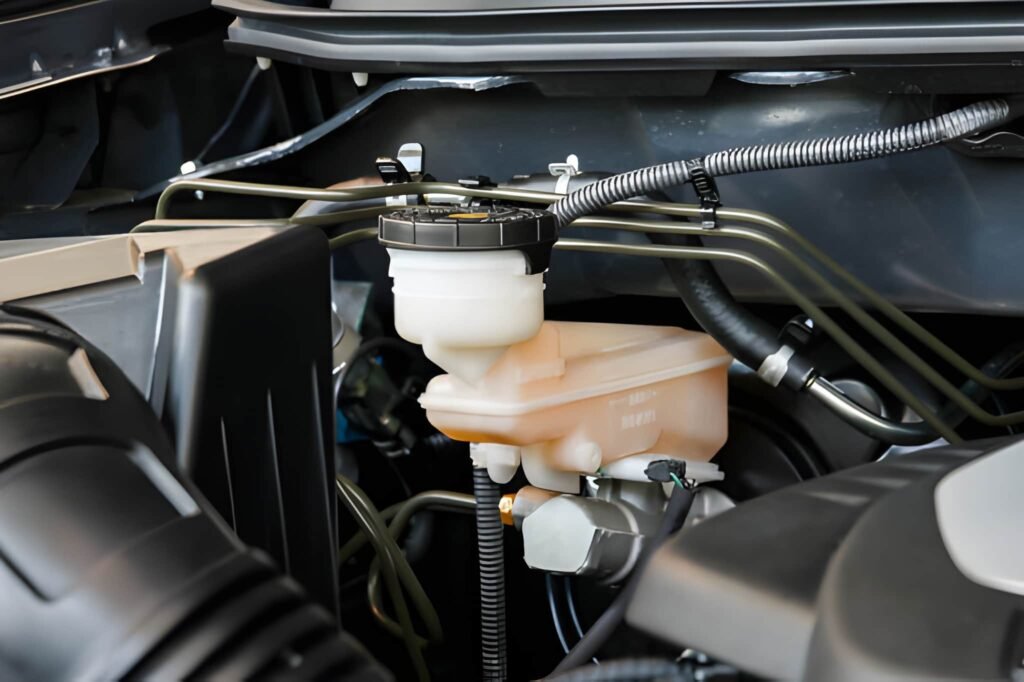
1. Check Brake Fluid Levels Regularly: You should check your brake fluid every few months. If you check your engine oil, it is a good time to check the fluid level in the reservoir. The reservoir has a clear side to check the level.
2. Replace Brake Fluid Periodically: You should change brake fluid every two to three years. If you don’t, the brake fluid will absorb too much moisture, which makes the fluid less effective, and lead to brake issues.
3. Inspect Brake Lines for Leaks: Look for damage or leaks in the brake lines and hoses. If you find any, get the issues fixed so that fluid is not lost.
4. Replace Worn Brake Pads: Excessive brake fluid usage may be caused by worn pads. Inspect your brake pads, and replace them before they get too thin. This should be done during regular maintenance.
What to do if You Notice Symptoms of Low Brake Fluid
If you notice any symptoms of low brake fluid, like a low brake pedal, do the following:
- Stop Driving: Pull over to a safe area if you notice soft brakes or any other signs pointing to brake fluid loss.
- Check Your Brake Fluid Level: If you are able to, look at the brake fluid reservoir. If the fluid level is too low, top it off with the proper brake fluid that is required.
- Look for Brake Fluid Leaks: See if you can find any brake fluid leaks under the car.
- Ask for Help: If you cannot find the problem or it is too complicated, call a mechanic to help you.
Frequently Asked Questions
Here are some FAQs about symptoms of low brake fluid –
1. Are there any symptoms of low brake fluid?
Soft brake pedal, warning lights on the dashboard, signs of increased stopping distance.
2. Is it safe to drive with no brake fluid?
You cannot drive without brake fluid. Without it, the brakes are unable to work and are extremely dangerous, leading to a high risk of a severe accident.
3. How often do you need to change brake fluid?
Every two or three years, depending on how long the car manufacturer recommends.
4. Is it safe to add brake fluid yourself?
Yes. As long as you know where to pour brake fluid and use the right type. But if you think you have a leak or some other brake problem, it would be best to let a professional take a look at the rest of your system.
5. Can I drive with a soft brake pedal?
A soft brake pedal means there is a problem with your brake fluid, and now you have to stop driving until the problem is fixed to avoid brake failure.
Conclusion
Seeing the consequences of low brake fluid could save someone’s life, it could be yours or your passenger’s. If there is a soft brake pedal or the stopping distance is too long, there is something wrong with your car’s brakes. If you have brake fluid issues, you should stop driving immediately and get a professional to look at your car.


