


What type of brake fluid do I need depends on your vehicle’s specifications, typically outlined in the owner’s manual. Most cars use DOT 3 or DOT 4 brake fluid, while high-performance vehicles may require DOT 5.1. Always check the recommended fluid type to ensure proper brake system performance.
When you hit the brakes in the car, you engage a braking system which uses brake fluid to transfer pressure to each wheel. The braking system needs fluid to work properly. But what fluid do you need? What fluid to use is a question that most drivers probably do not consider, yet the fluid used in the system affects how well the brakes perform. Using the wrong fluid can result in subpar braking, brake failure, or serious damage to the braking system.
In this guide, we will research the types of brake fluid, the pros and cons of each, and how to make a selection. Understanding brake fluid is a matter of safety and system effectiveness whether you drive a regular passenger car, a performance vehicle, or even a vintage model.

Contents
Key Functions of Brake Fluid
Knowing the critical functions of the braking system which preserves and transfers the hydraulic pressure necessary for braking, provides a better appreciation of the importance of making the right selection of brake fluid.
Here are some functions of brake fluid:
- Force Transmission: When pressure is applied to the brake pedal, a brake fluid ‘transmits’ that pressure to the brake calipers or wheel cylinders.
- Lubrication: It also provides the master cylinder, valves, and pistons with some degree of lubrication.
- Heat Resistance: The fluid also has a high boiling point brake fluid to help avoid vaporization caused by the extreme heat generated during braking.
- Corrosion Prevention: Brake fluid works to protect the metal parts of the brake system from rotting and corrosion.
- Moisture Absorption: The brake fluid also absorbs moisture from the air that surrounds it, assisting in the prevention of the brake components from becoming damaged.
What Happens When You Use the Wrong Brake Fluid?
Using the wrong type of brake fluid can result in a braking disaster for your vehicle. The wrong brake fluid type can create the following braking issues:
- Reduced Braking Efficiency: If the brake fluid is of low quality, it is boiling point will be lower and brake power will also become reduced after long periods of use.
- System Damage: The wrong fluid type can create damage to the brake parts such as the seals and hoses.
- Swelling Seals: DOT 5 and other brake fluids may damage rubber seals in brake systems, leading to leaks.
- Moisture Absorption: DOT 3 and 4 are brake fluids that capture moisture, and over time that moisture lacks brake fluid effectiveness and may cause corrosion in the brake pipe system.
What are Different Brake Fluid Types
There are multiple levels and types of brake fluids. Most people will come across brake fluids labeled DOT, however some types are specialized for performance and /or specific cars. Here are the different types and what to expect.
1. DOT 3 Brake Fluid
This is the most popular and most commonly used brake fluid. It is composed of glycol and other chemical byproducts which is also what makes the fluid in most passenger cars, trucks, and basic brake system vehicles.
- Boiling Point: It has a dry boiling point of 401 degrees Fahrenheit and a wet boiling point of 284 degrees Fahrenheit which is equivalent to 205 and 140 degrees Celsius.
- Advantages: It is easily accessible and low in cost. It also provides support in standard driving conditions for vehicles that do not have advanced braking systems.
- Cons: Compared to other fluids, DOT 3 brake fluid must be changed more often because moisture is absorbed over time, which lowers its boiling point.
2. DOT 4 Brake Fluid
DOT 4, which is still a glycol-based fluid, is more advanced than DOT 3, as it offers a greater range of boiling points. This makes it suitable for more extreme braking situations, such as anti-lock braking systems (ABS) or extreme towing/heavy-duty driving.
- Boiling Point: DOT 4 has a dry boiling point of 446°F (230°C) and a wet boiling point of 311°F (155°C).
- Pros: Compared to DOT 3, DOT 4 flooring systems offer greater performance, particularly during extreme braking situations. As such, it is commonly found in newer vehicles featuring ABS.
- Cons: DOT 4 brake fluid, like DOT 3, is hygroscopic, and therefore how quickly moisture is absorbed leading to a drop in braking performance.
3. DOT 5 Brake Fluid
Unlike DOT 3 and 4 brake fluids, DOT 5 brake fluid is silicone-based. It is non-hygroscopic, meaning it will not absorb any moisture. This can be advantageous for vehicles that have not been used for a long period of time, but the brake fluid is often not compatible with modern ABS braking systems due to a lack of sufficient chemical properties to support brake system functionality.
- Boiling Points: Dry boiling point: 500°F (260°C), Wet boiling point: 356°F (180°C)
- Advantages: It has a high resistance to heat and will not absorb moisture. This means that the chances of rust and corrosion developing is lower.
- Cons: DOT 5 has its downsides, as it does not mix well with brake fluids that contain glycol (DOT 3, DOT 4 & DOT 5.1). Mixing them together could lead to damaging your brake system. Furthermore, brake system seals and lines could be compromised when DOT 5 is used incorrectly.
4. DOT 5.1 Brake Fluid
Like DOT 3 and DOT 4, DOT 5.1 is glycol-based but has an overall higher boiling point. It is intended for high-performance automobiles which produce and experience high amounts of heat when braking. This includes Sports Cars, Race Cars or Cars with high performance braking systems.
- Boiling Point: Dry boiling point is 518°F (270°C) and wet boiling point is 374°F (190°C)
- Pros: DOT 5.1 performs well in high heat and is highly compatible to modern braking systems (including ABS) with her performance braking system.
- Cons: DOT 5.1 is more expensive and needs more maintenance than other fluids. DOT 5.1 holds moisture, so replacements are necessary.
How to Choose the Right Brake Fluid for Your Vehicle
Selecting brake fluid for your car is not a trivial task. Your vehicle owner’s manual has instructions on the type of fluid to use. Follow these guidelines to select good brake fluid for your car:
1. Inspect the Vehicle’s Manual
The owner’s manual specifies the type of brake fluid needed. Some cars only use DOT 3 or DOT 4. Other DOT 5.1 fluids are for high-performance vehicles.
2. Assess Driving Conditions
DOT 4 and DOT 5.1 are more ideal than regular driving situations. In situations like heavy traffic, towing loads, or mountain driving, the higher boiling points of DOT 4 and DOT 5.1 are useful. In normal driving scenarios DOT 3 works best.
3. Select Fluid Based on Brake System Characteristics
DOT 4 or DOT 5.1 fluids may be needed for vehicles with anti-lock braking systems (ABS) or electronic stability control (ESC) because those systems increase heat generation and need a greater range of temperature fluid.
4. Don’t Combine Brake Fluids
Because of the various chemical structures each type of brake fluid contains, mixing DOT 5 with DOT 3, DOT 4, or DOT 5.1 is a certain way to damage your brake systems. To avoid incompatibility, when switching to different brake fluids, a complete system flush is needed.
How Often Should You Replace Brake Fluid?
With time, brake fluid collects moisture from the air and lowers its boiling point. Because of this, brake fluid should be replaced every 2-3 years. Check your vehicle’s owner’s manual for specifics on your vehicle. You should consider replacing your brake fluid if you:
- Hear spongy brake pedal sounds
- See the brake fluid warning light
- Notice less brake responsiveness
- Observe dark or dirty brake fluid
Here are some FAQs about what type of brake fluid do I need –
1. What type of brake fluid does my car need?
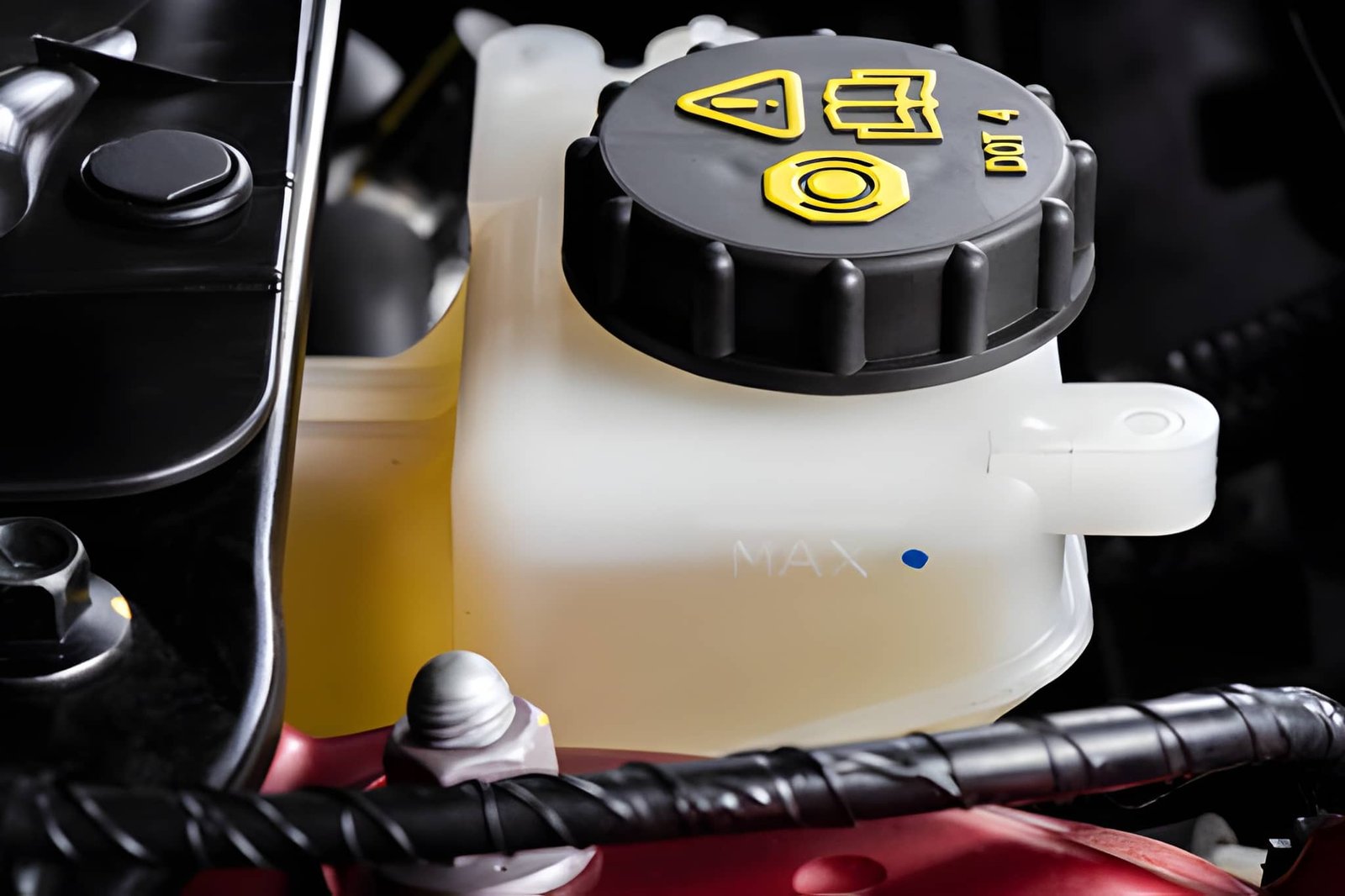
Owner’s manuals will tell you the specifics, and brake fluid reservoirs will have specs on the cap.
2. Is it ok to use a better grade of brake fluid than what is specified?
It is usually ok to use a better grade of brake fluid like DOT 5.1 instead of DOT 3 or DOT 4, but it is best to check the owner’s manual first.
3. Is DOT 5 brake fluid better than DOT 4?
DOT 5 is considered better than DOT 4 because of a higher boiling point, however, DOT 5 cannot be used with most ABS systems. This makes DOT 5 unsuitable for use with most modern vehicles.
4. Can I mix different brake fluid types?
Mixing different types of brake fluid is never a good idea. Specifically, DOT 5 cannot be mixed with DOT 3, DOT 4, or DOT 5.1. This is without a doubt, the quickest way to damage your brakes. Compatibility is a Must.
5. How often should I replace brake fluid?
On most vehicles, the brake fluid should be replaced every 2-3 years at most. Always refer to your vehicles service manual for the most accurate recommendations.
Conclusion
Knowledge about the differences between the types of brake fluids ensures that you will be able to make the right choice. Remember to consider the state of your brake systems and the conditions you drive in before choosing the type of brake fluid to use. With regular checking and maintenance of your brake system, including fluid replacement, you will be able to stay safe and avoid expensive repairs from a brake system in poor condition.


