


Where to pour brake fluid is into the brake fluid reservoir under the hood, typically near the engine’s back. Always use the correct fluid type and ensure the cap is securely closed.
Taking care of the vehicle’s braking system is important to ensure the safety, especially since one of the braking system components is brake fluid. Knowing where to pour brake fluid is important while checking the levels in your braking system. When you press the brake pedal, the brake fluid transmits the force to the brake components on each wheel, and helps your vehicle stop.
In this guide, we will help you learn where to pour brake fluid, which type of brake fluid is suitable, why certain levels of brake fluid are important, and steps you can follow to do this carefully.
Contents
- 1 What Does Brake Fluid Do?
- 2 Why Is It Necessary To Change Brake Fluid?
- 3 Where to Add Brake Fluid: : The Brake Fluid Reservoir
- 4 What Should the Brake Fluid Reservoir Look Like?
- 5 How to Pour Brake Fluid: Step-by-Step Instructions
- 6 5. Inspect the Fluid Level
- 7 Which Brake Fluid Should Do You Use?
- 8 Selecting The Right Brake Fluid
- 9 When Should You Check Brake Fluid Levels?
- 10 Mistakes While Pouring Brake Fluid
- 11 Frequently Asked Questions
- 12 Conclusion
What Does Brake Fluid Do?
When it comes to the hydraulic system of your vehicle’s braking system, brake fluid is the hydraulic fluid that is utilized. Brake fluid is responsible for transferring the force that you apply to the brake pedal in the vehicle’s cabin to the braking system components located at the wheels. When you depress the brake pedal, the brakes fluid goes through the system and forces the brake calipers and drums to engage and stop the vehicle.
There are several important functions that brake fluid performs including the following:
- Force Transmission: The pressure that gets put on the brake pedal needs to be transferred to each brake system that exists at every wheel, this is what brake fluid does.
- Lubrication: Brake fluid also provides lubrication to multiple components which exist inside the brake system. This can help keep the system in working condition for longer.
- Corrosion Resistance: Brake systems have multiple components. Each of these can be corroded, but the use of brake fluid can help to avoid this.
- Temperature Regulation: The use of brake fluid can help to avoid overheating brake systems since it can withstand the temperatures that come from the use of these systems. This helps the systems avoid malfunctions that come from overheating.
Why Is It Necessary To Change Brake Fluid?
With the passing of time, brake fluid can start to absorb moisture from the environment. This can negatively impact braking since it reduces the effectiveness of the fluid. This can cause serious issues:
Moisture in the fluid can lead to overheating of the fluid and this can cause an effect known as brake fade which is a considerable decrease in braking effectiveness.
The more moisture that is inside the fluid, the more rust and corrosion can occur in the components of the brake system, such as the brake lines and master cylinder. This can lead to more severe issues such as leaks.
Brake fluid can also become less effective if it absorbs more and more moisture. This leads to an increased risk moment while operating the vehicle.
When you regularly flush or top off brake fluid, you help maintain your brake power for stopping and keep your brake system running smoothly.
Where to Add Brake Fluid: : The Brake Fluid Reservoir
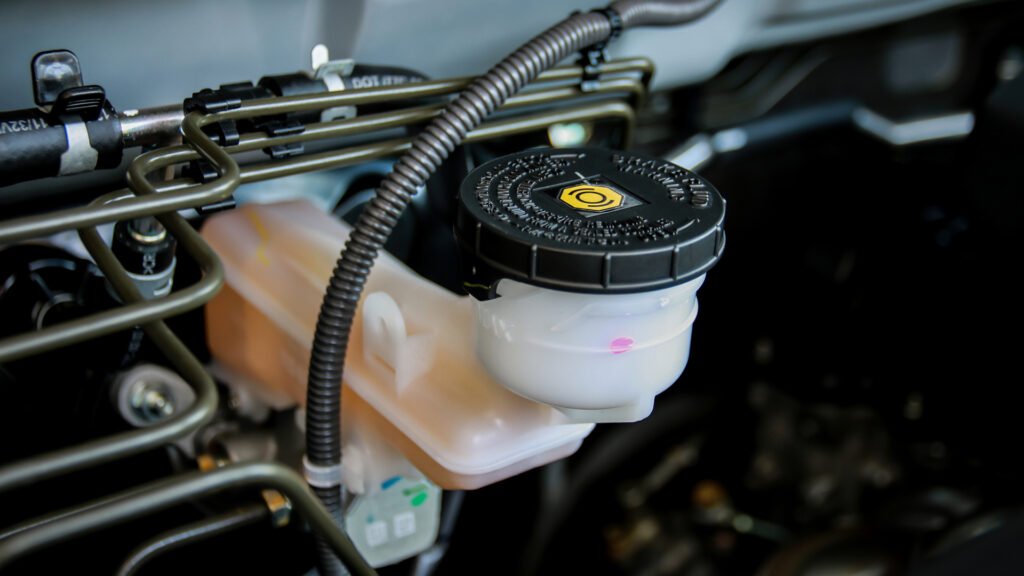
The only location to add brake fluid is in the reservoir specifically designed for it. The reservoir is in the engine bay, close to the back of the engine, and is located on the driver’s side. Depending on your car make and model, you should be able to find the brake fluid reservoir with ease.
How to Find the Brake Fluid Reservoir
You can follow these steps to find the brake fluid reservoir in your car:
- Open the car’s hood: Find the latch to the hood of your car and pull it, then open the hood.
- Find the brake fluid reservoir: The brake fluid reservoir is usually found toward the back of the engine bay, on the side of the driver or passenger seat.
- Look for labels or symbols: The reservoir should be a small, transparent container with a label that says, “brake fluid” or it has a picture of a brake system on the cap. The cap may also outline the brake fluid type that your car needs.
Tip: Finding the brake fluid reservoir in your vehicle may be challenging. The owner’s manual contains a useful illustration to help you pinpoint the location of the brake fluid reservoir.
What Should the Brake Fluid Reservoir Look Like?
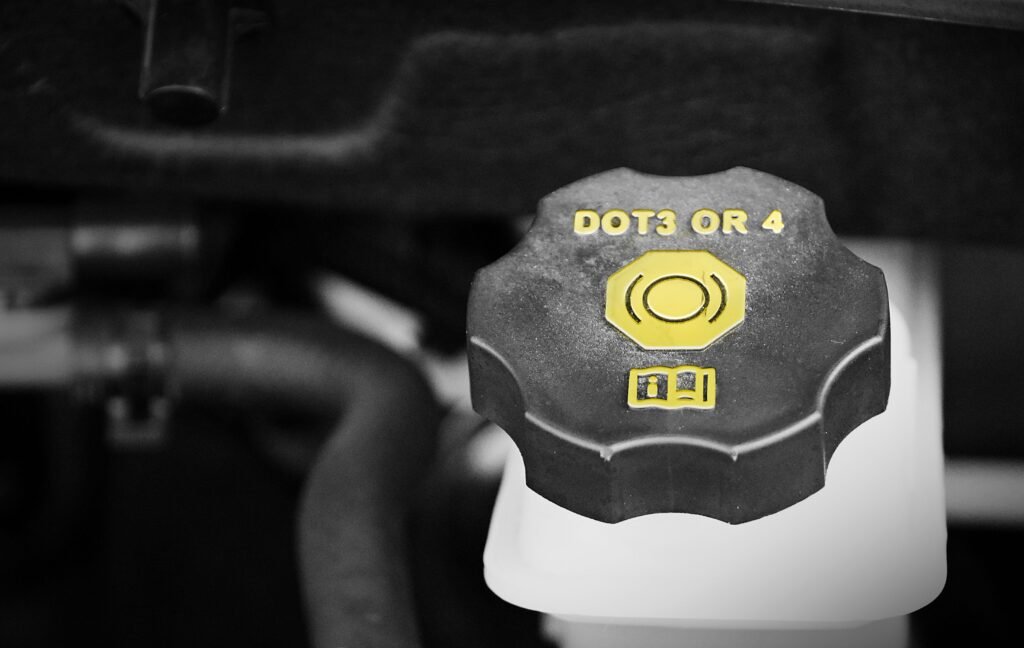
A typical brake fluid reservoir is made of clear or semi-transparent plastic to allow for the level of fluid to be visible. There are usually indicators on the side of the container for the minimum and maximum fluid levels. The cap is sometimes marked with a symbol for brake fluid or a label listing the types of fluid compatible with the container (DOT 3, DOT 4, etc.).
- Most Vehicles Use DOT 3 Brake Fluid, Which Is The Most Common Type.
- Vehicles that tend to be exposed to higher temperatures will use DOT 4 Brake Fluid.
- Brake fluid for extreme conditions is more expensive and less commonly used. This is known as DOT 5.1 Brake Fluid and it is a higher-performance fluid.
Failure to keep the levels of brake fluid in check can result in low brake fluid. This can lead to spongy brakes, a decline in performance, and a complete brake failure. Low fluid levels can lead to the aforementioned brake problems, making it crucial to check fluid levels frequently.
How to Pour Brake Fluid: Step-by-Step Instructions
Now that you have identified where the brake fluid reservoir is located, let’s go through how to add the brake fluid to the proper location. Follow the steps outlined below.
1. Make Sure Car is on Level Ground
To begin, make sure that your vehicle is on level ground. This allows you to take an accurate measurement of the fluid level and ensures there is no overflow when you open the reservoir.
2. Turn the Car Off
Ensure that the car’s engine is off and that the ignition is turned to the off position. You should also let the engine cool for a few minutes to avoid being burned when the brake fluid reservoir is opened.
3. Clear the Surrounding Area
Use a clean, dry cloth to remove any dust that may be around the reservoir cap. This is to prevent any outside particles from contaminating the brake fluid reservoir when you open the cap.
4. Remove Cap from Brake Fluid Reservoir
The cap that you will remove is located on the brake fluid reservoir. Depending on your car, the cap may have to be turned or unclipped.
5. Inspect the Fluid Level
Check the current position of the brake fluid inside the reservoir. If it’s below the minimum line, you need to top it up. If it’s above the maximum line, you might have filled it too much and need to drain some fluid.
6. Adding in the Brake Fluid
Using a new funnel, add the brake fluid into the reservoir until you get to the maximum line. Don’t add too much as this causes fluid to spill and can lead to overheating in the brake system.
7. Replace the Cap
After adding brake fluid, securely put the cap back on the reservoir to keep it clean.
8. Close the Hood
Make sure the hood is closed properly before you start driving. Ensure the cap is secured on the reservoir.

Which Brake Fluid Should Do You Use?
When pouring brake fluid, knowing the right type is necessary. Brake fluid options include the following:
DOT 3: Commonly found in most standard vehicles. It is a type of glycol-based brake fluid that is compatible with the majority of cars found on the road.
DOT 4: It has a slightly higher boiling point than DOT 3, making it more ideal for more severe use or for hotter climates.
DOT 5: This is a silicone-based brake fluid that is used in specialty applications, such as vintage cars, or for vehicles that use non-hygroscopic fluids.
DOT 5.1: This is considered a more extreme fluid with higher performance that is compatible with DOT 3 and 4 systems but has different properties.
Selecting The Right Brake Fluid
Go check the cap of your brake fluid reservoir. It is the quickest method of determining what type of fluid your car needs. This is different in each model. If you are uncertain, it is best to check your owner’s manual. Mixing brake fluids is a no-go, and can cause issues for yourself down the road.
When Should You Check Brake Fluid Levels?
You should check the fluid levels at regular per miles intervals. The brake fluid should ideally be checked every 6,000 to 8,000 miles. However, if you are in a more strenuous driving condition, checking the fluid levels once a year can be more ideal.
Being aware of a possible reduction in braking power, or the illumination of your brakes warning light, could mean it’s time to inspect your brake system and possibly add some brake fluid.
Mistakes While Pouring Brake Fluid
Adding brake fluid shouldn’t be a complicated task, but some beginners find a few of the steps daunting. Take a look at some more frequent issues to avoid.
1. Overfilling the Reservoir: Never overfilling a brake fluid reservoir. You can fill it to the recommended level. Overfilling it can cause fluid to overflow onto the brakes when they heat up, causing damage and even contamination to the brake system.
2. Using the Wrong Brake Fluid: Each vehicle uses a specific brand and type of brake fluid. Using the wrong brake fluid can result in reduced braking power and cause damage to the entire brake system.
3. Not Sealing the Reservoir Cap Properly: Leaving the cap of the brake fluid reservoir loosely shut can allow air and moisture into the brake system, causing corrosion and lowering the brake fluid’s effectiveness.
4. Pouring Fluid into the Wrong Area: Only brake fluid reservoir can be filled with brake fluid. Other engine compartments can be poured with engine oil, but doing this with brake fluid could cause serious damage to the engine.
Frequently Asked Questions
Here are some FAQs about where to pour brake fluid –
1. Where do I pour brake fluid in my car?
Pour brake fluid into the brake fluid reservoir in the engine bay near the firewall. Make sure you have the correct type and brand of brake fluid as indicated in your car manual before pouring.
2. How do I know if my brake fluid is low?
The first signs of low brake fluid are a spongy brake pedal and a brake light appearing on the dashboard. If you see the warning light on the dashboard, the system should be immediately checked.
3. Can I mix different types of brake fluid?
In no case should you mix two different brake fluids. The effects of mixing two different brake fluids could be different, and you could damage your brake system.
4. How often should I check my brake fluid?
Every 6,000–8,000 miles is a good guideline for checking the brake fluid. It should be done in conjunction with the regular system checks of your vehicle.
5. What happens if I overfill the brake fluid reservoir?
If you overfill the brake fluid, the brake system may become contaminated and also the brake system may become less efficient and more prone to overheating.
Conclusion
Learning to identify the correct location to pour in brake fluid, and how to perform the task properly, is important to keep your vehicle’s braking system well maintained. Being able to properly perform the task as well as keeping a record of the frequency of replacing brake fluid helps to keep the braking system intact, aiding in the driver’s safety.
Following the instructions in the guide, coupled with using the correct brake system fluid, helps to avoid expensive damage to the braking system. Checking the fluid levels frequently is important, and visiting a mechanic is always advisable for any braking system problems.


