Why check transmission fluid when engine is running? It ensures an accurate reading since the fluid circulates through the system, reflecting real operating conditions.
Transmission fluid is a major component in the overall system of your car. It is important to flush and exchange transmission fluid. A common concern is, should I check the transmission fluid with the car off or running? The answer is in the way the fluid circulates across the system. The engine pump, while running, circulates the transmission fluid across the system.
The difference is the engine running. The fluid’s circulation across the system provides an accurate reading of how much fluid is in the system, as opposed to the fluid sitting in the transmission cooler and torque converter. This article outlines the system and the importance of the engine running while checking the transmission fluid, as well as a step by step guide to checking your car’s transmission fluid.
Contents
What is Transmission Fluid?
While asking what happens if you check transmission fluid when engine is running, you should first understand what transmission fluid is and what it does. Transmission fluid is a crucial lubricant in cars that have automatic transmissions. It prevents overheating and wear by ensuring that all the moving parts of the transmission system are properly lubricated. It also helps the shifting of gears by lubricating the gear system.
Transmission fluid comes in either a green or red color and is made to withstand extreme temperatures and pressure. In order to aid in the cooling of the transmission parts, transmission fluid is designed to rotate through both the gearbox and the radiator to dissipate heat. If transmission fluid is low, or if the fluid is contaminated then the transmission system will overheat and suffer serious damage.
There are two types of transmission fluid found in cars:
- Automatic Transmission Fluid (ATF): This is the most common transmission fluid found in cars.
- Manual Transmission Fluid: A thicker fluid is used in manual transmissions, and this fluid is known as gear oil.
In this article, we will look only at automatic transmission fluid (ATF) since it is the most common.
The Role of Transmission Fluid in Automatic Transmissions
Transmission fluids main functions are:
1. Provides Lubrication
The many moving parts in the transmission, such as the gears, clutches, and shafts need lubrication so that they don’t experience excessive friction and wear. The lubrication the transmission fluid provides is prolonging the life of the transmission.
2. Provides Hydraulic Action
Transmission fluid provides the hydraulic action that allows the various parts of the transmission to work. The pumping of the fluid throughout the system, compresses clutch packs and shifts gears, and provides the engine’s power to the wheels.
3. Absorbing and Dissipating Heat
The transmission fluid is essential in keeping the transmission at a safe operating temperature because the many components that make up the transmission generate a lot of heat, and a buildup of heat can cause critical damage to the transmission.
4. Cleaning and Contamination Removal
The transmission fluid helps to carry away contaminants that accumulate in the transmission like dirt and tiny pieces of metal. The fluid moves contaminants to a filter so that they don’t damage the internal parts of the transmission.
Why Check Transmission Fluid When Engine Is Running?
Fluid levels are determined by the circulation of the system. When the engine is running, system circulation leads to an accurate measurement of fluid levels. Here are the factors that necessitate the checking of the fluid level with the engine running.
1. Fluid Circulation
With the engine running, the transmission pump moves fluid throughout the whole transmission system, including the torque converter. This is an engine-related fluid transfer device that sits on top of the engine and includes an oil-filled swamp. This fluid goes inaccessible when the engine is turned off.
Additionally, the system components are all lubricated and working properly because fluid circulation is happening among them. When the engine is turned off, some fluid will drain to the pan, but the measurement is still accurate to the level present during operation.
2. Fluid Reading Principles
As the temperature rises, transmission fluid will expand. When the fluid level is checked, really hot transmission fluid will lead to a measurement that is closer to the level of the fluid. Most dipsticks will be set to record a level that is appropriate when the engine reaches a certain temperature. If the fluid is checked cold or the engine isn’t running, the level may be miscalculated leading to a miscalculation of the fluid that is actually needed.
The contraction and expansion of the transmission fluid is also crucial to the operational efficiency of the transmission. A low fluid level can lead to erratic shifting, overheating, or even total transmission failure. Fluid levels should be checked while the engine is running to better reflect working conditions.(carcare.org)
3. Hydraulic Pressure
Unlike a manual transmission, the gears in an automatic transmission are shifted using hydraulic pressure, and that pressure is only maintained while the engine is running. For this reason, the fluid level should only be checked while the engine is running or else the hydraulic system is not under pressure and you will not have an accurate measurement of fluid. The level will be too high or too low, depending on the pressure at that time as compared to the working pressure.
The fluid that flows while the engine is running is kept under pressure and this pressure is what the transmission system needs to operate properly. If there is no fluid pressure, there is no way to determine if the system has enough fluid for the transmission to work.
4. Temperature and Expansion
The temperature of the transmission fluid is very important when it comes to the proper volume of the fluid. As the engine runs, the transmission fluid heats up to the operating temperature and this heat causes the fluid to expand. The dipsticks Hot level markings are designed for this operating temperature.
While the transmission fluid is cold, it will be below the level that is actually present, giving you a false low reading. If you check the fluid when it is cold, you could be lead to believe that you need to add more fluid, which will be an overfilled transmission. If the transmission is overfilled it can lead to foaming, poor shifting, and can even cause more internal damages to the transmission.
5. Avoiding Common Mistakes
The transmission can be overfilled or underfilled when the engine is turned off. The fluid level may look low when the engine is off, and you might be tempted to add more fluid. Overfilling has the same severity and consequences as underfilling the transmission. It can create excessive pressure in the system, causing erratic shifting, leaks, and damaging seals and gaskets.
How to Check Transmission Fluid Correctly
It is important that you follow these steps in the correct order, as they are designed to replicate the auto-transmission fluid circulation diagram.
How to Check Transmission Fluid Step By Step (Must Follow with Engine Running)
This is how you can check that your fluid is in good condition and check the levels.
1. Let the Engine Warm
Start the vehicle and let the temperature reach the correct operating temperature. You can let it warm as you prepare to check the fluid, or you can take a test drive and let it warm as you drive.
2. Run the Gears
While the engine is running, move the gear shift from Park to Drive and back to Park (many newer cars have an additional option called neutral and that shift like all the others also helps circulate the fluid in the gearbox, so use that too). This is to keep the transmission fluid at the same level.
3. Find the Dipstick
Pop the hood, and go to the back of the engine bay. The dipstick for the transmission fluid is usually closer to the back and is a brightly colored stick.
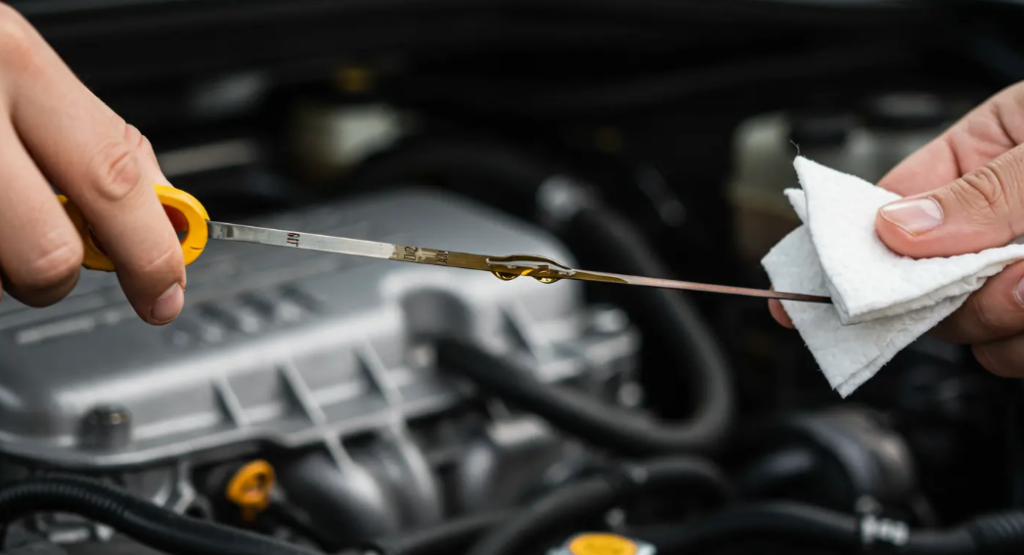
4. Pull the Dipstick and Clean It
Take the dipstick out and wipe it with a clean, lint-free, plated, and fully inserted dipstick.
5. Fluid Level Check
Take out the dipstick again and note the fluid level. Compare the fluid level with the dipstick markings, and see if it is within the “HOT” range. If the level is below the “HOT” range, follow the vehicle’s manual to add fluid.
6. Fluid Condition Check
Examine the fluid’s color and odour. Healthy transmission fluid is typically red or pink, while dark, brown, or burnt-smelling fluid shows signs of contamination or overheating, and may require a fluid change.
7. Putting the Dipstick Back
Following fluid level and condition checking, place the dipstick back in and shut the hood. Ensure the dipstick is fitted correctly.
Mistakes when Checking Transmission Fluid
Many vehicle owners make mistakes when doing transmission fluid, leading to faulty readings or other damages. Here, we will review the most common mistakes, plus how to avoid them, so that you can do fluid checks accurately.
Engine Not Being Warmed Up: Once the fluid is checked while the engine is cold, you can get a false reading. The vehicle must be at a normal operative temperature to check fluid levels.
Not Running the Engine: Checking a fluid level with the engine off will yield an inaccurate reading because the fluid is not circulating. This can lead to over or under filling the fluid of the transmission.
Not Following Manufacturer Instructions: Different types of vehicles can have drastically different transmission types and calibration of the dipstick. Always follow the manufacturer instructions of the specific vehicle to avoid making mistakes.
Overfilling the Transmission: Excessive overfilling of the transmission can lead to damage as well as erratic shifting. When adding fluid, it is important to do so in small amounts to avoid damaging the transmission. It is possible to further avoid damage by checking the fluid level more often.
Related Article
Engine Hot AC Off
How Hot Should Engine Be for Tappet Clearances?
Check Oil When Engine is Hot Or Cold
Frequently Asked Questions
Here are some FAQs about checking transmission fluid when engine is running –
- Why do you have to check transmission fluid while the engine is running?
While running, the engine provides the proper pressure to the fluid and has an accurate reading of the fluid level, along with the performance.
- Is it possible to check the transmission fluid with the engine off?
Checking while the engine is off is not recommended. It could lead to an incorrect reading since the fluid could have drained from the vital components.
- How often should transmission fluid be checked?
Most manufacturers recommend transmission fluid checks to occur every 30,000 miles to 60,000 miles.
- What does it mean when transmission fluid is low?
If transmission fluid is low, it could lead to overheating, poor shifting, and eventually complete transmission failure if not found and fixed.
- Will driving the car with low transmission fluid cause problems?
Yes! It could cause serious transmission problems and changes need to be made. See a mechanic or add more transmission fluid.
Conclusion
Why check transmission fluid with the engine running as opposed to just checking the fluid when the engine is off? The engine needs to be running in order to achieve an accurate reading because with the system under pressure, the fluid is circulating throughout the critical components and providing an accurate reading of fluid level in the system.
Checking the fluid level with the engine off can lead to providing an inaccurate reading and can lead the mechanic to overfill the transmission leading to irrevocable damage to the transmission. Regular checks of the fluid will prolong the life of the transmission system while also ensuring that the system is functioning correctly.