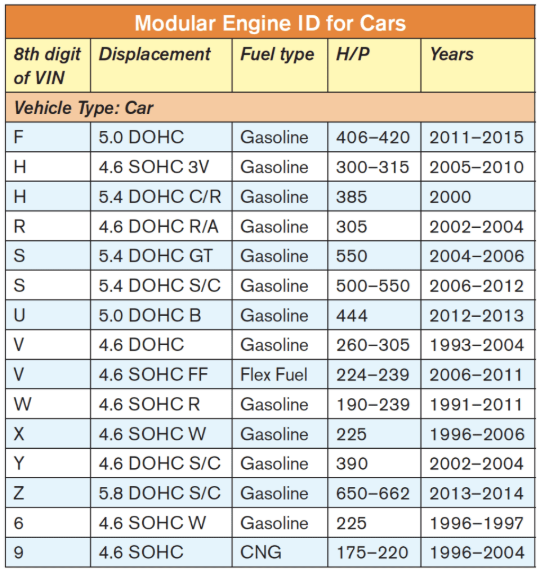
Ford VIN engine code chart decodes the 8th character of the VIN to identify the vehicle’s engine type and specifications. It ensures accurate parts and maintenance.
Ford vehicles, like all cars, come with a unique Vehicle Identification Number (VIN) that holds a wealth of information. This 17-character code provides detailed insights into a vehicle’s model, engine type, manufacturing plant, and year of production. One of the most critical pieces of this puzzle is the engine code, which is included within the VIN. This code indicates the specific engine fitted at the factory.
Knowledge about the Ford VIN engine code chart is important for a variety of reasons. It helps ensure the right parts are used for repairs, confirms the vehicle’s specifications when buying or selling a used car, and allows you to know the exact engine in your Ford vehicle. In this article, we’ll explore how the VIN is structured, where to find the engine code, and how to decode it using the Ford VIN engine code chart.
Contents
What is the VIN and How Does It Relate to the Engine Code?
A Vehicle Identification Number (VIN) is a 17-character alphanumeric code assigned to every motor vehicle by the manufacturer. This code provides a unique identifier for each vehicle and is used for various purposes, including registration, insurance, and tracking.
Breakdown of the VIN Structure
The VIN is divided into three main sections:
- World Manufacturer Identifier (WMI) – The first three characters.
This identifies the manufacturer of the vehicle. For example, 1F refers to Ford in the United States. - Vehicle Descriptor Section (VDS) – Characters 4 to 9.
This section contains information about the vehicle’s attributes such as body style, engine type, and transmission. The engine code is typically found in the 8th position of this section. - Vehicle Identifier Section (VIS) – Characters 10 to 17.
This includes the model year, plant code, and the vehicle’s unique serial number.
The engine code is most often located in the 8th character of the VIN, but it can vary depending on the model year and vehicle type.
Ford VIN Engine Code Chart
To understand the Ford VIN engine code, you’ll need to refer to a Ford VIN engine code chart. This chart links each character in the VIN (specifically the 8th character) to a particular engine type. Here’s a detailed example of how this works:
Example of a Ford VIN
Let’s decode a Ford VIN for clarity:
1FTFW1E5XKFB12345
- 1F – This is the WMI (World Manufacturer Identifier), identifying Ford.
- T – Vehicle type: A full-size truck.
- F – Body style: A 4-door truck.
- W – Engine type and fuel: Typically, this indicates a V8 engine.
- 1 – Check digit: A calculated value to verify the VIN.
- E – The 8th character that represents the engine code.
- 5 – Model year: In this case, it’s 2015.
- X – Assembly plant: This denotes where the vehicle was assembled.
- KFB12345 – Serial number: A unique identifier for this specific vehicle.
From this VIN, we can use the 8th character (E) and consult the Ford VIN engine code chart to identify the specific engine that was installed in this truck.
Ford VIN Engine Code Chart – Examples and Detailed Breakdown
Ford uses different codes to represent the wide range of engines in its vehicles. Below is a Ford VIN engine code chart with common engine codes and their descriptions:
| Engine Code | Engine Description | Usage |
|---|---|---|
| A | 2.3L EcoBoost | Common in newer Ford cars like the Fusion and Focus. |
| B | 5.0L V8 | Found in higher-performance vehicles like the Mustang and F-150. |
| C | 3.5L Ti-VCT V6 | Common in mid-range SUVs and trucks like the Explorer and F-150. |
| D | 2.0L EcoBoost | Smaller turbocharged engine in models like the Escape and Focus. |
| E | Electric Motor | Found in hybrid and electric vehicles such as the Ford Fusion Energi. |
| F | 1.5L EcoBoost | Efficient small engine for compact cars and hatchbacks. |
| G | 3.0L Powerstroke Diesel | Diesel engine option for F-Series trucks. |
| H | 3.7L V6 | Common in older models of the Ford Mustang. |
| J | 2.7L EcoBoost | Popular in mid-size trucks like the Ford F-150. |
| L | 3.5L EcoBoost Hybrid | Hybrid engine found in vehicles like the Ford Escape Hybrid. |
How to Decode the Engine Code in the VIN
Decoding the engine code from the VIN requires matching the 8th character with the code chart. Here’s how to do it:
- Locate the VIN on the vehicle – The VIN is typically located on the driver’s side of the dashboard, near the windshield. It may also be located on a metal plate inside the driver’s side door frame.
- Find the 8th character – This character represents the engine code and is the most critical part for decoding the engine.
- Consult the Ford VIN engine code chart – Once you have the 8th character, refer to the Ford VIN engine code chart to identify the engine that corresponds to that code.
Example Walkthrough
Let’s decode the engine code for the following VIN:
1FADP3F20JL114987
- 1F – This indicates Ford.
- A – This indicates a compact sedan.
- D – The vehicle is a 4-door sedan.
- P – This character refers to the 2.0L 4-cylinder engine.
- 3 – This character indicates a manual transmission.
- F – This is the engine code, matching to the 2.0L EcoBoost engine.
- 2 – Check digit.
- J – The vehicle is a 2018 model year.
- L – Assembly plant.
- 114987 – Serial number.
In this case, the engine code F corresponds to a 2.0L EcoBoost engine.
Why the Ford VIN Engine Code Chart is Important
The Ford VIN engine code chart is vital for several reasons:
1. Accurate Parts Replacement
The most crucial use of the Ford VIN engine code chart is to ensure that the correct parts are used for repairs. Engine components such as pistons, timing belts, and valve lifters are engine-specific, so knowing the engine code ensures that the right part is chosen.
2. Verifying Vehicle Specifications
For anyone buying a used Ford, verifying the engine through the VIN engine code is an excellent way to confirm the vehicle’s specifications. Some sellers might list the engine as a larger displacement or a different type, but cross-referencing the VIN with the engine code chart will give you the facts.
3. Understanding Vehicle Performance
Knowing the engine type helps in understanding the vehicle’s performance. Whether you’re buying a performance car like the Mustang or a work truck like the F-150, the engine code will tell you exactly what engine is under the hood and how much power it can generate.
4. Helps in Tuning and Modifications
If you’re interested in upgrading or tuning your vehicle, knowing the exact engine model is essential. For instance, if you have a 3.5L EcoBoost engine, you’ll want to ensure any aftermarket parts or modifications are compatible with that specific engine.
Related Article
Ford Window Sticker by VIN
Ford Recalls by VIN Number
Engine Fault Service Now Ford Escape
Frequently Asked Questions
Here are some FAQs about ford vin engine code chart –
1. Where can I find the Ford VIN engine code on my vehicle?
The Ford VIN engine code is typically found in the 8th character of the VIN. You can locate the VIN on the driver’s side of the dashboard near the windshield, or on the door frame of the driver’s side.
2. What does the 8th character in the VIN mean?
The 8th character in the VIN corresponds to the engine code, identifying the engine type, displacement, and configuration. This helps determine the exact engine installed in your vehicle.
3. Can I use the Ford VIN engine code to find parts for my car?
Yes, the engine code is crucial for finding the correct parts for your vehicle. Whether it’s the engine itself or other components, the VIN ensures you get the right parts for the correct engine type.
4. Why is the engine code important when buying a used car?
When buying a used Ford, the engine code verifies that the car has the advertised engine. It’s essential for ensuring that the vehicle’s performance matches the description provided by the seller.
5. Does the VIN change if I replace the engine?
No, the VIN remains the same even if the engine is replaced. The VIN only reflects the factory-installed engine, so after-market engine swaps will not update the VIN code.
Conclusion
The Ford VIN engine code chart is an invaluable tool for understanding exactly what engine is in your Ford vehicle. Whether you’re purchasing a used car, replacing engine parts, or confirming engine specifications, decoding the engine code from the VIN provides the clarity you need.
By using the Ford VIN engine code chart, you can ensure that you’re choosing the right parts, confirming vehicle history, and understanding the performance capabilities of your car. Always refer to the chart relevant to your vehicle’s model year to avoid errors. This knowledge empowers owners, mechanics, and buyers to make informed decisions and maintain Ford vehicles at their best.