


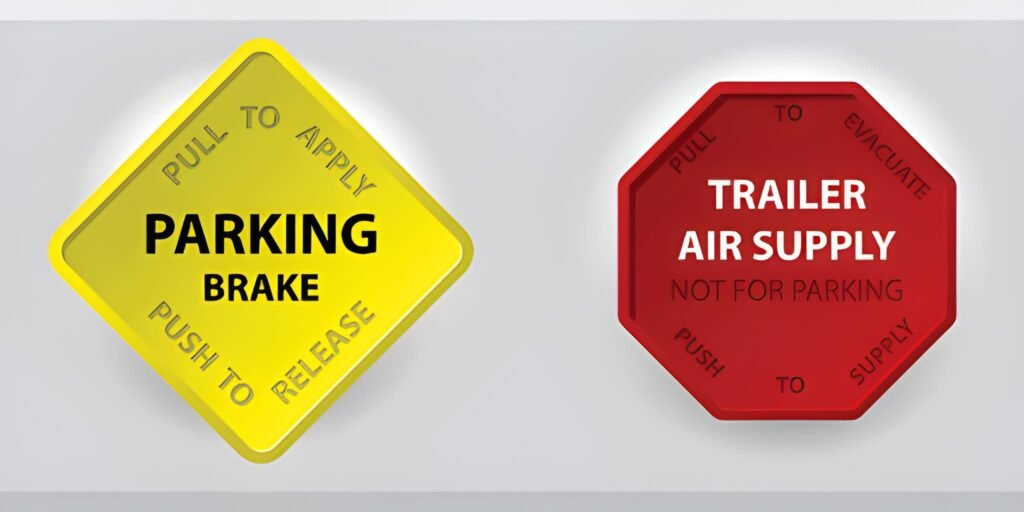
When should you test your parking brakes CDL? You should test your parking brakes during the pre-trip inspection, ensuring they engage and hold the vehicle in place. It’s important to check them before starting a trip to confirm they are in proper working condition for safety and compliance.
Testing your parking brakes is one of the many steps that must be done to keep your vehicle safe. This is even more critical for commercial drivers who hold a CDL (Commercial Driver’s License). If the parking brakes of the vehicle are not working correctly, the vehicle could roll while it is parked. This could cause potential accidents.
In this guide, we will explain why testing parking brakes is important, when to test them, how to test them, and what to do if you have problems with your parking brake system.
So, first, let’s examine the parking brake’s importance and why it should be tested.

Contents
- 1 Why is Testing Parking Brakes Important?
- 2 When Should You Test Parking Brakes CDL?
- 3 How to test parking brakes properly with CDL
- 4 Components Of A Parking Brake System
- 5 Parking Brake Troubleshooting
- 6 Frequently Asked Questions
- 7 Conclusion
Why is Testing Parking Brakes Important?
Parking brake, or emergency brake, holds the vehicle in place when it is parked. If you go even a little downhill, the vehicle is not supposed to roll. This is not especially important for small cars, but when you are dealing with commercial vehicles like trucks that can weigh so many tons, this is a critical part of safety.
For drivers with a CDL, testing a vehicle’s parking brake is a matter of safety as well as a legal obligation. As a part of a Federal Motor Carrier Safety Administration (FMCSA) pre-trip inspection, brakes of all types, including parking brakes, must be checked. Neglecting the inspection of parking brakes can lead to unsafe conditions and potential legal consequences.
The Importance of Parking Brakes in Larger Vehicles
Heavy trucks and commercial vehicles have parking brake systems that are even more critical to safety. Due to their size and weight, these vehicles can require added safety systems. Parking brakes in large vehicles are designed to work together with the vehicle’s primary brakes, which for most heavy trucks are air brakes.
While driving, the primary brakes are the ones that can be relied upon for stopping and slowing the vehicle. The parking brake, however, is the one that will keep the vehicle from moving when it is parked, which can be essential to preventing the vehicle from rolling away when parked on a slope.
Having understood the importance of parking brakes, it is appropriate to examine when you should test the parking brakes.
When Should You Test Parking Brakes CDL?
Testing retail driving brakes should be a part of your daily CDL driving. Here are some important points when you should test your braking systems.
1. Before Each Drive: Pre-trip inspections
Before each drive Is perhaps the most important moment when you should test for brakes for admission. Pre-testing is things you are obliged to do and they help you to test for issues which might otherwise get bigger before you get on the road.
Things to consider before the drive starts
Testing the brakes is important and with all the other pieces of the inspection you have to make sure the parking brakes are working. Pre-testing of Driving is mandatory and assists in the discovery of issues that could risk Driving. Including all things begins with your brakes.
- Confirm that brakes work: It is also important to do the same with the other brakes besides the parking break. Adding to this is a mandatory inspection for all drive abilities that must be in place before driving commences. Adding on, make these drive abilities as safe as possible in order to operate.
- Indicator Lights: Look out for dashboard warning lights relating to the parking brake. Some cars have electronic systems that provide alerts when the parking brake is not set correctly.
- Brake Pedal Movement: Try to pay attention to any strange movements of the brake pedal. If the pedal feels unresponsive, the parking brake system may need some attention.
This is a critical step because a defective parking brake system can create big problems once you drive, such as the vehicle rolling by itself or being hard to control.
2. Parking on a Slopes Hill
The second most important time a driver should test a cars hand brakes is after parking on a hill. Once parking on a hill, one should test the hand brakes to see if the car rolls in the opposite direction, so that the car remains stationary.
What to Do
When testing hand brakes, one should make sure it works properly to hold the car in place. Here are some steps to ensure the brake is functioning properly in this manner.
- After parking the car on a slope, one should always use the hand brakes, then shift the gear into park, or park mode if it is an automatic. Try to gently push the hand brake to see if the car rolls. If the car rolls even on the slightest bit, the hand brakes are malfunctioning
- Always engage the hand brakes with a lot of force. On steep slopes, make a doublecheck of the hand brakes to ensure it is holding the car in place with no movement.
- If you use air brakes, make sure that the air pressure is sufficient for the brakes to engage properly. A low pressure warning may prevent the hand brakes from being engaged.
And don’t forget, parking brakes play a big role in making sure your vehicle does not roll away while parked, especially on steep hills.
3. After Every Trip
Just like pre-trip inspections, inspections after each leg of your trip are equally as important. After doing your delivery or trip, you should always check your parking brake.
Why Post-Trip Inspections Matter
Working parking brakes are just as important for your vehicle as any of the other systems. Post trip inspections mean you are keeping your vehicle secure from rolling while eliminating the risk of brake issues on a future leg of the trip.
- During your inspection, you should check to see if the parking brake is still working and if it’s holding the vehicle in place.
- You should also check to see if the parking brake pivots are still working and that the brake engages and disengages.
- If the brakes sound weird, feel weak, or feel like they are not working as the should, there is probably a problem with the system. This should be fixed as soon as possible.
After each trip, check that the parking brake is working as it should along with the other vital systems. This is especially important before you make another trip.
4. Signs of Trouble with Parking Brake
If you come across any inconsistencies, or warning signs that you think may suggest a problem with the parking brake, you should test it immediately. Here are issues you could come across:
Problems Engaging the Parking Brake: If it is tougher than usual to pull the parking brake, or it is tougher than usual to let go of the parking brake, then you may have a problem with the brake cables, or the inner components, that may be worn out, or the cables may be broken.
Noisy Parking Brake Mechanism: If you hear noises of squeaking, or other unusual noises, then you may have worn out brake pads, or crud may have made its way into the braking mechanism.
Weak Parking Brake: If you go rolling backward down a hill after you’ve pulled the parking brake, then the parking brake may not be applying enough force to keep the car there.
If any of these have been happening to you, don’t wait until the parking brake fails to happen. Test the parking brake and consider letting a professional take a look.
5. When Performing Maintenance Checks
Like all systems in your vehicle, the parking brake system requires routine maintenance. Maintenance checks help identify small issues before they become big problems.
Importance of Maintenance Checks
Frequent maintenance checks help avoid system failures, ensuring your parking brake and other parts of the vehicle remain functional.
- Preventive Measures: During maintenance, check the parking brake system to see if parts like the air pressure system (if equipped), cables, and brake pads, need replacement. Giving the parking brake system maintenance by replacing worn brake pads, tightening cables, and ensuring there is enough air pressure in the air system helps the system last longer.
- Safety Inspections: Mechanics will check the parking brake system to identify if there are failing parts.
Fleets have maintenance schedules, but as a CDL driver, it’s also your responsibility to keep an eye on the parking brake even when scheduled maintenance is not that close.
6. After Severe Weather or Outside Influence
Should your vehicle be exposed to severe weather conditions (such as heavy rain, snow, or ice), or if the vehicle has been involved in a minor accident or crash, you must test the parking brake.
How to test weather above or impact
Extreme weather or collisions can lead to parking brake malfunction. Therefore, it is critical to check the effectiveness of the parking brake after sudden weather or impact.
- Wet or Ice Over: After heading out in water or ice, listen for ice or water to be stuck in the parking brake. Also, see if the parking brake works before heading out.
- Collision or impact: After your truck gets involved in minor or major accidents, check the parking brake so it’s not frozen or damaged after the impact.
It’s always wise to check functionality of the parking brake after any major environmental or mechanical impact.
How to test parking brakes properly with CDL
Be sure to test parking brakes with care. They are simple to do, as long as you pay close attention to every detail.
Step 1: Brake Engagement: With your foot on the brake, pull the parking brake lever down completely, or with electronic brakes, slide the switch down until the indicator light comes on.
Step 2: Check whether the car rolls: With the brake set, move the gear shift to the neutral position to prevent the car from rolling. Release the foot brake, and gently press the accelerator. If the car rolls forward, the parking brake has failed the test.
Step 3: Listen for Problems: While manually engaging the brake, pay attention to see if the lever or switch grinds or squeaks. This will indicate either a worn part or some other mechanical problem with the brake.
Step 4: Releasing the brake: With the brakes still engaged, make sure that the brake will release with a light pull. If it does not fully release or has difficulty releasing, this could indicate a problem with the brake.
Step 5: Test On Inclines or Slopes: As stated before, test how your parking brake performs on inclines. If you have a steep enough hill, engage your parking brake and see if your vehicle rolls. If the vehicle rolls, the parking brake isn’t working properly and you need to get it checked.
Components Of A Parking Brake System
To appreciate the importance of regular testing, understanding the components of a parking brake system is important, especially with large commercial vehicles like trucks.
1. Parking Brake Lever/Button: This is the part the driver uses to engage the parking brake. In older systems, this is a hand lever, while in newer vehicles, it may be an electronic push button or a foot pedal. The parking brake lever/button is connected to the brake system that forces the brake to engage.
2. Brake Pads or Shoes: The brake system uses brake pads or shoes that press against the brake drum or disc to stop the vehicle. These pads can get worn down, and they need to be replaced on a regular basis, it’s just part of maintenance.
3. Cables And Linkages: Cables and linkages are what connect the parking brake lever/button to the brakes that perform the stopping action. If these are loose or broken, the parking brake won’t work.
4. Air Compressor and Reservoir (for air-braked vehicles): In vehicles with air-brakes, the braking system, including the parking brake, uses the air compressor for braking. Low air pressure can cause the parking brake to not engage, and that is why you need to keep track of air pressure levels.
5. Parking Brake Drum/ Disc: Brake pads or shoes press onto the drum or disc to hold the vehicle in position. That surface can get worn down or damaged over time causing less effective braking.
6. Actuators: In some cases, the parking brake can be engage and disengaged by system actuators. These can malfunction cause a bad parking brake.
Parking Brake Troubleshooting
If your parking brake fails any of the tests, you will need to troubleshoot the problem.
Common Problems and Solutions
The parking brake will not work when there is not enough air pressure in the system. Check the air pressure gauge. If the pressure is low, check for leaks and refill the system to correct this problem.
- Worn brake pads will cause the parking brake to be less effective: Have a qualified mechanic replace them if you suspect that the pads are worn.
- Damaged cables or linkages: If the parking brake lever feels stiff or doesn’t engage all the way, cables or linkages can be damaged, and they should be inspected for signs of wear and replaced if needed.
- Brake fluid issues (hydraulic systems): If your car uses hydraulic brakes, check that the brake fluid is at the right level, because low fluid can cause the parking brake to be less effective.
Related Article
Parking Brake Not Holding
Should You Always Use Your Parking Brake?
Parking Brake Unavailable Car Won’t Start
Frequently Asked Questions
Here are some FAQs about testing parking brakes cdl –
1. How often should I test my parking brake?
You should test it every day. Do a pre-trip inspection, check it after parking on an incline, do a post-trip inspection, and check it whenever you notice any issues with the brake’s performance.
2. What should I do if the parking brake fails?
If it fails, there may be an issue with the system caused by low air pressure, wear on the brake pads, or damaged cables. If you can’t find the problem, get professional help right away.
3. Can I drive if my parking brake is not working?
It is unsafe to drive without a working parking brake. This is especially true for a commercial vehicle. Make sure you have a working parking brake before driving the vehicle.
4. What signs may indicate insufficient strength in my parking brake?
Indicators of insufficient strength in your parking brakes may include being hard to engage, making funny noises, and the vehicle rolling with the parking brake engaged.
5. What do the CDL regulations say about the parking brake tests?
The regulations about CDL state that the driver has to do pre-trip inspections that include a parking brake test. Not doing this can get the driver into trouble.
Conclusion
For CDL drivers, checking the parking brakes is vital. When parking brakes are tested regularly, the driver can be sure the brakes work when needed. Parking brakes should be tested before every trip, after every trip, on down slope and up slope. If there is anything about the parking brakes that seems off, the parking brakes should be tested. Regular maintenance and tests should be done to make sure that there is no risk from having a malfunctioning parking brake.
As long as a driver is responsible and tests the parking brakes regularly, safety from accidents will be guaranteed. CDL drivers should be dependable and safe, and the driver can accomplish that by regularly checking the parking brakes.


