


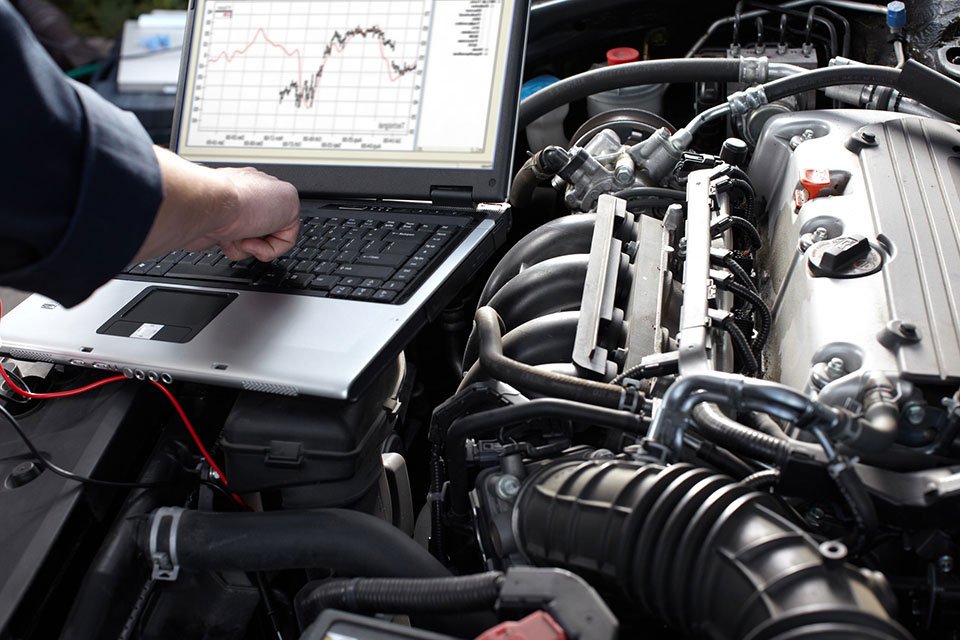
How to diagnose an engine problem starts with observing symptoms like unusual noises, smoke, or dashboard warning lights. Using tools such as an OBD-II scanner and performing visual inspections of key components can help identify the cause.
Any automobile is an engine driven automobile that propels all the drives that go along to road trips. When any of the engines start to malfunction, it can lower performance, efficiency, and safety. The awareness of the diagnosis of the engine problem will help the drivers detect a problem before it spins out of control. The symptoms are also; strange sounds, smoke, smell, dashboard alert indicators and poor performance. A majority of engine problems can be established accurately through correct equipment, observation and methodical testing.
This manual will walk through the symptoms, equipment, check-up, pitfalls and tips most often used on the maintenance making engine diagnostics easy to anyone.

Contents
- 1 Engine Problem Knowledge
- 2 Common Symptoms of Engine Troubles
- 3 Diagnosis of the Engine Problem Step by Step
- 3.1 Step 1: Prepare the Vehicle
- 3.2 Step 2: Observe Symptoms
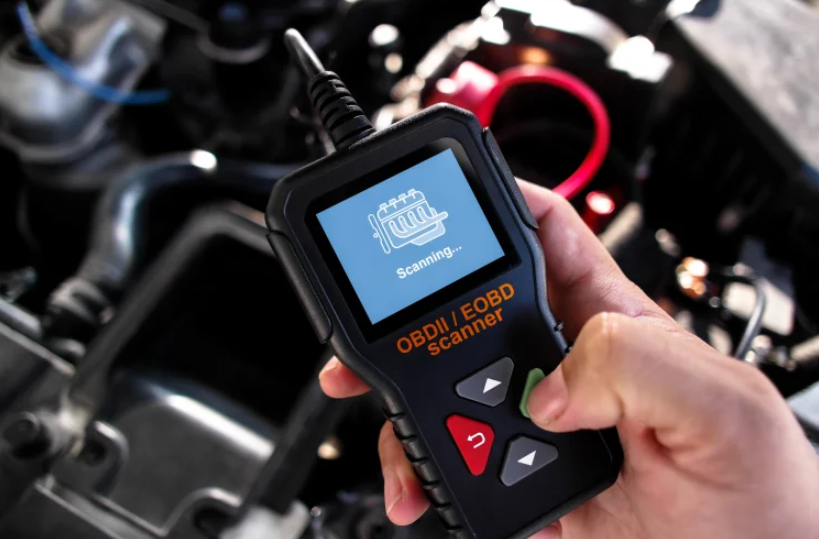
- 3.3 Step 3: Diagnostic Trouble Codes (DTCs) Scan.
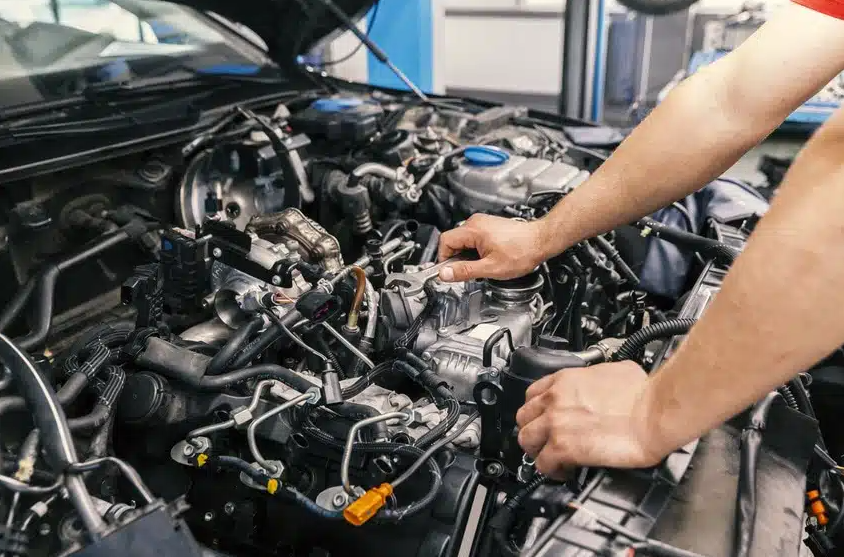
- 3.4 Step 4: Physical and Visual Inspection
- 3.5 Step 5: Clue-Listening and Clue-Feeling.
- 3.6 Step 6: Inspect Key Components
- 3.7 Step 7: Perform a Test Drive
- 3.8 Step 8: Advanced Diagnostics
- 3.9 Step 9: Document Findings
- 3.10 Step 10: Decide on Action
- 4 Conclusion
Engine Problem Knowledge
The issues that come along with the engines are many. They can either be caused by normal wear and tear, poor maintenance or failure of some components. In the diagnosis of the problem, the type of engine is required, as well as the interaction of the systems. The most important categories of engine issues are:
- Mechanical issues: Bearings, chains, stained pistons, timing belts.
- Electrical issues: lightning, ignition, wiring.
- Fuel system issues: Obstructed injectors, blocked fuel filters or fractured fuel pumps.
- Problems of the cooling system: Low coolant, or failed water pumps.
- Issues with emissions system: defective oxygen sensors, catalytic converters or exhaust leakages.
To be able to diagnose a problem, one has to identify the category of a problem that it belongs to.
Common Symptoms of Engine Troubles
Engines are complex devices, which are made out of mechanical, electrical and fuel components. They can fail over time, wear, poor maintenance or fail unexpectedly. One should always detect any issue during early stages because a minor issue can become a costly repair task. When drivers are aware of the symptoms of a common engine, they get to feel the appropriate action before the damage may be extreme. The list of the most typical signs of engine problems and their explanation and reasons why they should not be neglected is as follows.
1. Dashboard Warning Lights
Dashboard warning lights are often the first indication that something is wrong with the engine. Paying attention to these signals early can help prevent serious damage and guide you toward the correct diagnostic steps.
Check Engine Light (CEL): The most common and the initial sign of engine issues is the check engine light. Once it is on, it means that the engine control unit (ECU) has noticed an issue within the system. Causes can be simple issues, like a loose gas cap, and serious issues, like ignition misfires or broken sensors.
Other Dashboard Lights: In addition to the check engine light, other dashboard warnings can indicate serious engine or system problems. Understanding what each light means helps identify issues early and take the right action before damage occurs.
- Oil Pressure Warning: The indicator indicates low oil pressure and that can be very deadly to the engine unless taken seriously.
- Temperature Warning Light: This is an indicator that the engine is overheating and this could be due to low coolant, faulty thermostat or faulty water pump.
Reason why it matters: Dashboard warning lights may lead to permanent damage of the engine or even engine failure in case they are not adhered to. These warnings could save the money of repairs because it will be addressed at an early stage.
2. Unusual Engine Noises
In normal engine operation, it possesses some sounds. Any distortion of these sounds is a signal.
- Knocking or Pinger: This is generally due to pre-ignition or detonation in the cylinders, maybe due to improper octane of the wrong fuel or damaged engine bearings.
- Squealing: This is normally due to a frayed, or loose, serpentine belt, which draws such items as the alternator and water pump.
- Tapping or Clicking: It usually indicates the problems with the valve lifters or the absence of lubrication in the engine.
- Grinding: Could be a sign of severe mechanical damage usually in the timing chain, pistons or bearings.
All it takes is to listen to the engine and one would be in a position to know what the problem is all about even before the diagnostic codes come out.
3. Poor Engine Performance
By and large, the changes in engine performance are a sign of a problem that must be resolved:
- Poor Power: The car lacks the ability to accelerate or maintain the acceleration. This can be occasioned by clogged fuel injectors, faulty sensors and low compression in one or more cylinder.
- Stalling: Engine suddenly stalls when idle or on the move. The common causes include problems in fuel delivery, sensor problems or ignition system problems.
- Hesitation or Rough Idling: Hesitation or rough idling during acceleration may indicate misfires, leakage of vacuum or spark plug problems.
- Implication: The underperformance tends to be worsened in the long-run. Early diagnosis will aid in avoiding further damage on the engine as well as enhance fuel efficiency.
4. Smoke and Unusual Emissions
The type and the color of the smoke or exhaust emission provide some clues about engine problems:
- Blue Smoke: This is oil that is combusted in the combustion chamber typically worn off by piston rings, valve seals or cylinder walls.
- Black Smoke: It could be that a lot of excess fuel is being burned and this could be due to clogged fuel injectors, problems with the sensor or air intake.
- White Smoke: Coolant is in the combustion chamber and this may either be due to a broken head gasket or a broken cylinder head.
- Abnormal Smells: The abnormal smell of smoking oil, fuel or coolant could be smelled before the occurrence of smoke.
- Significance: Smoke and odors are tangible and observable signs that can to a large extent warn of serious engine problems that require immediate remedies.
5. Engine Overheating
A running engine that is overheating or running hotter than it should is a dramatic indicator. Common causes include:
- Low Coolant Levels: Low Coolant levels reduce the cooling down ability of the engine.
- Failure of the thermostat: A stuck thermostat can prevent the circulation of the coolant.
- Radiator/Water Pump Issues: Obstructions or destruction of the cooling system reduces the effectiveness of heat transfer.
- Head Gasket Failure: This leads to coolant spillage and overheating that can destroy the engine block.
Why it matters: Overheating can result in bending of cylinder heads, fractured pistons and seizure of the engine. This requires urgent diagnosis and correction.
6. Shaking and Engine Vibrations
- Too many Vibrations: This can refer to misfiring, damaged engine mounts or unbalanced rotating components.
- Shaking When idle: This is usually due to spark plug issues, or vacuum leakage or fuel system issues.
- Acceleration Shakiness: This may be a bad or broken engine mount, or a transmission problem.
- Observation Hint: Pay attention to vibrations time – idle, acceleration or braking because this may be applied to determine the affected system.
7. Fluid Leaks
Leaking of the fluids around the engine compartment are sure signs of problems:
- Oil Leaks: This is normally caused by damaged seals, gaskets or damaged oil pans.
- Coolant Leaks: It can be as a result of radiator damage, hose wear or head gasket.
- Fuel Leaks: Signify injector or fuel line problems and are a danger of a fire.
- Significance: Even small leakages can lead to major damage to the engine unless they are addressed in time.
8. Unusual Fuel Consumption
The engine issues are usually attributed to the loss of fuel efficiency:
- Blocked Air Filter: Reduces the air intake that increases the fuel consumption of the engine.
- Broken Oxygen Sensors: An inappropriate proportion of fuel and air will lead to an inefficient combustion.
- Fuel Injector Problems: Fuel supply can be disproportionate and this can increase the consumption rate.
One can monitor the tendencies of fuel consumption and avoid the mechanical damages prior to their emergence.
9. Driving Warning Signs
There are conditions in which only some engine problems are expressed:
- Loss of Power on Hills: This is a term that is used to refer to problems with fuel or ignition.
- Engine Surging or Hesitation: It can be brought about by air intake or misfires.
- Strange Noises under load: Refers to mechanical stress or wear.
- Hint: Diagnose variation in performance in different driving conditions. Proper diagnosis can be done using such hints.
10. Association Among Symptoms
In the majority of cases, a number of symptoms may be combined:
- Smoke + overheating The smoke and overheating may be indicators of a ruptured head gasket.
- Knocking + low power means low compression or bearing.
- Rough idle and check engine light is always likely to show some ignition or fuel system issues.
Why is important: Engine can be diagnosed quicker and in a more efficient way in case one knows the connections between the symptoms.
Diagnosis of the Engine Problem Step by Step
The systematic diagnosis of an engine problem is precise and does not result in unnecessarily repairing the engine. This can lead to wrong diagnosis, wastage of time and high costs associated with skipping of the steps or rushing to a conclusion. The process can be broken down into steps, with the first step, which is observation, up to the high-level diagnostics, with each step describing what it accomplishes and why it is significant.
Step 1: Prepare the Vehicle
Before any diagnostics is carried out:
- Park Safely: It is important that the car is parked in a flat and level area. Use wheel chocks where necessary.
- Engine Cool: engine should cool down in order to avoid burns and to get the right readings.
- Protective Equipment: Wear Long sleeves, safety glasses and gloves. Engines have sharp edges, hot surfaces and chemicals.
- Gather Tools: the required materials will be an OBD-II scanner, a flashlight, hand tools (wrenches, pliers), a multimeter and stethoscope that a mechanic will use.
Its importance: Preparation allows reducing the risk factor and ensuring that all diagnostic processes can be performed without interruption.
Step 2: Observe Symptoms
Check Engine Light: The light tells whether it is on or off and the pattern of blinking it might mean misfires.
- Performance Changes: Report all crass idling, hesitation, stalling or unusual vibrations.
- Noise and Smells: Listen to the knocking, squealing or tapping. Touch hot oil, coolant or oil.
- Vision Check: Inspection of fluid leakage, loose wire and unattached hose.
Examples: A stalling car when accelerating with a check engine light may be one of the following: A blocked fuel injector or a malfunctioning oxygen sensor.
Importance: This is time-saving because observation of the symptoms before disassembly or scanning helps to minimize the number of potential causes.
Step 3: Diagnostic Trouble Codes (DTCs) Scan.
The existing vehicles have a computer installed in the car that records engine failures. Such codes are significant to read and diagnose well.
- Locate the OBD-II port: This is often located beneath the dashboard, on the driver side.
- Connect the scanner: Connect the OBD-II scanner and position the ignition to the ON position.
- Retrieve codes: Read all the codes stored on scanner using instructions on the scanner.
- Interpret codes: The scanner manual or web database will assist you to understand the meaning of each code.
Common Codes:
- P0300: Random misfire
- P0171: System excessively lean (engine operating on an inadequate amount of fuel)
- P0420: below threshold catalytic converter efficiency.
Reason why it is important: Trouble codes also provide a point of reference and they are usually very direct to the point of the broken system and therefore do not require one to go through trial and error during the inspection.
Step 4: Physical and Visual Inspection
Since symptoms, scanning code are observed, visually examine components:
- Belts and Pulleys: Inspections: Check cracks, fraying or looseness. Available old belts can affect the work of alternator and water pump.
- Hoses and Connections: Search on leaks, cracks and loose fittings. The possibility of leaks in the coolant and the vacuum can result into overheating of the engine and poor performance.
- Fluid Levels: Test engine oil, coolant, brake fluid and transmission fluid. The low limits can trigger warning lights and break the engine.
- Wiring and Sensors: Check connectors are clean and they have not corroded. Faults that are intermittent may be occasioned by broken wiring.
- Condition: The codes of P0171 or P0174 can be caused by a leaking vacuum hose that causes rough idling.
Step 5: Clue-Listening and Clue-Feeling.
Audio and tactile feedback can be used to signify hidden issues:
- Engine Knocking: This may be a symptom of pre-ignition, poor fuel or poor bearings.
- Squealing Belts: It can mean that tensioners are faulty.
- Vibrations: It can cause excessive vibration as a result of misfires or defective engine mounts.
- Throttle Response: A hesitation or surging during acceleration may be an indicator of fuel system or sensor issues.
The mechanic stethoscope helps to identify the sound that is deep in the engine without destroying it.
Step 6: Inspect Key Components
Certain components are less likely to work and would require to be inspected in a systematic manner:
Spark Plugs
- Examine for wear, deposits, and proper gap.
- Black, sooty plugs indicate a rich fuel mixture.
- White, blistered plugs indicate overheating.
Air Filter
- Clogged filters reduce airflow and engine efficiency, causing hesitation.
Fuel System
- Check fuel pressure using a gauge.
- Inspect injectors for clogs and leaks.
Battery and Electrical System
- Test battery voltage (12.4–12.6V at rest).
- Test alternator output (13.5–14.5V while running).
- Weak voltage affects sensors and ignition performance.
Cooling System
- Ensure coolant level and mixture are correct.
- Check radiator, hoses, thermostat, and water pump.
Step 7: Perform a Test Drive
Symptoms are tested in a real world setting by taking a short drive:
- Throttle response and engine RPM.
- Test surges, tremors or stuttering.
- examine accelerating, braking or turning sounds.
Example: Only during load, misfires may indicate a problem with the delivery of fuel or the failure of ignition coils.
Step 8: Advanced Diagnostics
Use advanced techniques in complex or long-term issues:
- Compression Test: It shows the pressure inside the cylinder and in case it is low then it means that rings or valves have been worn out.
- Leak-Down Test: Finds all the points of compression loss (head gasket, valves, piston rings).
- Smoke Test: Intake system or vacuum leakages.
- Live Data monitoring: Displays real-time trims of the fuel, oxygen sensor and engine load.
The significance of advanced diagnostics is that it can identify internal or latent problems that cannot be identified by visual inspection or a code scan.
Step 9: Document Findings
Record all the symptoms, codes, eye appearances and test results.
- Record problems (idle, acceleration, load, temperature).
- Documentation assists in ensuring that there is a proper follow-up and also assists the mechanics in case of professional repair.
Step 10: Decide on Action
DIY Repair: There are occasions where some of the simplest repair processes like air filters, spark plugs or vacuum hose can be carried out at home.
Professional Service: The complex problems like the internal engine damage, failure of the head gasket or transmission problems will require professional mechanics.
Clue: The same problems or the red flags should not be ignored; the faster the engine can be fixed, the better.

Conclusion
Being a knowledgeable engine problem diagnostician will enable you to uncover problems promptly, as well as make decisions with complete confidence. The beginning with warning lights, scanning codes, visual and audio checks and examinations of the major parts provide a clear road towards the revelation of widespread defects.
The process can be made easier and more precise with the help of such tools as an OBD-II scanner. It can save you time and prevent guesses whether you intend to undertake some DIY repairs, or you would like to visit a mechanic because of a serious issue. Problem detection at an earlier stage ensures the longevity of the engine and assists in ensuring the stable functioning on the roads.


